
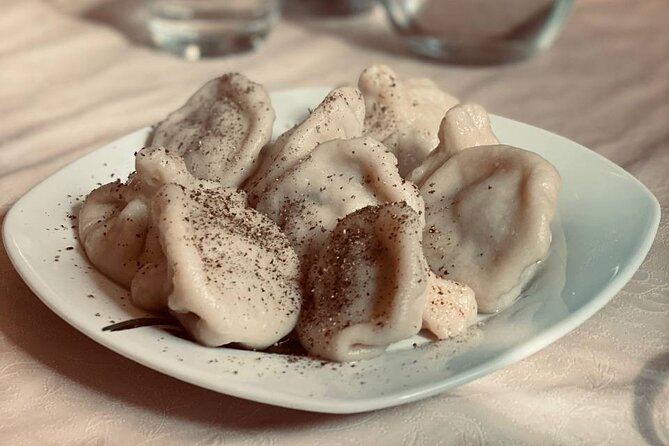
Reviewed · TBILISI FOOD & KHINKALI WALKS
Taste of Georgia. Cooking-Class Khinkali, Khachapuri and more
Two hours, serious Georgian comfort food. This cooking class in Tbilisi pairs hands-on instruction with a cozy family-kitchen feel, so you’re not just watching—you’re learning the techniques that make Georgian dumplings and cheese boats work.
I especially liked the way the lesson breaks things into clear steps: making the dough elastic and soft for khinkali, then learning the filling and the key move for keeping them intact in the pot. One possible drawback to know up front: it’s a compact, kitchen-style experience for a small group, so you’ll want to be comfortable with a little kitchen heat and active participation.
In This Review
- Key highlights worth booking for
- A small-group, family-kitchen class near Merab Kostava
- The khinkali master class: dough elasticity, broth filling, and shaping that holds
- Dough: soft, elastic, and forgiving
- Filling: ingredients plus the healing broth moment
- Turning them right so they don’t fall apart
- What you’ll eat
- Adjarian khachapuri: dough, stretchy cheese, and the egg yolk finish
- The dough: tender, not tough
- Cheese choice: for stretching and melting
- Arranging: different ways to shape the boat
- The signature finish: egg yolk
- The meal experience: eat what you make, and do it with Georgian wine
- Price and value: what $98 buys in a 2-hour cooking skill session
- What to expect on the day: pacing, participation, and simple booking tips
- Who this class suits best (and who might not love it)
- Should you book Taste of Georgia?
- FAQ
- Is the class offered in English?
- How long does the cooking class take?
- What’s the meeting point in Tbilisi?
- What dishes will I cook and taste?
- How big is the group?
- Are alcoholic beverages included?
- Is private transportation included?
- Do I get a mobile ticket?
- Will I get confirmation after booking?
- What’s the cancellation policy?
Key highlights worth booking for
- Small group (max 8), so you’re more likely to get real attention.
- English-led master class, with step-by-step guidance on dough and shaping.
- Khinkali technique focus, including turning the dumplings so they don’t fall apart.
- Ajarian khachapuri know-how, from dough handling to choosing cheese for stretchy melt.
- Included tasting and alcoholic beverages, so you can enjoy what you make right away.
- Practical approach, aimed at helping you recreate Georgian classics at home.
A small-group, family-kitchen class near Merab Kostava
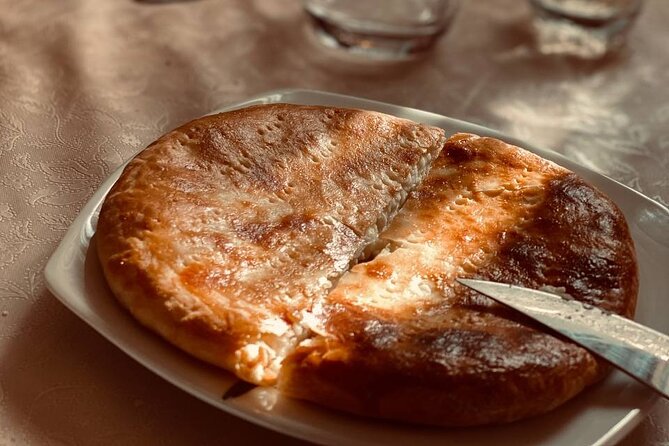
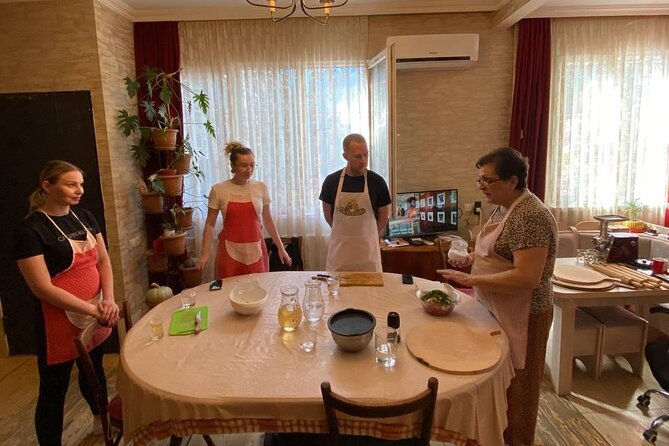
This experience is set up like you’re joining a Georgian home cooking lesson, not lining up for a show. The setting is described as cozy and homely, hosted by an experienced Georgian family who guide you through popular recipes and the habits behind them—how to work with ingredients, how to judge amounts, and how to avoid common mistakes.
The class starts at Georgian Cooking Classes Chakandrila, 8 Merab Kostava St, Tbilisi, and it runs for about 2 hours. You’ll be there with a maximum of 8 travelers, which matters more than it sounds. In a group that small, it’s easier to get corrections when your dough feels too stiff, too loose, or when shaping isn’t as tight as it should be.
If you care about logistics: you get a mobile ticket, and the activity is near public transportation. Private transportation isn’t included, so you’ll want to plan how you’ll reach the meeting point on your own.
And yes, English is available. That’s important here, because a lot of the learning is tactile. When someone can explain what elastic dough should feel like, you don’t just follow motions—you understand why.
More Tbilisi food walks for khinkali, khachapuri and market bites

The khinkali master class: dough elasticity, broth filling, and shaping that holds
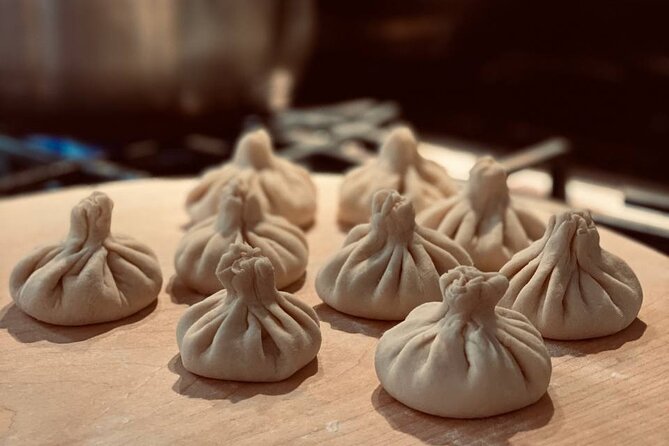
Khinkali are the pride of Georgian cuisine, and this class treats them like a serious craft. The lesson follows the full chain: dough, filling, and then the shaping technique that makes or breaks the final result.
Dough: soft, elastic, and forgiving
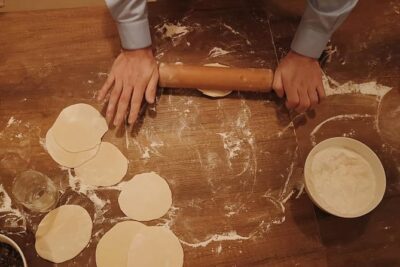
You’ll learn how to select quantities and mix the dough so it ends up elastic and soft. That might sound abstract, but it’s actually the foundation for everything else. If your dough is too dry, it won’t seal well. If it’s too wet, it’s hard to handle and can tear. The goal is a texture that stretches enough to work with your hands and holds up when boiled.
This is one of those skills you’ll carry home. Even if you never make khinkali again, you’ll understand how Georgian dough is built for a hot cooking method: it needs flexibility at the start and structure by the time it hits boiling water.
Filling: ingredients plus the healing broth moment
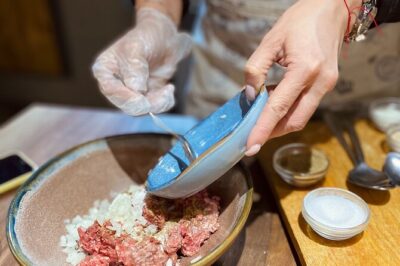
You’ll also find out what to put inside your khinkali and why the filling process is tied to that famous flavor experience—the broth. The description is specific: the filling includes ingredients that create the same comforting broth that plays a main role when you eat khinkali.
That’s more than taste trivia. It changes how you think about the filling—this isn’t just “meat in dough.” It’s a dumpling designed to deliver a hot, savory liquid payoff, and that’s a big reason Georgian khinkali are so satisfying.
Turning them right so they don’t fall apart
Then comes the part that home cooks often struggle with: sealing and shaping. You’ll learn how to turn your khinkali correctly so they don’t fall apart when cooking. In practical terms, it means you’re being taught how to close the dough so steam and broth stay inside, instead of leaking out or breaking the dumpling apart.
If you take one takeaway seriously, make it this. A lot of cooking classes teach recipes. This one leans into technique, which is exactly what you need if your goal is to cook again later.
More khinkali and khachapuri cooking classes we have rolled up in Tbilisi


What you’ll eat
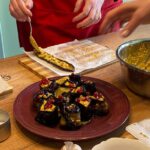
The class includes a starter of Georgian khinkali with meat or cheese or mushrooms in their sauce wrapped in dough. So you’re not only learning the process; you’re also tasting the result in the setting where everyone’s working at the same pace.
One small note for expectations: khinkali are not a dainty food. They’re meant to be handled, eaten, and enjoyed. If you go in thinking it’s a formal meal, you may miss the point. Think comfort food with technique.
Adjarian khachapuri: dough, stretchy cheese, and the egg yolk finish
The second dish is Ajarian-style khachapuri, a cheese-filled bread often shaped like a boat. This class frames it as a “main” and then teaches you how to make it properly—from dough to the right cheese behavior.
The dough: tender, not tough
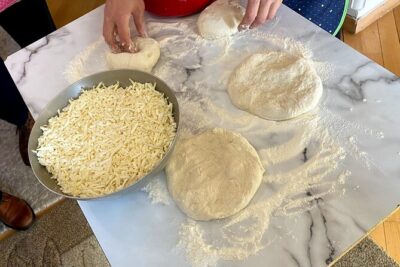
You’ll learn how to prepare the khachapuri dough so it turns out tender. The lesson here is about handling and how the dough behaves when it bakes. If the dough is overworked or under-proportioned, the final texture can end up chewy or heavy. The goal is that tender base that supports the cheese and keeps the whole thing balanced.
Cheese choice: for stretching and melting
Cheese is the star in Adjarian khachapuri. The class explains what cheese to use to get stretching, melting results. That matters because not every cheese melts the same way, and not every melt gives you that stretchy pull people expect when they tear into a hot khachapuri.
This is one of the best parts for home cooks, because it translates into a shopping plan: you’re learning what behavior to look for (stretchy melt), not just what ingredient name to chase.
Arranging: different ways to shape the boat
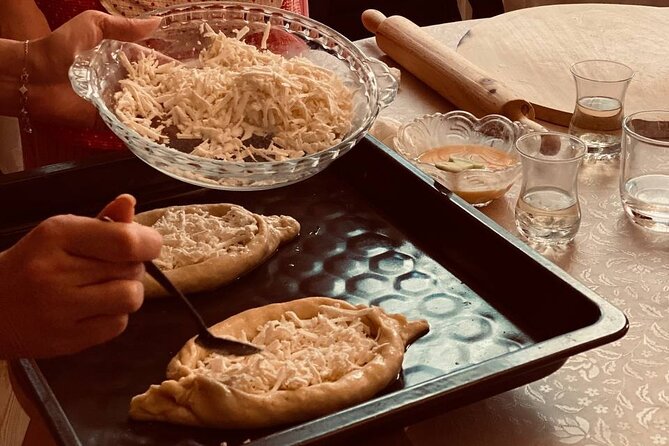
You’ll also learn about different ways of arranging the dish. In practice, that means you’ll understand how the shape affects how the cheese sits and bakes. It also helps you make it look right, not just taste good.
The signature finish: egg yolk
The sample menu calls out a classic final touch: sticky cheese in dough and egg yolk. That egg yolk is part of why Adjarian khachapuri feels so different from other cheese breads. It adds richness and a slightly custardy element that plays nicely with hot melted cheese.
If you’re a first-timer with Georgian food, this is a great dish to master because it’s easy to recognize when you’ve gotten it right. The moment you see the cheese melt and the egg yolk finish, you’ll get why this style is so iconic.
The meal experience: eat what you make, and do it with Georgian wine
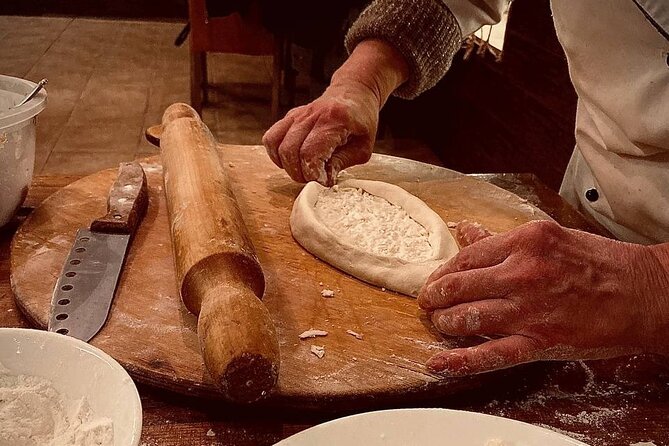
This isn’t just a classroom. It’s a lunch master class with tasting of homemade dishes, and alcoholic beverages are included. That combination changes the vibe in a good way. You’re not ending the session hungry and rushing out for dinner. You’re eating during the experience, while the food is fresh and the skills are still in your hands.
From a recent booking, one highlight was the table-side chef energy—Grisha—and the feeling of making something yourself, then sharing it with a glass or two of Georgian wine. Even if your chef’s style is different, the structure stays the same: you learn, you cook, and you get to enjoy the result right then.
The group size also helps this part. With up to 8 people, it’s less chaotic and more like a shared dinner that happens to involve dough, flour dust, and a lot of friendly technique talk.
Price and value: what $98 buys in a 2-hour cooking skill session
At $98 per person for about 2 hours, the value depends on what you want out of the experience.
Here’s what you do get, based on the information provided:
- A master class format, focused on two major Georgian staples (khinkali and Adjarian khachapuri)
- Hands-on cooking plus tasting
- Alcoholic beverages included
- Instruction in English
- A small group size (max 8)
What you don’t get:
- Private transportation
So for most people, the math makes sense if you’re coming to Tbilisi specifically for food experiences and want more than a restaurant meal. You’re paying for a skill you can reuse—dough texture, shaping technique, cheese behavior, and how to assemble the dishes correctly.
If you’re hoping for a long, multi-stop tour with lots of sightseeing, this likely won’t feel like the best match. It’s compact and kitchen-focused by design. But if your travel style is hands-on and you want something genuinely Georgian that you can recreate at home, $98 is closer to “a meal plus a class” than “just a dinner.”
What to expect on the day: pacing, participation, and simple booking tips
This is a kitchen experience, so expect a working pace. You’ll spend time learning dough handling and technique, then see (and taste) the results.
A couple practical points that will make the session easier:
- Come ready to participate. This isn’t a sit-and-watch activity.
- Ask about variations during booking. In one case, a request was made for Imeruli Khachapuri instead of the listed Adjarian style, and it was satisfied. If you have a specific preference, send it in before the day.
- Plan your route to the meeting point. Since private transportation isn’t included, use public transport or pre-book a short ride if you need it.
Also, confirmation is received at the time of booking, and you’ll have a mobile ticket—helpful if you’re juggling other reservations in Tbilisi.
Who this class suits best (and who might not love it)
This class is a strong fit if you:
- Love Georgian food and want to understand how it works beyond taste
- Want a small-group experience (max 8)
- Prefer practical instruction in English
- Like meals that include a relaxed, social side, with drinks included
It may feel less ideal if you:
- Want a sightseeing-heavy day rather than a focused cooking session
- Are uncomfortable joining in hands-on cooking steps
- Need private transport provided door-to-door (it’s not included)
Should you book Taste of Georgia?
Yes, if you want a skills-first Georgian food experience in Tbilisi. The combination of khinkali technique, Adjarian khachapuri know-how, and tasting with included alcoholic beverages makes it easy to justify the price as more than a simple meal.
Before you book, I’d do two things:
- If you care about a specific khachapuri style (like Imeruli), mention it during booking.
- Confirm your plan for getting to 8 Merab Kostava St without relying on private transport.
If you’re chasing a memorable evening with real technique and a final plate you helped make, this is the kind of experience you’ll remember the next time you cook at home.
FAQ
Is the class offered in English?
Yes. The experience is offered in English, so you should be able to follow the steps and explanations.
How long does the cooking class take?
It runs for about 2 hours (approx.).
What’s the meeting point in Tbilisi?
The start point is Georgian Cooking Classes Chakandrila, 8 Merab Kostava St, Tbilisi, Georgia. The activity ends back at the meeting point.
What dishes will I cook and taste?
You’ll cook and taste Georgian khinkali and Adjarian khachapuri (with egg yolk), as described in the sample menu.
How big is the group?
The experience has a maximum of 8 travelers, keeping it small and easier to learn in.
Are alcoholic beverages included?
Yes. Alcoholic beverages are included.
Is private transportation included?
No. Private transportation is not included, so you’ll need your own way to reach the meeting point.
Do I get a mobile ticket?
Yes. You’ll receive a mobile ticket.
Will I get confirmation after booking?
Yes. Confirmation will be received at the time of booking.
What’s the cancellation policy?
You can cancel for a full refund up to 24 hours in advance of the experience’s start time. Cancellation cut-offs use local time.
More from Our Tbilisi Review Desk




More Khinkali and Khachapuri Cooking Classes
More Tbilisi Food and Khinkali Walks

Not quite your thing? More Tbilisi tours and day trips from our review desk










Tbilisi Food & Khinkali Walks, compared.
 ★ 5.0Private Tbilisi Food Tour: 9 Tastings Walk in Bohemian DistrictFrom $79227 reviews
 ★ 4.5Small-Group Khinkali and Khachapuri Cooking Class in TbilisiFrom $27224 reviews
 ★ 5.0Tbilisi Food Tour in a Local FamilyFrom $49113 reviews
 ★ 5.0Cook True Ajarian Khachapuri and Khinkali in Highlanders StyleFrom $3993 reviews
 ★ 5.0Old Town and Beyond: A Tbilisi Silk Road Feast with Culinary BackstreetsFrom $12562 reviews
 ★ 5.0Tbilisi City Pub CrawlFrom $3157 reviews
 ★ 4.5Taste of Kakheti: Wine Tour Bread Baking & Churchkhela WorkshopFrom $1946 reviews
 ★ 5.0Private 4 days Food & Wine and Sightseeing tour to Kakheti, Kazbegi, Mtskheta.From $1025 reviews
Browse the lists this tour appears in