
Reviewed · MTSKHETA & JVARI UNESCO TRIPS
Day Trip to Mtskheta Gori and Uplistsikhe
Cave towns and cathedrals in one long day. This guided day trip strings together Uplistsikhe’s rock-hewn world, UNESCO Mtskheta, and two standout Georgian churches, with time in Gori for either Soviet-era history or a slower stroll. You get round-trip transport from Tbilisi, an English-speaking guide, and a schedule that keeps you moving without turning every stop into a sprint.
I like that the day packs serious variety: you’ll go from Early Iron Age rock architecture to 6th-century church sites, then land in Gori for a totally different era. I also like the option to tailor the middle of the day with lunch in Gori and a choice around the Stalin Museum. One drawback: it’s a long, walk-heavy day, and Uplistsikhe has uneven steps, so comfortable footwear matters.
In This Review
- Key highlights you’ll care about
- From Avlabari meeting point to a full day on the road
- Uplistsikhe cave town: rock-cut history with real walking
- Gori lunch and the Stalin Museum option: choose your pacing
- Jvari Monastery: the cross, the confluence, and the view
- Svetitskhoveli Cathedral in Mtskheta: Living Pillar and royal Georgia
- Price and logistics: what $29 actually buys you
- Church dress code and on-the-ground tips (so you don’t get turned away)
- Who will enjoy this most?
- Should you book this Tbilisi day trip?
- FAQ
- What’s included in the $29 price?
- Is lunch included?
- Do I need to pay entrance fees for Uplistsikhe and the Stalin Museum?
- Where is the meeting point in Tbilisi?
- What’s the church dress code?
- Can I cancel for free?
Key highlights you’ll care about
- Rock-cut Uplistsikhe with structures from the Early Iron Age to the Late Middle Ages, plus pagan and Christian architectural layers
- Mtskheta UNESCO stops including Jvari Monastery and Svetitskhoveli Cathedral, tied to Georgian kings and major Orthodox traditions
- Gori as a flexible pause: you can do the Stalin Museum or use free time to explore the city and its fortress area
- Lunch add-on for local flavor (optional) so you can switch from museum mode to eating like a local
- A guided flow with real timing: start from Avlabari, return near Avlabari, and keep the sights clustered in a single day
From Avlabari meeting point to a full day on the road
The tour starts near Tbilisi’s Avlabari metro area, with the meeting point listed as about 50 meters from Avlabari station. In practice, you’ll want to arrive early and be ready to go—some departures start the moment everyone is onboard, even if you’re given a slightly later schedule.
Transportation is included, and that’s a big part of the value. Uplistsikhe and Mtskheta aren’t the kind of places you casually hop to with zero planning, especially if you don’t want to juggle local buses, long waits, and unclear connections. The day is designed to take you out of the city and back with minimal friction.
You’ll also start at a traveler meeting spot where the vibe is social—board games, music, and even a glass of wine are part of the scene while you wait. It’s a small touch, but it can flip the mood from solo logistics to group energy fast.
More Mtskheta and Jvari UNESCO runs we have made from Tbilisi
Uplistsikhe cave town: rock-cut history with real walking
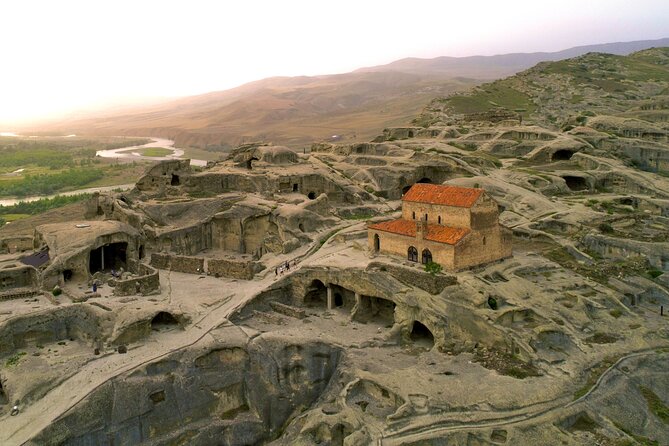
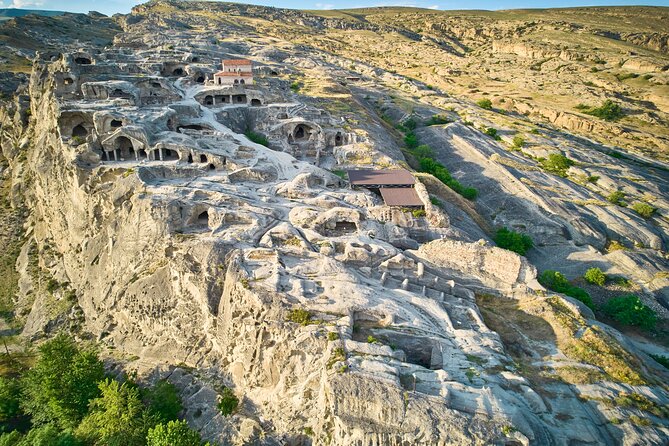
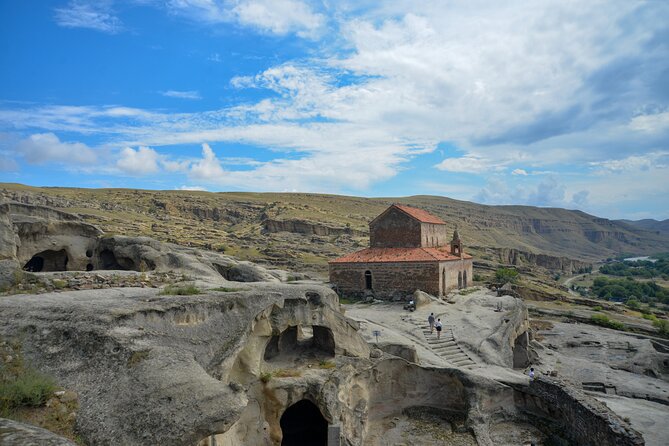
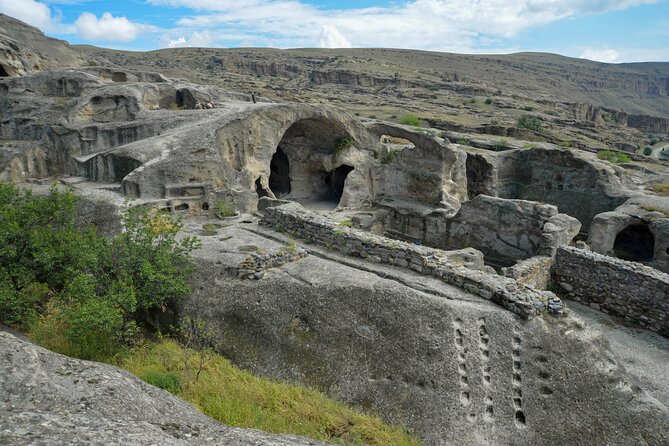
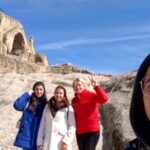
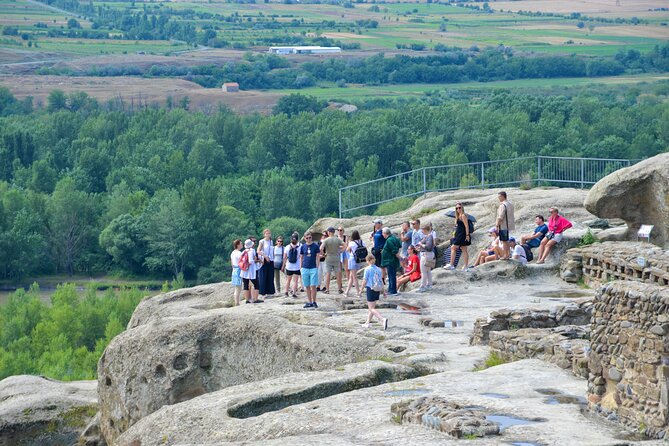
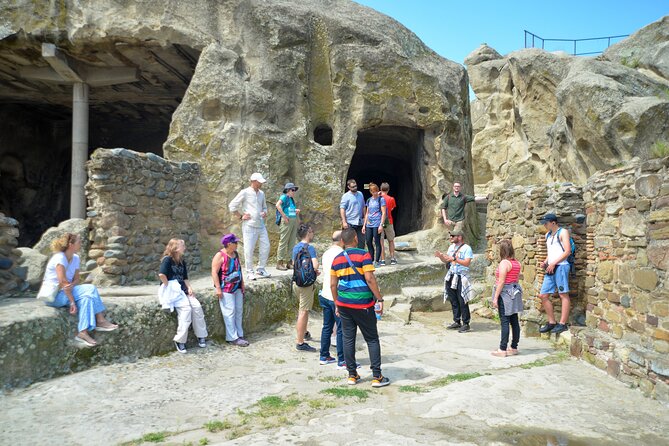
Uplistsikhe is the headline for a reason. This antique, rock-hewn town sits in eastern Georgia on a left bank of the Mtkvari River, and it’s famous for how many different periods and cultural influences show up in the same place. You’re looking at structures spanning from the Early Iron Age through the Late Middle Ages, and the site reflects a blend of rock-cut cultures linked to Anatolia and Iran—plus pagan and Christian architecture living side by side.
What to expect on-site:
- You’ll be walking among carved spaces and uneven ground.
- There are steps and climbs, so it’s not a sit-and-read stop.
- The views are part of the payoff, but your legs will do a noticeable amount of work.
Practical tip: bring your own bottled water. One review flagged that none is provided, and it’s the kind of small detail that becomes a big one when you’re in the middle of sun, steps, and hopping from one carved area to another. Also, pack sensible footwear. Even if you’re fit, Uplistsikhe can feel slippery or hard on footing depending on weather.
Entry isn’t included in the base price. The Uplistsikhe entrance fee is listed as 15 GEL (about $6). If you’re budgeting carefully, it’s worth treating that as part of the true “all-in” cost, because it’s central to the experience.
Gori lunch and the Stalin Museum option: choose your pacing
Gori is where the tour shifts gears. You’ll arrive around early afternoon for a lunch break at a local restaurant. The lunch is optional and priced at 45 GEL (about $17 per person). I like this setup because it lets you decide how much you want to “sit” versus “see.”
If you take the lunch option, the goal is pretty clear: eat Georgian food in a real local setting without turning your day into an endless search for a restaurant. And one review mentioned that the lunch was delicious and plentiful, which is exactly what you want on a day like this.
If you’d rather go faster, you can use free time in Gori instead. The plan includes an optional path for exploring Gori itself, including the fortress area (Goris Tsikhe), which has been used since at least the 7th century. You get a more medieval feel, plus the kind of panoramic viewpoints that help you understand how the city sits in its surroundings.
About Stalin Museum: entry is optional, with a listed fee of 15 GEL (about $6). If you’re curious about Soviet-era Georgia—and especially Stalin’s birthplace—this stop can be a strong contrast to the centuries of church and rock architecture that come right before and after it.
Two useful ways to approach it:
- If you like museums and historical context, plan to go inside. The museum experience is described as having Soviet-era characteristics, plus Stalin’s original house and a railway carriage.
- If you’re museumed out by mid-day, you’re not locked in. Several people opted out and used the Gori free time instead, and the fortress exploration can make that decision feel worthwhile.
Just be honest with yourself about the day’s energy. This is not a light schedule. Between travel time and walking, you’ll be glad you chose either lunch or extra exploring based on what your body wants.
Jvari Monastery: the cross, the confluence, and the view
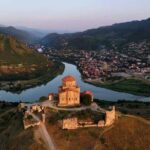
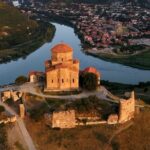
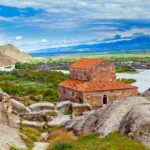
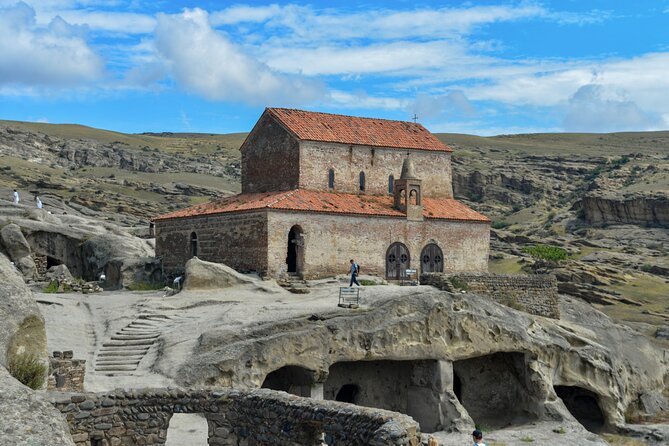
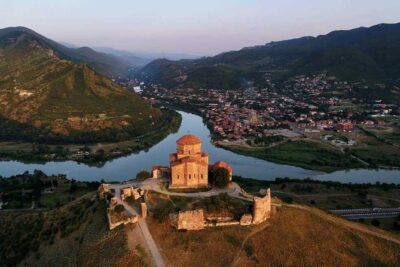
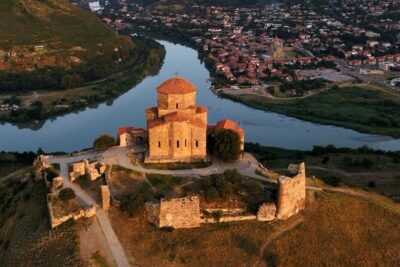
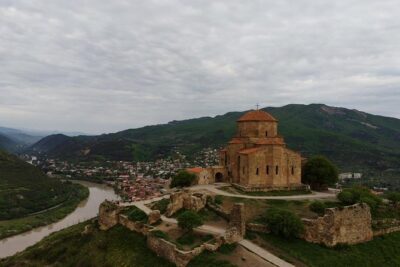
Jvari Monastery—often translated as the Monastery of the Cross—arrives about late afternoon. It sits near Mtskheta and is a 6th-century Georgian Orthodox site that’s part of the UNESCO listing for the historic monuments of Mtskheta.
Jvari’s location is the whole point. It stands on a rocky mountaintop where you can look down toward Mtskheta at the confluence of the Mtkvari and Aragvi rivers. That means the visit isn’t only about the church itself—it’s also about orientation. You start to “read” how the city developed where rivers meet, and why that spot mattered over centuries.
Time here is shorter than the big Mtskheta stop later in the day, so treat Jvari like your visual warm-up. Take a few minutes to get your bearings from outside, then go in to appreciate what you came for: a major early Georgian Orthodox landmark set against dramatic terrain.
Entry is listed as free. One of the practical boons of this tour is that UNESCO-style sites can add up fast in costs, yet several key stops here don’t ask for extra admission fees.
Svetitskhoveli Cathedral in Mtskheta: Living Pillar and royal Georgia
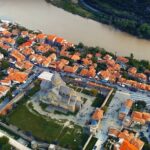
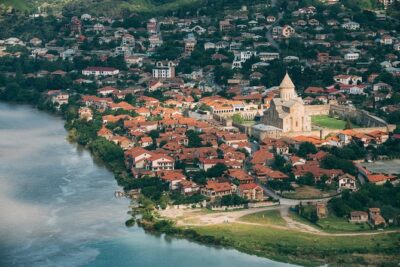
Mtskheta is old—older than many people expect—and the tour gives you time to experience it with purpose. Mtskheta was founded by ancient Meschian tribes in the 5th century and served as the capital of the early Georgian Kingdom of Iberia for a long span. It also remained a key coronation and burial place for Georgian kings well into later history.
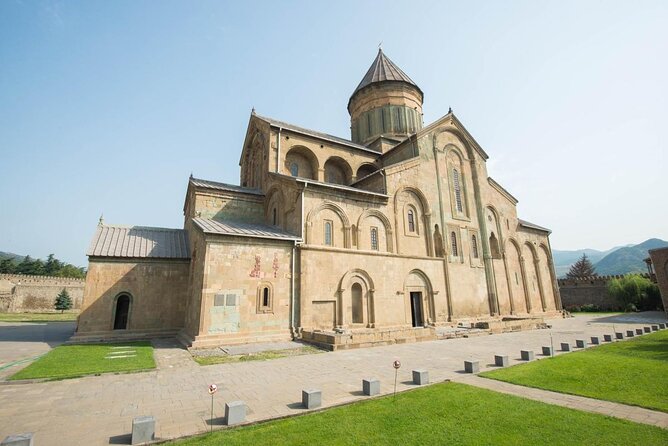
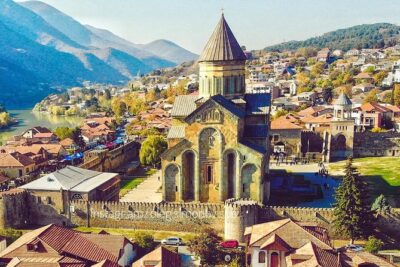
Svetitskhoveli Cathedral is the major church stop. Its name literally translates to Cathedral of the Living Pillar. It’s currently the second-largest church in Georgia, after the Holy Trinity Cathedral, and it carries a special tradition: it’s associated with the burial site of Christ’s robe.
This matters because it explains why the place feels important to locals even if you’re not steeped in Orthodox details. It’s not just another old church. It’s a focal point of national religious memory, with connections that stretch back to the early Georgian kingdom era.
Entry is free for this stop. That’s another reason the tour’s value holds up. You’re paying mainly for transportation and guided interpretation, while many of the core religious and UNESCO sites aren’t extra-ticket attractions.
More Gori and Uplistsikhe cave-town days we have traced from Tbilisi

Price and logistics: what $29 actually buys you
At $29 per person, this day trip can be a strong value—if you use it for what it’s best at: reducing travel hassle while covering several major sights in one shot.
Here’s what’s included:
- a professional guide service
- transportation service
What you should budget extra for (listed on the tour details):
- lunch in Gori (optional): 45 GEL (about $17)
- Stalin Museum (optional): 15 GEL (about $6)
- Uplistsikhe entrance: 15 GEL (about $6)
So your real cost depends on your choices. If you do both entrances and skip the paid lunch, your day looks cheaper than if you do lunch plus museum. If you do the full experience, it’s still reasonable for a guided day that covers multiple UNESCO-listed sites and a major rock-cut historical site.
Two more practical notes from real-world pacing:
- The day is listed as about 10 hours, but long tours can run longer depending on routing and how crowds behave. One review mentioned an extreme long day, which is a reminder to plan the rest of your trip around this outing, not the other way around.
- Arrival timing at Avlabari can be flexible in the moment. Show up a bit early. If everyone is ready, the group can roll earlier than the strict minute you expected.
Church dress code and on-the-ground tips (so you don’t get turned away)
Churches have rules, and they’re not optional. For any church stop, don’t wear shorts, and women need to cover their heads. This isn’t about being dramatic—it’s about basic entry requirements. If you forget, you may have to step out and improvise.
Other small tips that make the day easier:
- Bring water for Uplistsikhe. It’s an active walk among steps and carved areas.
- Wear shoes that grip. Uneven ground is part of the charm, but also part of the challenge.
- Consider packing a hat for sun exposure at outdoor rock sites.
- If you’re choosing between lunch and free time in Gori, match the choice to your energy. The day is busy, and you’ll enjoy the late-afternoon churches more if you’re not running on fumes.
Who will enjoy this most?
This tour fits best if you want a structured day that still feels like real places, not a checklist machine. You’ll probably enjoy it most if you:
- love history that shifts eras fast, from Iron Age rock sites to 6th-century Orthodox monuments to Soviet-era memory
- want UNESCO Mtskheta sights without spending a day figuring out transport
- like the idea of optional choices in Gori based on your interests
If you hate walking on uneven ground or you need lots of breaks, plan extra care for Uplistsikhe. It’s doable, but it’s active.
Should you book this Tbilisi day trip?
If your goal is to see Uplistsikhe and Mtskheta’s UNESCO sites in one efficient day, this tour is an easy yes. The included transportation and guide service do the heavy lifting, and the option to adjust your Gori time (Stalin Museum versus free exploration, plus optional lunch) helps you shape the day around your interests.
I’d book it if you’re comfortable with a long day and at least moderate walking. I’d skip it or rethink your plan if you want a short, low-movement outing or if you’re very sensitive to church dress rules and walking steps.
If you do book: show up early at Avlabari, bring water and good shoes, and decide ahead of time whether you want lunch or museum time in Gori. That one decision can make the day feel either perfectly paced or slightly exhausting.
FAQ
What’s included in the $29 price?
The price includes a professional guide service and round-trip transportation from Tbilisi. Entrance fees and lunch are not included unless you choose the optional add-ons.
Is lunch included?
No. Lunch in Gori is optional and costs 45 GEL (about $17) per person.
Do I need to pay entrance fees for Uplistsikhe and the Stalin Museum?
Yes. Uplistsikhe entrance is listed at 15 GEL (about $6). Stalin Museum entrance in Gori is listed at 15 GEL (about $6). Both are optional based on what you want to do.
Where is the meeting point in Tbilisi?
The start meeting point is listed as M/S Avlabari, and the tour meeting area is about 50 meters from Avlabari metro station. The tour ends back at the meeting point.
What’s the church dress code?
Shorts aren’t allowed. Women need to cover their heads. Plan to follow this at Jvari Monastery and Svetitskhoveli Cathedral.
Can I cancel for free?
Yes. Free cancellation is available. You can cancel up to 24 hours in advance of the experience start time for a full refund.
More from Our Tbilisi Review Desk


More Gori and Uplistsikhe Cave-Town Days
More Mtskheta and Jvari UNESCO Runs
Not quite your thing? More Tbilisi tours and day trips from our review desk




Mtskheta & Jvari UNESCO Trips, compared.
 ★ 5.0Mtskheta,Jvari,Bazaar,wine tasting,Chronicles of GeorgiaFrom $20730 reviews
 ★ 5.0Mtskheta-Gori-UplistsikheFrom $90112 reviews
 ★ 4.5Mtskheta, Jvari, gori, uflistsikhe, history and panorama (group tours)From $19107 reviews
 ★ 5.0Mtskheta-Jvari-Uplistsike-Chronicle of Georgia, PRIVATE TripFrom $68105 reviews
 ★ 4.5Tbilisi – Mtskheta – Jvari. Full City Tour on Hop On Hop Off BusFrom $4091 reviews
 ★ 4.5Ancient Georgia Group Tour: Mtskheta,Jvari, Gori, UplistsikheFrom $2473 reviews
 ★ 5.0Ancient Mtskheta and Chronicle of Georgia half day tourFrom $6566 reviews
 ★ 5.0Private Day Trip to Gudauri and Kazbegi from Tbilisi via Jvari and MtskhetaFrom $11457 reviews
Browse the lists this tour appears in