
Reviewed · OLD TBILISI WALKING TOURS
Tbilisi Walking Tour Including Cable Car and Traditional Bakery
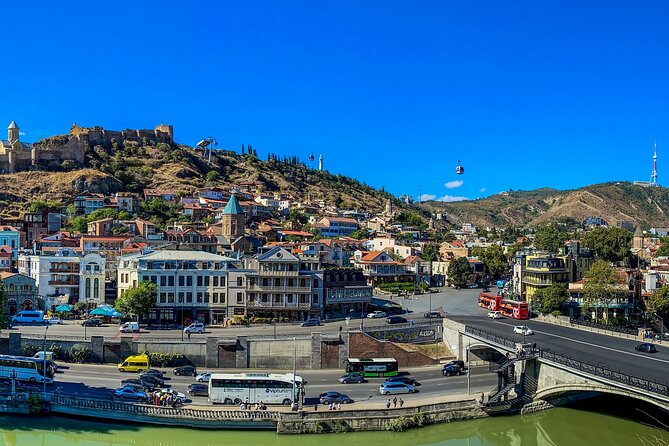
Tbilisi packs a lot into four hours. I love the cable car ride up to the Mother of Georgia statue area, because the views change the whole scale of the city. I also love how the guide turns the route into a living lesson on Tbilisi’s history and culture, from King Vakhtang Gorgasali legends to modern symbols like the Bridge of Peace.
Plan for one hiccup: on windy days, the cable car may not operate. Everything else still runs, but your “big elevation moment” might be replaced by ground-level sightseeing.
In This Review
- Key highlights worth your time
- Why this 4-hour Tbilisi walk is such a smart intro
- Meeting at M/S Avlabari and getting set up
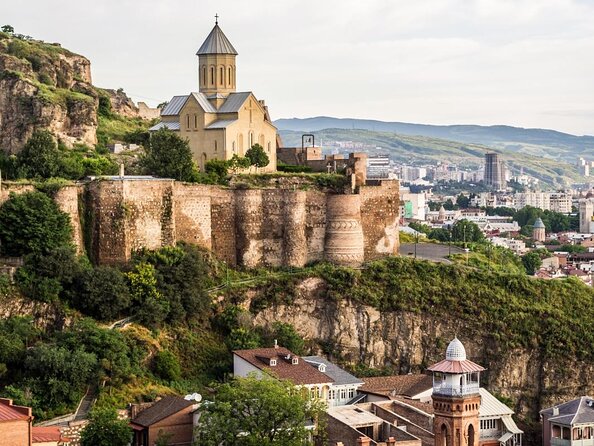
- Metekhi Cathedral: the cliff church with deep legend
- Vakhtang Gorgasali monument: where Tbilisi’s founding myth starts
- Europe Square and Rike Park: the city’s present tense
- The cable car up to the Mother of Georgia: your main skyline payoff
- Kartlis Deda and the Bridge of Peace: two Tbilisi symbols, one river view
- Church stops in Old Tbilisi: Metekhi, Anchiskhati, Sioni (with dress rules)
- Rezo Gabriadze’s angel clock tower and the Tamada toast tradition
- Shardeni Street and Abanotubani: walking the fun parts of Old Tbilisi
- Tone bakery: Georgian pie and lemonade, done the right way
- Price and value for $19: what you’re really paying for
- Who should book this, and who might want a different plan
- Should you book this Tbilisi walking tour with cable car and bakery?
- FAQ
- How long is the Tbilisi walking tour?
- What does the tour cost?
- Is the cable car included in the price?
- What food and drinks are included?
- What language is the tour offered in?
- Where does the tour start?
- Where does the tour end?
- What is the minimum age to join?
- Can churches be visited by anyone?
- What happens if the weather is windy?
Key highlights worth your time
- Cable car to Kartlis Deda so you get that above-the-city perspective
- Bridge of Peace + Rike Park with modern design by the river
- Icon churches in Old Tbilisi including Metekhi, Anchiskhati, and Sioni
- Rezo Gabriadze’s angel clock tower and the hourly ritual
- Tone bakery pie and lemonade for a straightforward Georgian food win
Why this 4-hour Tbilisi walk is such a smart intro

This tour is built for people who want the city’s main stories without spending a whole day sprinting between far-flung sights. You get a compact route that links river geography, royal legends, Soviet-era symbols, and old-town faith in one smooth sequence.
The pacing generally feels workable for a first visit because you’re not stuck in one neighborhood. You’ll move between cliff views, river promenades, and the historic core, so your brain keeps “resetting” with new scenes every few stops.
More Old Tbilisi walking tours through the balconied backstreets

Meeting at M/S Avlabari and getting set up
You start near M/S Avlabari in Tbilisi, then gather at a free meeting space where you can calm your nerves before you begin. It’s designed to feel social—music, board games, and even a glass of wine are part of the welcome vibe.
This matters more than it sounds. If you’re new to Tbilisi, a friendly start helps you avoid that awkward moment of standing around scanning street signs. Also, the tour uses a mobile ticket, so you’re not fumbling for paper in a crowd.
Metekhi Cathedral: the cliff church with deep legend
The first real landmark hit is Metekhi Cathedral, perched on a cliff plateau above the Mtkvari River. The guide shares the local layer of meaning: early church roots connected to Vakhtang Gorgasali and a legend about saint Shushanik being transferred there in the 7th century.
Even if you’re not a “church facts” person, this stop works because the setting does half the storytelling. Look across the river and you start to understand why Tbilisi’s identity is tied to this waterway and its hills.
Vakhtang Gorgasali monument: where Tbilisi’s founding myth starts
Next comes the Monument of King Vakhtang Gorgasali, tied to the Chosroid dynasty and the early power struggle against Sasanian influence. The tour also points you to the idea that Vakhtang tradition is linked with the reorganization of the Georgian Orthodox Church and even the foundation of Tbilisi.
This stop is short, but it’s a useful anchor. Once you know who Vakhtang is in Georgian storytelling, the rest of the route stops feeling random—each church and symbol starts to connect back to the same national narrative threads.
Europe Square and Rike Park: the city’s present tense
You cross Europe Square, where you get a quick framing of Georgia’s relationship with the European Union—an important context when you’re seeing Georgia’s modern face.
Then you reach Rike Park, a relatively new recreational area by the river, right by the Bridge of Peace. Rike is also where the cable car starts, and it’s full of everyday energy: fountains, kids’ play areas, and open space that locals actually use.
If you like photos, this is a high-yield stretch. The river, the bridge lines, and the hillside views combine into one of the easiest “Tbilisi overview” moments.
More Narikala and Mtatsminda cable-car viewpoints above Tbilisi





The cable car up to the Mother of Georgia: your main skyline payoff
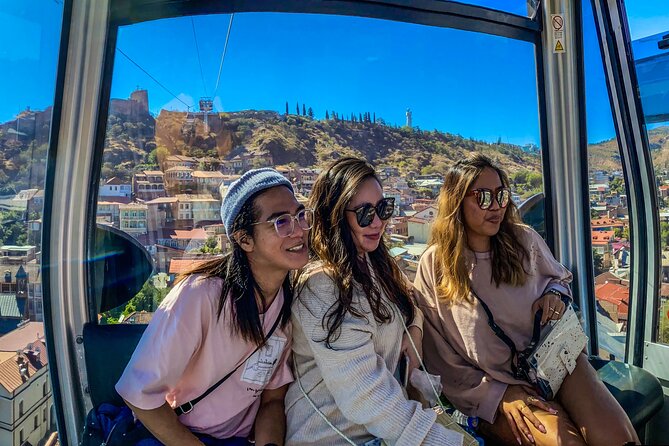
One of the tour’s strongest practical perks is that the cable car is included, taking you toward the Mother of Georgia statue area. From up there, you’ll see the city in a way walking alone just can’t deliver.
This is also where you’ll feel the route’s design. Instead of only visiting historic buildings at street level, you get a change in altitude that makes the whole trip feel like more than just a checklist.
Quick weather reality: the cable car won’t run during windy conditions. If it’s gusty, don’t be surprised if the organizer shifts the plan on the fly and keeps the group moving.
Kartlis Deda and the Bridge of Peace: two Tbilisi symbols, one river view
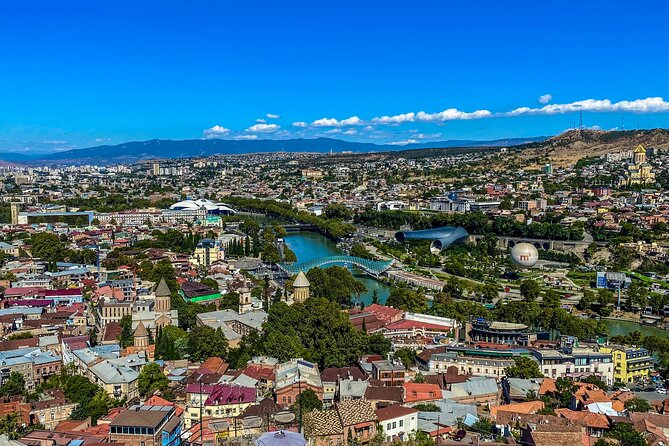
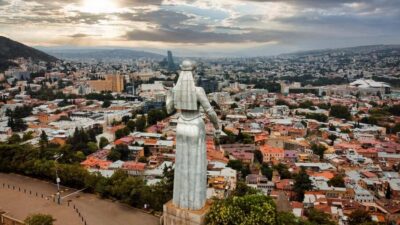
Back on the route, you meet Kartlis Deda (often misnamed as Kartlis Deda), a 20-meter aluminium statue on Sololaki hill. It’s a city symbol built for Tbilisi’s 1500th anniversary celebrations in 1958, and the guide explains the meaning: she greets friends with a bowl of wine and threatens enemies with a sword.
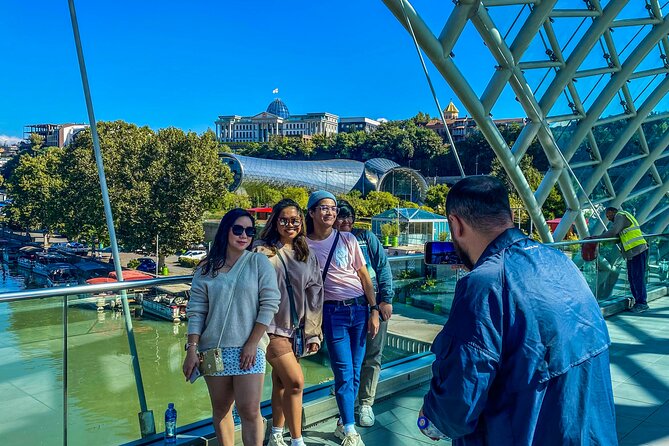
Next is the Bridge of Peace, the pedestrian glass-and-steel bridge over the Mtkvari. It was assembled in Italy from unassembled components, spans 156 meters, and has more than 10,000 LED bulbs that switch on about 90 minutes before sunset. This is exactly the kind of detail that turns a bridge photo from random to meaningful.
Go here with one small goal: take in the bridge shape first, then let the river and skyline fill in the rest of the frame.
Church stops in Old Tbilisi: Metekhi, Anchiskhati, Sioni (with dress rules)
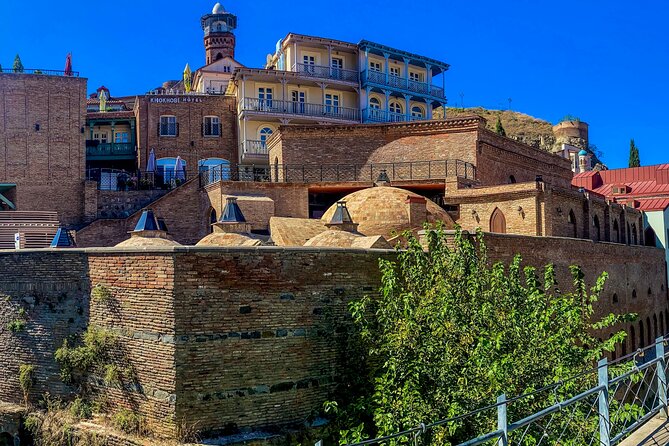
This section is where the tour feels most “Tbilisi,” because it blends architecture with stories tied to faith and power.
After the Patriarchate of Georgia seminary stop (a quick informational pause), you move to Anchiskhati Basilica, dating to the 6th century. The tour covers the name shift: originally associated with the Virgin Mary’s Birth, later renamed Anchiskhati. You’ll also hear the 1675 connection—when Peter Meskhi moved the image of Christ not made by hand, the Meskhishvilis became pastors of the church.
Then you reach Sioni Cathedral, in the oldest part of upper Kala. A legend ties its first church to King Vakhtang Gorgasali in the 5th century, so even this quick stop feels connected to the earlier Vakhtang monument.
Practical tip: church entry rules matter. No shorts, and women need to cover their heads. If you arrive slightly underdressed, you’ll spend more energy dealing with it than enjoying the visit, so plan a light scarf.
Rezo Gabriadze’s angel clock tower and the Tamada toast tradition
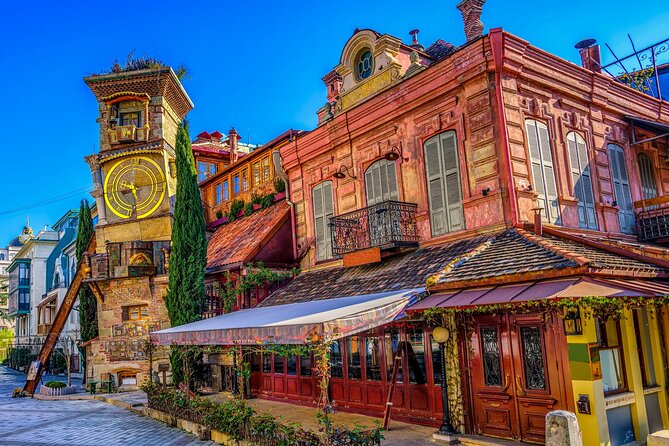
In the old town, you’ll hit Rezo Gabriadze’s Marionette Theater and the famous clock tower next to it. Every hour, an angel comes out with a small hammer to ring the bell. There’s also a small puppet show inside the tower at 12:00 and 19:00, called The Circle of Life.
Even better, you learn how the tower’s look ties back to the artist—Rezo designed the hundreds of tiles himself, which is why it looks so personal rather than decorative.
Right after that you stop at the Tamada (Toastmaster) Statue, where the guide explains the toastmaster tradition. It’s a culture lesson in miniature: not just eating and drinking, but the social structure around how Georgians celebrate together.
If you’re the type who likes to understand what you’re seeing, this pair of stops gives you that. The city stops feeling like sightseeing and starts feeling like manners, music, and ritual.
Shardeni Street and Abanotubani: walking the fun parts of Old Tbilisi
Next you go to Jan Shardeni Street, a pedestrian street that’s one of the most popular and photogenic areas in Tbilisi’s old center. It’s the kind of place where you’ll naturally slow down, because the street layout encourages wandering and people-watching.
Then you move into Abanotubani, the bathhouse district known for hot springs and the sulfurous waters that power the public bathhouses. You’ll hear the name Abanos Kucha for the bathhouse street, and it’s a strong visual contrast to the church-heavy parts of the tour.
And to keep the day from getting too solemn, you get a break outdoors with Leghvtakhevi Waterfall. It’s a popular spot for cooling off when it’s hot, and it gives the route a “nature reset” even though you’re still in the city.
Tone bakery: Georgian pie and lemonade, done the right way
One of the most satisfying parts of the whole experience is the Tone bakery stop. You taste traditional Georgian pie and lemonade, and it’s exactly the kind of food break that makes a walking tour feel human.
This matters because it keeps you from running on snacks you bought at random. With a planned stop, you’re not guessing what’s worth it in a tourist-heavy area.
If you’re trying to decide what to eat later, this stop is also a quick baseline. You’ll know the style you liked—then you can chase it again on your own schedule.
Price and value for $19: what you’re really paying for
At $19 per person for about 4 hours, you’re buying more than a route map. You’re paying for a guide to connect the landmarks into a story, plus the included cable car ride and the included food—Georgian pie and lemonade.
Cable car access alone often costs more than you expect in tourist cities, and this tour bakes that into the ticket. Add in the multiple landmark stops (churches, bridge, symbolic statues), and you’re getting a lot of “worth stopping for” moments packed into one block of time.
Group size maxes out at 100 travelers, which is big, but the stops are frequent and the walking legs are short enough that you don’t feel trapped in one long queue.
Who should book this, and who might want a different plan
This tour fits you if you’re:
- Visiting Tbilisi for the first time and want the key sights plus context
- Short on time but still want the city’s old-town feel
- Interested in Georgian culture beyond food—things like the Tamada tradition and Vakhtang legends
You might want a different plan if you expect a long, slow museum-style pace. This is a walking route with lots of stops, so you’ll be moving and listening rather than taking a deep seat-time approach in one place.
If you’re coming specifically for one single attraction, like only the cable car viewpoints or only the bathhouses, this might feel like too much variety. But if you want a balanced Tbilisi first impression, it’s a strong match.
Should you book this Tbilisi walking tour with cable car and bakery?
Yes—if you want an efficient, good-value way to see the city’s icons, connect them to Georgian stories, and end with a real food stop. The biggest decision point is weather, because wind can affect the cable car, which is the tour’s main “view from above” feature.
If the cable car is a priority for your trip, check the forecast on the day you go. If it runs, you’ll get that skyline moment plus the old-town core. If it doesn’t, you’ll still have a focused loop through Tbilisi’s major landmarks and traditions.
FAQ
How long is the Tbilisi walking tour?
It lasts about 4 hours.
What does the tour cost?
The price is $19 per person.
Is the cable car included in the price?
Yes, the cable car ride is included.
What food and drinks are included?
The tour includes traditional Georgian pie and traditional Georgian lemonade. At the meeting point, there is also a glass of wine available.
What language is the tour offered in?
The tour is offered in English.
Where does the tour start?
The tour starts at M/S Avlabari in Tbilisi, Georgia.
Where does the tour end?
The tour ends in the center of the old city at Meidan Bazar.
What is the minimum age to join?
The minimum age is 5.
Can churches be visited by anyone?
No—church entry has a dress code. Shorts are not allowed, and women need to cover their heads.
What happens if the weather is windy?
Cable cars won’t be operating during windy weather, though the tour still runs in all weather conditions.
More from Our Tbilisi Review Desk




More Narikala and Mtatsminda Cable-Car Views
More Old Tbilisi Walking Tours



Not quite your thing? More Tbilisi tours and day trips from our review desk
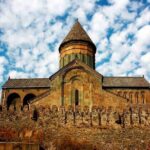





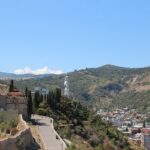
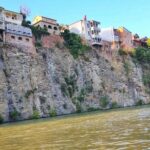




Old Tbilisi Walking Tours, compared.
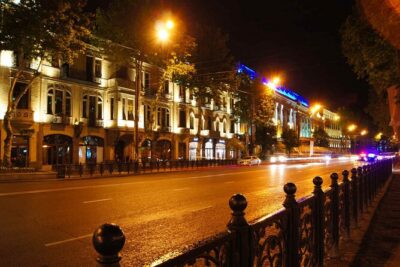 ★ 5.0Evening Walking & Talking Tour with Wine & Boat RideFrom $10572 reviews
 ★ 5.0Kakheti;City of Love Sighnaghi, Bodbe. KTW. Wine House Group tourFrom $16376 reviews
 ★ 5.0Old Tbilisi Highlights walking tour with wine & 10 tastingsFrom $15276 reviews
 ★ 5.0Old Tbilisi Tour: Private Walking Tour With Wine TastingFrom $39273 reviews
 ★ 5.0Private Tbilisi Food Tour: 9 Tastings Walk in Bohemian DistrictFrom $79227 reviews
 ★ 5.0Old and New City Guided Tour with 2 Cable Car RidesFrom $39176 reviews
 ★ 5.0Tbilisi Old Town Walking Tour with a Local GuideFrom $38168 reviews
 ★ 4.5City tour Tbilisi on red busFrom $20139 reviews
Browse the lists this tour appears in