
Reviewed · TUSHETI & KHEVSURETI WILDERNESS HIKES
Trekking Tour from Tusheti to Khevsureti via Atsunta Pass
That first step onto the trail feels like time travel. This is a remote 6-day trek through the Greater Caucasus with alpine meadows, snow-suggesting peaks, and medieval stone villages, plus a true off-grid stretch where it’s just you and hikers. I love the mix of old fortified villages (Omalo, Dartlo, Mutso, Shatili) and the wild “no humans, no hut” mountain days. A key drawback to consider: it’s serious hiking (about 72 km) and you’ll need solid fitness, plus you’ll be camping with only basic gear.
What makes it especially interesting is how the trip connects two regions that feel totally different once you cross the Atsunta Pass (up to 3431m). The logistics are built around that reality: 4WD gets you into Tusheti, then you shift from guesthouses to camping, and finally you pop out into Khevsureti and finish with transport back to Tbilisi.
I also like that the guiding team is a real part of the value. Names that come up for TrekGeorgia guides include Dito, Tato, Dimitri, Nutsa, and Misha, and the feedback highlights strong communication and clear local knowledge—useful when you’re moving through narrow gorges and mountain passes.
In This Review
- Key Things I’d Put on Your Radar
- Entering the Atsunta Corridor: Why This Trek Hooks You
- The Tusheti First Day: Omalo, Keselo Towers, and Mountain Road Views
- Stone Villages of Pirikiti: Dartlo, Kvavlo, Parsma, and Girevi
- Wilderness Days Above the Gorge: What It Means to Hike Without Huts
- Atsunta Pass (3431m): The Climb, the Pause, and the Payoff
- Into Khevsureti: Mutso’s Fortress Complex and Shatili’s Tower Town
- Price and Value: What You’re Actually Buying for $1,620
- What’s Included (and What You Still Need): Gear, Food, Sleep
- Practical Tips: Fitness, Luggage, Altitude, and Solo-Friendly Pace
- Should You Book This Tusheti to Khevsureti Trek?
- FAQ
- How high do you reach on this trek?
- How much walking is involved?
- What kinds of sleeping arrangements are included?
- Is camping gear provided?
- What gear should I bring?
- What’s the group size and minimum age?
- Where do we meet and what time does the tour start?
Key Things I’d Put on Your Radar
- Atsunta Pass to 3431m with panoramic stops and a real sense of altitude achievement
- Stone-tower village stops in Tusheti, before the trek gets truly wild
- A 3-day off-grid feel: no huts and very few people around
- Horses for luggage so you can hike with a lighter pack
- Small group size (max 15) which usually means smoother pacing and less crowding
- Meals and sleeping logistics handled with guesthouses plus camping equipment
Entering the Atsunta Corridor: Why This Trek Hooks You
This trek works because it does two things at once. You get the drama of mountain travel—gorges, ridges, high passes—then you slow down for stone villages that look built to last wars and weather.
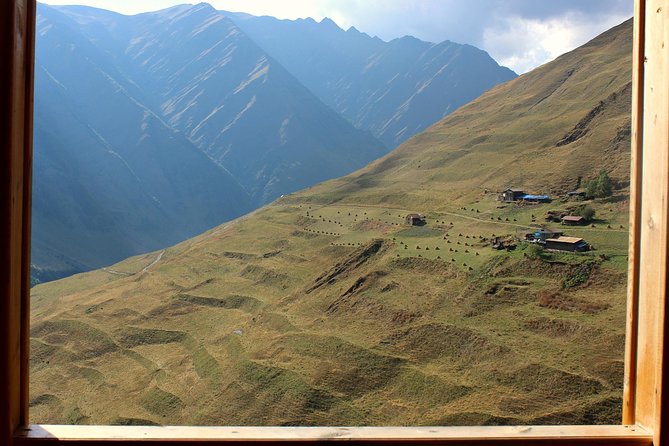
Tusheti starts with a lived-in feel. You travel by road into the highlands, visit medieval towers and stone neighborhoods, and learn the rhythm of small communities perched above valleys. Then you move into a shepherd-trail style of hiking where the scenery turns wilder and the human footprint gets thinner.
If you like your trips to feel like the mountains are the main character, you’ll probably love the way this route changes over time: village days first, wilderness days second, and fortress-village finale in Khevsureti.
More Tusheti and Khevsureti wilderness hikes we have walked from Tbilisi
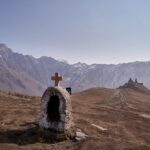
The Tusheti First Day: Omalo, Keselo Towers, and Mountain Road Views
Your day starts with a morning meeting at the Giant Bicycle monument in Rose Revolution Square, Tbilisi, with a 9:00 am start time. From there, the group is transferred toward Tusheti using a 4WD route, including a drive segment toward Alavani and onward to Omalo.
Along the way, you cross a mountainous pass at about 2850m. That matters because it sets expectations early: the air will feel different before you even begin real hiking, and you’re already entering a higher-elevation Georgia.
Once you reach Omalo, you explore the area around Omalo and Keselo Towers. These are the kind of structures that make you look around more than you might on a typical sightseeing stop. You can see why people built defensive towers where they did: sightlines over valleys, control points near paths, and stone that simply holds up.
Stone Villages of Pirikiti: Dartlo, Kvavlo, Parsma, and Girevi
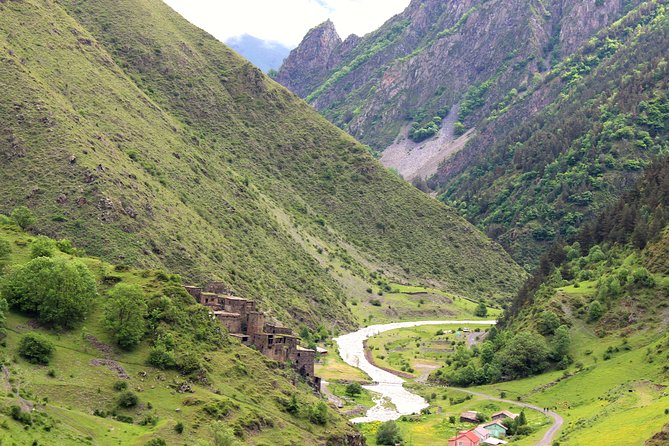
Tusheti is often described in terms of wild terrain, but the villages are what give the trek its heart. The route moves through places like Dartlo, Kvavlo, Parsma, and Girevi, with medieval stone houses and defensive buildings still shaping the scenery.
On the way to Dartlo, you hike along the Pirikiti side of the Tusheti valley. Dartlo is described as recently renovated, which means you’ll get an easier-to-walk approach compared with some abandoned stone ruins. The payoff is the classic Tusheti look: layered stone buildings, tower shapes, and a valley setting that makes the mountains feel close.
From Dartlo toward Kvavlo, the hike goes past mostly ruined towers and houses. The route is not just scenery; it’s a slow lesson in how settlements spread across hillsides with views over the Alazani River and surrounding peaks. The one-way walk is listed at about 3.2 km with an ascent of roughly 400 meters, taking around 2 hours one way.
Later, the trek continues upstream along the Pirikiti Alazani river gorge, stopping at villages such as Chesho and Parma (Parsma), then narrowing down toward Girevi. Girevi is reached via a narrow walking path that feels more like traveling through a corridor than moving through an open trail. That’s one reason this area feels so remote even before you start camping.
Practical note: these village-to-village days are long in total time because you’re driving, then hiking, then settling into guesthouse stays. Plan for a day that’s never only “the walk.”
Wilderness Days Above the Gorge: What It Means to Hike Without Huts
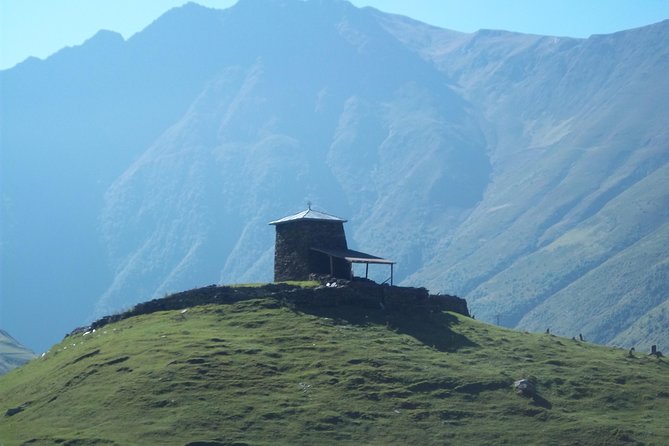
After the village sequence, the trek shifts into a shepherd-trail style. The trip language says it plainly: for about three days there are no huts, no humans except hikers. That’s not just a romantic detail—it changes how you should prepare.
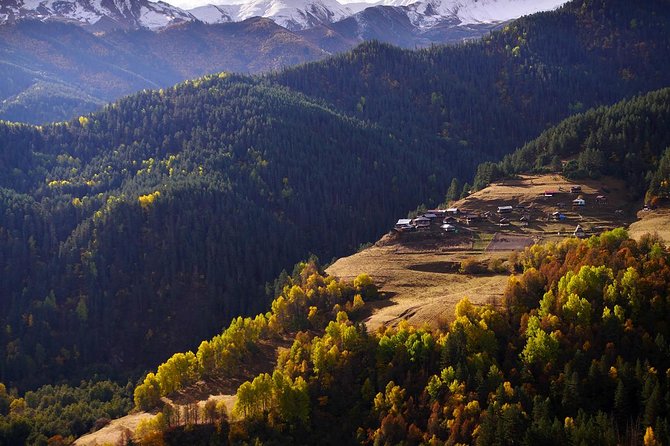
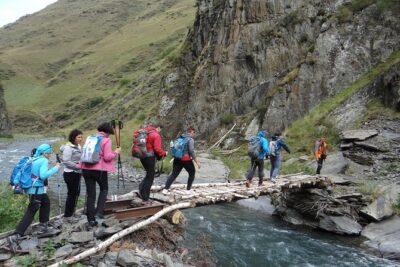
You’ll camp in areas described as open fields, alpine meadows, rock stones, and gorge terrain. The route includes crossings of small mountainous rivers and travel near ruined settlements like Chontio. This is where you start feeling the difference between a maintained hiking day and a wilderness-feeling trek.
Even though there are no huts, the tour includes basic camping equipment: tents, sleeping bags, sleeping mats, and cooking gear. That’s a big deal for value because you’re not also forced to rent or buy the whole camping setup just to do one trip.
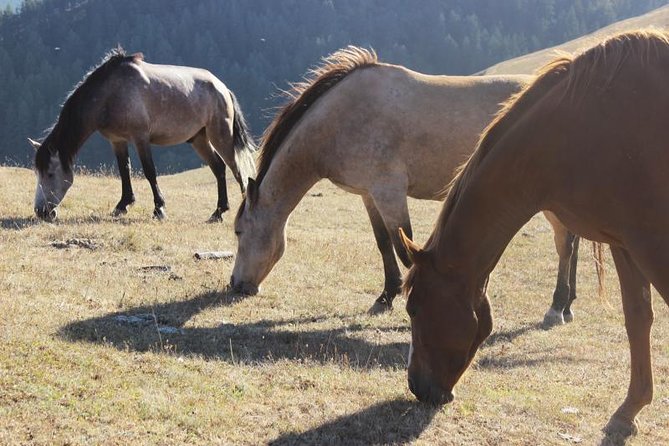
You’ll also use horses for luggage transportation, which matters most on wilderness stretches. Your hiking pack won’t be a full-on expedition kit, but you’ll still want to organize your essentials carefully, because you won’t have a shop or refill point when you’re deep in.
If you’re the type of traveler who likes quiet mornings, long pauses for photos, and days where you hear your own footsteps more than other voices, this part is where the trek really earns its “most stunning” reputation.
Atsunta Pass (3431m): The Climb, the Pause, and the Payoff
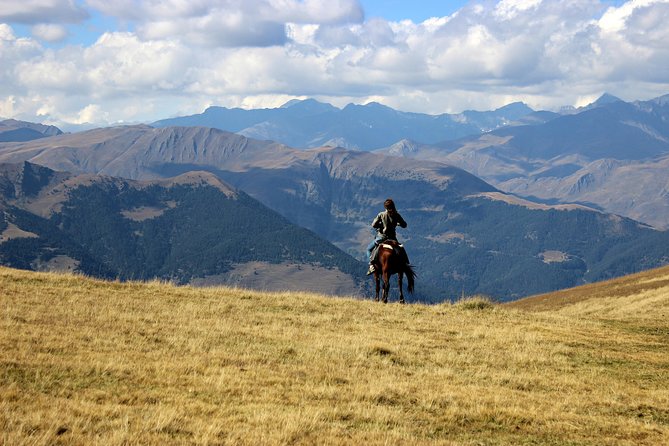
This is the moment most people remember. You start the toughest segment after breakfast, moving through the gorge above Girevi, crossing small rivers, and passing ruined village Chontio before reaching a stopping area near Kvakhidi.
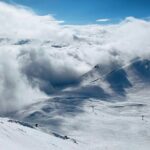
From there, the route becomes open: alpine meadows, green fields (when conditions allow), and rock-strewn terrain. It’s where you see the difference between mountain “walking” and mountain “travelling.” The pass isn’t only height—it’s the line where the terrain stops feeling sheltered.
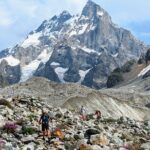
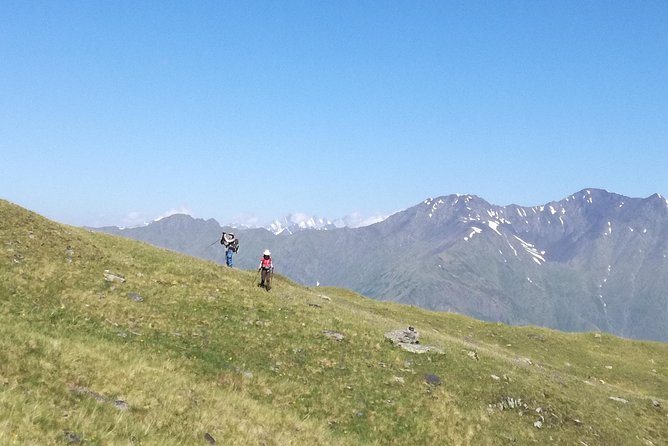
The high point is listed at 3431 meters, and you’ll reach Atsunta Pass for snacks and panoramic views. This is the part where pacing matters. Even if you feel good, don’t rush the ascent. In high terrain, breathing rate and steady steps beat pushing to prove something.
After the pass, you descend toward Khidotani ridge and camp again in open alpine meadow conditions. That’s a practical detail you shouldn’t ignore: the weather can shift quickly, especially as you move away from the comfort of valleys.
So yes, it’s hard. But it’s also honest. You’ll learn your own rhythm in a way that a sit-and-watch viewpoint never teaches.
More Caucasus hikes and treks we have laced up for near Tbilisi
Into Khevsureti: Mutso’s Fortress Complex and Shatili’s Tower Town
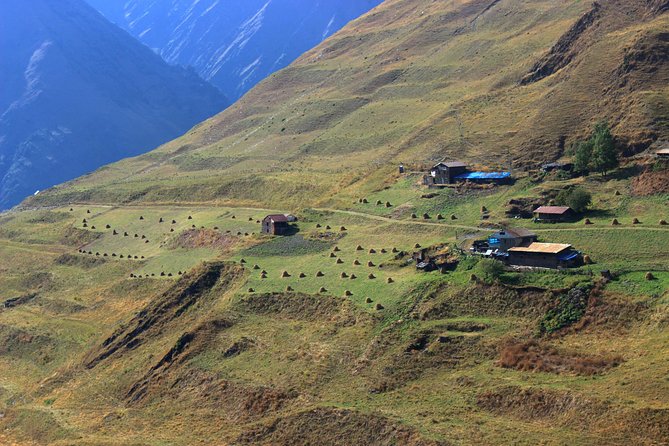
Crossing into Khevsureti changes the hiking flavor. The route description notes that the pathway becomes easier and, for several kilometers, follows a car road. That’s a relief after high, narrow, wilderness-feeling terrain, and it helps explain why the day feels like a transition rather than another grind.
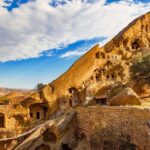
You start descending into a narrow gorge and reach the first inhabited area in the region at Khoni. Then you hike to Mutso village, which is largely abandoned but still impressive for architecture and surrounding scenery. Mutso’s fortress complex is described as recently renovated, so the towers and fortification structures are more legible than you might expect in a place with fewer residents.
You can also take a detour to the Mutso fortress complex (a listed extra walk of about 2 km). This is one of those choices that’s worth considering if your legs still feel okay. Fortresses like this reward patience—slow walking, looking up, and understanding how stone shapes defensibility.
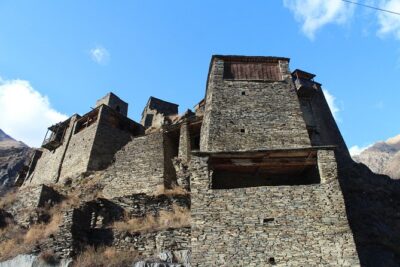
After that, your transport driver waits near Mutso. You drive to Shatili, a spectacular medieval stone complex known for towers and houses built on rocky ridges above narrow gorges. Shatili is the kind of place where your camera will run out of space before your curiosity does.
The trek then ends with transport back toward Tbilisi, and the activity finishes back at the original meeting point area.
Price and Value: What You’re Actually Buying for $1,620
At $1,620 per person for about six days, the value comes from the full package—not just the hiking.
You’re paying for:
- Expert leadership from experienced adventure guides (and group size stays capped at 15)
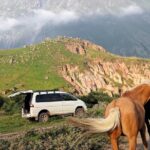
- 4WD transfers from Tbilisi to the Tusheti starting area
- Transport near the finish from Mutso to Shatili, then onward to Tbilisi
- Multiple nights of lodging (guesthouses in Omalo, Dartlo, Girevi, and Shatili)
- Camping equipment for the wilderness stretch
- Horses for luggage
- Meals: 6 lunches, 5 breakfasts, and 6 dinners included
This matters because the most expensive part of remote trekking isn’t always the guides. It’s the logistics: getting you into the mountains, moving supplies, arranging lodging in small settlements, and handling meals in areas that don’t have typical services.
If you were doing this independently, you’d likely spend time and money just figuring out transport, gear, and local support. Here, those pieces are assembled so you can focus on the walk and the views.
The one thing to watch is drinks: they’re not included. Bring a plan for hydration and any non-food items you’ll want during long hiking days.
What’s Included (and What You Still Need): Gear, Food, Sleep
The tour covers a lot of the “hard planning” work for you. Nights are split between guesthouses and camping:
- Omalo guesthouse: private facilities
- Dartlo, Girevi, Shatili guesthouses: shared facilities
- Wilderness nights: camping with tents, sleeping bags, sleeping mats, and cooking gear
Meals are scheduled across the trek: breakfasts, lunches, and dinners are included in the totals listed. That’s a comfort because you’re not constantly wondering when you’ll find food, especially during the pass and gorge segments.
What’s not included is also worth noting:
- Trekking gear such as your backpack and trekking poles
- Drinks
- The last overnight in Tbilisi (the trek ends after transport; you’d book your own city night if you need one)
If you’re comparing this to other treks, this inclusion set can be a big swing. Camping gear is often a hidden cost in self-guided or budget group options.
Practical Tips: Fitness, Luggage, Altitude, and Solo-Friendly Pace
This tour isn’t marketed as casual. The requirements say you should have a strong physical fitness level, and the minimum age is 14.
You’ll hike a total of about 72 km over six days, and the total day times are long because of driving segments and hiking segments. Even when a day includes an easier pathway segment, it’s still part of a trek rhythm.
Altitude is part of the deal. You’ll cross the Atsunta Pass area around 3431m, and earlier the road crossing sits around 2850m. If you’re prone to altitude issues, build in extra caution before you commit. The best preparation is sensible pacing: steady steps, breaks when you need them, and staying hydrated.
Luggage is handled thoughtfully. Each traveler is allowed a maximum of 1 suitcase and 1 carry-on bag, and oversized or excessive luggage might have restrictions—so ask ahead if you’re bringing unusual items. Your hiking load is supported by horses for luggage transportation, but you still need access to your essentials.
Group size is small (max 15), and solo travelers are well served by that. A smaller group usually means the guide can slow down for questions and keep the day’s pace aligned with the terrain instead of rushing to manage a bigger crowd.
Should You Book This Tusheti to Khevsureti Trek?
Book it if you want a trek that feels real: towers in stone villages first, then wilderness with camping and very few people around, then a dramatic finish in Shatili’s ridge-top fortress town.
Don’t book it if you’re looking for an easy vacation with lots of downtime, or if you don’t want to camp. This is a working hiking trip with serious walking and high points, and it asks you to show up fit and prepared.
If you’re the kind of traveler who enjoys quiet mornings, gorge paths, and mountain villages that make you stop and look up at the stone, this route is a strong match—especially with the guided structure, camping gear support, and luggage help built into the cost.
FAQ
How high do you reach on this trek?
You cross Atsunta Pass at about 3400m, and the highest point on the trip is listed as 3431 meters above sea level.
How much walking is involved?
The tour notes that about 72 km of walking is involved over the six days.
What kinds of sleeping arrangements are included?
You get guesthouse overnights in Omalo (private facilities) and Dartlo, Girevi, and Shatili (shared facilities), plus camping during the wilderness section.
Is camping gear provided?
Yes. Basic camping equipment is included: tents, sleeping bags, sleeping mats, and cooking gear.
What gear should I bring?
You’ll need to bring trekking gear such as your backpack and trekking poles, since these are not included.
What’s the group size and minimum age?
The tour has a maximum of 15 travelers, and the minimum age is 14 years.
Where do we meet and what time does the tour start?
The meeting point is the Giant Bicycle monument at Rose Revolution Square in Tbilisi, and the start time is 9:00 am.
More Tbilisi Tours and Georgian Day Trips



More from Our Tbilisi Review Desk
More Tusheti and Khevsureti Wilderness Hikes
Not quite your thing? More Tbilisi tours and day trips from our review desk



Tusheti & Khevsureti Wilderness Hikes, compared.
 ★ 5.03 Day Tusheti Tour Explore Unspoiled WildernessFrom $33528 reviews
 ★ 5.0day trip to Shatili, Khevsureti, Mutso, Ananuri.From $15021 reviews
 ★ 5.0Five days tour to Khevsureti (Abudelauri lakes) & Kazbegi with hikes.From $10014 reviews
 ★ 4.51 day hiking in Birtvisi Canyon from TbilisiFrom $804 reviews
 ★ 5.0Lagodekhi – A day hiking from TbilisiFrom $954 reviews
 ★ 4.57-day hiking expedition to Tusheti through the Atsunta passFrom $1,1903 reviews
Browse the lists this tour appears in