
Reviewed · SVANETI, MESTIA & USHGULI TREKS
8-Day Trekking Group Tour in Svaneti
Tower villages and real mountain effort await in Svaneti. I love the expert, attentive guiding (names you may hear a lot include Gogi, Dito, and Nugo) and the home-style meals that make long hike days feel manageable. One thing to plan for: you’re walking about 58 km total, with a couple of serious elevation sections and some nights in shared guesthouse facilities.
If you like your travel with purpose, this trip mixes big scenery with small-community culture. You’ll spend days moving through Upper Svaneti’s villages—tower houses, old churches, and river valleys—then finish with a visit to key Ushguli heritage sites.
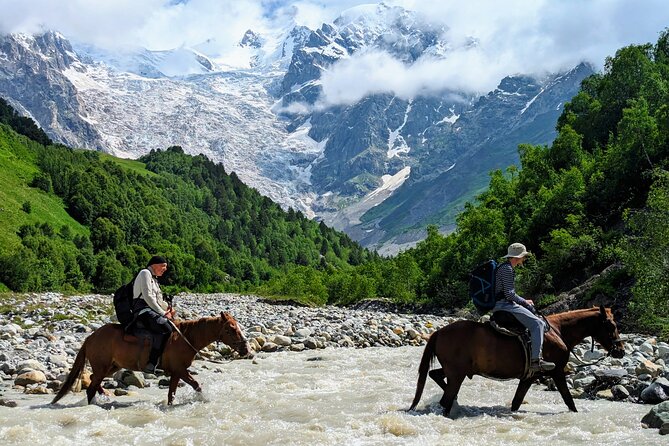
You start early (7:00 am in Tbilisi), and you’ll ride in an air-conditioned vehicle between hiking days. I also like that the route includes a safety-focused horse crossing when the Adishi river gets roaring, not a do-it-yourself “hope for the best” moment.
In This Review
- Key things I’d circle before you go
- Why Svaneti feels different from other Georgian treks
- The drive days: when Georgia sets the stage
- Day 1: Tbilisi to Upper Svaneti via Zugdidi and the Enguri Dam
- Day-by-day hiking: what you’ll actually see and why it matters
- Day 2: Mazeri hike along the Dolra River and mineral springs
- Day 3: Guli Pass to Koruldi Lakes with the Ushba-area feel
- Day 4: Zhabeshi to Mulakhi community on an easy-to-follow route
- Day 5: Adishi village beneath Tetnuldi—birch, rhododendron, and old towers
- Day 6: Adishi river crossing by horse, then Chkhunderi Pass and Khalde
- Day 7: Traditional Svan villages to Ushguli—plus museum and a medieval church
- Day 8: Mestia back to Tbilisi with a Chalaadi glacier stop
- Lodging and food: what’s included (and what isn’t)
- Guides and group dynamics: why safety feels real here
- How hard is it, really?
- What to bring so days don’t feel harder than they should
- Price and value: is $1,340 worth it?
- Should you book this Svaneti trek?
- FAQ
- What time does the tour start in Tbilisi?
- Where do I meet and where does it end?
- How much walking is involved?
- What level of fitness do I need?
- Are lunches included?
- What meals and snacks are included?
- What are the lodging conditions like?
- Is trekking gear required, and can it be rented?
- Do we visit Ushguli’s cultural sites?
- What happens if weather is bad?
Key things I’d circle before you go
- Small group size (up to 15) keeps hiking days feeling human, not like a conveyor belt
- English-speaking leadership with local route know-how and careful pacing
- Guesthouse variety: private facilities in Mazeri and Mestia, plus shared-facility nights later on
- Big Svaneti sights on the trail: Koruldi Lakes, Chkhunderi Pass, glacier stops, and Ushguli towers
- Included meals and snacks so you’re not hunting for food mid-trek
- Luggage transport by car during hiking days so you can hike with a lighter daypack
Why Svaneti feels different from other Georgian treks
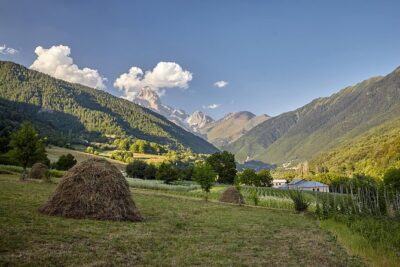
Svaneti is not just “mountains plus hiking.” It’s mountains with people still living in the middle of it—defensive tower houses, stone villages, and churches that look like they’ve been there forever.
This tour is built for that contrast. You hike long enough to earn the views, then you come down to guesthouses that keep things simple and practical. That rhythm is the whole point: active days outdoors, plus real village life when you’re done walking.
More Svaneti treks through Mestia and Ushguli we have logged from Tbilisi
The drive days: when Georgia sets the stage
You don’t spend every minute on foot. Day 1 is a long travel day out of Tbilisi, but it’s packed with meaningful stops that help you understand what you’re hiking through.
Day 1: Tbilisi to Upper Svaneti via Zugdidi and the Enguri Dam
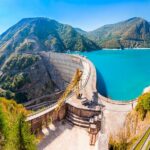
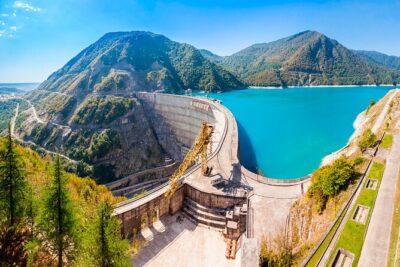
You start with a morning departure and then break up the journey with two big context stops. First is a visit to Dadiani Palace in Zugdidi, tied to local lords who ruled a major part of western Georgia. Then you head to the Enguri Arch Dam—one of the highest arch dams in the world (271.5 meters)—before continuing into Upper Svaneti.
The final segment lands you in Mazeri, a solid base village for what comes next. This day is mostly about getting oriented to Svaneti’s geography and culture, not fitness.
Day-by-day hiking: what you’ll actually see and why it matters
Day 2: Mazeri hike along the Dolra River and mineral springs
Today is your “wake up your legs” day. You start in Mazeri and follow the Dolra River upstream. The trail moves past mineral water springs, a small church in a pretty setting, and open meadows before the path climbs gradually through pine forest.
You’ll also reach a border post area before making the final ascent. Then you turn back and return to Mazeri. Expect a mix of slow climbing, forest walking, and those little moments—springs, churches, and views that feel earned rather than staged.
More Caucasus hikes and treks we have laced up for near Tbilisi
Day 3: Guli Pass to Koruldi Lakes with the Ushba-area feel
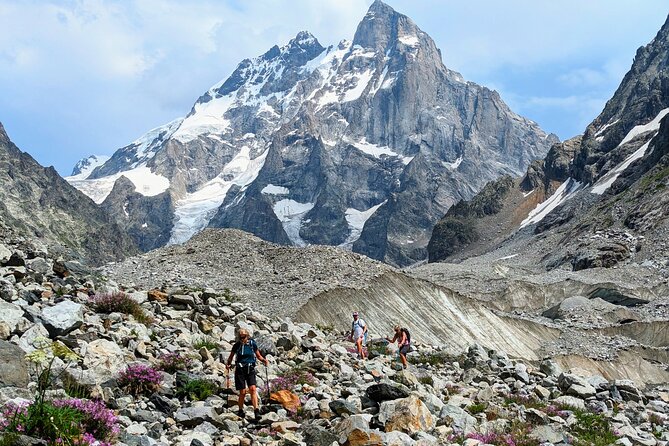
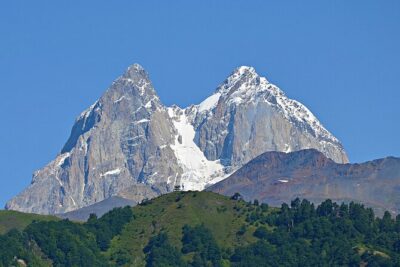
Day 3 is one of the bigger effort days. You hike to Koruldi Lakes through Guli Pass (about 2,960 m). The climb takes good stamina, and the payoff is an alpine-style lake setting surrounded by dramatic peaks—often including views toward Ushba.
After crossing the high point, you descend into another valley and reach the lakes. This is the kind of day where a steady pace matters more than speed. Guides on this route are known for keeping people moving safely, and that matters when you’re at altitude and tired.
Day 4: Zhabeshi to Mulakhi community on an easy-to-follow route
By Day 4, the trek “resets” into easier rhythm. You start in Zhabeshi and hike toward the Mulakhi community. The route is described as easy: it follows an off-road car line at times and has a well-marked trail.
Why this day is valuable: it’s where you can focus on village textures—stone paths, local scenery, and the slower pace of mountain community life—without feeling like you’re always fighting the trail.
Day 5: Adishi village beneath Tetnuldi—birch, rhododendron, and old towers
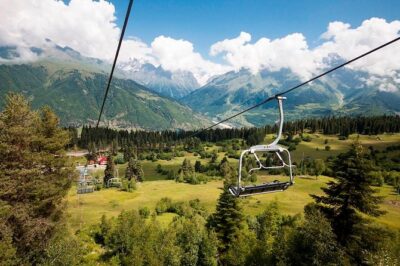
Day 5 pushes back into “real trekking,” but with scenery variety. After breakfast you move up toward the slopes of Tetnuldi, passing a ski resort area. Then you descend into birch forests and rhododendron bushes, crossing past a small mountainous river and eventually reaching alpine meadows.
In front of you sits Adishi village, known for stone towers and centuries-old houses, set below Tetnuldi. You’re not just passing through; the village setting—below the mountain, by a roaring river, and framed by high peaks—is part of why this trek feels special.
Day 6: Adishi river crossing by horse, then Chkhunderi Pass and Khalde
This is another standout day, and it’s also where the tour’s safety approach becomes practical.
You follow upstream toward the river and then cross the Adishi river—a section that’s described as roaring. For safety, you get on horseback for the crossing. After that, you climb up to Chkhunderi Pass (about 2,655 m) for panoramic views and lunch at the top ridge.
Then you descend into the Khaldechala river valley and walk toward Khalde village, which was destroyed in the 19th century by Russian soldiers. From there, you continue by off-road transport to Iprali.
This day blends mountain effort with historical scars in the landscape. It’s one of those “you understand the region, not just the view” moments.
Day 7: Traditional Svan villages to Ushguli—plus museum and a medieval church
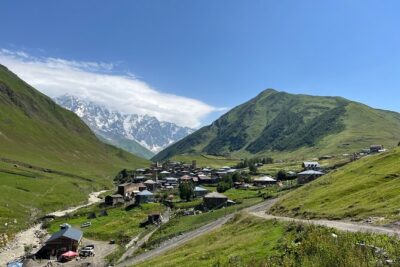
Day 7 is your cultural-and-scenery payoff. You trek through traditional Svani villages, passing places like Kala and Davberi, then you reach Ushguli from above. Ushguli sits at the foot of Mount Shkara near the confluence of the Enguri and Kvishiri rivers.
Then comes the part you won’t get if you only do a fast day trip: you visit the Ushguli Ethnographic Museum housed in a 12th-century old Svanetian tower-house. You also see the Lamaria Church (dedicated to the Assumption of the Mother of God). After all that, you overnight back in Mestia.
This is also where you’ll feel the highest permanent settlement in Europe marker (Ushguli is given as about 2,200 m)—not because you’re doing a lecture, but because the altitude and the tight cluster of stone towers make you slow down and look.
Day 8: Mestia back to Tbilisi with a Chalaadi glacier stop
Your last day is mostly a travel-and-finish day, but it doesn’t feel empty. After breakfast, you head back toward Tbilisi and stop at Chalaadi Glacier, following the Mestiachala River upstream. After about 1.5 km, you reach the finish point where the river is born, then continue on to Tbilisi.
You finish back at the original meeting point area in Tbilisi, so you’re not left wondering where you’ll end up.
Lodging and food: what’s included (and what isn’t)
This is one of the best “value signals” in the package. You get 2 nights in Mazeri with private facilities, then 2 nights in Mestia with private facilities, and three additional nights in Zhabeshi, Adishi, and Iprali where facilities are shared.
Breakfast is included 7 times, and you get lunch 6 times and dinner 7 times, plus bottled water and snacks during the trek. What you don’t get: lunch is listed as not included overall, but the day plan includes lunches for most hiking days. In practice, you’ll want to confirm how that’s handled for your departure dates. What’s clearly not included is alcoholic drinks, available to purchase.
From guide-driven experience on this route, guesthouses tend to be simple but functional. One past hiker note I keep in mind: hot water isn’t guaranteed everywhere. You’ll be outdoors most of the day, so this is less about luxury and more about managing expectations.
Guides and group dynamics: why safety feels real here
The strongest theme from the people who’ve done this trek is how professional and caring the guides are. Names you may meet include Gogi and Dito, and you might also hear about Nugo depending on your group.
What you can count on in your day-to-day experience:
- pacing that aims to match hikers’ ability levels
- careful route choices and attention to safety
- local storytelling and practical explanations, not just “follow me” leadership
- punctual start behavior (important when you’re leaving at 7:00 am)
Group size is limited to a maximum of 15 travelers, which helps you get answers, not just silence. That matters on long hiking days when questions come up.
How hard is it, really?
You’re hiking around 58 km in total over the 8 days. The tour says moderate physical fitness is needed, and that checks out when you look at the elevation points:
- Guli Pass around 2,960 m
- Chkhunderi Pass around 2,655 m
Even when some days are labeled easy, you’re still in mountain terrain. Bring a realistic mindset: slow and steady beats “fast and heroic.” If you’re new to altitude-style hiking, you’ll want to treat this as a training trip, not a test.
Also plan for weather. This experience requires good weather, and the route may adjust if conditions are unsafe.
What to bring so days don’t feel harder than they should
The tour doesn’t include your trekking gear (like poles and backpacks), but you can rent them. If you already own gear, you’ll likely be happier with your own fit and comfort.
Pack the basics like you would for a multi-day mountain trek:
- footwear you trust for rocky and uneven ground
- a daypack (light but secure)
- layers for changing temperatures in higher passes
- something for rain or wind, since mountain weather can change fast
- a water strategy (you’ll have bottled water and snacks included, but you’ll still want to manage hydration)
And remember: luggage is transported by car during hiking days, so you don’t need to haul everything on your back.
Price and value: is $1,340 worth it?
At $1,340 per person, this is not a budget stroll. But it includes a lot of costs that usually blow up a trek’s total price: expert leadership, transportation, guesthouse stays, and most meals across the week.
You’re paying for:
- structured multi-day guiding and route safety
- lodging in multiple villages (with private and shared facility nights)
- logistics that move both people and luggage
- entry to or access for cultural stops (like the museum and church visits included in the route)
If you tried to replicate this independently, you’d still need guides, local transport between trailheads, and overnight planning. The price feels most fair if you value not having to manage those details yourself.
The one cost to keep in mind is that lunch is listed as not included in the general notes, while lunches show up across the day plan. Make sure you know what’s included on your date, so there are no surprises when you’re hungry.
Should you book this Svaneti trek?
Book it if you want mountain hiking with a real human scale: tower villages, old churches, lake viewpoints, and museum time at Ushguli—guided by people who keep safety and pacing in mind. It’s also a good match if you like small-group travel (up to 15) and you’re fine with guesthouses that are more practical than fancy.
Skip it (or switch dates/consider a shorter option) if you expect an easy walk every day, hate early starts, or need private facilities every single night. With about 58 km on the feet and a couple of major pass days, you’ll want to show up in steady hiking shape.
If you’re the kind of traveler who cares about how places got their shape—dams, defensive towers, river valleys, and the stories tied to them—this is a strong way to see Svaneti without feeling rushed.
FAQ
What time does the tour start in Tbilisi?
The meeting time is 7:00 am at the Giant Bicycle monument at Rose Revolution Square in Tbilisi.
Where do I meet and where does it end?
You start at the Giant Bicycle monument in Tbilisi and the activity ends back at the same meeting point.
How much walking is involved?
The tour notes that about 58 km of walking is involved over the 8 days.
What level of fitness do I need?
The tour advises a moderate physical fitness level, and it includes trekking through mountain passes with long hiking days.
Are lunches included?
The included list shows lunches are included 6 times, while the general notes list lunch as not included. You should confirm how lunch is handled for your exact dates.
What meals and snacks are included?
Bottled water and snacks are included, along with breakfast (7), lunch (6), and dinner (7).
What are the lodging conditions like?
You’ll stay in guesthouses with private facilities on 2 nights in Mazeri and 2 nights in Mestia. You’ll have shared facilities on nights in Zhabeshi, Adishi, and Iprali.
Is trekking gear required, and can it be rented?
Trekking gear like trekking poles and backpacks is not included, but it can be rented.
Do we visit Ushguli’s cultural sites?
Yes. You visit the Ushguli Ethnographic Museum in a 12th-century tower-house and also visit the Lamaria Church.
What happens if weather is bad?
The experience requires good weather. If it’s canceled due to poor weather, you’ll be offered a different date or a full refund.
More Tbilisi Tours and Georgian Day Trips


More from Our Tbilisi Review Desk
More Svaneti Treks through Mestia and Ushguli
Not quite your thing? More Tbilisi tours and day trips from our review desk


Svaneti, Mestia & Ushguli Treks, compared.
 ★ 5.0Private five days tour to Svaneti-Mestia, Ushguli, Becho,ChalaadiFrom $5021 reviews
 ★ 4.03-Day Private Mestia and Ushguli Tour from TbilisiFrom $46010 reviews
 ★ 4.53-Day Tour in SvanetiFrom $33610 reviews
 ★ 5.04-Day Tour in Svaneti – Mestia/UshguliFrom $4807 reviews
 ★ 5.0Private tour to Mestia – Ushguli – Svaneti – the magical mountainsFrom $7997 reviews
 ★ 5.0From Tbilisi: Svaneti 4 Days Private tour (Mestia, Ushguli)From $4806 reviews
Browse the lists this tour appears in