

Reviewed · OLD TBILISI WALKING TOURS
City tour Tbilisi on red bus
Tbilisi in a single seated loop. This hop-on hop-off Red Line tour gives you an efficient overview of the city with headsets, so you can follow what you’re passing even if you’re not great at reading street signs. I especially like the built-in headset audio (14 languages) and the simple approach for getting your bearings fast, with big landmarks like Peace Bridge and Freedom Square on the route. One thing to keep in mind: the tour is timed tight (about 1.5 hours), so if you’re hoping for lots of stop-and-stare time at every photo spot, you may feel a bit rushed.
Here’s the practical value: you pay for orientation plus flexibility. With a 24-hour ticket, you can return later for a closer look at the parts you like most. Price is $20 per person, which is usually fair for the amount of ground covered—just don’t expect this to replace a good walking day in the Old Town.
In This Review
- Key Things to Know Before You Ride the Red Line
- A 90-Minute Orientation Loop on Tbilisi’s Red Line
- How Hop-On Hop-Off Works With a 24-Hour Ticket
- Headsets and Audio Guides: What You’ll Hear (and What to Expect)
- The Route Past Big Tbilisi Sights You’ll Actually Recognize
- Dry Bridge Market, Meidan Bazaar, and Metekhi Cathedral: Quick Passes You Can Turn Into Plans
- Comfort, Timing, and Group Size: Getting the Most From the Ride
- Price and Value: Is $20 Worth Your Time?
- Who This Tbilisi Red Bus Tour Fits Best
- Should You Book This Tbilisi Red Bus Tour?
- FAQ
- What’s the duration of the Tbilisi Red Line city tour?
- Is it English-friendly, and do I get headsets?
- Is this a hop-on hop-off tour?
- Where do I start the tour?
- What sights are included on the route?
- What’s included in the price, and what’s not?
- Can I cancel for a refund?
Key Things to Know Before You Ride the Red Line

- Headsets are included, so you can hear the guide clearly while the bus rolls between sights
- Audio runs in 14 languages, which helps even when your group includes different nationalities
- You can hop off and come back, using the Red Line as your moving base
- It’s built for orientation, passing major areas from Old Tbilisi walls to Rustaveli Avenue
- Small-ish group size for a big city, with a maximum of 50 travelers
- Plan for timing wiggles, because delays can happen on busy streets and at stops
A 90-Minute Orientation Loop on Tbilisi’s Red Line

This tour is at its best as your first-day tool. You start near 44 Kote Afkhazi St (0105), and you end back at the same meeting point. The total riding time is about 1 hour 30 minutes, and the route is designed to show you a wide range of Tbilisi in one shot: Old Town defensive walls, Meidan Square, the sulfur bath district, the Mtkvari River area, and the corridor that leads toward major downtown plazas and boulevards.
Think of it like a city map you can sit on. You’re not just collecting views—you’re learning where things are. Once you’ve seen where Peace Bridge sits, how Rustaveli Avenue stretches out, and where Freedom Square fits into the layout, your next choices get easier. You’ll know whether something feels worth walking to from your hotel, or whether you should save your energy for a specific neighborhood.
Also, because it’s double-decker and Red Line branded, it’s simple to spot. The tour is offered with English, and many parts run with an audio guide. That combination matters if you want background info without needing a constant back-and-forth with your guide.
One more detail that’s surprisingly useful: you’re moving along the city’s biggest sight “spokes.” That means even if you don’t hop off, you still come away with a clearer mental picture of Tbilisi’s geography and the spread between old and modern areas.
More Old Tbilisi walking tours through the balconied backstreets



How Hop-On Hop-Off Works With a 24-Hour Ticket
You get a 24-hour ticket, so you’re not forced to do everything in one single ride. The tour itself is short, but the ticket is longer, which is where the value lives. The way to use that wisely: do the first loop for orientation, then return later for the one or two places you actually want to linger at.
The practical trick is deciding what you’re really trying to get out of the hop-off part. If your goal is photos, you might hop off where you see something you like—Peace Bridge, the downtown squares, or the cathedral area—and then hop back on when you want to keep moving. If your goal is learning, you’ll stay on longer and listen closely with the headsets, using the first pass as your guide for where to walk next.
Just be aware: the tour is structured, and timing can affect how free the experience feels at each stop. On rainy days, you may end up waiting for the next bus rather than having unlimited time on the street. So bring a small dose of flexibility. If the weather is bad, focus on one quick objective when you hop off, then get back on.
If you’re traveling with kids or you’re limited by mobility, this approach can still work well. You’re not committing to long walks. You can do short transfers by bus, then use the time on foot only where it’s worth it.
Headsets and Audio Guides: What You’ll Hear (and What to Expect)
You’ll get headsets for the guide audio, and the audio guide covers 14 languages. This is a big deal in Tbilisi because the city mixes layered neighborhoods, architecture styles, and river-and-hill geography. Being able to hear what you’re passing turns the ride into an actual lesson, not just a drive-by bus tour.
In English, you’ll likely hear the guide’s narration as the bus rolls by key sights. There are also cases where the tour is operated by a multilingual guide, which can help if you want to ask a question at the start or during the ride. That matters because not every rider wants to rely only on audio. If you enjoy conversation, being able to communicate in English is a comfort.
Now for the balanced expectation. This is not a museum-grade lecture. Some people want more detailed explanation at every stop, and if you’re that type of visitor, you might feel the narration is more of a pointer than a deep storytelling session. My practical advice: use the tour to identify what to research later. You’ll get the names and the locations—then you can decide what deserves your full attention on foot.
If the bus is moving quickly through busy areas, the audio becomes even more important. Put the headset on right away. And if you’re sitting on the top deck, keep an ear on the narration while you scan for landmarks ahead of you—your brain will connect the description to the view much faster.
The Route Past Big Tbilisi Sights You’ll Actually Recognize
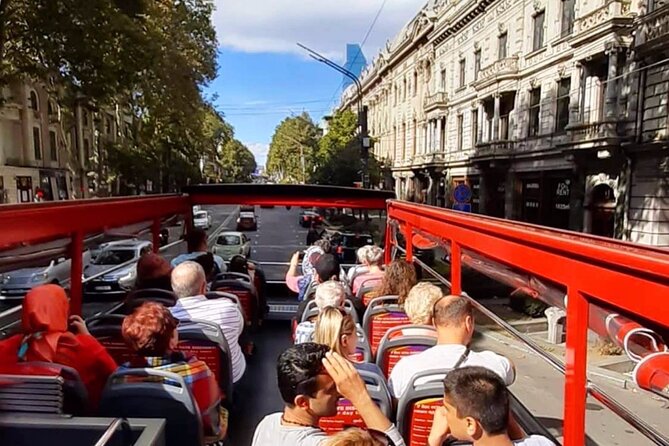
The Red Line route is built around recognizable anchors. As the bus moves, you’ll pass through (or near) the old defensive areas of the historic center, then toward major squares and corridors that define downtown. Here are the “you’ll remember these later” stops and zones the route is designed to cover:
Old part of the city with defensive walls
This is where Tbilisi feels layered and built for protection. Even from a bus window, you’ll get a sense of how the city developed around the older parts and how steep or tucked some streets are.
Meidan Square
It’s a central reference point. Once you’ve seen it from the bus route, you’ll understand why it pops up in directions and why it connects different directions of travel.
Sulfur bath district
Tbilisi is famous for its baths, and the bus route helps you place the bath area in the wider city layout. You don’t need to book a bath experience from the bus tour itself—this is more about seeing where it is so you can plan if you want to go later.
Mtkvari River corridor
The river is a major geography driver in Tbilisi. Seeing it from the bus gives you a quick “map lesson” about where water sits in relation to the downtown streets.
Metekhi wall and cathedral area
You’ll be guided toward this part of the city visually, and you’ll pass key points connected to the Metekhi zone. If you’re interested in religious architecture and viewpoints, this area is a smart place to consider hopping off later for photos.
Dry Bridge and the Flea Market area
This is one of the places people keep coming back for: browsing, shopping, and walking between stalls. The bus pass doesn’t replace wandering the market, but it tells you where the market sits relative to everything else.
Rike Park and Peace Bridge
Peace Bridge is a landmark that helps you orient your next day. Seeing it from the bus often makes it easier to understand why people like to pair it with a walk along the river area.
Freedom Square, Rustaveli Avenue, Heroes Square, Agmashenebeli Avenue
These are the big-city artery stops—squares and avenues that define the feel of modern Tbilisi and the connections between neighborhoods. If you want a sense of what’s central versus what’s more out toward other directions, this is where you’ll learn it quickly.
A helpful way to ride: keep your phone camera ready, but also keep your headset volume at a level where you can still hear narration clearly. You’ll remember better when you can connect what you heard with what you saw.
Dry Bridge Market, Meidan Bazaar, and Metekhi Cathedral: Quick Passes You Can Turn Into Plans
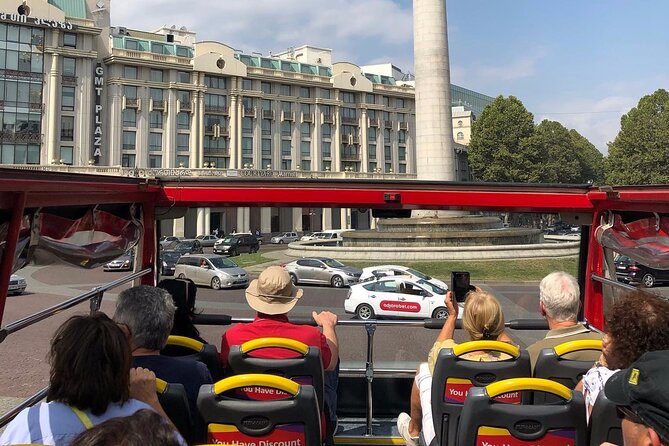
Some key areas are passed by rather than treated as long stops. That doesn’t make them useless; it makes them efficient.
Meidan Bazaar (passed by)
If you’re the type who likes market atmosphere, the bus helps you locate the area and gauge whether it’s worth spending time. Use the first ride to decide if you want to come back with more time.
Dry Bridge Market (passed by)
This market area is a prime candidate for a follow-up. Even if you don’t hop off during the bus tour, you’ll know where it is. If you do hop off, think of it as a browse-and-choose kind of plan, not a quick photo stop.
Metekhi Cathedral (passed by)
This is an area you’ll likely want to revisit if you care about viewpoints and architecture. From the bus you get the context; on foot you can spend time without the speed of traffic controlling your pace.
Here’s the trade-off. Because these are brief passes, you won’t get a slow, cinematic look. But you can turn the bus tour into a two-step strategy: (1) identify what you love from the road, then (2) return on your own time for the part that actually pulls you in.




Comfort, Timing, and Group Size: Getting the Most From the Ride
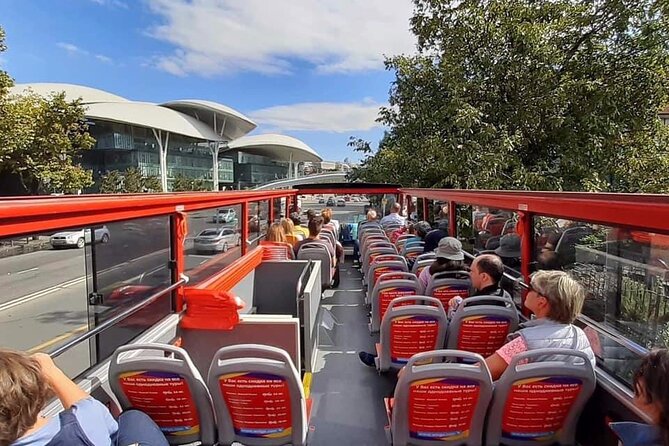
This isn’t a crowded coach experience in most cases. The tour caps at 50 travelers, and the experience uses headsets, which helps everyone follow the narration. In general, that supports a calmer ride than you’d expect from a sightseeing bus.
Still, timing can vary. The tour is scheduled for about 1 hour 30 minutes, but delays can happen due to traffic, parking, or where the bus needs to maneuver. One reason to keep expectations flexible: if you’re planning a timed dinner or a specific attraction right after, give yourself a buffer.
Another practical point: the bus can move quickly through sections between sights. If you’re trying to read every sign or take perfect photos, you’ll feel the motion. The fix is simple: focus on a few key photos at major landmarks, then let the headset do the detailed work.
If you’re traveling with mobility limits, this tour can be a smart way to see the city without turning your day into a long hike. The bus keeps you seated and moving. But you’ll still need to handle getting on and off the bus and doing any short walks if you hop off.
Price and Value: Is $20 Worth Your Time?

At $20 per person, this tour is priced like an efficient city primer rather than a premium private experience. That’s exactly how I’d frame the value. You’re buying:
- a fast overview across multiple neighborhoods
- included headsets so you’re not stuck guessing
- a 24-hour ticket to revisit what you liked
If you’re new to Tbilisi, $20 is often a good deal because you save time figuring out where things are. If you already know exactly what neighborhoods you want and you enjoy building your own day, you might feel it’s less necessary. But for most visitors, the bus tour reduces the mental friction of starting a trip.
It also helps you avoid the “wrong turn” problem. When you can see where Peace Bridge sits, where Rustaveli Avenue runs, and how the river fits into downtown, you plan future transport better. That can be worth more than the ticket cost.
What’s not included is straightforward: no food or drinks are part of the tour. So plan to eat before or after. If you’re planning a market stop like Dry Bridge, bring water and snacks if you tend to get hungry while browsing.
Who This Tbilisi Red Bus Tour Fits Best
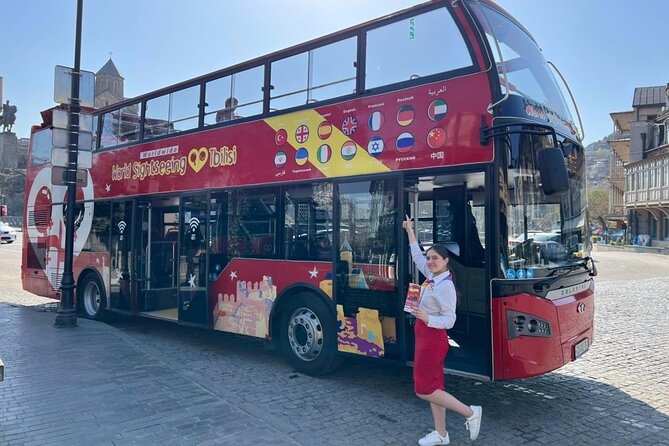
This is a strong match if you want a first-day orientation, especially if you want mobility-friendly sightseeing without long walking stretches. It also works well if you enjoy learning from narration and want the convenience of a fixed route.
It’s less ideal if you’re looking for deep, stop-by-stop guided storytelling or if you prefer to fully customize every minute. This bus tour is designed to cover a lot, so it moves on. For the most satisfying day, pair it with a walking plan afterward for the one or two places that you want to savor.
If you like checking off landmarks and then deciding what to explore, this approach is a solid fit.
Should You Book This Tbilisi Red Bus Tour?
Yes—if you want an easy way to get your bearings and you’re happy to use the ride as a springboard for your next moves. I’d book it when:
- you arrive with limited time and want a broad overview
- you want headsets so you don’t miss what you’re passing
- you like the idea of hopping off later with a 24-hour ticket
I’d think twice if you’re the type who needs lots of time at every stop or you’ll be disappointed by a more “overview” style narration. In that case, you might still book it for orientation, but plan to follow up with separate time on foot.
FAQ
What’s the duration of the Tbilisi Red Line city tour?
The tour is listed at about 1 hour 30 minutes.
Is it English-friendly, and do I get headsets?
Yes. The experience is offered in English, and headsets are included to help you hear the guide clearly.
Is this a hop-on hop-off tour?
Yes. The experience includes a 24-hour ticket, and the route is set up so you can get on and off.
Where do I start the tour?
The meeting point is 44 Kote Afkhazi St, Tbilisi 0105, Georgia.
What sights are included on the route?
The bus passes by major areas and landmarks such as the Old Town defensive walls, Meidan Square, the sulfur bath district, the Mtkvari River area, Metekhi Cathedral and wall area, Dry Bridge and the flea market area, Rike Park, Peace Bridge, Freedom Square, Rustaveli Avenue, Heroes Square, and Agmashenebeli Avenue.
What’s included in the price, and what’s not?
Included are a 24-hour ticket, headsets, and all taxes and handling charges. Food and drinks are not included unless specified.
Can I cancel for a refund?
Yes. You can cancel for a full refund up to 24 hours before the experience’s start time.
More Tbilisi Tours and Georgian Day Trips



More from Our Tbilisi Review Desk
More Old Tbilisi Walking Tours



Not quite your thing? More Tbilisi tours and day trips from our review desk












Old Tbilisi Walking Tours, compared.
 ★ 5.0Tbilisi Walking Tour Including Cable Car and Traditional BakeryFrom $191,310 reviews
 ★ 5.0Evening Walking & Talking Tour with Wine & Boat RideFrom $10572 reviews
 ★ 5.0Kakheti;City of Love Sighnaghi, Bodbe. KTW. Wine House Group tourFrom $16376 reviews
 ★ 5.0Old Tbilisi Highlights walking tour with wine & 10 tastingsFrom $15276 reviews
 ★ 5.0Old Tbilisi Tour: Private Walking Tour With Wine TastingFrom $39273 reviews
 ★ 5.0Private Tbilisi Food Tour: 9 Tastings Walk in Bohemian DistrictFrom $79227 reviews
 ★ 5.0Old and New City Guided Tour with 2 Cable Car RidesFrom $39176 reviews
 ★ 5.0Tbilisi Old Town Walking Tour with a Local GuideFrom $38168 reviews
Browse the lists this tour appears in