
Reviewed · MTSKHETA & JVARI UNESCO TRIPS
Uplistsikhe, Mtskheta and Jvari – historical private day tour from Tbilisi
A single day can still feel like three different countries. This private route strings together Pagan Georgia, early Christianity, and the Soviet era without rushing the story into the next stop. You’ll see major landmarks around Tbilisi’s historical heart and come away with a clear sense of how power and belief shifted over centuries.
I especially like the mix of must-see UNESCO sites with hands-on, photo-friendly ruins. Uplistsikhe gives you the cave-town atmosphere, while Mtskheta and Jvari explain why this region matters for Georgian Christianity. If you care about context, the professional English-speaking guide support really helps connect the dots.
One practical consideration: Uplistsikhe’s rocky paths can be uneven and steep in spots. Plan for some climbing, wear comfortable non-slip shoes, and you’ll be fine even if you’re not a big “ruins tourist.”
In This Review
- Key points before you go
- A Day That Spans Pagan, Christian, and Soviet Georgia
- Pickup, Private Comfort, and How the Day Feels
- Uplistsikhe Cave Town: Climb, Imagine, and Get Your Photos Done
- Mtskheta and Svetitskhoveli: The Cradle of Georgian Christianity
- Jvari Monastery on the Cliff: Why the View Matters
- Gori Fortress: Soviet-Era Context You Can Actually Place
- The Optional Organic Winery Stop (Wine or Lunch Time)
- Price and Value: What $149 Really Buys
- Who This Tour Suits Best (and Who Might Skip It)
- A Few Words on Guides: When the Day Clicks
- Should You Book Uplistsikhe, Mtskheta, and Jvari from Tbilisi?
- FAQ
- How long is the tour?
- What is the price per person?
- Do you get pickup from Tbilisi?
- Are entrance fees included?
- Is the winery stop included?
- Is the Stalin Museum included?
- What should I wear for Uplistsikhe?
Key points before you go
- Three historical eras in one tight loop: Pagan life at Uplistsikhe, Christian roots in Mtskheta/Jvari, and Soviet-era context in Gori
- UNESCO stops you can actually feel: church sites with real viewpoints, not just quick snapshots
- Comfortable private transfers with A/C: reduces fatigue on a 7–8 hour day
- Entrance fees handled for most stops: included where the tour lists them as covered
- Optional organic winery time: add a local flavor moment without blowing up your schedule
A Day That Spans Pagan, Christian, and Soviet Georgia
This tour works because it follows a timeline you can see. Uplistsikhe looks like a natural outcrop until your guide puts it into a human story—rocks and caves that once held a sizable community. Then you shift from carved stone to religious architecture as you head toward Mtskheta and Jvari, where Christianity took root in this region.
Finally, you end in Gori, where the Soviet chapter lands with a direct connection to Joseph Stalin. Even if you’re not a history buff, it’s a useful contrast: sacred spaces up on cliffs and then political history tied to a fortress and the memory of a person.
More Mtskheta and Jvari UNESCO runs we have made from Tbilisi
Pickup, Private Comfort, and How the Day Feels
The day is built around pickup in a comfortable car with A/C, and it’s private—just your group. That matters because this route is long enough that comfort becomes part of the experience, not just a perk. You won’t be standing around waiting on multiple stops or coordinating with strangers.
Timing is also structured enough that you get real time at each place: about 2 hours at Uplistsikhe, about 2 hours in Mtskheta for the cathedral area and Samtavro, around 45 minutes at Jvari, and about 45 minutes at Gori Fortress. For a 7–8 hour day, that’s a sensible pacing plan.
Also, the tour uses a mobile ticket and includes entrance fees as listed on the itinerary. That reduces hassle when you’re trying to enjoy the moment instead of sorting paperwork.
Uplistsikhe Cave Town: Climb, Imagine, and Get Your Photos Done
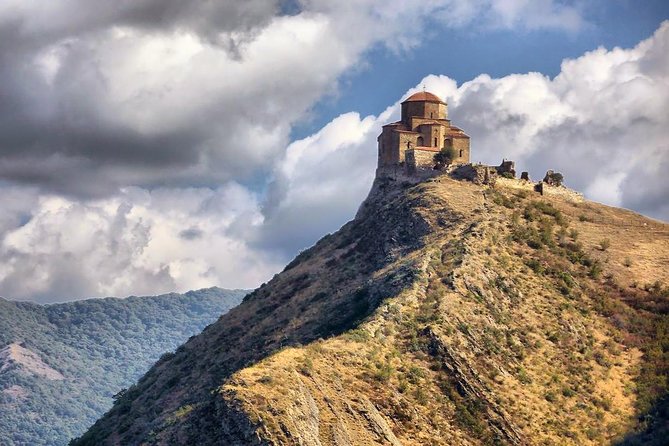
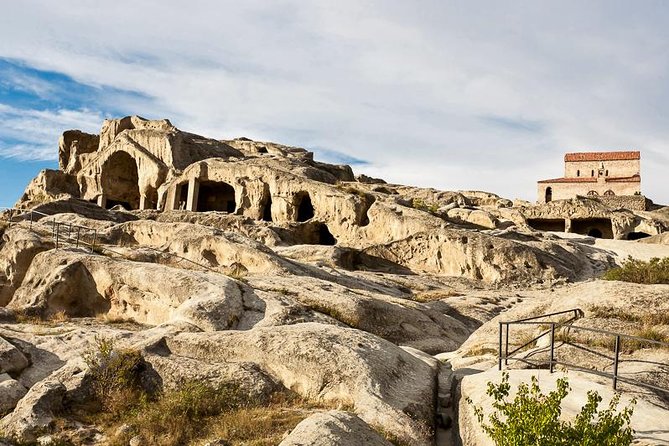
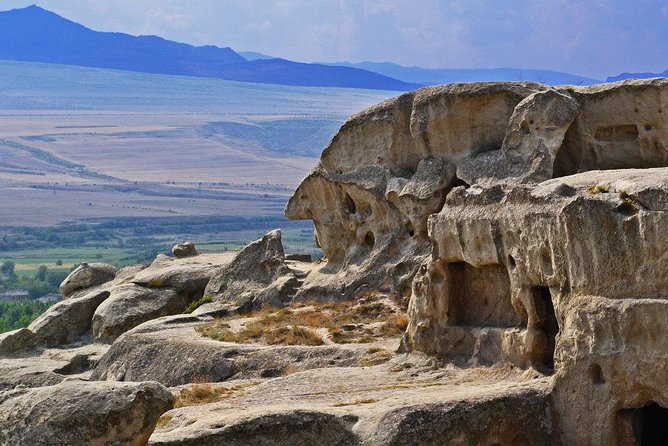
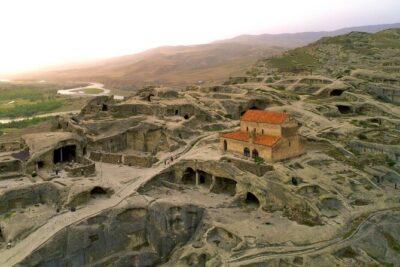
Uplistsikhe is the kind of place where your brain does half the work. You walk among rocky ruins carved into the hillside, and it’s easier to picture daily life when you can see how people used the space. The tour’s time here is about 2 hours, so you’re not stuck on a treadmill of quick stops.
A big reason this stop is popular is scale and atmosphere. You’re looking at a cave town that was once home to over 20,000 people and tied to pagan culture. That combination—human density in a landscape that looks so rugged today—creates a strong sense of how different life was back then.
Practical tip: wear comfortable, not slippery shoes. The surfaces are uneven and there’s elevation. If you’re traveling with anyone who hates stairs or slippery stone, I’d treat this as the “workout” portion of the day.
The good news is that Uplistsikhe also rewards patience with views along the way and from higher points near the top. If you like taking photos, this is where you’ll spend time looking up, not just looking straight ahead.
Mtskheta and Svetitskhoveli: The Cradle of Georgian Christianity
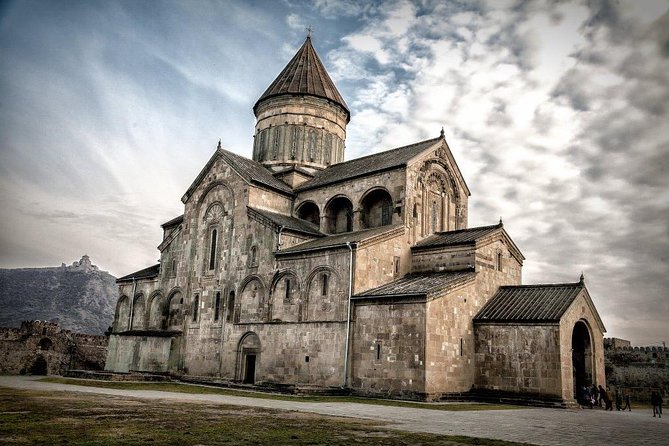
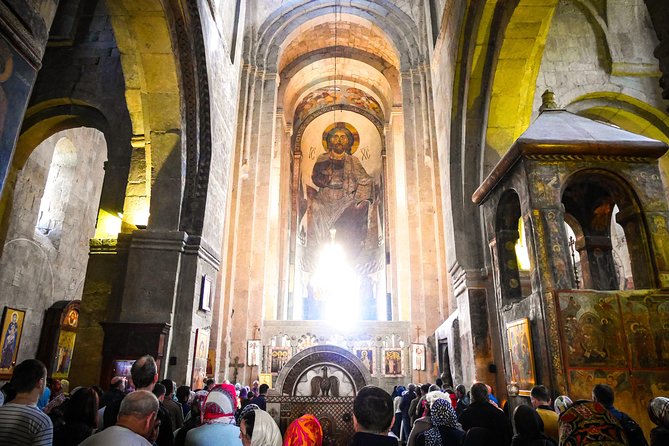
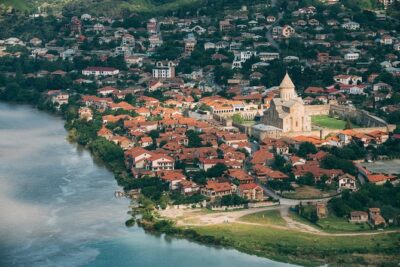
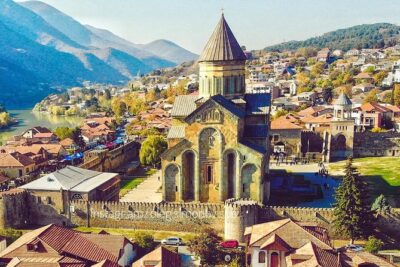
Mtskheta is where the story turns spiritual. You’ll spend about 2 hours at the Church of the Holy Cross area, including the Svetitskhoveli cathedral and the convent of Samtavro. This is part of what makes the stop feel meaningful: you’re not just seeing one building, you’re seeing a cluster of places tied to the beginning of Christianization in Georgia.
Svetitskhoveli is the headline site, and the tour frames it as a place with traces that still show the region’s earlier role as a flourishing capital. Then Samtavro adds a personal link: it’s described as once being the residence of St. Nino. That kind of detail helps you understand why this isn’t simply a pretty stop on a map.
Admission is listed as free for this segment, which is a nice bonus for value. More importantly, the free-entry setup makes it easier to enjoy without feeling squeezed by timing or costs. If you tend to plan loosely, this portion lets you slow down a bit and look closely.
One consideration: churches and convent areas often have their own pace rules and spaces where you’ll want to be respectful with behavior and dress. It’s not listed as a specific constraint, but it’s a smart idea to carry something modest for shoulders/knees just in case the setting asks for it.
Jvari Monastery on the Cliff: Why the View Matters
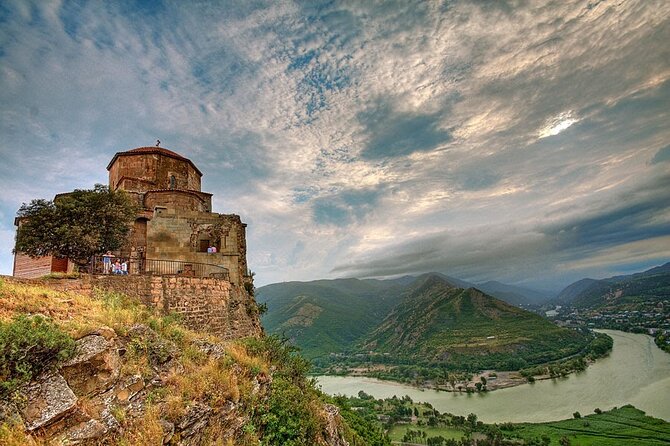
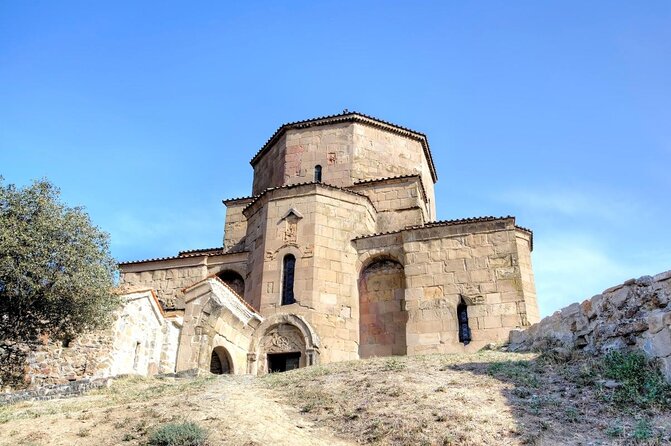
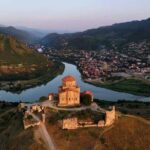
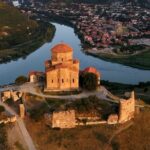
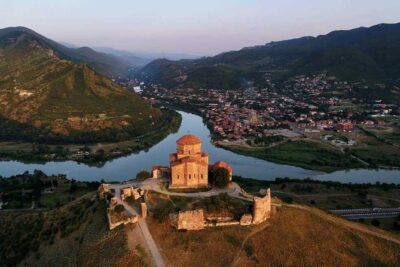
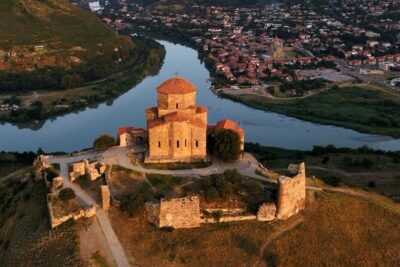
Jvari is short on time and strong on impact, with about 45 minutes on the schedule. The monastery sits on a cliff, overlooking Mtskheta and the rivers of the Mtkvari and Aragvi, plus surrounding mountains. That viewpoint is a big part of why it shows up in poems and stories, and why it’s often called a must-see.
This is also where the tour’s pacing pays off. After spending longer inside the Mtskheta cathedral area, you get a quick transition to an open, high viewpoint. It’s a reset for your eyes and your memory, helping you place what you saw below from a wider angle.
Admission is listed as free here too, so it’s another value win. The only real drawback is that 45 minutes can fly if you stop for a lot of photos and you’re slower in stepping around uneven spots. I’d treat it like a short guided spotlight rather than a long hangout.
If you love dramatic geography, this is the stop for you. If you hate viewpoints and prefer indoor sites, you might find yourself wishing for a bit more time elsewhere—but Jvari’s timing still works well for most schedules.
More Gori and Uplistsikhe cave-town days we have traced from Tbilisi


Gori Fortress: Soviet-Era Context You Can Actually Place
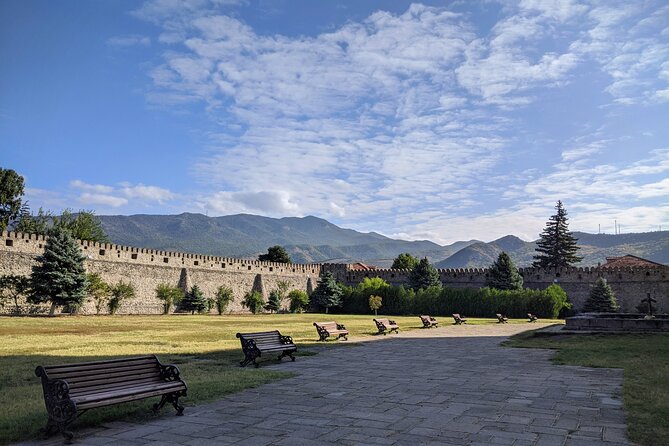
After Uplistsikhe and the religious sites, Gori offers a totally different mood. You’ll have about 45 minutes at Gori Fortress, with entrance fees included for this stop. The tour connects the location to the Soviet atheism era and points out that Gori is linked to Joseph Stalin’s birthplace.
This part can feel surprisingly clear when it’s explained well. A fortress isn’t just stone; it’s power, control, and the idea of defense. That makes it a useful ending to the day because it pulls you away from spiritual symbolism and into political history.
One helpful heads-up: there’s an optional Stalin Museum, but tickets for that are not included. So if you think you might want more, budget for extra time only if your guide suggests it and the day’s flow still allows it.
If you’re only interested in medieval or religious sites, Gori might not be your favorite. But if you want a rounded picture of Georgia’s 20th-century story, this is one way to keep the day from feeling stuck in the distant past.
The Optional Organic Winery Stop (Wine or Lunch Time)
The tour includes an optional stop connected to an organic winery. Depending on the version you choose, you can add wine tasting at an organic winery or enjoy lunch with a local family in Mtskheta. The important detail is that the tour notes this as optional and that an organic winery lunch is listed under included items when selected.
This is a good use of time if you want your historical day to end with something sensory and local. It also makes sense logistically: Mtskheta is already the base point, so you’re not burning extra travel time just to find a meal.
To keep your day smooth, treat this as the place to slow down. If you’re sensitive to alcohol, you can still take part without turning the winery stop into a heavy event. And if you’re strict about timing, confirm exactly what’s included in your chosen option so you’re not surprised by how long the winery portion runs.
Price and Value: What $149 Really Buys
At $149 per person, this tour sits in a mid-to-upper range for a private day trip. The value is mostly in what it bundles together.
You’re paying for:
- a professional English-speaking guide
- private transfers in a comfortable A/C car
- entrance fees as listed for the itinerary stops
- an optional organic winery lunch option
When you compare this to the cost of piecing it together yourself—car, guide, and multiple entrances—this price starts to look more reasonable. Especially for a day that spans four separate areas, private transport is a real time saver. That time savings is part of the value, not just convenience.
If you want the cheapest possible day, you could build a DIY plan. But if you want a clean, guided route with fewer decision points, this is the kind of structured tour that justifies the price.
Also, check the group discount note if you’re traveling with friends. Even a small discount can swing the math quickly in a private setting.
Who This Tour Suits Best (and Who Might Skip It)
This tour is a strong fit if you:
- want a single-day overview of Eastern and central Georgia’s major sites
- enjoy seeing historical layers—pagan, Christian, and Soviet—on the same route
- like guided context while you walk and look at real landmarks
- prefer private logistics over bus schedules
It’s also ideal for couples, small families, and friend groups who want a plan that feels organized but not rushed. The stops are timed in a way that works for most visitors, and the private transfers reduce fatigue.
Who might consider a different option: if you dislike uneven rocky ground, Uplistsikhe could be tough even with comfortable shoes. If your interests are extremely narrow—only religious sites, for instance—you may feel the Soviet-era ending is extra.
A Few Words on Guides: When the Day Clicks
The day’s quality often hinges on the guide’s ability to connect details. In the feedback you can see a pattern: guides like Zurab, Luka, and Temo are praised for turning each stop into a coherent story and for careful, detailed explanations. That kind of attention makes the sites feel less like isolated monuments and more like a linked narrative.
If your guide emphasizes how each site functioned—community life at Uplistsikhe, religious significance in Mtskheta and Jvari, and historical meaning at Gori—you’ll likely feel the day “click” in the best way.
Should You Book Uplistsikhe, Mtskheta, and Jvari from Tbilisi?
I’d book this tour if you want one organized day that gives you major Georgian history without a lot of planning work. It’s a smart choice for first-timers who want UNESCO sights plus a standout cave town, with comfort built in through private A/C transport and a guide who can connect the dots.
Skip it or choose something narrower if you:
- hate climbing on uneven stone
- want only one theme (purely religious or purely Soviet history)
- prefer to move at your own pace without timed stops
If your goal is a guided, efficient, story-driven route with good value for money, this one is hard to beat—especially if you’re aiming to cover Uplistsikhe, Svetitskhoveli, Jvari, and Gori in a single day.
FAQ
How long is the tour?
The tour runs about 7 to 8 hours.
What is the price per person?
The price is $149.00 per person.
Do you get pickup from Tbilisi?
Yes. Pickup is offered, and the tour includes private transfers in a comfortable car with A/C.
Are entrance fees included?
Entrance fees are included as per the itinerary. Some stops are listed as free and others as included.
Is the winery stop included?
An organic winery option is listed as optional, and an organic winery lunch is listed as optional as well. Wine tasting or a local lunch may depend on what you choose.
Is the Stalin Museum included?
Tickets to the Stalin Museum are not included (optional).
What should I wear for Uplistsikhe?
Uplistsikhe has uneven surfaces with elevation, so wear comfortable, not slippery shoes.
More from Our Tbilisi Review Desk


More Gori and Uplistsikhe Cave-Town Days
More Mtskheta and Jvari UNESCO Runs

Not quite your thing? More Tbilisi tours and day trips from our review desk





Mtskheta & Jvari UNESCO Trips, compared.
 ★ 5.0Day Trip to Mtskheta Gori and UplistsikheFrom $291,801 reviews
 ★ 5.0Mtskheta,Jvari,Bazaar,wine tasting,Chronicles of GeorgiaFrom $20730 reviews
 ★ 5.0Mtskheta-Gori-UplistsikheFrom $90112 reviews
 ★ 4.5Mtskheta, Jvari, gori, uflistsikhe, history and panorama (group tours)From $19107 reviews
 ★ 5.0Mtskheta-Jvari-Uplistsike-Chronicle of Georgia, PRIVATE TripFrom $68105 reviews
 ★ 4.5Tbilisi – Mtskheta – Jvari. Full City Tour on Hop On Hop Off BusFrom $4091 reviews
 ★ 4.5Ancient Georgia Group Tour: Mtskheta,Jvari, Gori, UplistsikheFrom $2473 reviews
 ★ 5.0Ancient Mtskheta and Chronicle of Georgia half day tourFrom $6566 reviews
Browse the lists this tour appears in