
Reviewed · MTSKHETA & JVARI UNESCO TRIPS
Ancient Georgia Group Tour: Mtskheta,Jvari, Gori, Uplistsikhe
Jvari and Uplistsikhe in one long day is a smart way to see Georgia fast, and I like that the group stays small (max 15) with a guide who can keep everyone moving. Svetitskhoveli adds real spiritual history on top of the views, and Stalin’s Museum gives you the harsher side of Georgia’s 20th century. One thing to consider: it’s a long day, and the cave-town walk at Uplistsikhe means uneven stone and stairs, so you’ll want decent shoes and stamina.
You’ll start in Tbilisi at 9:00 am and get about 9 to 10 hours of road time, sites, and exploring. The price is budget-friendly at $24 per person, especially since WiFi and air-conditioning are included, but you’ll still need to budget separately for the two paid admissions (Stalin Museum and Uplistsikhe).
In This Review
- Key highlights worth your attention
- $24 per person: what you’re really buying on this Georgia day trip
- Start smart at 9:00 am: meeting point, pacing, and how the timing works
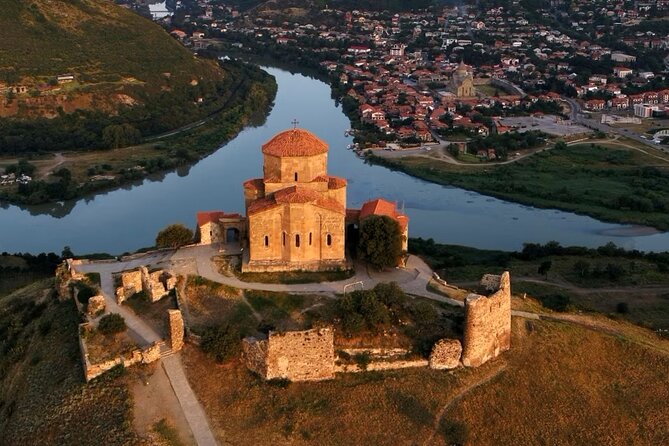
- Jvari Monastery: the quick free stop with the best river confluence payoff
- Gori’s Stalin Museum: you’ll spend an hour, and the context lands later
- Uplistsikhe cave town: climbing is part of the deal
- What makes Uplistsikhe special
- The drawback you should respect: footing matters
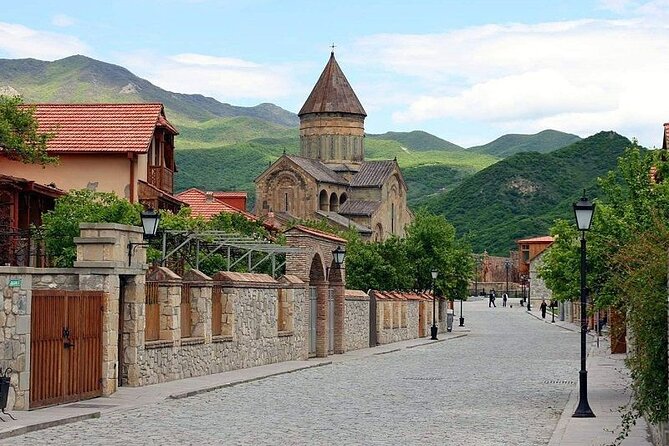
- Svetitskhoveli Cathedral in Mtskheta: short visit, big significance
- Church dress tip (don’t skip this)
- Guides, languages, and how to avoid the dual-language headache
- Food, comfort, and what to bring for this long day
- Who should book this tour, and who may feel it’s too much
- Should you book Ancient Georgia with Imperial Tours?
- FAQ
- How long is the Ancient Georgia Group Tour?
- Where is the meeting point, and when does the tour start?
- How much does the tour cost?
- What’s included in the price?
- Are the Stalin Museum and Uplistsikhe tickets included?
- Is lunch included?
- Is the tour offered in English?
- How many people are in a group?
- Are service animals allowed?
- What is the cancellation policy?
Key highlights worth your attention
- Small group size (max 15): easier pacing and less bottlenecking at busy church stops
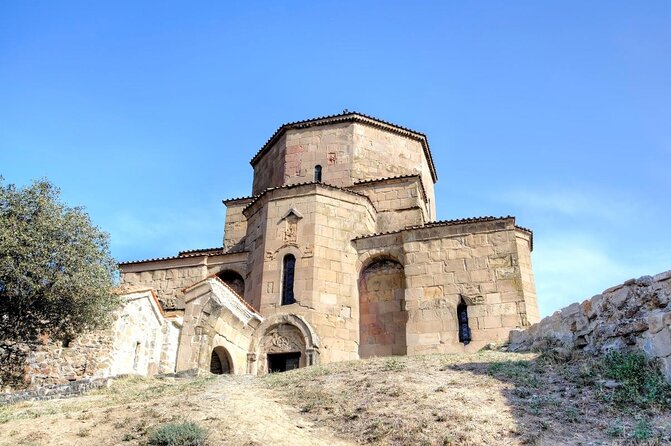
- Jvari’s river confluence views: a classic Georgia viewpoint with quick entry (free)
- Gori’s Stalin Museum context: a full hour in the birthplace complex (tickets extra)
- Uplistsikhe cave city layers: rock-cut structures from Early Iron Age through Middle Ages, with pagan and Christian elements
- Svetitskhoveli relics and Saint Nino connection: a short but meaningful stop at Old Mtskheta’s center
- Useful comfort touches: WiFi on board and an air-conditioned vehicle for the drive
$24 per person: what you’re really buying on this Georgia day trip
This is a value-focused day tour out of Tbilisi, running about 9 to 10 hours. At $24 per person, you’re mainly paying for organized transport, a guide, and the time saved by not stitching together buses and taxis yourself. That said, you should treat it as a paid-guided experience with two additional ticket costs you’ll handle on site.
The tour company includes WiFi on board and an air-conditioned vehicle, both of which matter on a long day that can feel hotter than you expect between stops. You also get a mobile ticket, and you’ll return to the same meeting point at the end.
Group size is capped at 15 travelers, which is one of the reasons people seem to feel the day stays controlled instead of chaotic. You’ll also have time for transportation built into the total duration, so you shouldn’t be surprised by “secret” travel gaps eating your site time.
If you hate long days, this still might stretch your energy. If you’re okay with a packed route that favors the big historical hits, it’s a solid buy.
More Mtskheta and Jvari UNESCO runs we have made from Tbilisi
Start smart at 9:00 am: meeting point, pacing, and how the timing works
You meet at 15 Abano St in Tbilisi and depart at 9:00 am. The tour lasts roughly 9 to 10 hours, and the schedule includes driving time, so you can plan one full day without juggling extra transport.
Site visits are relatively short at each stop—some are around 30 to 40 minutes, and others are about an hour. That means the tour is designed for seeing the highlights and getting clear explanations fast, not for slow, lingering photo sessions at every location.
Also note the “real-world” constraint: you’ll have to add your own meal timing. Lunch is handled at a local restaurant late in the day, but the food itself is not included. If you get shaky without snacks, plan for it.
Jvari Monastery: the quick free stop with the best river confluence payoff
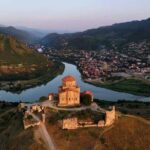
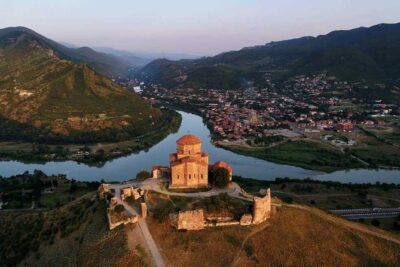
Jvari Monastery is a great place to start because it’s both easy to reach and visually rewarding. You’ll visit for about 40 minutes, and admission here is free.
The setting is the selling point: Jvari sits at the confluence of the Mtkvari and Aragvi rivers. Even if you’re not a church-and-stone person, you’ll likely appreciate the viewpoint. It gives you an instant “map” of why Mtskheta matters—rivers, routes, and settlement patterns.
A short stop like this has a plus and minus. The plus: you get the payoff without eating half the day. The minus: you’ll want to keep your eyes open for details because you won’t have time to wander endlessly.
If weather is clear, this is often where your camera roll gets its strongest early shots. If it’s rainy or windy, you may want to bring a light layer and take extra care on slippery paths.
Gori’s Stalin Museum: you’ll spend an hour, and the context lands later
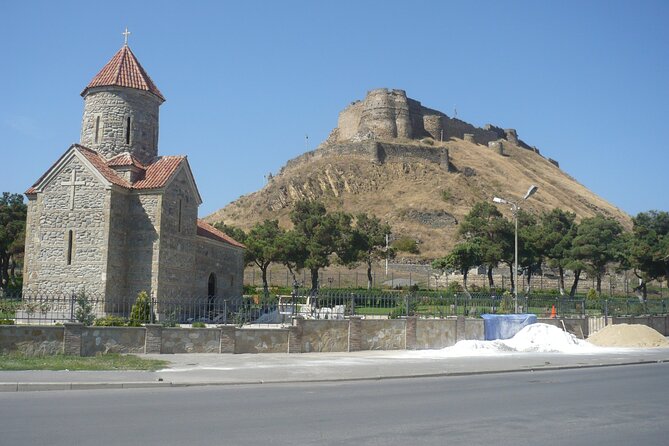
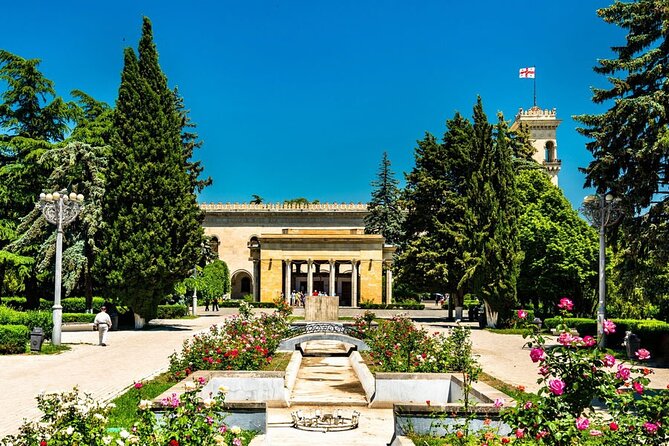
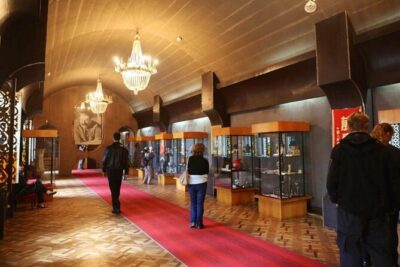
Gori is where the tour turns from spiritual Georgia into the politically heavy 20th century. You’ll spend about 1 hour at the State Stalin Museum, and admission is 15 GEL per person (not included in your tour price).
The museum complex is a lot more than one room. It was opened in 1957, and the birthplace house memorial opened in 1937, during Stalin’s lifetime. Even without getting lost in dates, those two opening years help you understand the museum’s intention: this wasn’t only built after the fact—it grew during the era when the figure was still shaping events.
The practical takeaway for you: don’t rush this hour. The tour’s structure makes it easy to hit it and move on, but this is the one stop where deeper reading helps you understand why people in Georgia can view the past with complicated feelings.
One heads-up: there’s no mention that audio headsets are included, so if you prefer audio-style interpretation, you might find yourself relying on your guide and the museum displays.
Uplistsikhe cave town: climbing is part of the deal
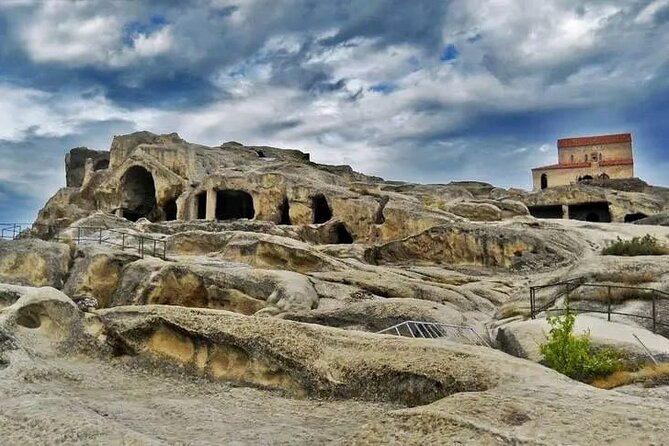
Uplistsikhe is the day’s physical centerpiece, and it’s also where the “ancient Georgia” theme becomes real in your hands and shoes. You’ll have time for lunch at a local restaurant, then you’ll continue to the cave town itself.
A key thing: there are two parts of this stop on the schedule, with about 1 hour for the lunch and about 1 hour for the cave town visit. Admissions are 15 GEL per person for Uplistsikhe (not included).
More Gori and Uplistsikhe cave-town days we have traced from Tbilisi

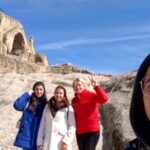
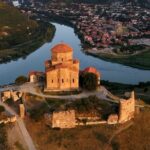
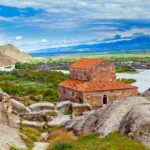

What makes Uplistsikhe special
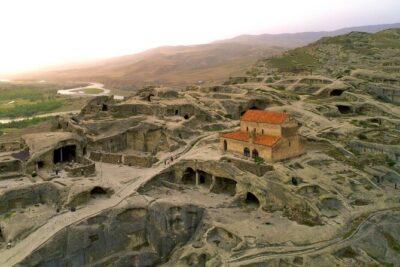
Uplistsikhe is built on a high rocky left bank of the Mtkvari River, with structures dating from the Early Iron Age to the Late Middle Ages. What you’re looking at isn’t just one single-period site—it’s a layered place.
It’s especially notable for the combination of rock-cut styles tied to Anatolia and Iran, and for the way pagan and Christian architecture coexist. That blend makes Uplistsikhe feel like a crossroads in stone, not a museum prop.
The drawback you should respect: footing matters
This is where you’ll feel whether the tour is a match for you. Multiple people point out that Uplistsikhe involves a lot of climbing on rock surfaces, and wet conditions can make it treacherous. If your shoes have poor traction, the visit can feel stressful instead of fun.
My practical advice:
- Wear shoes with good grip.
- If it’s rainy, take your time.
- If you’re mobility-limited, be realistic about what you’ll miss here.
If you’re comfortable on uneven terrain and you like exploring on your feet, Uplistsikhe can be the highlight of the whole day.
Svetitskhoveli Cathedral in Mtskheta: short visit, big significance
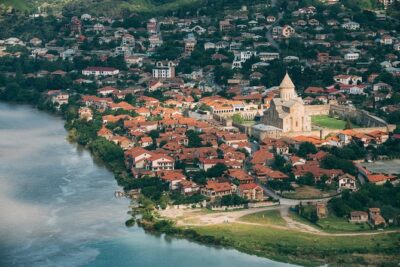
Back in Old Mtskheta, you’ll visit Svetitskhoveli Cathedral for about 30 minutes, and admission is free.
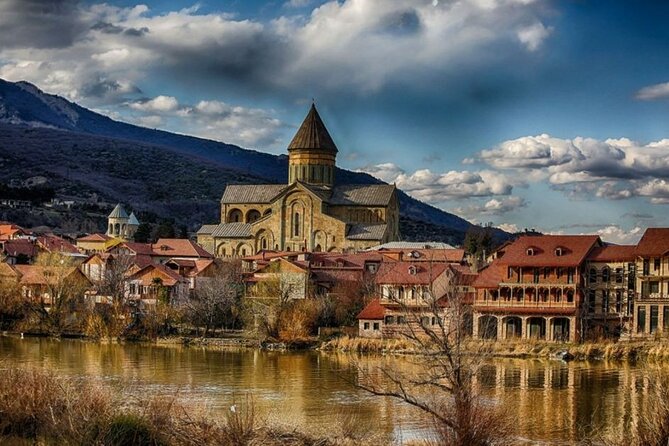
This stop is described as historically significant—so significant that it’s linked to the start of Christianity in Georgia. You’ll hear that it was erected on a spot chosen by Saint Nino. The cathedral also houses relics, including what’s believed to be Christ’s Mantle, a 4th-century baptismal font, and a piece of cedar wood said to have been salvaged from the original structure.
For you, the value here is pacing. A 30-minute cathedral visit can feel rushed if you expect a museum-style lecture. But as part of a structured day—views at Jvari, the harder political context in Gori, then physical exploration in Uplistsikhe—Svetitskhoveli gives you a calm center and a strong sense of place.
Church dress tip (don’t skip this)
One practical detail from real-world experience: if you’re visiting churches, be ready for head and leg coverage rules. Women may want a scarf for covering the head, since sites often have scarves available but having your own is easier. Men should plan for long pants or bring something to cover their legs, since larger leg-cover scarves can be hard to find.
Guides, languages, and how to avoid the dual-language headache
Your experience will rise or fall on the guide, and this tour has plenty of evidence that the leaders are actively managing groups during the day. Guides named David, Natalia, Lasha, Tami, and Omar appear in the tour feedback, and a recurring theme is that strong guiding keeps people engaged while also handling logistics smoothly.
Language is where you should pay attention. The tour is offered in English, but at least some days include switching between English and Russian to accommodate different participants. If you strongly prefer one language only, that’s a potential downside. It can also stretch the time, because you’re essentially hearing the same explanation adjusted for different listeners.
If you’re traveling solo and don’t mind that rhythm, it can still work fine. If you want one clear channel and nothing extra, confirm language expectations before you go.
Food, comfort, and what to bring for this long day
Since lunch at the local restaurant is included only as a stop—not as a paid meal—you should plan for your own ordering. Bring a bit of cash or a payment method you trust at local restaurants.
On top of that, make sure you bring the things that make church sites and cave towns easier:
- Shoes with traction (Uplistsikhe can be slippery)
- A scarf if you want head coverage without hunting for a replacement
- A light layer for morning-to-afternoon temperature swings
- A small snack if you’re the kind of person who gets hungry between stops
The vehicle helps. WiFi and air-conditioning are included, and the driver is part of why groups don’t feel stressed on the road. Still, you’ll spend a lot of hours together as one unit, so comfort items go a long way.
Who should book this tour, and who may feel it’s too much
This tour is best for you if you want a packed but guided sweep through major Georgian themes: early Christianity in Mtskheta, a signature mountain viewpoint at Jvari, cave-city archaeology at Uplistsikhe, and the political shock of Stalin’s birthplace in Gori.
It can also suit families and mixed ages, since there’s at least one comment about a group that included both older participants and a very young child while still staying satisfied. That suggests the logistics can work for mixed groups when people move at a steady pace.
But it may not suit everyone:
- If you need low-step, flat-surface walking, Uplistsikhe is the part to worry about.
- If you’re sensitive to long days, the 9–10 hours can feel like a marathon.
- If you only want English with no switching, watch for dual-language pacing.
For history lovers who like their stops explained (not just ticketed), this has strong appeal.
Should you book Ancient Georgia with Imperial Tours?
I’d book this if you want a one-day hit list that doesn’t feel like a rushed transfer, and if you’re excited by contrasts: church relics in Mtskheta, cliffside river views at Jvari, the hard edge of Stalin’s birthplace, and an actual cave town where pagan and Christian elements share space.
I wouldn’t book it if you have limited mobility, struggle with climbing, or you’re the type who hates hearing multiple language versions. In those cases, you might find the day less enjoyable than it could be.
Overall, it’s a good value day tour with clear highlights, small-group control, and the right kind of variety for first-time visitors to Georgia’s old heartlands.
FAQ
How long is the Ancient Georgia Group Tour?
It runs about 9 to 10 hours total.
Where is the meeting point, and when does the tour start?
The tour starts at 9:00 am at 15 Abano St, Tbilisi, Georgia.
How much does the tour cost?
The price is $24.00 per person.
What’s included in the price?
The tour includes WiFi on board, an air-conditioned vehicle, and the time for transportation.
Are the Stalin Museum and Uplistsikhe tickets included?
No. Admission to the Stalin Museum is 15 GEL per person, and admission to Uplistsikhe is also 15 GEL per person.
Is lunch included?
Lunch at a local restaurant is part of the schedule, but the lunch itself is not included in the tour price.
Is the tour offered in English?
Yes, it is offered in English.
How many people are in a group?
The maximum group size is 15 travelers.
Are service animals allowed?
Yes, service animals are allowed.
What is the cancellation policy?
There is free cancellation up to 24 hours in advance for a full refund. If the tour is canceled due to poor weather, you’ll be offered a different date or a full refund.
More from Our Tbilisi Review Desk

More Gori and Uplistsikhe Cave-Town Days
More Mtskheta and Jvari UNESCO Runs
Not quite your thing? More Tbilisi tours and day trips from our review desk




Mtskheta & Jvari UNESCO Trips, compared.
 ★ 5.0Day Trip to Mtskheta Gori and UplistsikheFrom $291,801 reviews
 ★ 5.0Mtskheta,Jvari,Bazaar,wine tasting,Chronicles of GeorgiaFrom $20730 reviews
 ★ 5.0Mtskheta-Gori-UplistsikheFrom $90112 reviews
 ★ 4.5Mtskheta, Jvari, gori, uflistsikhe, history and panorama (group tours)From $19107 reviews
 ★ 5.0Mtskheta-Jvari-Uplistsike-Chronicle of Georgia, PRIVATE TripFrom $68105 reviews
 ★ 4.5Tbilisi – Mtskheta – Jvari. Full City Tour on Hop On Hop Off BusFrom $4091 reviews
 ★ 5.0Ancient Mtskheta and Chronicle of Georgia half day tourFrom $6566 reviews
 ★ 5.0Private Day Trip to Gudauri and Kazbegi from Tbilisi via Jvari and MtskhetaFrom $11457 reviews
Browse the lists this tour appears in