
Reviewed · SOVIET & BRUTALIST TBILISI
Soviet Tour – Hidden Tbilisi
Soviet fingerprints are still on Tbilisi’s streets. This tour is interesting because you see how the Soviet era shaped real buildings and public space, not just museum pieces, with a small group and an English-speaking guide telling the story as you move. You also get an air-conditioned vehicle, so you can stay comfortable while hopping between sites.
Two things I really like: the pace gives you time to look closely, and the guiding style connects architecture to how people actually lived. Names you may hear from guides include Giorgi and Irakli, and the explanations can get personal, with fun cultural details (one guide even shared how certain cartoon characters were banned under the old system).
One possible drawback: this is a Soviet-focused route, so if you’re mainly after churches, old town views, or pure food wandering, you may want a different day plan. Also, there’s no transfer from anywhere specific beyond getting yourself to the meeting spot at 2 Rose Revolution Square.
In This Review
- Key highlights worth your time
- Soviet Tbilisi Works Best With a Tight Group
- Where Your Day Starts: Rose Revolution Square Setup
- Stop 1: Real Georgia Tours and the Soviet-Era Architecture Sweep
- Bank of Georgia: Soviet-Era Style With a Pragmatic Reason
- Chronicles of Georgia: Socialist Monument and a Big Panorama
- J. Stalin’s Underground Printing House Museum: Propaganda in the Dark
- Price, Timing, and What Your $99 Really Buys
- Small Touches That Make It Feel Personal
- Who Should Book This Soviet Tour
- Should You Book Soviet Tour – Hidden Tbilisi?
- FAQ
- How long is the Soviet Tour – Hidden Tbilisi?
- How much does the tour cost?
- What language is the tour offered in?
- What group size should I expect?
- Are entry tickets included?
- Where do I meet the tour?
- Can I cancel for a full refund?
Key highlights worth your time
- Max 6 people means you can ask questions and still hear every explanation clearly
- Air-conditioned vehicle helps when you’re moving across the city for several stops
- Soviet monuments with unusual perspectives instead of only the obvious tourist highlights
- Included entry tickets at multiple stops, so you don’t burn time buying things on the go
- Underground printing house visit for a memorable, hands-on-feeling slice of propaganda history
Soviet Tbilisi Works Best With a Tight Group
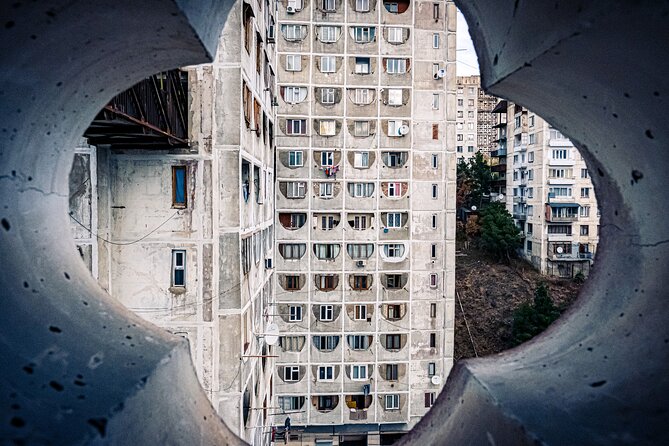
Tbilisi has layers. And the Soviet layer is visible if you know what to look for—shapes, materials, street presence, and the way “monument” was treated like public messaging. Doing it with a small group makes the experience feel like a guided walk through that layer, rather than a checklist.
I also like how the tour doesn’t rush you into one photo spot and then off to the next. You get structured time at each major stop, so you can actually read the buildings and understand why they look the way they do.
More Soviet and brutalist Tbilisi walks we have wandered off the tourist trail



Where Your Day Starts: Rose Revolution Square Setup
You meet at 2 Rose Revolution Square, Tbilisi 0108. It’s a good anchor point because it’s near public transportation, so you’re not stuck figuring out a complicated rendezvous.
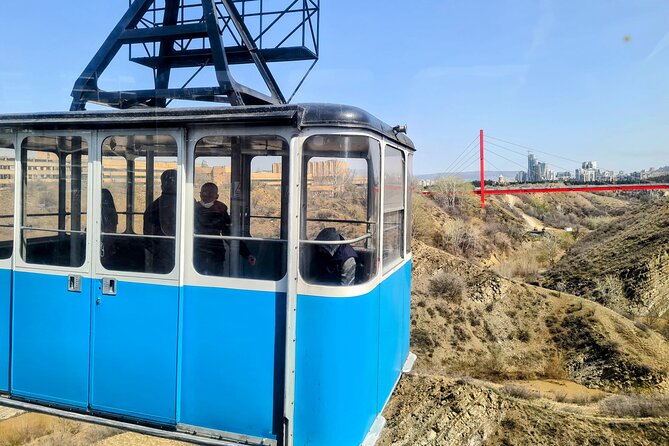
From there, you ride in an air-conditioned vehicle. That matters because the stops are spread around the city, and you’re out for about 3 to 4 hours total. For a short window, it’s a smart way to cover ground without your afternoon turning into a transit slog.
Stop 1: Real Georgia Tours and the Soviet-Era Architecture Sweep
Your first big stretch is with Real Georgia Tours, where you explore the non-touristic side of Tbilisi through Soviet-era monuments and buildings. The goal is simple: you don’t just see objects—you learn what they were meant to do and how they shaped daily life around them.
This part takes about 2 hours, and that time gives you a real chance to notice details. Soviet influence often shows up in clean, bold massing and in how buildings relate to the street—how they project authority, how they guide movement, and how public space gets organized. Your guide can point out those patterns as you go.
One of my favorite ways these kinds of stops work is when the guide connects architecture to use. A building isn’t just pretty or ugly; it’s built for a purpose, and Soviet design often had strong ideas about that purpose. If you’re the kind of traveler who likes to understand the why behind what you’re seeing, this first stop will feel like the heart of the tour.
Possible catch: because this is about less-obvious parts of Tbilisi, you’ll spend more time learning and less time wandering on your own. If you’re not in the mood for explanations, it might feel like you’re always being steered to the next viewpoint.
Bank of Georgia: Soviet-Era Style With a Pragmatic Reason
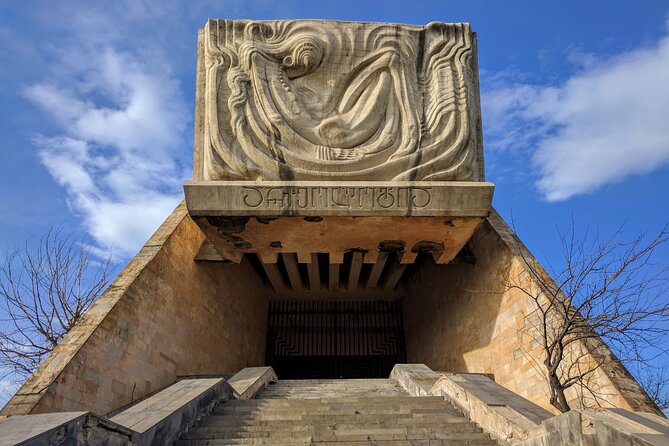
Next you head to the Bank of Georgia head office. It’s listed among the top examples people cite for Soviet architecture, and the standout point here is that the building’s unusual shape has a practical reason.
You get about 15 minutes at this stop. That’s short, but it’s also enough time to see the structure and get the story without dragging the whole tour. If you love architecture, this stop is a quick win: you’ll likely walk away understanding how function and form were tied together.
Tickets here are free, which is nice value. It also keeps the visit feeling smooth—no ticket line drama, no scrambling to understand what you’re supposed to pay for.
Chronicles of Georgia: Socialist Monument and a Big Panorama
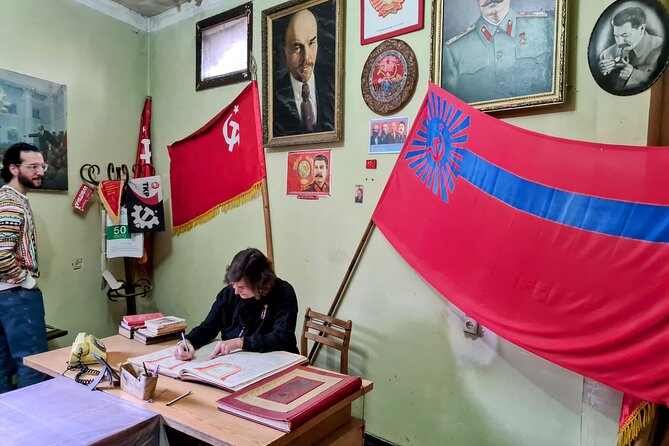
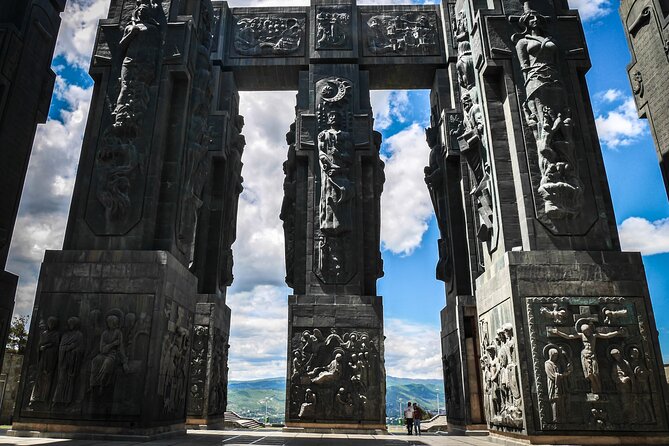
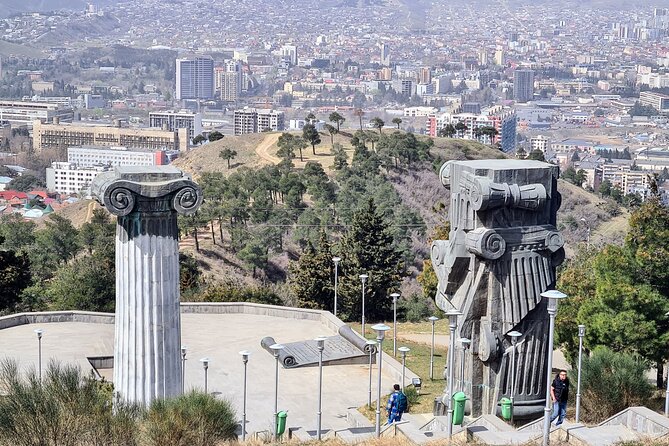
Then comes Chronicles of Georgia, often described as the Stonehenge of Tbilisi. It’s a clear example of socialist monumentalism, and it’s also the sort of place where the views finish the lesson.
You’ll spend about 30 minutes here. That time is key because a monument like this isn’t only about the structure itself; it’s about what you can see from it and how the suburbs frame the story of the city. If you like learning how political messages were made “visible,” this stop delivers.
This stop is also free to enter, which helps keep the tour feeling like good value at the $99 price point. You’re not paying extra at every turn, and you’re still getting a major, iconic Soviet-era experience.






J. Stalin’s Underground Printing House Museum: Propaganda in the Dark
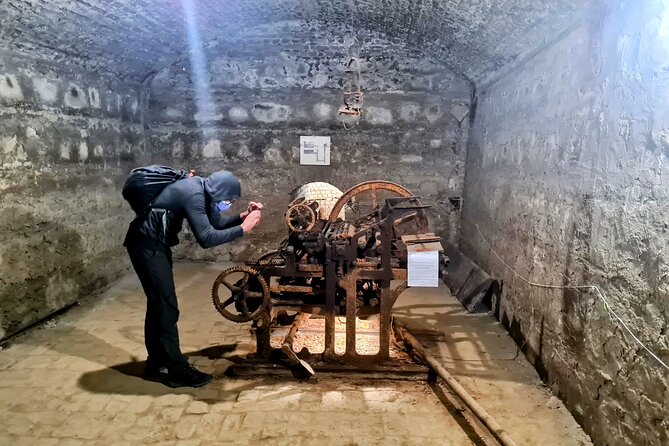
The most intense stop is J. Stalin’s Underground Printing House Museum. You go into the underground world where Stalin and supporters were creating plans and propaganda leaflets.
You get about 40 minutes here, which is long enough to absorb what the space is trying to show. Underground sites have a way of turning “history talk” into something more physical. You can feel why propaganda needed secrecy, control, and speed.
This one includes an admission ticket, so you’re paying the money back in concrete experience. And it’s the stop that’s most likely to stay with you, especially if you’re interested in how governments used communication systems to shape public life.
Price, Timing, and What Your $99 Really Buys
At $99 per person, the value comes from two places: the route is built around a run of paid and free entries, and you’re not handling logistics for each site. The tour lasts about 3 to 4 hours, and you’re getting an air-conditioned vehicle to connect the stops efficiently.
You’ll also benefit from the format: a maximum of 6 travelers keeps the group moving while still leaving room for questions. That can make a big difference on a history tour—too many people and you get rushed answers; a tight group usually means better interaction.
Admission tickets are included at key points: the first major Soviet-route segment and the underground printing house, plus the stops listed with included entry. At the Bank of Georgia and Chronicles of Georgia, entry is free. So you’re paying for guided access and interpretation more than buying your way through individual attractions.
Small Touches That Make It Feel Personal

Some tours add human moments that go beyond architecture. On at least some runs, you may meet historians who help manage the places and share how they view the Soviet era from their working perspective.
And yes, there can be food at the end. One guide even treated the group to a special khachapuri with bean fillings, which is the kind of local flavor that makes a history-heavy afternoon end on something warm and memorable.
If you’re the type who likes variety, there’s also mention of an optional extra stop for a Soviet car museum, with restored cars and bikes. That can be a great add-on if you want a less solemn angle on Soviet-era design, more mechanical and playful.
Who Should Book This Soviet Tour
You’ll probably enjoy this tour most if you like history that shows up in everyday surroundings. It’s also a good fit if you enjoy asking questions and want your guide to connect themes—style, propaganda, public space, and how it all affects what you see today.
If you’re traveling with someone who loves architecture and you’re the one who usually checks church steeples and old squares, this tour is a nice bridge. It gives structure, a clear focus, and plenty to look at beyond postcards.
Should You Book Soviet Tour – Hidden Tbilisi?
I think this is a smart booking if you want Soviet-era Tbilisi with real context and a guide who can explain what you’re looking at in plain terms. The combination of small group size, air-conditioned transport, and a mix of included and free sites makes it feel efficient for the time.
Skip it only if Soviet history isn’t your priority. If you’re hoping for mostly medieval lanes and traditional viewpoints, you’ll likely be happier with a different type of tour. If you’re curious about how political power shaped the city’s design, this one is worth your $99.
FAQ
How long is the Soviet Tour – Hidden Tbilisi?
It’s approximately 3 to 4 hours.
How much does the tour cost?
The price is $99.00 per person.
What language is the tour offered in?
The tour is offered in English.
What group size should I expect?
The tour has a maximum of 6 travelers.
Are entry tickets included?
Admission tickets are included for some stops, while other stops have free entry. Specifically, tickets are included for the Real Georgia Tours segment and the J. Stalin’s Underground Printing House Museum, and Bank of Georgia and Chronicles of Georgia are free.
Where do I meet the tour?
The meeting point is 2 Rose Revolution Square, Tbilisi 0108, Georgia. The tour ends back at the meeting point.
Can I cancel for a full refund?
Yes. You can cancel up to 24 hours in advance for a full refund.
More Tbilisi Tours and Georgian Day Trips




More from Our Tbilisi Review Desk
More Soviet and Brutalist Tbilisi Walks



Not quite your thing? More Tbilisi tours and day trips from our review desk












Soviet & Brutalist Tbilisi, compared.
 ★ 5.01 Day Private Armenia: UNESCO, Soviet & Curated Family LunchFrom $135106 reviews
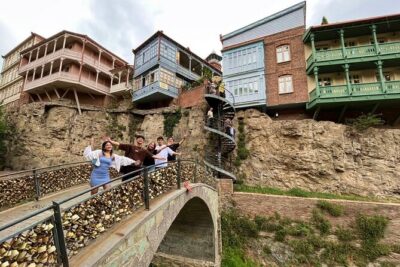 ★ 5.0Tbilisi old town & soviet heritage – Private driver-guided TourFrom $7783 reviews
 ★ 5.0Armenia: 1 Day Soviet gems, UNESCO + Family lunch (Small group)From $4968 reviews
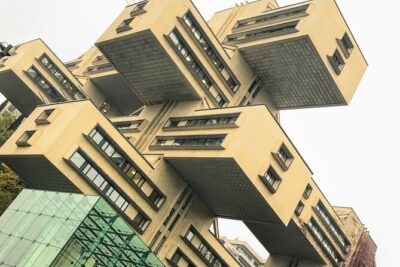 ★ 5.0Brutal Tbilisi: Urban exploration and untold storiesFrom $7559 reviews
 ★ 5.0Soviet Tbilisi Tour – Off the beaten pathFrom $4945 reviews
 ★ 5.0Soviet past – Private day tour to Chiatura, Katskhi pillar and ChroniclesFrom $14929 reviews
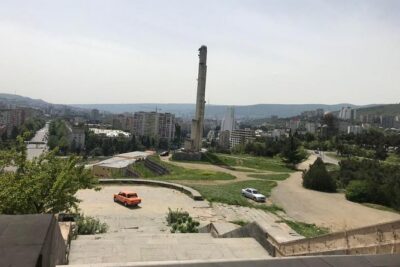 ★ 5.0Concrete Giants TourFrom $5420 reviews
 ★ 4.5Soviet Story – Private day trip to Chiatura, Stalin’s museum and Katskhi pillarFrom $2015 reviews
Browse the lists this tour appears in