
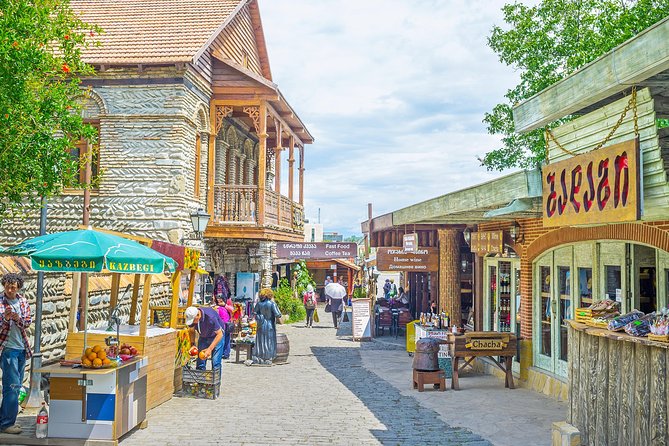
Reviewed · MTSKHETA & JVARI UNESCO TRIPS
Mtskheta,Jvari,Gori,Uplistikhe(private tour)
Cave, churches, and a Soviet detour. I love the tight private pickup at 9:00 and the story-driven route through UNESCO-listed Mtskheta. One caution: lunch and most entrance tickets aren’t included, so you’ll want to plan for that before the day starts.
This tour is a practical way to see a lot without spending hours on buses. You get an air-conditioned vehicle, bottled water, and an English-speaking guide who helps you connect the dots between rock-cut pagan ruins and major Georgian Orthodox sites.
- Rock-cut Uplistsikhe: 1.5 hours in a stone city carved into the earth.
- Gori with real local flavor: time in the town plus a museum option.
- Jvari Monastery views: the monastery of the Cross above Mtskheta’s river confluence.
- Svetitskhoveli Cathedral stop: Living Pillar church with royal coronation and burial associations.
- Private, door-to-door flow: hotel pickup/drop-off and a 10-hour schedule that actually works.
In This Review
- How the 9:00 a.m. pickup shapes your whole day
- Uplistsikhe Cave Town: rock-cut culture from Iron Age to Middle Ages
- Gori stop: hometown time and what to do about lunch
- Stalin Museum option: Soviet history in Joseph Stalin’s birthplace town
- Jvari Monastery: the Monastery of the Cross with river-confluence views
- Svetitskhoveli Cathedral: the Living Pillar and royal coronations
- Price and value: $125 for a private, door-to-door history day
- What this tour feels like in real life
- Who should book this private Mtskheta–Jvari–Gori–Uplistsikhe tour
- Quick “before you go” checklist
- Should you book it? My take
- FAQ
- What time does the tour pick me up?
- How long is the tour?
- Is this a private tour?
- Is the tour guided and in English?
- What’s included in the price?
- Are entrance fees included?
- Is lunch included?
- Which stops are included on the route?
- What are the cancellation rules?
- Is there a mobile ticket?
How the 9:00 a.m. pickup shapes your whole day
This is a full-day run—about 10 hours—with a pickup at 9:00 a.m. directly from your living place in the Tbilisi area. That early start matters more than it sounds. You avoid the late-morning rush and you get daylight for your key photo viewpoints at Jvari and around Mtskheta.
The format is straightforward: you’re in a private car with a professional, English-speaking guide. You also get hotel pickup and drop-off plus bottled water. For a day with multiple historical sites, this kind of logistics saves energy for the actual visiting, not the travel stress.
One more practical note: this tour is popular enough that it’s commonly booked well in advance (around 72 days). If you’re traveling in peak season or on a weekend, it’s smart to lock it in sooner rather than later.
Uplistsikhe Cave Town: rock-cut culture from Iron Age to Middle Ages
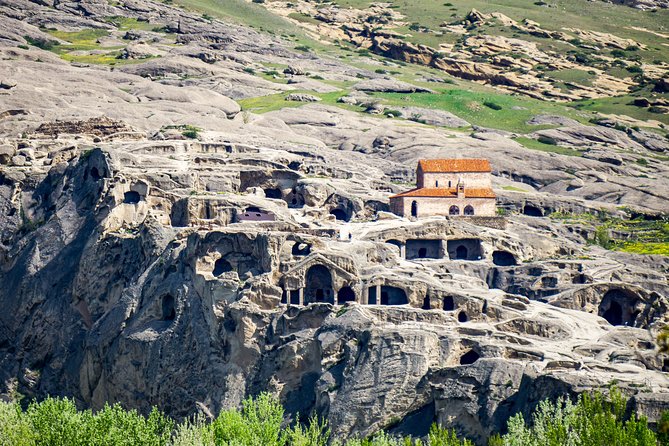
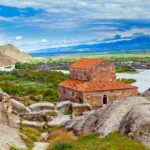
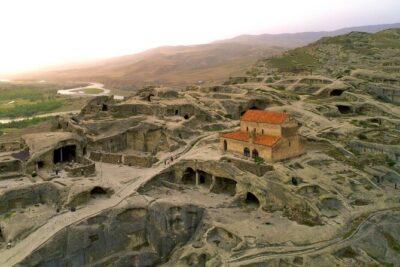
Your first stop is Uplistsikhe Cave Town, with about 1 hour 30 minutes on site. This is one of those places where the setting explains the history. Uplistsikhe is an antique rock-hewn town in eastern Georgia, built on the left bank of the Mtkvari River. Instead of just visiting a building, you’re walking through a landscape that people actually shaped and lived in.
What I like here is the mix of influences. The site includes structures from the Early Iron Age through the Late Middle Ages and shows a unique overlap of rock-cut traditions from Anatolia and Iran. You’ll also notice the way the architecture reflects both pagan and Christian eras—basically, layers of belief living side by side in the stone.
The biggest drawback? Entrance tickets are not included, so you’ll need to pay separately. Also, cave-town sites can mean uneven steps and rock surfaces. Even if the walking doesn’t look extreme on paper, bring comfortable shoes and expect a bit of climbing and uneven ground.
More Mtskheta and Jvari UNESCO runs we have made from Tbilisi
Gori stop: hometown time and what to do about lunch
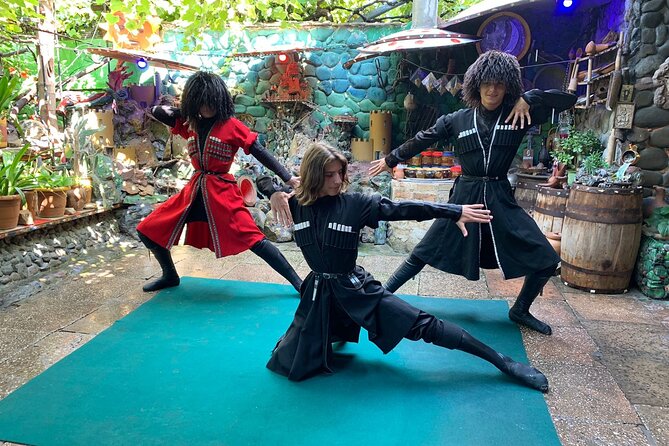
Next you head to Gori, with about 1 hour 30 minutes allocated. This part of the day is about atmosphere as much as sights. The plan includes lunch time in Gori, with the idea of a more local feel.
Here’s the honest budgeting tip: lunch isn’t included as part of the tour price. So even if you’re told lunch details when you book, don’t assume a specific meal is covered. If you care about eating a particular way—more local, family-style, or a set meal—ask the guide what’s actually happening on your date before you commit.
Why Gori still works even with lunch uncertainty: it gives you a break from constant “museum mode” and lets you experience a Georgian town pace. It’s also a helpful reset before you move into the heavy political-history spotlight at the Stalin Museum area.
If you want an efficient strategy: use your guide’s timing. During the Gori portion, ask what area is easiest for a quick sit-down meal and where to stroll for short city views without wasting time.
Stalin Museum option: Soviet history in Joseph Stalin’s birthplace town
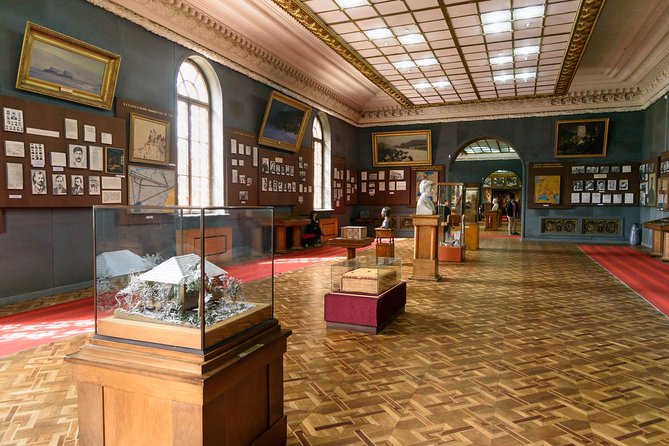
After Gori lunch time, you’ll either visit the Stalin Museum or have free time in Gori (optional). This stop is about 1 hour, and the admission isn’t included.
The Stalin Museum covers the life of Joseph Vissarionovich Stalin, who was born in Gori. The museum keeps a Soviet-era feel and includes places tied to his early life—like his original house and his railway carriage.
If you’re a history person, you’ll probably enjoy how concrete it can feel when the subject is tied to a specific birthplace town. If you’re not into Soviet history, the free time option is useful because it lets you shift back toward walking and general city understanding.
Either way, Gori isn’t just a museum town. The area around town has been populated since the early Bronze Age, and medieval Georgian chronicles connect the town’s founding to King David IV. There’s also a fortress of Gori (Goris-Tsikhe) with early use dating back to the 7th century, plus archaeological evidence showing urban life in classical antiquity. That means even when you’re not in a museum, the background is layered.
Jvari Monastery: the Monastery of the Cross with river-confluence views
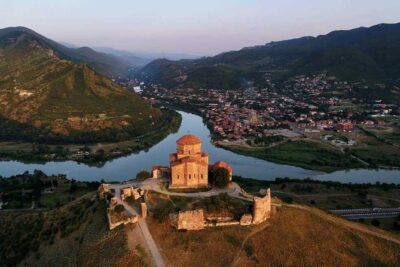
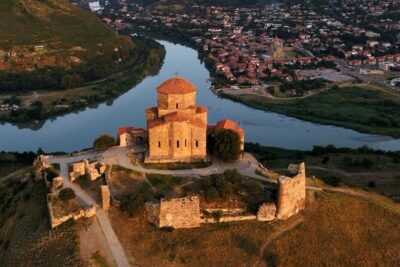
Next up is Jvari Monastery, also called the Monastery of the Cross. You’ll have about 30 minutes here, and admission is listed as free.
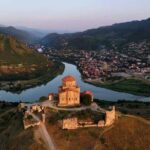
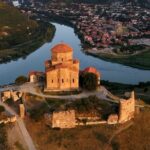
This is the kind of stop that feels short, but it usually lands well if you’re ready for views. Jvari sits on a rocky mountaintop near Mtskheta, right where the Mtkvari and Aragvi rivers meet. The monastery dates to the 6th century and is part of the UNESCO World Heritage listing connected to the historic structures of Mtskheta.
What makes Jvari special is its location. Even a quick visit gives you a strong sense of why people built major sites at natural chokepoints and dramatic overlooks. You’re not just looking at a church—you’re looking at the geography that shaped the kingdom around it.
Because the stop is only 30 minutes, my advice is simple: don’t waste time on indecision. Decide in advance if you want longer photos at the viewpoint or a slower look at the monastery details. Either choice is fine, but you only get so much time.
Svetitskhoveli Cathedral: the Living Pillar and royal coronations
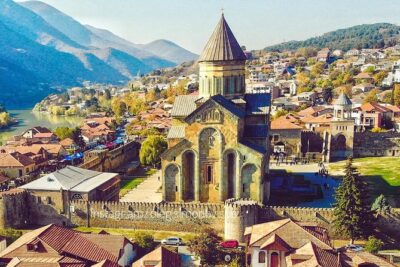
Your final major historic stop is Svetitskhoveli Cathedral in Mtskheta, with about 1 hour 30 minutes. Admission is listed as free here too.
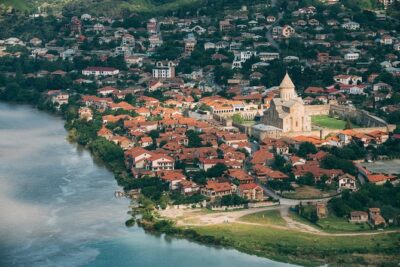
Svetitskhoveli is widely regarded as one of Georgia’s most important churches. The name translates to Cathedral of the Living Pillar. The church is currently the second-largest in Georgia after the Holy Trinity Cathedral, and it carries major religious weight. It’s associated with the burial site of Christ’s mantle, which is part of why this site remains so revered.
There’s also an undeniably political dimension: Mtskheta served as the capital of the early Georgian Kingdom of Iberia, and Svetitskhoveli functioned as a key church for Georgian monarchs. It’s tied to coronations and also served as a burial place for most kings until the end of the kingdom in the 19th century.
What I like most about this stop is that it gives you a full-circle feeling after Uplistsikhe and Jvari. You started the day with rock-cut, layered belief in cave space. Then you climbed to a mountain monastery. Now you’re inside a major cathedral linked to sacred tradition and royal statecraft.
For your visit: give yourself enough time to look slowly at both the sacred atmosphere and the grandeur of the building. One hour 30 minutes is comfortable if you don’t treat it as a quick “check-the-box” stop.
More Gori and Uplistsikhe cave-town days we have traced from Tbilisi


Price and value: $125 for a private, door-to-door history day
At $125 per person for an approximately 10-hour private tour, the value is really in the combination of transport + guide + efficiency.
Here’s what you’re paying for:
- Private transportation in an air-conditioned vehicle
- A professional guide in English
- Bottled water
- Hotel pick-up and drop-off
- A route that includes Uplistsikhe, Gori, Jvari, and Svetitskhoveli in one day
Entrance fees and lunch are not included, and that matters for planning your total spend. Still, you’re not paying extra for the logistics headache. If you’re trying to assemble these stops on your own, you’d likely spend time coordinating rides and timing between Mtskheta and Gori, not to mention tracking tickets and operating hours.
Also, since it’s private, the schedule can work better for families and mixed-age groups than you might expect from a rigid group tour. You can ask questions and adjust pacing when a site needs a little extra time.
One practical takeaway: bring a bit of cash or card-ready funds for entrance fees at places like Uplistsikhe (and the Stalin Museum if you choose it). Even when the churches are free, you’ll want to cover the paid sites.
What this tour feels like in real life
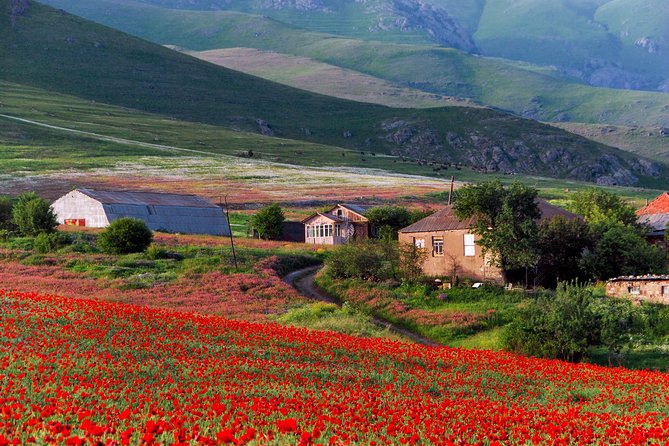
This is a classic “best of the day” route, but it’s not just sightseeing stamps. The order is smart: start with Uplistsikhe’s deep-time stone city, then switch to Gori’s town life and political history, then land on two major Georgian Orthodox anchors in Mtskheta.
You’ll likely leave feeling like you’ve seen how Georgia’s story changes across time:
- rock-cut settlement life and shifting belief systems
- Soviet-era memory linked to a real town
- medieval religious architecture tied to national identity
The tone is guide-led, and the day moves with enough structure to keep you from feeling lost. That structure is what makes the tour feel efficient without feeling rushed.
Who should book this private Mtskheta–Jvari–Gori–Uplistsikhe tour
This is a good fit if you:
- want a private day in English with door-to-door pickup
- like a route that connects multiple eras without needing multiple day trips
- prefer guided context at major sites like Svetitskhoveli and Jvari
- don’t want to manage transport between Mtskheta and Gori on your own
It’s also a good choice if you’re short on time but still want more than one “big church” stop. You get cave town + town history + UNESCO religious sites.
Quick “before you go” checklist
- Wear comfortable shoes for rock-cut and uneven surfaces at Uplistsikhe.
- Plan for entrance fees at paid sites; free admission is listed for Jvari and Svetitskhoveli.
- Budget separately for lunch in Gori.
- If you care about the lunch plan in particular, ask the guide what’s actually happening on your day before you sit down.
Should you book it? My take
If you want a practical, high-value day that strings together Georgia’s oldest layers and its best-known sacred sites, I think this is a strong pick. The private pickup at 9:00, the guide-led pacing, and the mix of Uplistsikhe + Gori + Mtskheta’s UNESCO highlights make it worth considering—especially if you’d rather not piece together multiple independent trips.
I’d only think twice if you want lunch to be fully handled for you, because lunch and entrance tickets aren’t included. But that’s easy to manage with a quick chat with your guide and a bit of planning. If you do that, you’ll get a satisfying day where each stop adds meaning to the next.
FAQ
What time does the tour pick me up?
The tour starts with pickup at 9:00 a.m. from your living place in the Tbilisi area.
How long is the tour?
The duration is approximately 10 hours.
Is this a private tour?
Yes. It’s a private tour/activity, so only your group participates.
Is the tour guided and in English?
Yes. A professional guide is included, and the tour is offered in English.
What’s included in the price?
The tour includes an air-conditioned vehicle, private transportation, a professional guide, bottled water, and hotel pick-up and drop-off.
Are entrance fees included?
No. Entrance fees are not included. Uplistsikhe and the Stalin Museum list entrance as not included, while Jvari and Svetitskhoveli are listed as free admission.
Is lunch included?
Lunch is listed as not included.
Which stops are included on the route?
The tour follows this order: Uplistsikhe Cave Town, Gori, the option for the Stalin Museum (or free time in Gori), Jvari Church/Monastery, and Svetitskhoveli Cathedral in Mtskheta.
What are the cancellation rules?
You can cancel for a full refund if you cancel up to 24 hours in advance of the experience’s start time.
Is there a mobile ticket?
Yes, mobile ticket is listed as a feature.
More from Our Tbilisi Review Desk


More Gori and Uplistsikhe Cave-Town Days
More Mtskheta and Jvari UNESCO Runs
Not quite your thing? More Tbilisi tours and day trips from our review desk




Mtskheta & Jvari UNESCO Trips, compared.
 ★ 5.0Day Trip to Mtskheta Gori and UplistsikheFrom $291,801 reviews
 ★ 5.0Mtskheta,Jvari,Bazaar,wine tasting,Chronicles of GeorgiaFrom $20730 reviews
 ★ 5.0Mtskheta-Gori-UplistsikheFrom $90112 reviews
 ★ 4.5Mtskheta, Jvari, gori, uflistsikhe, history and panorama (group tours)From $19107 reviews
 ★ 5.0Mtskheta-Jvari-Uplistsike-Chronicle of Georgia, PRIVATE TripFrom $68105 reviews
 ★ 4.5Tbilisi – Mtskheta – Jvari. Full City Tour on Hop On Hop Off BusFrom $4091 reviews
 ★ 4.5Ancient Georgia Group Tour: Mtskheta,Jvari, Gori, UplistsikheFrom $2473 reviews
 ★ 5.0Ancient Mtskheta and Chronicle of Georgia half day tourFrom $6566 reviews
Browse the lists this tour appears in