
Reviewed · MTSKHETA & JVARI UNESCO TRIPS
Mtskheta-Jvari-Gori-Uplistsikhe-Stalins Museum All inclusive tour
One day, five time periods, and zero guesswork. This all-inclusive route stitches together Uplistsikhe cave town and UNESCO Jvari Church, plus Gori’s fortress and the Stalin Museum. I like that you get real on-the-ground context for Georgia’s Christian story and Soviet-era history, not just a quick stop-and-photo run. The day also feels balanced because it mixes rock-hewn ruins, hilltop views, and major cathedral architecture. One watch-out: the schedule moves through a lot of sites, so you’ll want a calm pace inside each stop and some patience if lunch timing runs late.
This is built as a private tour for your group with hotel pickup offered and a full-day car (air-conditioned, with fuel surcharge covered). You start at 9:30 am, then spend about 8 to 10 hours on the road and at stops, with bottled water included. The physical demand is listed as moderate, which mostly matters for uneven cave floors and some walking on hills.
In This Review
- Key points worth knowing before you go
- A Day That Links Christian Georgia to Soviet Gori
- Price and Logistics: What You Really Get for $155
- Pickup, Start Time, and How the Day Fits (9:30 to About 10 Hours)
- Uplistsikhe Cave Town: Rock-Hewn Georgia from Ancient Times
- Stalin Museum in Gori: 60,000 Exhibits and a Personal Slice of Power
- Goristsikhe Fortress Ruins: Gori’s Rocky Past, From BC to Prison Days
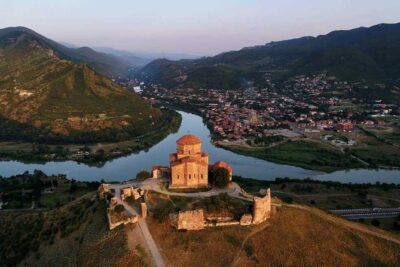
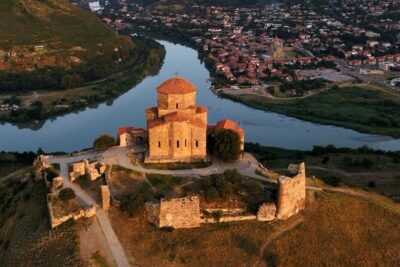
- Jvari Church and the UNESCO Hilltop View Over Mtskheta
- Svetitskhoveli Cathedral: Mantles, Bell Tower, and Royal Memory
- Lunch in Gori: Included, But Time Can Slip
- How the Guide Affects Your Experience (And How to Get the Best Day)
- Who This Tour Fits Best (And Who Might Prefer Something Else)
- Should You Book This Mtskheta–Jvari–Gori–Uplistsikhe–Stalin Tour?
- FAQ
- How long is the tour?
- What time does the tour start?
- Is this tour private?
- What’s included in the price?
- What is not included?
- What sites are visited?
- Can I cancel for a full refund?
Key points worth knowing before you go
- Uplistsikhe cave city (2 hours): Rock-hewn settlement tied to very old cultural layers, including early Bronze Age traces.
- Stalin Museum in Gori (1 hour): 60,000+ exhibits plus a memorial house and Stalin’s personal train car.
- UNESCO stops: Jvari Church and Svetitskhoveli Cathedral are both part of UNESCO World Heritage.
- Good value inclusions: Lunch in Gori, private transportation, bottled water, and key entrance tickets are covered.
- Language clarity can vary: One guide experience can feel relaxed and easy, while another can be harder to follow.
- Pace is full: You’ll see a lot, so comfy shoes and a snack plan (for hunger timing) help.
A Day That Links Christian Georgia to Soviet Gori
If you like history, this route is a smart way to understand Georgia as a place where different eras sit close together. You start with Uplistsikhe, an ancient rock-hewn town tied to some of the oldest settlement stories in the region. Then you head into Gori, where Soviet power shows up in the most literal way possible: Joseph Stalin’s museum.
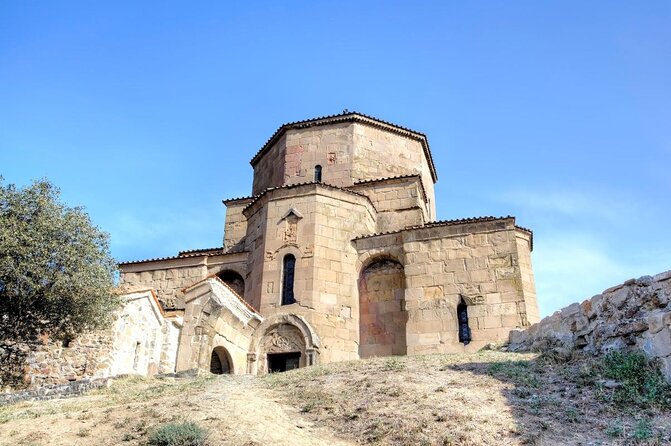
After that, the tone shifts to sacred architecture and the birth of Georgian Christian tradition. Jvari Church sits on a hill opposite Mtskheta at the confluence of the Aragvi and Mtkvari rivers. Svetitskhoveli Cathedral follows with an 11th-century complex that served as the religious center for hundreds of years.
This tour works best if you enjoy switching gears. You’re not just chasing monuments—you’re moving through belief systems, power structures, and local memory, stop by stop.
More Mtskheta and Jvari UNESCO runs we have made from Tbilisi
Price and Logistics: What You Really Get for $155
At $155 per person, the biggest value is what’s included rather than what you have to add later. You get private transportation in an air-conditioned vehicle, pickup is offered, and you also receive bottled water. The tour includes lunch in Gori, and it covers entrance tickets for Stalin’s Museum and Uplistsikhe Cave Town.
Two more small details matter for budget stress: fuel surcharge is included, and the tour uses a mobile ticket option. You don’t have to hunt for separate admissions during the day.
The trade-off is time and tempo. The itinerary covers multiple sites across the Mtskheta and Gori area, so it’s not the kind of day where you wander slowly for hours. You’ll get breaks between stops, but the overall schedule is full.
Pickup, Start Time, and How the Day Fits (9:30 to About 10 Hours)
The tour starts at 9:30 am. Expect roughly 8 to 10 hours total, including transit between the five main stops. Because it’s private for your group, you won’t get stuck waiting for strangers—but you will still feel the drive time between Tbilisi and the sites around Mtskheta and Gori.
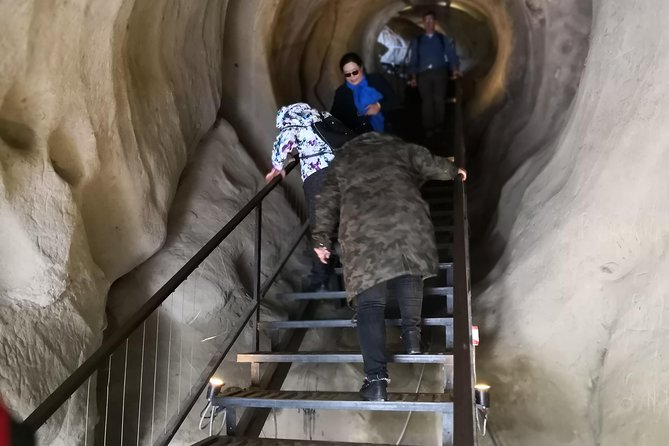
You should also plan for a moderate walking day. Uplistsikhe involves a cave city layout, which means uneven surfaces and stairs. Jvari and Svetitskhoveli are on hills and within cathedral grounds, so comfortable shoes are not optional if you want to enjoy yourself.
One practical tip: eat a solid breakfast. Lunch is included, but timing can land later in the day depending on how the schedule moves.
Uplistsikhe Cave Town: Rock-Hewn Georgia from Ancient Times
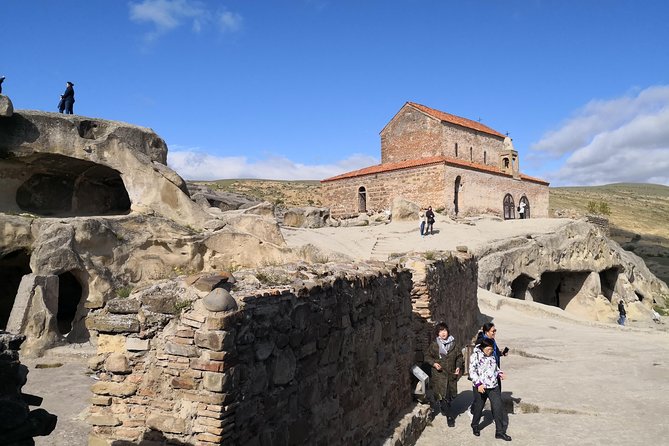
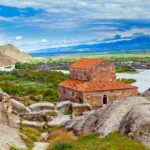
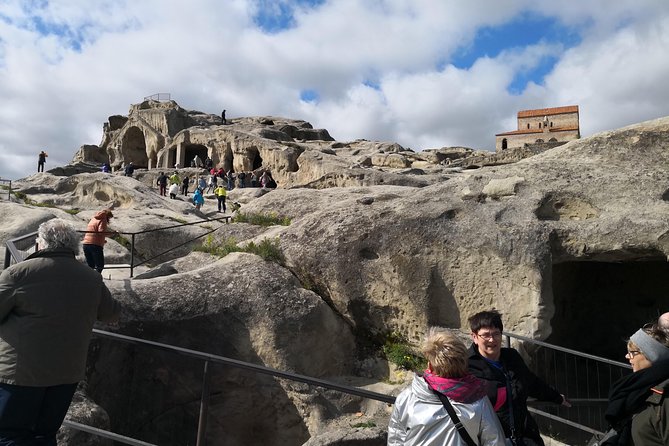
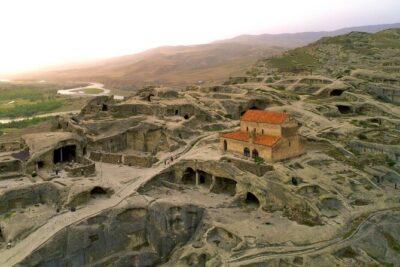
Uplistsikhe is the kind of place that makes history feel physical. It’s a rock-hewn city about 10 km east of Gori on the left bank of the Mtkvari River, and it’s one of the oldest settlement areas in the Caucasus region. You’ll typically have around 2 hours here, and the ticket is included.
What makes this stop especially worthwhile is how clearly it shows human adaptation. The ruins are set into the rock, so you’re walking through a built environment that grew around geography. The site is first mentioned in history in the 7th century, but the surrounding archaeological and architectural monuments include older layers—some dating back to the early Bronze Age—and are connected to the Kura-Araxes culture.
Even without a deep archaeological background, you can read the logic of the place. Think: housing carved into rock, passages that channel movement, and a town plan shaped by the hillside. It’s also a good reset after transit, because you can slow down as you explore sections at your own pace inside the two-hour window.
Watch-outs: wear grippy shoes and keep an eye on footing. The “cave city” idea sounds romantic, but you’ll still be climbing and stepping.
Stalin Museum in Gori: 60,000 Exhibits and a Personal Slice of Power
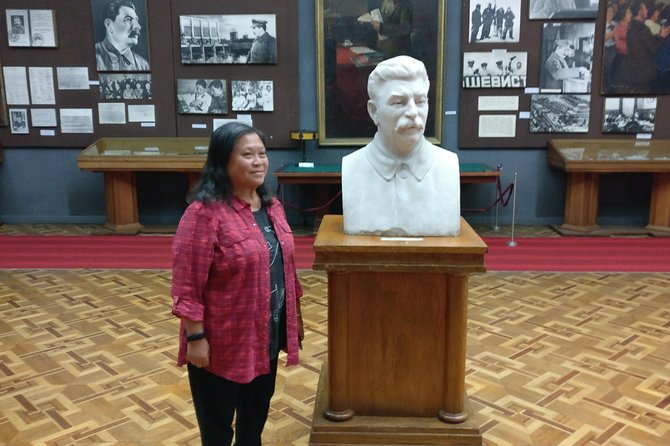
The Stalin Museum is a sharp contrast to the ancient stone around it. It’s in Gori, and it focuses on Joseph Stalin’s life and image as curated through personal artifacts and staged historical context.
You’ll have about 1 hour, with entry included. The museum was founded in 1937 and holds over 60,000 exhibits. The most memorable parts are the memorial house (where he is believed to have been born), the exhibition building, and Stalin’s personal train car, which he used on trips to Tehran, Yalta, and Potsdam.
This stop isn’t just about facts. It’s about how totalitarian power tries to make itself feel personal—through belongings, objects, and the physical setting of the story. If you prefer light entertainment, this may not be your favorite hour. If you’re the kind of person who likes to understand how eras get packaged and remembered, you’ll likely find it fascinating.
One more note: the museum’s impact depends on your guide’s explanations. On some days, the storytelling can feel relaxed and easy to follow. On other days, you might struggle if the language delivery isn’t clear. If you want more out of the hour, ask questions during the tour while you still have time.
More Gori and Uplistsikhe cave-town days we have traced from Tbilisi


Goristsikhe Fortress Ruins: Gori’s Rocky Past, From BC to Prison Days
After the museum, the day shifts again to stone and ruins. Goristsikhe is a historic fortress on a rocky hill in central Gori, and you’ll usually spend about 40 minutes here. Admission is listed as free.
The ruins and archaeological findings suggest a fortress existed as far back as the 1st century BC. Later, in historic manuscripts, it’s mentioned in the 13th century as Gori Prison. That jump—from ancient fortress to prison identity—helps you see how power structures reuse the same strategic ground.
This is a shorter stop, so it works best as a “bridge” between major sights. You get enough time to take in the setting and understand why this hill mattered, without losing the day to extra wandering.
Because it’s a hilltop setting, bring your usual hill stamina. This is not the time for sandals.
Jvari Church and the UNESCO Hilltop View Over Mtskheta
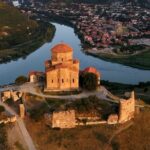
Jvari Church is one of those stops where the setting adds meaning. It’s a 6th-century Georgian Orthodox monastery built on a hill opposite Mtskheta, right at the confluence of the Aragvi and Mtkvari rivers.
You’ll typically have about 40 minutes, and admission is free. Jvari is part of a UNESCO World Heritage listing focused on early Georgian Christian architecture.
This site’s origin story matters. After Christianity was adopted, King Mirian III erected an enormous wooden cross at this location. Later, in the second half of the 6th century, Guaram (ruler of Kartli) built a small church beside the Holy Cross. Even if you just skim the explanation, you’ll feel why people kept returning to this place: it’s sacred, but it’s also anchored to a specific geography that makes the story easier to picture.
The best way to enjoy Jvari is to slow down and let the hilltop setting sink in. If your guide has a clear delivery that day, it’s one of the moments where the tour starts to feel truly meaningful rather than just scheduled.
Svetitskhoveli Cathedral: Mantles, Bell Tower, and Royal Memory
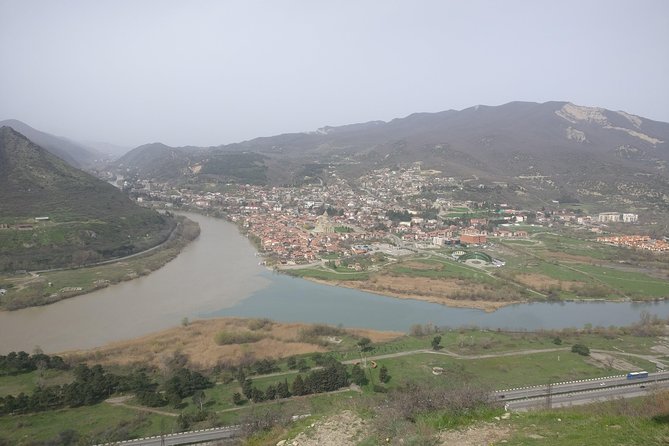
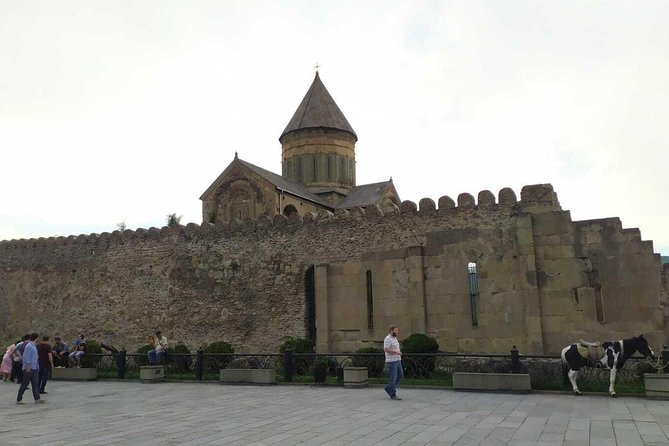
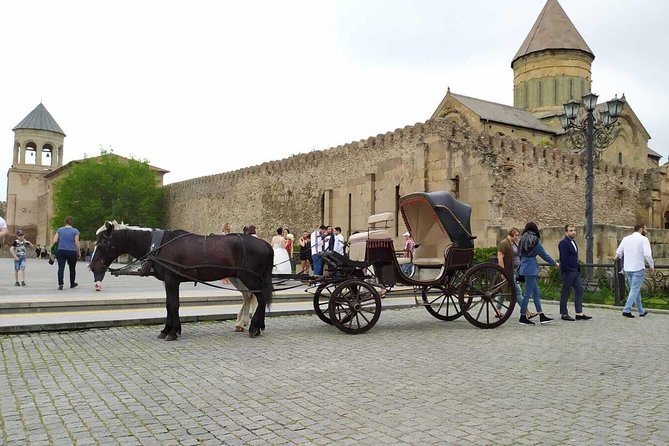
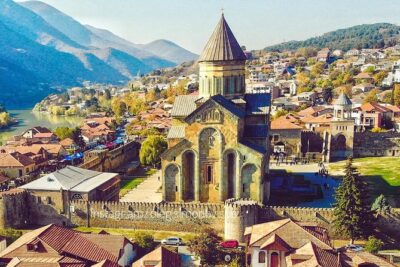
Svetitskhoveli Cathedral is the big religious centerpiece of the day. It dates to the 11th century and served as the religious center of Georgia for hundreds of years. You’ll spend around 1 hour, and it’s free to enter.
This is not only one building. The complex includes the church, a gate, a bell tower, castles, and clerical residences. It’s the kind of place where you can understand why it mattered politically and spiritually.
Two preserved relics are highlighted here: the mantle of Christ and the mantle of the Prophet Elijah. The cathedral also contains the tombs of King Vakhtang Gorgasali, known as the founder of Tbilisi. That connection—sacred relics plus the memory of a royal founder—helps explain why Svetitskhoveli remained central across generations.
UNESCO recognition comes from the architecture and historical role of the complex. In a day filled with different eras, this stop gives Georgia’s Christian story a durable, institutional feeling.
If you’re hoping for the “wow” moment, this is often it. If you’re short on patience, this is the stop you’ll want to treat gently: it deserves your attention.
Lunch in Gori: Included, But Time Can Slip
Lunch is included in a restaurant in Gori. In theory, it’s the perfect reset: a break from walking, and a chance to try Georgian food before the last two UNESCO-style stops.
In practice, timing can vary. One real consideration from the day’s experiences is that lunch may arrive later than you expect. Because the tour is built with multiple stops and fixed durations, the most common consequence is simple: you may get hungry before lunch hits.
My advice is straightforward. Plan for a solid breakfast, bring a small snack if you’re the type who runs out of patience with hunger, and use the time after lunch to pace yourself through Jvari and Svetitskhoveli.
Alcoholic beverages are not included, so if you want wine or beer with your meal, you’ll need to pay separately.
How the Guide Affects Your Experience (And How to Get the Best Day)
This tour can feel either relaxed or confusing, depending on how clearly your guide communicates. In one experience, the guide David kept the day easygoing, with enough time at each point to avoid feeling rushed. That same day also included a wine-tasting organized as a bonus.
On other days, the pace may still be smooth, but if you don’t understand the language delivery, the tour can feel less engaging. The sites are interesting on their own, but great context turns them from “I saw it” into “I got it.”
Your move: ask one or two questions early. Examples that help based on what you’ll see—How did Uplistsikhe function as a settlement? Why was Jvari placed there?—and you’ll steer the explanation toward what you care about.
Because the tour is private for your group, you’re more likely to get that personal touch than on a bigger bus tour.
Who This Tour Fits Best (And Who Might Prefer Something Else)
This is a strong match if you want a history-and-culture day that doesn’t require planning between stops. You’re getting Uplistsikhe, a major museum in Gori, and two UNESCO Christian architecture sites (Jvari and Svetitskhoveli). If you like places with layers—ancient settlement, medieval religious identity, Soviet-era memory—this route makes a lot of sense.
It’s also a good fit for first-time visitors to the Mtskheta and Gori area because it groups distant sites into one efficient day. The private vehicle and included tickets reduce friction.
Who might find it less ideal? If you strongly dislike structured schedules, or if you’re the type who wants long, quiet time alone in sacred spaces, you may feel the pace. It’s also worth noting that the day assumes moderate fitness, mainly due to cave and hill walking.
Should You Book This Mtskheta–Jvari–Gori–Uplistsikhe–Stalin Tour?
If you want one ticket that covers a lot of Georgia’s most talked-about historical stops, I’d say yes—especially at $155 when lunch and key admissions are included. Uplistsikhe and the UNESCO churches are the core “value anchors,” and the Stalin Museum adds a very different angle on how the 20th century left marks on this region.
Book it if your ideal day includes:
- At least two major UNESCO architecture moments
- One site that’s ancient and rock-carved (Uplistsikhe)
- One site that’s heavy on personal artifacts and political history (Stalin Museum)
- A car day with fewer logistics to manage
Skip it (or consider another option) if you need lots of free time, dislike museum-heavy hours, or prefer tours where language delivery is guaranteed. If communication is a concern for you, choose this tour when you’re comfortable asking questions and guiding the pace in your own way.
Overall, this is a practical, high-impact day trip that gives you context—not just photos—across ancient, medieval, and modern Georgia.
FAQ
How long is the tour?
The tour lasts about 8 to 10 hours.
What time does the tour start?
The start time is 9:30 am.
Is this tour private?
Yes. It’s private, and only your group participates.
What’s included in the price?
It includes pickup offered, private transportation in an air-conditioned vehicle, fuel surcharge, bottled water, lunch in Gori, and entrance tickets for Stalin’s Museum and Uplistsikhe Cave Town.
What is not included?
Alcoholic beverages are not included.
What sites are visited?
You’ll visit Uplistsikhe Cave Town, Stalin Museum, Goristsikhe, Jvari Church, and Svetitskhoveli Cathedral.
Can I cancel for a full refund?
Yes. You can cancel up to 24 hours in advance for a full refund.
More from Our Tbilisi Review Desk


More Gori and Uplistsikhe Cave-Town Days
More Mtskheta and Jvari UNESCO Runs

Not quite your thing? More Tbilisi tours and day trips from our review desk





Mtskheta & Jvari UNESCO Trips, compared.
 ★ 5.0Day Trip to Mtskheta Gori and UplistsikheFrom $291,801 reviews
 ★ 5.0Mtskheta,Jvari,Bazaar,wine tasting,Chronicles of GeorgiaFrom $20730 reviews
 ★ 5.0Mtskheta-Gori-UplistsikheFrom $90112 reviews
 ★ 4.5Mtskheta, Jvari, gori, uflistsikhe, history and panorama (group tours)From $19107 reviews
 ★ 5.0Mtskheta-Jvari-Uplistsike-Chronicle of Georgia, PRIVATE TripFrom $68105 reviews
 ★ 4.5Tbilisi – Mtskheta – Jvari. Full City Tour on Hop On Hop Off BusFrom $4091 reviews
 ★ 4.5Ancient Georgia Group Tour: Mtskheta,Jvari, Gori, UplistsikheFrom $2473 reviews
 ★ 5.0Ancient Mtskheta and Chronicle of Georgia half day tourFrom $6566 reviews
Browse the lists this tour appears in