
Reviewed · MTSKHETA & JVARI UNESCO TRIPS
Mtskheta – Jvari + Gori – Uplistsikhe Private Day Tour
Crosses, caves, and Stalin in one day. This Mtskheta–Jvari–Gori–Uplistsikhe route stacks major Georgian sights with smart pacing, starting at Jvari and ending inside the rock-cut world of Uplistsikhe. You’ll move from hilltop river views to UNESCO cathedral-town streets, then to the Soviet-era story of Joseph Stalin, and finally to an ancient fortress carved into the ground.
I especially like the private pickup and drop-off from any address in Tbilisi—it saves time and keeps the day smooth. I also like how the itinerary connects history in a way you can feel: Christian origins at Jvari and Svetitskhoveli, then political history in Gori, then much older everyday life in the caves.
One caution: two stops have extra entry fees—Stalin Museum and Uplistsikhe Cave Town are $5 per person each, even though Jvari and Mtskheta are listed as free.
In This Review
- Key highlights you’ll care about
- A smart one-day route: Jvari, Mtskheta, Gori, and Uplistsikhe
- Jvari Monastery: the Cross on the hill above the Aragvi and Kura
- Mtskheta UNESCO core: Pompey’s Bridge to Svetitskhoveli Cathedral
- Gori and the Stalin Museum sites: personal objects, gifts, and an armored train
- Uplistsikhe Cave Town: the Fortress of God carved into rock
- Price and value: what $57.80 buys you (and what adds up)
- Getting the most from the day (without trying too hard)
- Who should book this private Mtskheta–Gori–Uplistsikhe tour
- Should you book it?
Key highlights you’ll care about
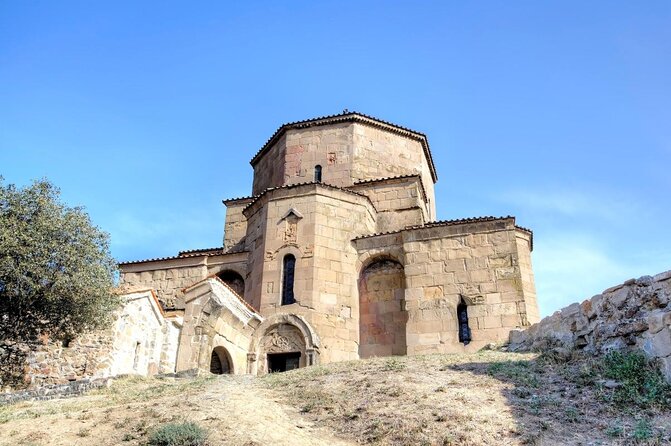
- Hilltop start at Jvari Monastery: 6th-century architecture with views where the Aragvi and Kura rivers meet
- UNESCO Mtskheta + Svetitskhoveli: a cathedral town linked to ancient Iberia and a famous robe tradition
- Gori’s Stalin focus without detours: birthplace house, armored train, and a museum with personal objects and gifts
- Uplistsikhe cave city that still feels usable: tunnels, temples, a royal cave of King Tamara, and more
- Private car + WiFi: comfortable transport across a long day, with less hassle than public options
A smart one-day route: Jvari, Mtskheta, Gori, and Uplistsikhe
If you only have one full day outside Tbilisi, this tour makes a strong case. It hits four places that would take real effort to stitch together on your own, especially if you want time at each stop rather than rushing through photo ops.
The day is built around variety. First you get panoramic views at Jvari. Then you walk through layers of ancient Mtskheta and its main church, Svetitskhoveli. After that, you shift to Gori’s Stalin sites—more than a single exhibit, since you’ll see the birthplace house and the armored train as part of the stop. Finally, Uplistsikhe brings you back thousands of years, with caves used for religious and daily spaces.
The big practical win is the private transportation. You’re not waiting around for other groups, and you don’t have to coordinate multiple legs with different ticket lines and timing. A guide’s English also matters here, because the sites are old and symbol-heavy. You’ll understand what you’re looking at, not just where to stand for a picture.
More Mtskheta and Jvari UNESCO runs we have made from Tbilisi
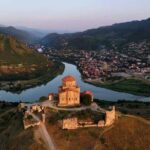
Jvari Monastery: the Cross on the hill above the Aragvi and Kura
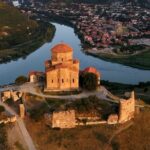
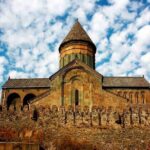
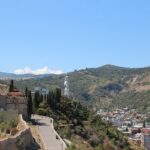
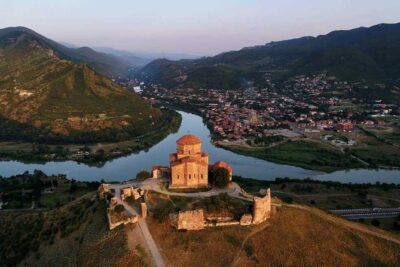
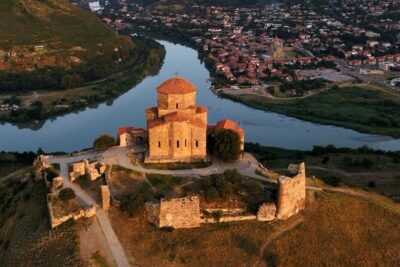
Jvari Monastery is the kind of start that sets the whole day’s tone. You begin at an ancient temple dating back to the 6th century, perched on a high point near Mtskheta. The view is the headline: at the intersection of the Aragvi and Kura rivers, the landscape becomes a natural map of the region.
The name itself is meaningful. In Georgian, the church’s name translates as the cross, and your guide will explain its history and the symbolism tied to it. Even if you’re not a theology person, the combination of location plus architecture helps you grasp why this spot became a magnet for visitors over time.
How it fits in time:
- The stop is short, about 20 minutes.
- Since the visit centers on the viewpoint and key architectural features, it’s perfect as a warm-up—enough to get the atmosphere without exhausting you before the longer stops.
Potential drawback to plan around: because the time window is brief, it’s not the best choice if you want a long, slow, contemplative walk and lots of side areas. You’ll get the essentials, then move on.
Mtskheta UNESCO core: Pompey’s Bridge to Svetitskhoveli Cathedral
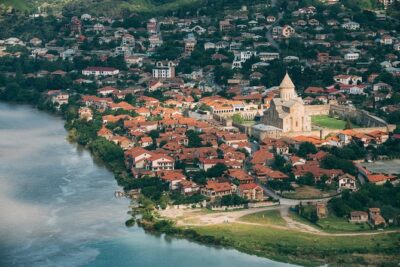
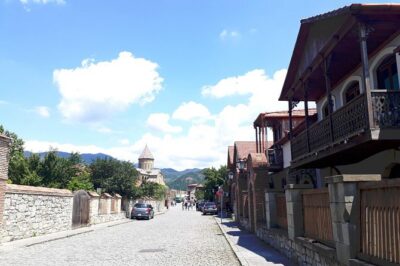
Next comes Mtskheta, described as a museum city and a UNESCO World Heritage site. The place has been inhabited for about 2,500 years, and it once served as the capital of the early Kingdom of Iberia. That “long continuity” is why Mtskheta feels different from a normal day-trip town.
In your time there, you’ll see several anchor monuments rather than trying to cover everything:
- Pompey Bridge, a stone bridge over the Kura River built in the time of Pompey the Great, around 65 BC
- A church from the 4th–5th century
- Bebris Castle from the 1st century
- And the main Orthodox cathedral, Svetitskhoveli Cathedral
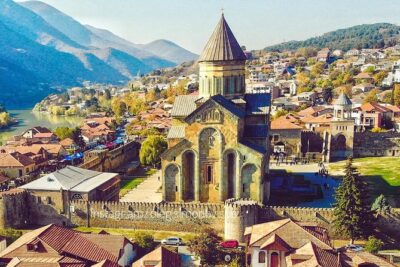
Svetitskhoveli is the big emotional centerpiece. It’s described as the main Christian Orthodox Cathedral, and it’s also known for a tradition that Christ’s robe is said to be buried here. Whether you treat that as sacred tradition or historical lore, it changes how you see the building and the devotion around it.
The Mtskheta portion is about 50 minutes. That’s a good balance: enough time to walk between highlights and understand how they connect, but not so long that you lose momentum after the morning viewpoint.
A small tip: in cathedral towns, your time tends to disappear fast when you stop to read and look closely. If you like details, I’d spend your first few minutes orienting yourself—then choose one or two focal points for deeper attention. You’ll still get the cathedral atmosphere without feeling rushed.
Gori and the Stalin Museum sites: personal objects, gifts, and an armored train
Gori is where the tour shifts gears hard. Instead of focusing on ancient stone and sacred tradition, you step into the Soviet-era story of Joseph Stalin.
The stop is about 1 hour, and the highlights include:
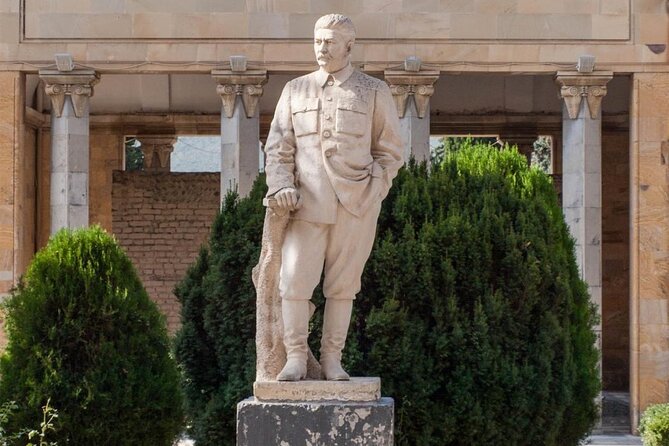
- The house where Stalin was born
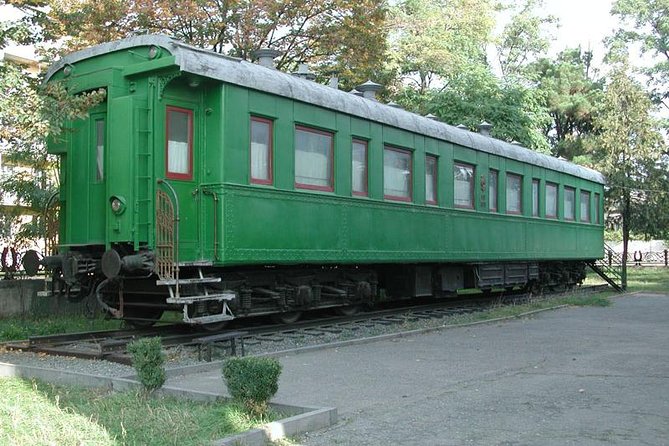
- His armored train
- The Stalin Museum, where you can see personal items like a pipe, a chair, and a sword
- Photos tied to childhood and early revolutionary activity, including being captured by Tsar police
- A hall of gifts received from different countries, with examples mentioned like Germany, Poland, and China
It’s a striking mix: personal artifacts, political imagery, and international gifts all in one museum orbit. If you’re curious about 20th-century history beyond textbooks, this stop gives you concrete objects to attach to the story.
Cost note: the Stalin Museum entry is listed as an extra $5 per person. The rest of the Gori stop is described as free admission, so you’ll likely end up paying just for that museum component.
One consideration for your day: this is the most emotionally and politically loaded stop on the itinerary. If you prefer lighter history, you may want to keep your expectations grounded. Still, the value here is that you get multiple related components in the same hour—birthplace house, armored train, and museum artifacts—so you’re not paying for time wasted on travel between separate sites.
Uplistsikhe Cave Town: the Fortress of God carved into rock
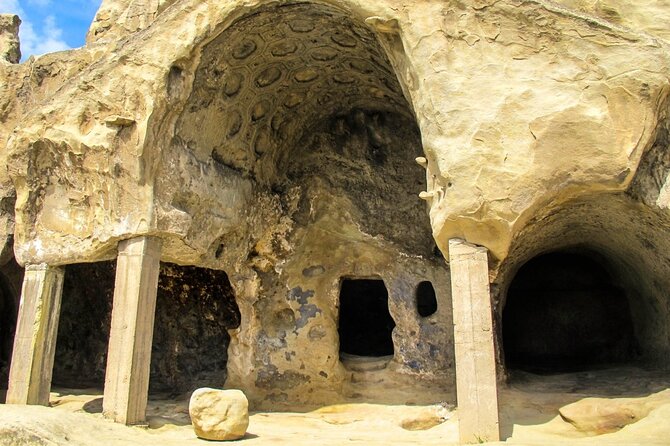
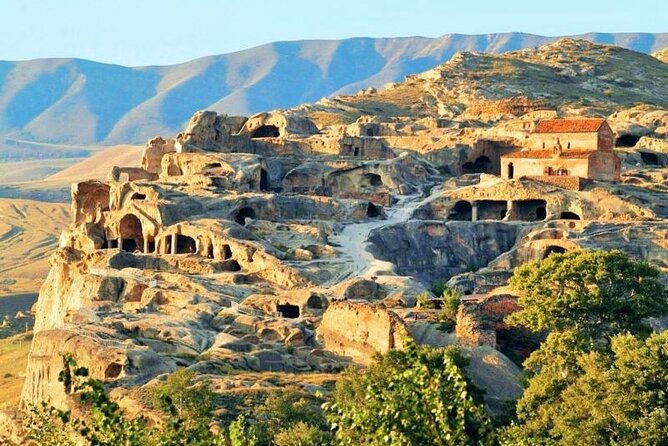
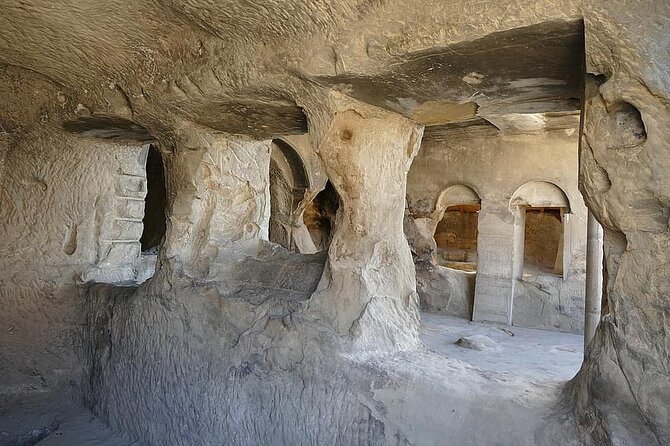
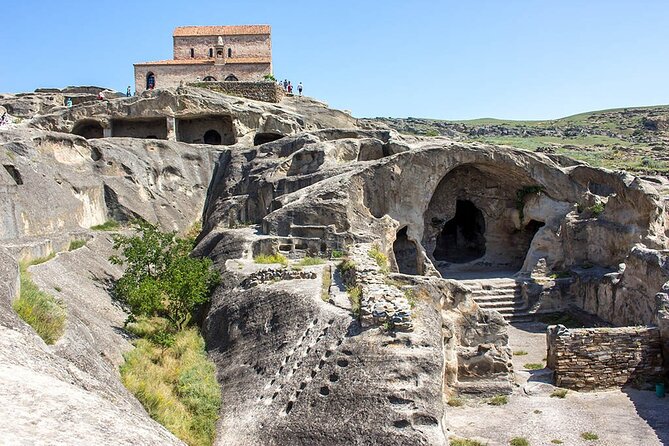
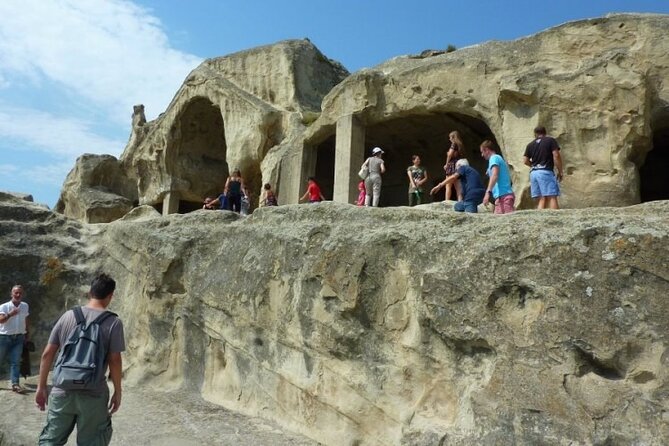
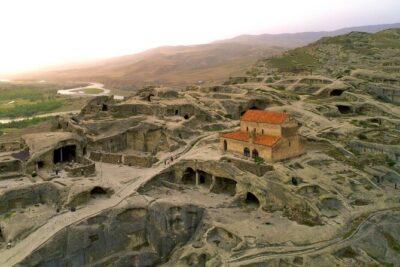
Uplistsikhe is the reason many people book this day trip in the first place. The cave city is described as about 3,000 years old, carved into rock and called the Fortress of God. What makes it special is its layered structure: the site preserved remains of architectural and religious buildings built over thousands of years.
The tour says only about 150 caves have survived. That matters because the ruins feel lived-in by time. You can see how spaces were organized across eras instead of viewing a single moment frozen in place.
During your 1 hour 30 minutes at Uplistsikhe, you’ll visit several key features, including:
- Cave tunnel
- An ancient sun temple
- The royal cave of King Tamara
- A winery
- A church from the 6th century
- A bibliotheca and an ancient pharmacy
This is one of those locations where a guide makes a real difference. Without context, caves can blur together. With context, you start noticing function—ritual spaces, storage or production ideas like a winery, and institutional spaces suggested by places described as a bibliotheca and pharmacy.
Comfort note: the site is cave-carved. You’ll want shoes with good grip and clothing that works in changing shade. If the weather is hot, plan for sun exposure on the approach areas around the caves. If it’s wet or windy, Uplistsikhe can feel less comfortable, which ties into the tour’s weather requirement.
More Gori and Uplistsikhe cave-town days we have traced from Tbilisi


Price and value: what $57.80 buys you (and what adds up)
At $57.80 per person, this isn’t a budget-only tour, but it also isn’t priced like a luxury private experience with endless stops. You’re paying for a full-day route with private transportation, WiFi on board, and hotel pickup and drop-off from any address in Tbilisi. Those three pieces matter, because the day is long enough that convenience becomes value, not fluff.
Here’s the honest math: two extra entry fees are listed as $5 per person—Stalin Museum and Uplistsikhe Cave Town. If you plan to do both paid components, you should mentally budget about $10 per person in addition to the base price.
The value case gets even stronger if you’re the type who wants to see multiple “anchor” sites in one go:
- Jvari: hilltop 6th-century monastery
- Mtskheta: UNESCO city highlights and Svetitskhoveli
- Gori: Stalin birthplace context plus museum artifacts
- Uplistsikhe: ancient cave city with major named features
This is basically a greatest-hits itinerary, but it’s not the kind where you’re dropped at a spot and left alone. The day’s structure is designed to keep the story connected.
Language support is also included: the tour is offered in English, and the guides described (George and Gogi) have strong communication skills. That matters because the site explanations—especially for symbolic architecture and historical artifacts—are part of the payoff.
Getting the most from the day (without trying too hard)
A private day tour like this works best when you’re ready to be efficient, not when you try to “win” time by sprinting through everything. Aim for a relaxed pace: arrive, listen, look, then move.
A few practical tips that fit this specific route:
- Bring water. The day is 8 to 9 hours, and you’ll cover multiple sites across different elevations.
- Wear grippy shoes for Jvari viewpoints and cave steps.
- If you care about photos, do your main picture moments early in each stop so you don’t lose the rest of the time to camera fiddling.
- Expect a lot of “context moments.” With English interpretation, you’ll understand the cross symbolism at Jvari, the robe tradition at Svetitskhoveli, and the museum object explanations in Gori.
Also: the itinerary is weather dependent. The tour requires good weather, and if it’s canceled due to poor weather, you’ll be offered a different date or a full refund. That’s especially relevant for Uplistsikhe, where damp or messy conditions can make cave walking less pleasant.
Who should book this private Mtskheta–Gori–Uplistsikhe tour
This is a great fit if:
- You want a private day without public-transport stress
- You’re happy with a packed route that still gives real time at each anchor site
- You want both ancient sacred Georgia and the Stalin-era story in one day
- You prefer an English guide so you don’t miss what makes each site meaningful
It may not be the best fit if:
- You only want one theme (for example, purely ancient religious sights).
- You dislike political history and museum stops, since Gori is a clear Soviet-focused segment.
- You’re sensitive to longer days. At 8 to 9 hours, this is not a half-day.
Should you book it?
Yes—if you want one well-structured day that takes you from hilltop monastery views to UNESCO Mtskheta, through Gori’s Stalin sites, and into Uplistsikhe’s rock-cut cave world. The combination of private transport, WiFi, and a guided English explanation is what makes the day feel cohesive instead of chaotic.
Just go in knowing two costs add on at the end: Stalin Museum and Uplistsikhe Cave Town entry fees. If you’re okay with that, this tour is a strong value for a high-impact itinerary that’s hard to replicate efficiently on your own.
More from Our Tbilisi Review Desk

More Gori and Uplistsikhe Cave-Town Days
More Mtskheta and Jvari UNESCO Runs
Not quite your thing? More Tbilisi tours and day trips from our review desk




Mtskheta & Jvari UNESCO Trips, compared.
 ★ 5.0Day Trip to Mtskheta Gori and UplistsikheFrom $291,801 reviews
 ★ 5.0Mtskheta,Jvari,Bazaar,wine tasting,Chronicles of GeorgiaFrom $20730 reviews
 ★ 5.0Mtskheta-Gori-UplistsikheFrom $90112 reviews
 ★ 4.5Mtskheta, Jvari, gori, uflistsikhe, history and panorama (group tours)From $19107 reviews
 ★ 5.0Mtskheta-Jvari-Uplistsike-Chronicle of Georgia, PRIVATE TripFrom $68105 reviews
 ★ 4.5Tbilisi – Mtskheta – Jvari. Full City Tour on Hop On Hop Off BusFrom $4091 reviews
 ★ 4.5Ancient Georgia Group Tour: Mtskheta,Jvari, Gori, UplistsikheFrom $2473 reviews
 ★ 5.0Ancient Mtskheta and Chronicle of Georgia half day tourFrom $6566 reviews
Browse the lists this tour appears in