
Reviewed · MTSKHETA & JVARI UNESCO TRIPS
Mtskheta, Jvari, gori, uflistsikhe, history and panorama (Private tours)
A view from above changes everything. This private tour strings together Mtskheta’s Christian roots and Uplistsikhe’s pre-Christian world into one satisfying day, with time to see the big ideas in Georgia’s past.
I especially like how the route pairs walkable churches with the kind of viewpoints that make you understand geography, not just memorize dates. I also like the practical pace: you get guided time at each key site without feeling rushed through everything. One thing to consider is the day is packed, so if you want slow museum time or lots of free wandering, you may feel the schedule moving along.
In particular, I appreciate the small-group feel: it’s set up so your group only goes together in the vehicle, with pickup available from a central Tbilisi address. The vehicle is air-conditioned, and there’s WiFi onboard, which helps on the longer ride between sites.
A possible drawback for some people is that lunch isn’t included, so you’ll need to plan a meal stop yourself while you’re out there in Mtskheta or Gori.
In This Review
- Key things to know before you go
- A 9-hour circuit through Mtskheta’s sacred center and cave Georgia
- Jvari Church: the rivers meet, and the view does the work
- Svetitskhoveli Cathedral: Pillar of Life-Giving and relics tied to legend
- Samtavro Church: Mirian and Nana, the blackberry story, and a calm pace
- Stalin Museum in Gori: short, political, and optional
- Uplistsikhe cave city: pagan stone labyrinths and Kura Valley views
- The guides make the day: Nino and Georgiy’s care shows
- Logistics that matter: start time, pickup, and no included lunch
- Price and value: what $90 covers, and what costs extra
- Who should book this, and who might want something else
- Should you book this Mtskheta–Jvari–Uplistsikhe private tour?
- FAQ
- How long is the private tour?
- What time does the tour start, and where is the meeting point?
- Is pickup included?
- Which stops are included in the tour price?
- Are lunch or extra museum/cave tickets included?
- Is this tour truly private?
Key things to know before you go
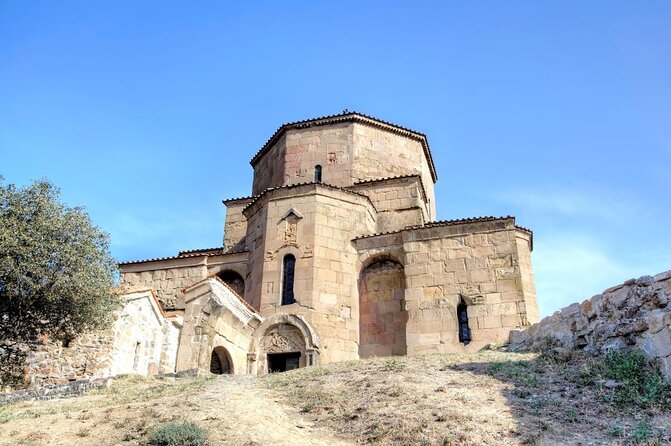
- Jvari viewpoint first: you start with a climb that makes Mtskheta and the two rivers feel real, not theoretical.
- Relics and sacred stories at Svetitskhoveli: you’ll hear about major Christian relics tied to Georgia’s spiritual history.
- Samtavro’s Mirian-Nana legacy: the early Georgian Christian royal story is part of the visit, not just a label.
- Optional Stalin Museum in Gori: you can add it only if your group wants it, with an extra ticket cost.
- Uplistsikhe cave city panoramas: pagan stone labyrinths plus Kura Valley views, with an extra ticket cost.
A 9-hour circuit through Mtskheta’s sacred center and cave Georgia
This is the kind of trip that helps your brain connect the dots. You start around 9:30am and spend about 9 hours seeing how Georgia’s spiritual story shifts over time—from early eras before Christianity to the church-era that shaped medieval culture.
You’ll ride out from Tbilisi in an air-conditioned vehicle, with WiFi onboard, and a highly qualified guide leading the way. It’s private in the real sense: it’s built for your group, not a random shuffle with strangers.
The big value here is that you’re not just ticking off names. You’re tracing a path of ideas across locations—walk up for views, step into church history, then switch gears to a cave city where religion and daily life were carved into stone.
More Mtskheta and Jvari UNESCO runs we have made from Tbilisi
Jvari Church: the rivers meet, and the view does the work
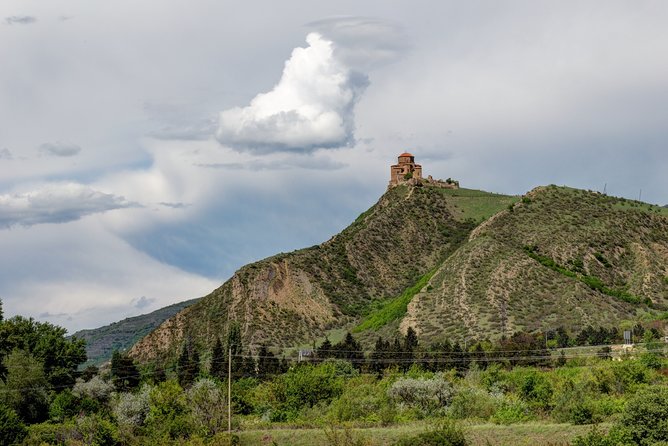
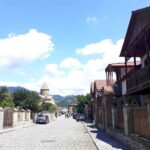
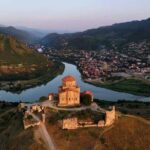
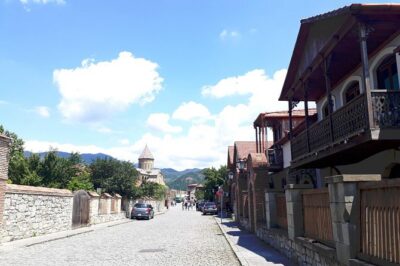
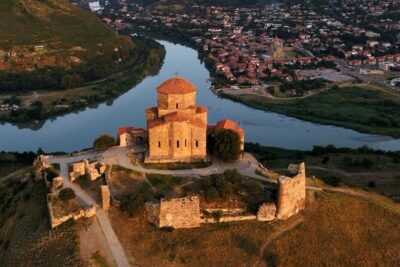
Jvari Church sits above Mtskheta, and the first thing you notice is how the land explains the story. Your walk begins from a central area with street names honoring figures like Pushkin, Lermontov, Tchaikovsky, Dumas-father, and Tolstoy, then you turn off the main path and head toward the VI-century church.
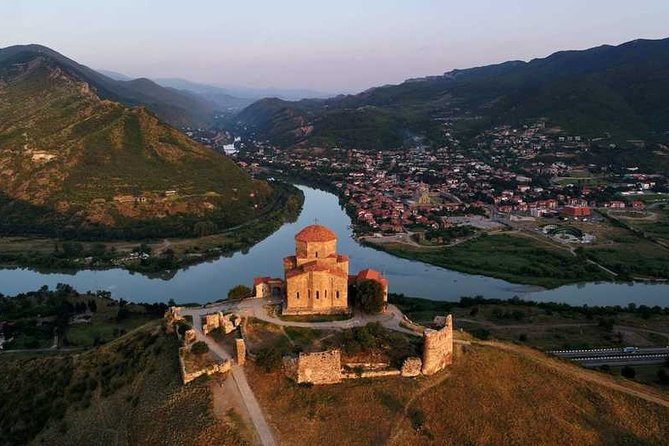
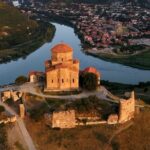
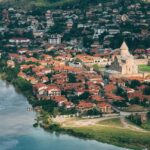
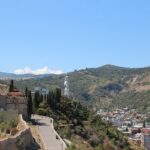
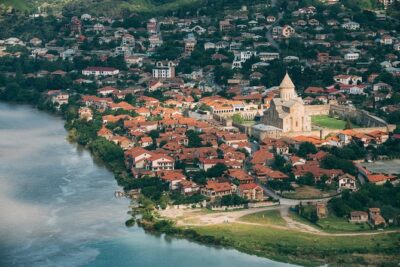
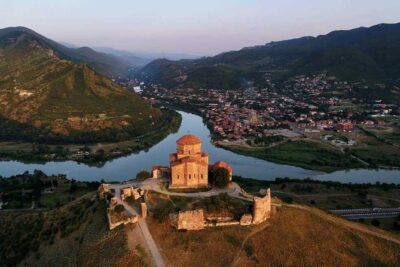
This stop is about perspective. From the temple area, you get an enchanting view of Mtskheta and the meeting of the Aragva and Kura rivers. It’s the sort of viewpoint that makes you understand why people settled here and why rulers and religious leaders cared so much about controlling the horizon.
One more detail that matters: the route includes passing places connected to the events described in Lermontov’s famous poem Mtsyri. Even if you don’t know the text well, it gives your walk a narrative thread instead of turning it into a pure sightseeing hike.
Practical tip: wear shoes you’re comfortable climbing in. The path is short, but it’s a walk meant to reach the viewpoint, not a stroll on flat ground.
Svetitskhoveli Cathedral: Pillar of Life-Giving and relics tied to legend
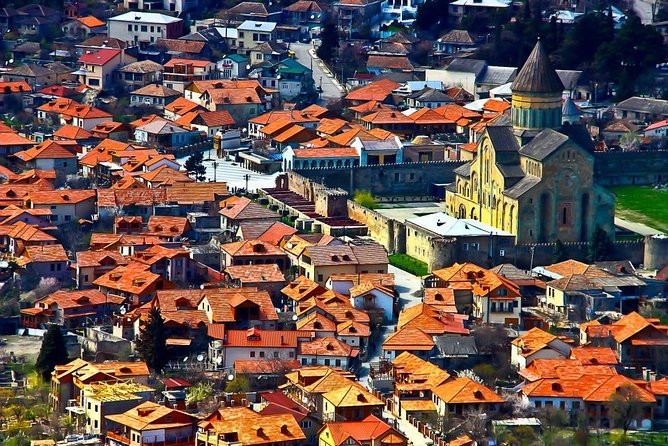
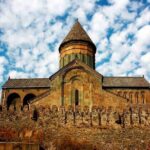
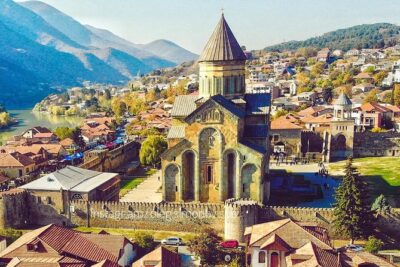
Next comes the patriarchal heart of the Georgian Orthodox Church experience in Mtskheta: Svetitskhoveli Cathedral, also known as the Pillar of Life-Giving. This is a cathedral stop where your guide’s storytelling really matters, because the site’s importance is layered.
You’ll spend time getting acquainted with the cathedral’s history and the big events connected to it. What makes the stop feel more than ceremonial is the set of Christian shrines associated with the place, including the tunic of Jesus Christ, the mantle of Elijah the Prophet, and relics of St. Andrew the First-Called.
Even if you’re not religious, this is a powerful way to understand medieval Georgia. The church isn’t just a building here—it’s presented as a center where faith, identity, and political legitimacy overlap.
Ticket-wise, entry is included for this stop, so you’re not juggling payments mid-tour. Plan to stay focused during the guide’s explanation; this is where you’ll pick up the context that makes the later stops easier to understand.
Samtavro Church: Mirian and Nana, the blackberry story, and a calm pace
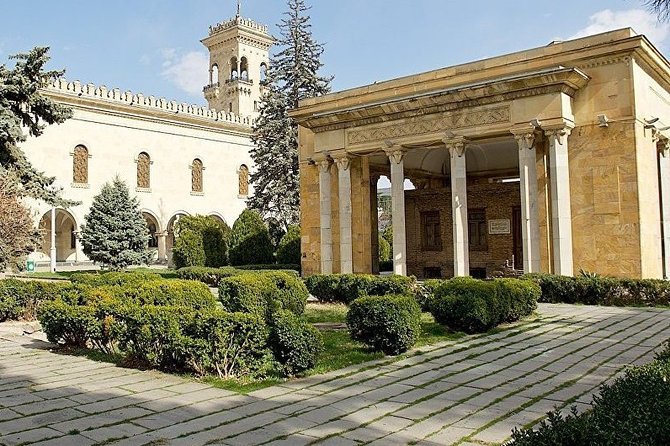
After the cathedral, you walk to Samtavro Church. This stop keeps a more human scale than the big cathedral, and it leans into early Georgian Christianity through royal and spiritual connections.
At Samtavro you’ll see the graves of Mirian—the first Georgian Christian king—and his wife, Queen Nana. You’ll also hear about relics of the holy elder Gabriel Samtavrii.
Then there’s the blackberry bush story tied to Queen Nana. The tour explains how it’s known as miraculous, repeatedly cut down by barbarians and then rising again. It’s a small detail, but it’s the kind of local belief you can’t get from a photo caption.
Timing is shorter here too—about 30 minutes—which helps keep the day from feeling like one long march. If you want a breath between major sites, this is a good moment to take it.
Stalin Museum in Gori: short, political, and optional
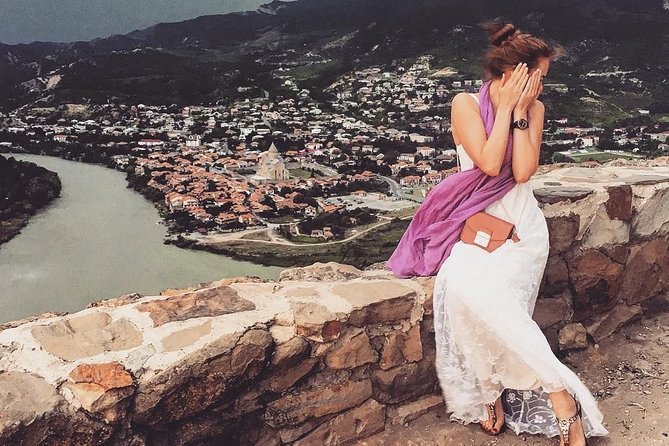
The middle-to-late part of the day can include the Stalin Museum in Gori, depending on what your group wants. This is listed as optional, and there’s an additional ticket cost of 15 GEL if you add it.
What I like about the way this is offered is that it respects different interests. Some people want to understand modern history as part of Georgia’s story; others want to stay strictly with early Christianity and the ancient past. Here you can choose your emphasis without having the museum forced on everyone.
Expect the visit to be guided through the main halls, focusing on preserved sculpture, personal belongings, and furniture. It’s a concentrated experience, and that can be a plus if you’re trying to fit everything into one day.
If you do add it, just remember the museum will pull time away from free breaks. Build in a little flexibility and keep water handy.
More Gori and Uplistsikhe cave-town days we have traced from Tbilisi


Uplistsikhe cave city: pagan stone labyrinths and Kura Valley views
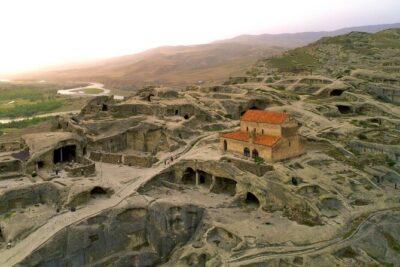
The day’s big switch happens with Uplistsikhe, the cave-city area that takes you back to the end of the II to the beginning of the first millennium BC. This stop is built around stone rooms, corridors, and practical spaces carved into the landscape—so it doesn’t feel like a staged ruin.
You’ll explore stone labyrinths connected to living and utility spaces. The guide explains what life might have looked like for the pagans who used the site, including cult-rite context rather than just technical descriptions.
One of the most interesting parts is the historical connection the tour highlights: Uplistsikhe’s trade with ancient states such as Urartu and Media, plus its rise and later decline. That framing helps you understand why the site mattered, not only how it looks.
And then there’s the viewpoint payoff. Uplistsikhe is timed so you can enjoy panoramic views of the Kura Valley, which makes the geography feel linked to the daily reality of people living inside the rock.
Extra cost note: there’s an additional ticket cost listed as 15 GEL for Uplistsikhe. Plan for that so you don’t get surprised on-site.
The guides make the day: Nino and Georgiy’s care shows
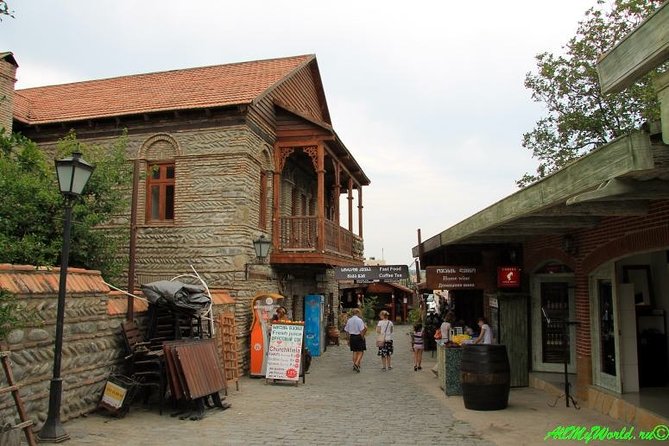
This is one of those tours where the guide is more than a translator—they shape how the day feels. In the feedback, guides named Nino and Georgiy Bereuashvili stand out for being attentive and information-forward.
Nino is highlighted for sharing lots of useful information and being very kind. Georgiy is described as caring and involved, and one review pairs him with the route and pacing, saying everything from the driver to the plan felt good.
What you should take from that: the tour isn’t only about the monuments. It’s about hearing stories in a way that makes you remember them later. If you like clear explanations and a guide who watches the group, this tour’s style fits.
Practical tip: ask questions during the church stops. The sacred sites make it easy to wonder about symbolism, relic stories, and why these places were chosen. A good guide will turn those questions into real context.
Logistics that matter: start time, pickup, and no included lunch
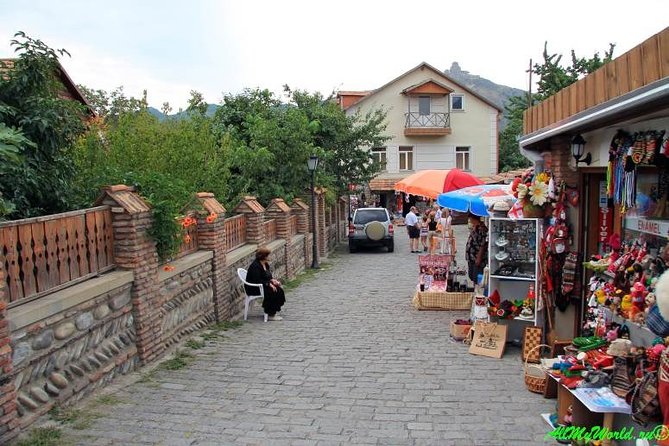
You start at 9:30am, with pickup offered from a specific meeting point in Tbilisi: 3 Vakhtang Gorgasali St, T’bilisi 0105, Georgia. The tour also notes group discounts, which is a nice detail if you’re traveling with friends.
Plan your day around the fact that lunch is not included. This matters because when a tour is 9 hours long, you don’t want hunger to turn into impatience at the wrong time.
I’d keep a light strategy: eat something early before you leave Tbilisi, then treat your lunch stop as part of the day’s rhythm rather than an emergency. One person specifically praised a cafe set in a rock area for being excellent and inexpensive, so it’s worth looking out for local lunch options near where you’ll be passing.
Also bring:
- comfortable shoes (you’ll walk and climb),
- water (especially if weather is warm),
- a small layer (church interiors and mornings can feel cooler),
- a charged phone/camera for viewpoints.
Price and value: what $90 covers, and what costs extra
At $90 per person, this tour sits in the mid-range, and the value comes from what’s already bundled. You get:
- air-conditioned vehicle,
- WiFi onboard,
- a highly qualified guide,
- admission tickets included for Jvari Church, Svetitskhoveli Cathedral, and Samtavro Church.
What’s not included:
- Lunch,
- Stalin Museum entry (15 GEL if you choose it),
- Uplistsikhe entry (listed as 15 GEL).
So the math is simple: the base price pays for the main ancient and early-Christian core, and then you have two optional/add-on elements. If you’re mainly there for the religious and cave-city focus, you’ll likely feel the value quickly once you realize you aren’t separately paying for the core church sites.
If you want Stalin Museum too, budget a little extra in GEL. If you skip it, you can spend the saved time resting or taking more photos at Uplistsikhe viewpoints.
One more value angle: because it’s private (your group only), you’re not forced into a one-size-fits-all pace. In a day trip, that difference can be the whole experience.
Who should book this, and who might want something else
This tour is a strong fit if you want a day that connects two worlds. You’ll enjoy it most if you like:
- early Christianity and how it shaped Georgia,
- ancient sites that were lived in, not just visited,
- good viewpoint stops where the guide frames why the geography matters,
- a guide-led day with enough structure to keep the story coherent.
You might want a different option if you dislike packed schedules or you prefer hours of unstructured wandering. With churches plus a cave city, the day moves. It’s designed to show you a lot, not to give you half-days of free time.
Still, if you’re aiming for maximum meaning in one day and you like thoughtful guiding, this route makes sense.
Should you book this Mtskheta–Jvari–Uplistsikhe private tour?
I think it’s worth booking if you want one organized day that explains Georgia’s timeline with real locations: Jvari’s river views, Svetitskhoveli’s sacred relic stories, Samtavro’s Mirian-and-Nana legacy, and Uplistsikhe’s cave-city world.
It’s also a good choice if you care about service. The standout theme in the feedback is the feeling of being cared for by the guide and driver—Nino and Georgiy get called out for being kind, attentive, and full of useful information.
Do a quick check on two practical points: you’ll need your own lunch, and you should expect small extra tickets if you add Stalin Museum and Uplistsikhe. If that works for you, this is a smart way to spend a day outside Tbilisi.
FAQ
How long is the private tour?
It runs for about 9 hours.
What time does the tour start, and where is the meeting point?
The start time is 9:30am, and the meeting point is 3 Vakhtang Gorgasali St, T’bilisi 0105, Georgia.
Is pickup included?
Yes. Pickup is offered.
Which stops are included in the tour price?
Jvari Church, Svetitskhoveli Cathedral, and Samtavro Church have admission tickets included.
Are lunch or extra museum/cave tickets included?
Lunch is not included. The Stalin Museum in Gori and Uplistsikhe have an additional ticket cost listed as 15 GEL.
Is this tour truly private?
Yes. It’s a private tour/activity, and only your group participates.
More from Our Tbilisi Review Desk



More Gori and Uplistsikhe Cave-Town Days
More Mtskheta and Jvari UNESCO Runs

Not quite your thing? More Tbilisi tours and day trips from our review desk






Mtskheta & Jvari UNESCO Trips, compared.
 ★ 5.0Day Trip to Mtskheta Gori and UplistsikheFrom $291,801 reviews
 ★ 5.0Mtskheta,Jvari,Bazaar,wine tasting,Chronicles of GeorgiaFrom $20730 reviews
 ★ 5.0Mtskheta-Gori-UplistsikheFrom $90112 reviews
 ★ 4.5Mtskheta, Jvari, gori, uflistsikhe, history and panorama (group tours)From $19107 reviews
 ★ 5.0Mtskheta-Jvari-Uplistsike-Chronicle of Georgia, PRIVATE TripFrom $68105 reviews
 ★ 4.5Tbilisi – Mtskheta – Jvari. Full City Tour on Hop On Hop Off BusFrom $4091 reviews
 ★ 4.5Ancient Georgia Group Tour: Mtskheta,Jvari, Gori, UplistsikheFrom $2473 reviews
 ★ 5.0Ancient Mtskheta and Chronicle of Georgia half day tourFrom $6566 reviews
Browse the lists this tour appears in