
Reviewed · MTSKHETA & JVARI UNESCO TRIPS
Mtskheta, Gori, Uplistsikhe Guided Tour
You get a lot of Georgia in one long morning. This Mtskheta, Gori, Uplistsikhe guided tour strings together three very different worlds: Georgian Orthodox landmarks, a volcanic-rock cave city, and Stalin-era history in Gori. I like how the route gives you fast context for why this region matters, instead of just dropping you at a single “must-see.”
Two things I especially like are the English-guided flow (with help that can cover Russian too) and the way the day ends up feeling like a mini sampler of Georgian culture. One possible drawback: the included lunch is at a local restaurant, and the quality and pricing can be hit-or-miss depending on the stop you’re assigned.
In This Review
- Key highlights worth your time
- The day-trip rhythm: how you fit three regions into 9–10 hours
- Jvari Church (Jvari Monastery): the Orthodox birthplace + river views
- Mtskheta and Svetitskhoveli Cathedral: the first capital story in one run
- Uplistsikhe Cave Town: walking volcanic-rock streets that used to be homes
- Gori’s Stalin Museum: a house-museum and an armored railway carriage
- Lunch at a local restaurant: plan your budget, watch the pricing
- Price and value: what $19.50 really buys you
- The guides and the extras: questions, dinner advice, and wine stops
- Pace, timing, and what to bring
- Who this tour fits best (and who should consider alternatives)
- Should you book the Mtskheta, Gori, Uplistsikhe guided tour?
- FAQ
- FAQ
- How long is the tour?
- What time does it start, and where is the meeting point?
- Is the tour offered in English?
- How much does the tour cost?
- What’s included in the price?
- What entrance fees are not included?
- Are the church and cathedral admissions included?
- How long do you spend at Uplistsikhe and the Stalin Museum?
- What happens if the weather is bad?
Key highlights worth your time
- Jvari Monastery viewpoints: the big river confluence angle is part of the payoff, not just an afterthought
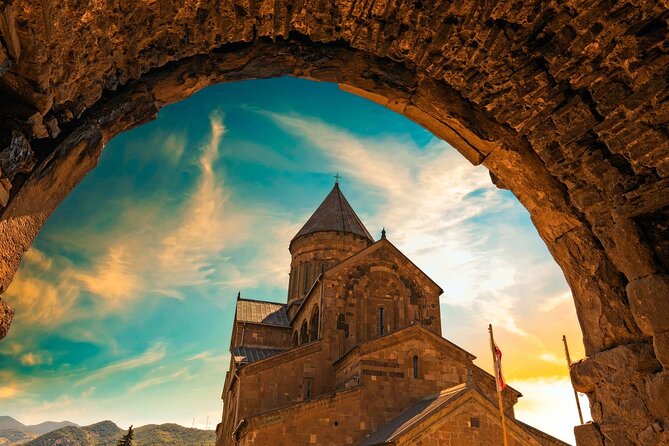
- Mtskheta + Svetitskhoveli Cathedral: you get the main religious story and the key cathedral site in one sweep
- Uplistsikhe on foot: ancient fortress remnants carved into volcanic rock, with temples, houses, streets, and squares
- Stalin Museum with real artifacts: house where he lived, plus personal items and the armored railway carriage
- Small group size (max 18): enough people for energy, small enough to move without chaos
- Good value for the route: $19.50 covers the air-conditioned vehicle and guided structure; major entrances cost extra
The day-trip rhythm: how you fit three regions into 9–10 hours
This is a full-day tour starting at 8:45 am from 5 Samghebro St, Tbilisi, and returning you to the same meeting point. The total time on the clock is about 9 to 10 hours, but the time spent driving between stops is about three hours total, which matters because it leaves more of the day for walking and sightseeing instead of sitting in traffic.
You travel in an air-conditioned vehicle, and the tour is offered in English with a mobile ticket. The group stays capped at 18, so you should be able to hear explanations and ask questions without feeling lost in a crowd.
One small practical note: the experience runs best in good weather, since outdoor walking is part of the plan. If weather forces a change, you’ll be offered another date or a full refund.
More Mtskheta and Jvari UNESCO runs we have made from Tbilisi
Jvari Church (Jvari Monastery): the Orthodox birthplace + river views
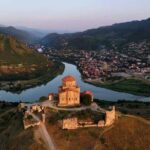
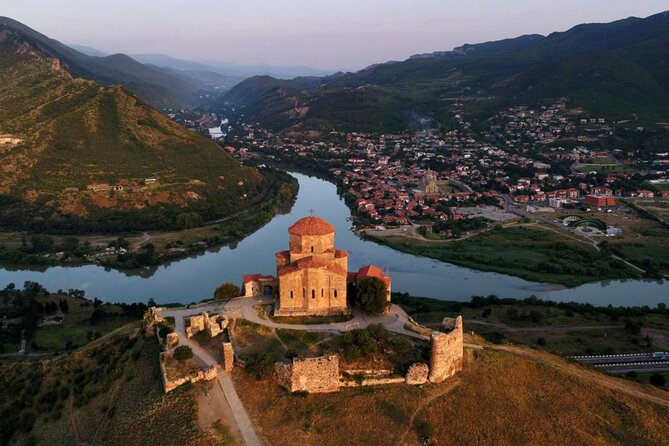
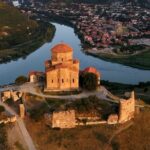
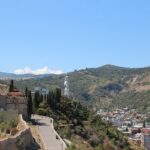
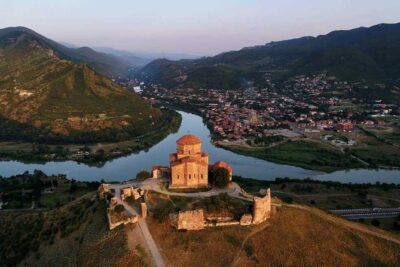
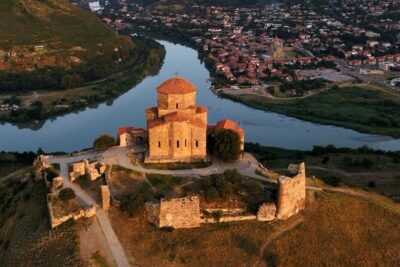
Stop one is Jvari Church / Jvari Monastery. It’s described as the birthplace of Georgian Orthodox Christianity, and that’s not just a label on a sign. What makes this stop work is the pairing of meaning and scenery: you also get stunning views over Mtskheta and the confluence of the Mtkvari and Aragvi rivers.
This is where the tour gives you orientation. Even if you’re not the type to memorize dates, the view helps your brain place the story in the landscape. You’ll spend about one hour, and admission is free for this stop.
How to make the most of it:
- Arrive ready to look outward. The viewpoint is the point.
- Wear comfortable shoes; the paths can be uneven depending on where you walk.
If you’re short on time in Tbilisi, this first stop is a strong way to get your bearings fast: you see the rivers, the city shape, and the spiritual history at the same time.
Mtskheta and Svetitskhoveli Cathedral: the first capital story in one run
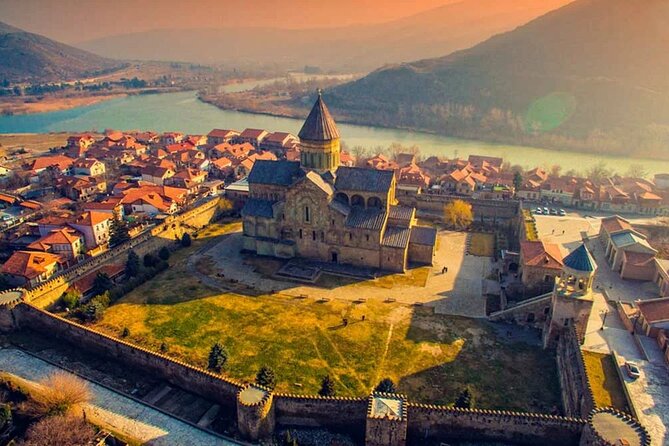
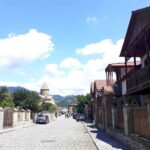
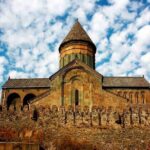
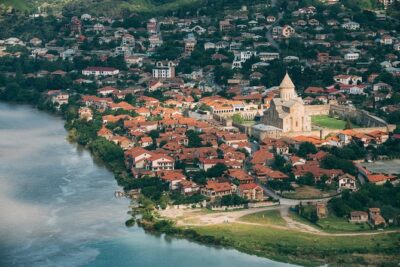
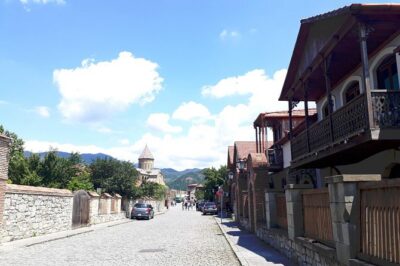
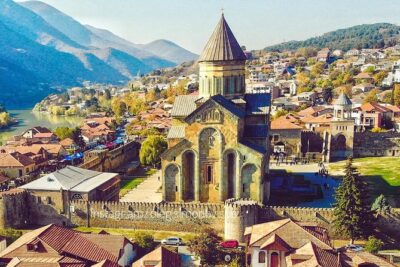
Next comes Mtskheta, the place often described as the first capital and religious center of Georgia. You’ll hear the story and get a focused look at the big site here: Svetitskhoveli Cathedral.
The tour breaks it into two parts:
- Mtskheta (about 40 minutes, admission free)
- Svetitskhoveli Cathedral (about 30 minutes, admission free)
The key detail is what the cathedral is tied to: the site is noted for having the Chiton of Christ. That kind of specific religious connection makes the stop feel more concrete than a generic “beautiful church” visit. You’re not just admiring architecture; you’re getting why people built their spiritual life around this location.
What I like about this structure is that it respects your attention span. You get enough time to understand the significance, then you’re not stuck for hours inside. It also keeps the day moving toward the more unusual scenery in the later stops.
A consideration: these are holy sites. Dress codes aren’t listed here, so I’d still play it safe—bring something that can cover shoulders and be mindful of respectful behavior when you’re near worship spaces.
Uplistsikhe Cave Town: walking volcanic-rock streets that used to be homes
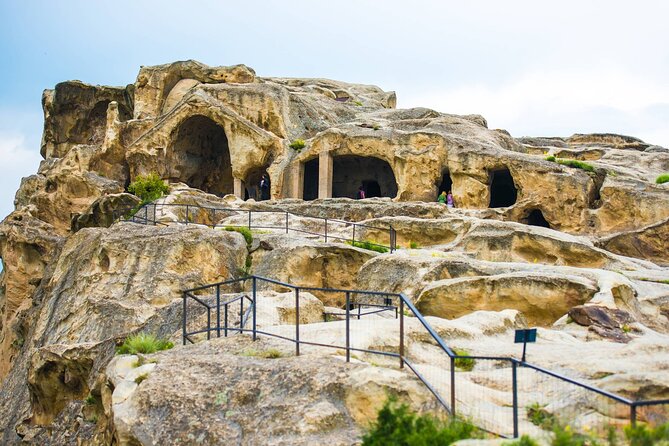
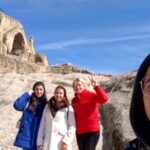
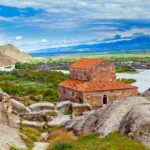
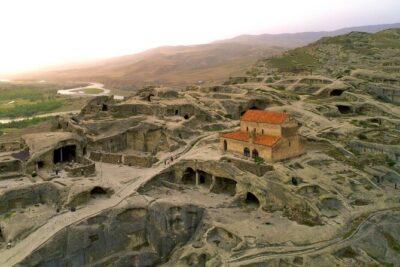
Stop four is Uplistsikhe Cave Town, one of those places where the setting does half the explaining. You’ll take a stroll through an ancient fortress city carved into volcanic rocks, and you’ll see remnants of ancient temples, houses, streets, and squares.
You’ll spend about 1 hour 30 minutes here. That time is realistic for a walking site like this: long enough to picture how the space worked, short enough that you’re not exhausted before the next museum stop.
This is the kind of stop that feels different from a typical “viewpoint and photo” attraction. Instead of only looking outward, you’ll be looking at how people shaped daily life into stone—places that were functional, built for living, moving, and gathering.
Practical tip for your comfort:
- Bring water and wear shoes you trust on uneven surfaces.
- If you’re sensitive to heat, think about when you’ll be outdoors; this is the type of site where shade can be limited in spots.
Admission for Uplistsikhe is not included. Expect to pay an additional $6.50 per person.
Gori’s Stalin Museum: a house-museum and an armored railway carriage
The final stop is the Stalin Museum in Gori, including Stalin’s House-Museum. You visit the house where he was born and lived, then explore items connected to his personal life and the broader story of his power.
A standout detail is that you’ll also see an armored railway carriage he used. That kind of artifact turns abstract history into something more physical. It’s not just a biography display; it’s the material culture of a specific era.
You’ll have about 1 hour at this stop. Admission is not included, with an additional $6.50 per person.
One thing to keep in mind: this museum is politically heavy by nature. If you’d rather keep the emotional tone of your day light, you may want to give yourself a short buffer after lunch so the content doesn’t stack too strongly.
More Gori and Uplistsikhe cave-town days we have traced from Tbilisi


Lunch at a local restaurant: plan your budget, watch the pricing
Lunch isn’t just a break in the schedule here. It’s part of the Uplistsikhe section: you’ll be taken to a local restaurant and given about 1 hour 30 minutes total for the stop that includes lunch time.
The data says lunch costs 20–30 GEL (not included). Based on real experience, the biggest variable is the restaurant choice. I’ve seen one account where lunch was described as some of the best food from the whole trip. I’ve also seen another where the restaurant felt mediocre with high prices for what was served.
So here’s the practical way to handle it: treat lunch as a budget line item, not a guaranteed win. If you care about value, eat a modest breakfast before you go, then let lunch be the bonus or the trade-off depending on where the group lands.
If you want extra flexibility, you can also keep some small snacks handy for long days—nothing fancy, just something that makes the gaps less painful.
Price and value: what $19.50 really buys you
At $19.50 per person, this tour sits in the “cheap enough to be smart” category for a full-day route from Tbilisi—especially because it includes an air-conditioned vehicle and guided structure across multiple sites.
But you do need to budget for the things that aren’t covered:
- Uplistsikhe entrance: $6.50 per person
- Stalin Museum entrance: $6.50 per person
- Lunch: 20–30 GEL +/-
The big picture: you’re paying a low base price for the logistics and guidance, then topping up for the two paid attractions and food. If you’re the kind of traveler who likes pre-booked, guided stops (instead of hunting buses and ticket lines), this is a good way to make the day effortless.
Also note: the tour is capped at 18, which helps keep it from turning into a ticket-queue conveyor belt.
The guides and the extras: questions, dinner advice, and wine stops
The tour’s “real value” shows up in how the guide connects dots. I’ve seen guides—such as Jimmy—handle questions in both English and Russian, and then add the kind of practical help that makes the rest of your trip easier. That can include advice on where to go for dinner and, in Georgia, where to find the best wine.
I’ve also seen Russalina described as very knowledgeable and good at making time feel special while keeping the group connected.
You shouldn’t count on a specific restaurant recommendation or a specific wine shop every time, but you can count on the guide role: this tour is built for a guided day, not a self-drive itinerary.
Pace, timing, and what to bring
With a morning start at 8:45 am and five structured stops, you’ll want to travel light but ready. Here’s what matters most for this exact route:
- Comfortable walking shoes (Uplistsikhe and cathedral areas are not “flat and easy” the whole way)
- Water bottle for the outdoor portions
- Weather layer in case the day turns cool or breezy
- A plan for lunch timing and spending (since it’s not included)
Also, remember that some stops are free admission (Jvari, Mtskheta, Svetitskhoveli). That’s great for your budget, but it doesn’t mean you should rush—these are the stops where the guide’s context pays off.
Who this tour fits best (and who should consider alternatives)
This tour is a strong match if you want:
- A day trip from Tbilisi that hits both famous religious sites and unusual terrain like a cave city
- A guided route in English, with enough time at each place to actually understand what you’re seeing
- A small-to-medium group format (max 18)
It may be less ideal if:
- You hate museum content or political history, since the day ends at the Stalin Museum
- You’re picky about lunch value, since the restaurant choice can be a gamble
- You prefer lots of free time to wander alone; the itinerary is structured
Should you book the Mtskheta, Gori, Uplistsikhe guided tour?
If you want a high-value introduction to the region around Tbilisi, I’d book it. The route is efficient, the free admission stops cover key religious landmarks, and Uplistsikhe adds that hands-on, stone-embedded sense of place. The Stalin Museum adds a very different tone, so the day doesn’t feel repetitive.
The main reason to hesitate is lunch quality variability. If that matters to you, plan your expectations (and keep a small snack option). If you’re flexible and you care more about seeing the full mix—Orthodox Georgia, cave-city life, and Stalin-era artifacts—this is an easy yes.
FAQ
FAQ
How long is the tour?
The tour runs about 9 to 10 hours.
What time does it start, and where is the meeting point?
It starts at 8:45 am at 5 Samghebro St, Tbilisi, Georgia.
Is the tour offered in English?
Yes, it’s offered in English.
How much does the tour cost?
The price is $19.50 per person.
What’s included in the price?
The price includes an air-conditioned vehicle and the guided tour.
What entrance fees are not included?
You’ll pay extra for Uplistsikhe Cave Town ($6.50 per person) and the Stalin Museum in Gori ($6.50 per person).
Are the church and cathedral admissions included?
Admissions for Jvari Church/Jvari Monastery, Mtskheta, and Svetitskhoveli Cathedral are listed as free.
How long do you spend at Uplistsikhe and the Stalin Museum?
You’ll spend about 1 hour 30 minutes at Uplistsikhe and about 1 hour at the Stalin Museum.
What happens if the weather is bad?
The experience requires good weather. If it’s canceled due to poor weather, you’ll be offered a different date or a full refund.
More from Our Tbilisi Review Desk

More Gori and Uplistsikhe Cave-Town Days
More Mtskheta and Jvari UNESCO Runs
Not quite your thing? More Tbilisi tours and day trips from our review desk




Mtskheta & Jvari UNESCO Trips, compared.
 ★ 5.0Day Trip to Mtskheta Gori and UplistsikheFrom $291,801 reviews
 ★ 5.0Mtskheta,Jvari,Bazaar,wine tasting,Chronicles of GeorgiaFrom $20730 reviews
 ★ 5.0Mtskheta-Gori-UplistsikheFrom $90112 reviews
 ★ 4.5Mtskheta, Jvari, gori, uflistsikhe, history and panorama (group tours)From $19107 reviews
 ★ 5.0Mtskheta-Jvari-Uplistsike-Chronicle of Georgia, PRIVATE TripFrom $68105 reviews
 ★ 4.5Tbilisi – Mtskheta – Jvari. Full City Tour on Hop On Hop Off BusFrom $4091 reviews
 ★ 4.5Ancient Georgia Group Tour: Mtskheta,Jvari, Gori, UplistsikheFrom $2473 reviews
 ★ 5.0Ancient Mtskheta and Chronicle of Georgia half day tourFrom $6566 reviews
Browse the lists this tour appears in