
Reviewed · MTSKHETA & JVARI UNESCO TRIPS
Gori-Uplistsikhe Mtskheta-Jvari one Day private Tour
Rock-hewn Georgia in one long day. This private route strings together Uplistsikhe (a cave city older than most buildings you’ll see in Europe) plus two major spiritual stops at Jvari and Svetitskhoveli. You’ll also get the odd-but-fascinating side of the country at Stalin’s Museum in Gori, where the storytelling is dramatic and the details are oddly personal.
I like that this tour keeps the pace human. You get focused blocks of time for each place—about two hours at Uplistsikhe, then time to eat in Gori, then guided museum and church visits—so you don’t feel chopped up into tiny, exhausting errands. I also like the comfort factor: air-conditioned private transport and bottled water make the long stretches between sites much easier. One thing to consider: Uplistsikhe and the hilltop church areas involve walking on uneven ground and some steps, so a moderate fitness level matters.
In This Review
- Key things to know before you go
- Price and value for up to four people
- How the day flows from 9:00am pickup to a late finish
- Uplistsikhe: walking through a fortress city carved from rock
- Lunch in Gori: plan for a real sit-down meal
- Stalin Museum in Gori: history presented as strange, specific theater
- Jvari Church near Mtskheta: the hilltop cross and big river views
- Svetitskhoveli Cathedral: where sacred relics and Georgian power meet
- Pacing and comfort: how to avoid the end-of-day slog
- Who this tour is best for (and who should choose differently)
- Should you book this one-day Gori–Uplistsikhe–Mtskheta–Jvari tour?
- FAQ
- How long is the Gori-Uplistsikhe Mtskheta-Jvari one-day private tour?
- What time does the tour start?
- What does the tour cost?
- Is pickup included?
- Are tickets included for the main attractions?
- What’s included in the price besides transportation?
- Is lunch or dinner included?
- Is this tour private?
Key things to know before you go
- Private group, up to 4 people: You’re not sharing the van with strangers.
- Uplistsikhe + Mtskheta UNESCO loop: You’ll hit both cave-town and church-and-viewpoint Georgia.
- Stalin Museum ticket included: Admission is covered for that one stop.
- Jvari and Svetitskhoveli admission listed as free: Your day is lighter on ticket hassles for those sites.
- Moderate walking required: Expect some uneven steps, especially at Uplistsikhe and on hill viewpoints.
Price and value for up to four people
This tour costs $185.49 per group (up to 4). In practical terms, that pricing tends to make sense when you split it among friends or family. If you’re traveling solo, it can feel pricey compared with public transport, but the value shifts quickly when you’re comparing it to taxi hopping or a rental car plus parking plus navigation.
What’s included helps the math: private transportation, air-conditioning, bottled water, and fuel surcharge are all covered. On the attraction side, the Stalin Museum admission ticket is included, while Jvari and Svetitskhoveli are listed as free to enter. Lunch and dinner are not included, but the schedule builds in time for lunch in Gori—so you’re not stuck hunting for food between stops.
The best part of this pricing is the time you save. This isn’t just “see stuff.” It’s “see stuff in one day without spending half the day in transit logistics.”
More Mtskheta and Jvari UNESCO runs we have made from Tbilisi
How the day flows from 9:00am pickup to a late finish
The experience starts at 9:00am. You’ll typically get picked up (pickup is offered) and then roll out toward Gori and Mtskheta.
From there, the timing is built around realistic site visits:
- Arrive Uplistsikhe around 11:00am with about 2 hours on site
- Lunch time in Gori around 13:00 with about 1.5 hours
- Stalin Museum and/or some free time in Gori around 14:45
- Then you continue to the two UNESCO church sites: Jvari and Svetitskhoveli, each with about 1 hour
Total time is about 7–8 hours. That length is right for a “big hits” day. You’ll be tired at the end (it’s a lot of walking and a lot of stops), but the schedule avoids the classic mistake: cramming in 6 places with no breathing room.
Uplistsikhe: walking through a fortress city carved from rock
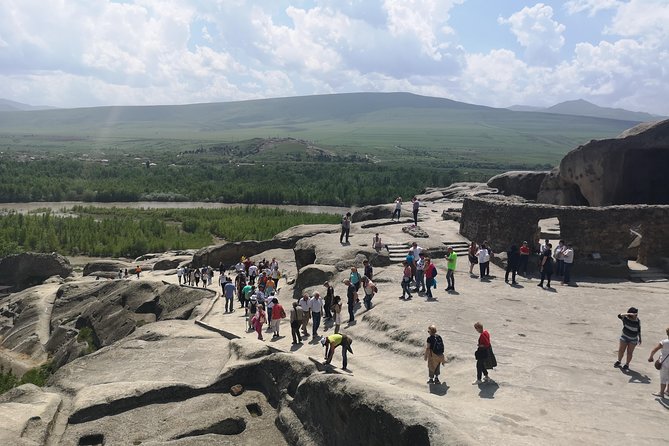
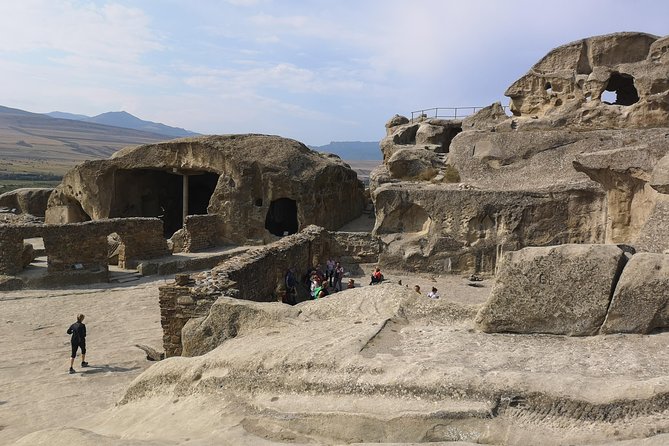
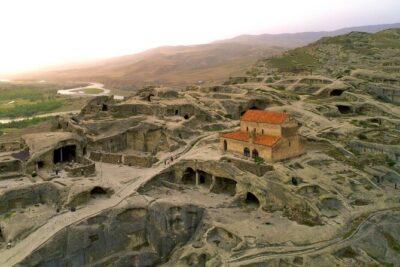
Uplistsikhe is your anchor stop, and it’s the one that feels most like stepping into deep time. The name is often translated as the Fortress of the Lord, and the site is built on the left bank of the river Mtkvari.
The key thing I want you to know: Uplistsikhe is not a museum with cases. It’s a living maze of rock-cut spaces and structures. The history stretches back to the 2nd–1st millennium B.C., and in different eras it mattered as a center of Kartli, including in the Middle Ages. You’ll also see how it fits into wider cultural connections—this place sits on an important trade route linking Byzantium with India and China, which helps explain why the architecture reflects a mix of rock-cut traditions from Anatolia and Iran, plus the long overlap of pagan and Christian building styles.
During your 2 hours here, you’ll have enough time to:
- orient yourself without rushing
- move between main carved areas
- take in the layout from different angles as you climb and descend through the rock
What to watch for: the ground can be uneven, and some pathways are step-heavy. If you have knee trouble, plan to go slower than you think. Wear shoes with real grip.
Also, Uplistsikhe is the kind of place where the story matters. Without a guide’s context, it can still be cool, but with context you start noticing why certain spaces were used and how the site evolved. That’s where private touring pays off.
Lunch in Gori: plan for a real sit-down meal
At about 13:00, you’ll have 1 hour 30 minutes for lunch in Gori at a restaurant. This is one of those moments that makes the whole day work. You’ll have time to eat properly, rest your legs, and reset before the churches and museum.
Lunch isn’t included in the price, so you’ll pay on your own. That said, the schedule is clearly designed for you to eat without stress. You’re not balancing a snack-on-the-go while your driver waits in a panic.
If you’re sensitive to heavy meals before lots of walking, go a bit lighter. But in general, this is the right point in the day to choose a local Georgian meal.
Stalin Museum in Gori: history presented as strange, specific theater
The Stalin Museum stop is one of the most distinctive parts of the itinerary. You arrive around 14:45, and the plan includes Stalin Museum time (about 1 hour) with the option of some free time in Gori as well.
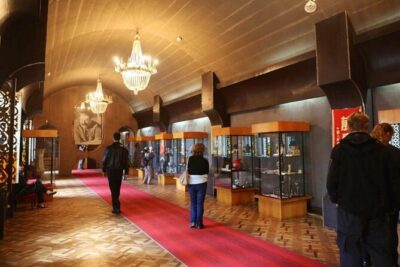
What you’re walking into is not the usual quiet memorial. The museum is built around recreated scenes from Stalin’s life—surreal and revealing in presentation. You’ll also see unique items like photos, gifts, and furniture. It’s the kind of place that makes you stop and ask yourself why certain objects were curated this way.
One special detail near the museum: the house where Stalin was born is preserved under a stone canopy nearby. Even if you don’t spend a long time there, the fact that it’s nearby changes the feel of the visit. The museum isn’t floating in abstraction; it’s anchored to a specific location.
A balanced caution: this museum deals with a brutal dictator. The emotional tone can hit hard if you’re sensitive to that kind of content. But if you want to understand 20th-century Georgia beyond postcard Georgia, this stop is a must.
More Gori and Uplistsikhe cave-town days we have traced from Tbilisi


Jvari Church near Mtskheta: the hilltop cross and big river views
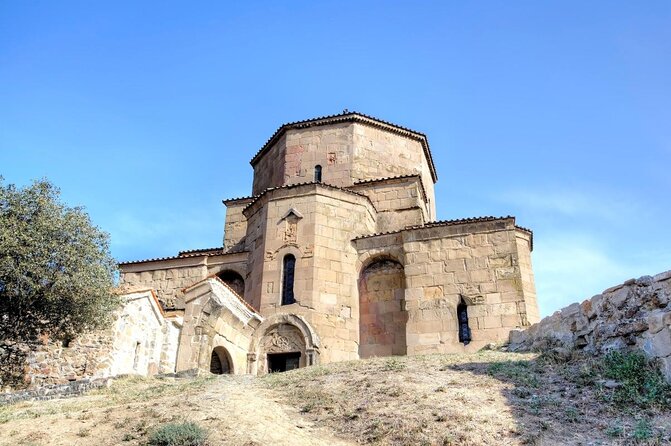
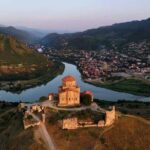
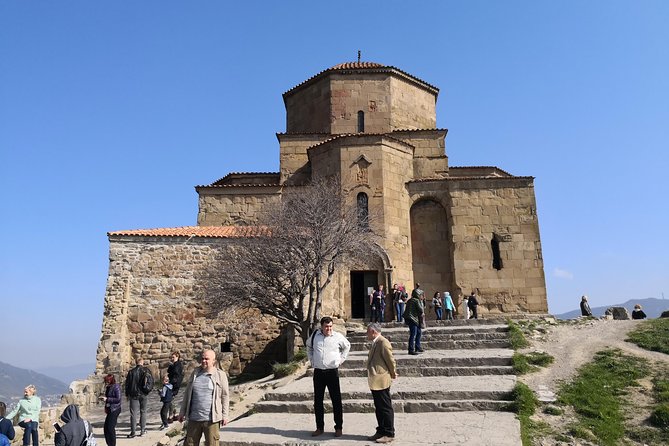
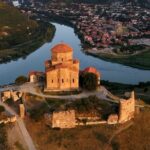
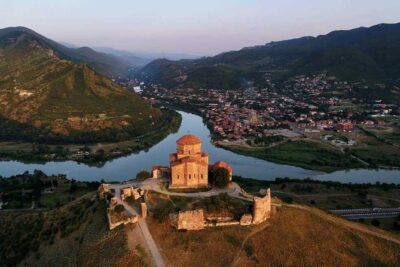
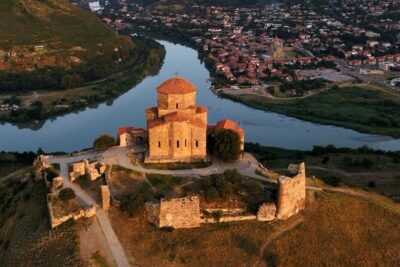
After Gori, you head toward Mtskheta, and your next spiritual stop is Jvari Church—an early Georgian Orthodox monastery from the 6th century, listed as UNESCO.
Jvari is built on a hill opposite Mtskheta, right at the confluence of the Aragvi and Mtkvari rivers. That location is the point. You’re not just visiting a building—you’re taking in the geography that shaped the religious significance of the site.
The story begins shortly after Christianity was adopted. King Mirian III erected an enormous wooden cross here. Later, in the second half of the 6th century, Guaram (ruler of Kartli) built a small church beside the Holy Cross. This is one of those sites where architecture and belief are connected to the landscape itself.
Your time here is about 1 hour, and it’s worth using that hour for two things:
- the church interior/exterior views at a comfortable pace
- the viewpoint energy from the hilltop area
Jvari also tends to feel calmer than big-city sites. The setting helps. If it’s a clear day, you’ll get sweeping sightlines over the river bend—very good “pause and think” territory.
Svetitskhoveli Cathedral: where sacred relics and Georgian power meet
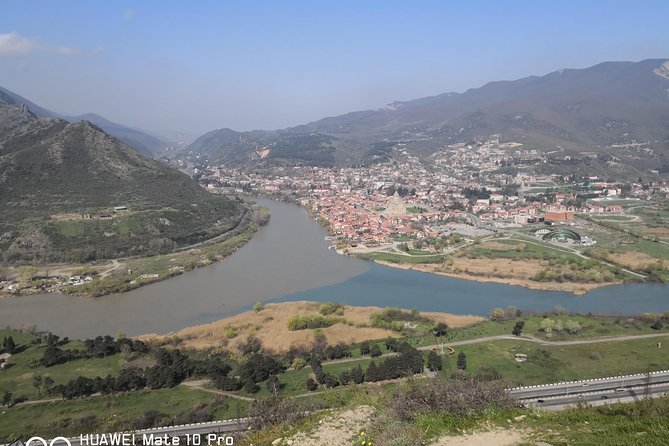
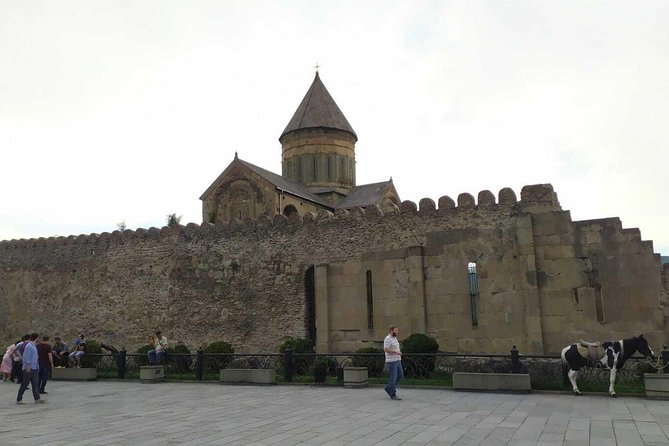
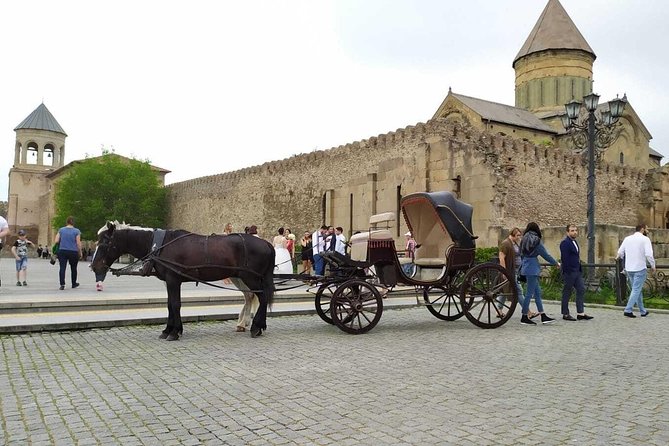
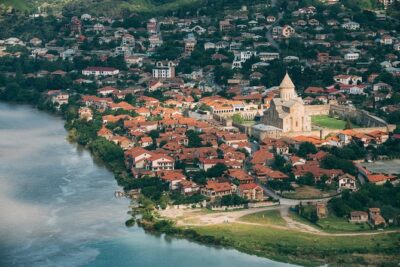
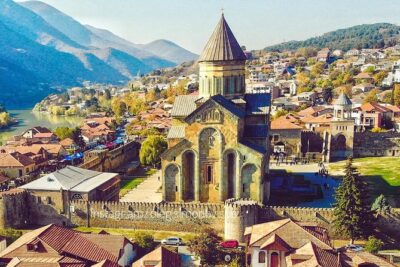
Next is Svetitskhoveli Cathedral, another UNESCO site and one of Georgia’s most important sacred centers. It dates back to the 11th century and is part of a larger complex that includes the church, gate, bell tower, castles, and clerical residences.
Svetitskhoveli is famous for relics and political history in one place. The cathedral is described as preserving the mantles of Christ and of the Prophet Elijah. That’s a big deal in terms of why pilgrims cared for centuries. The complex also includes the tomb of King Vakhtang Gorgasali, who is connected to the founding story of Tbilisi.
You’ll have about 1 hour at the cathedral. That’s usually the sweet spot: enough time to see the key parts, soak up the atmosphere, and not feel like you’re being marched through.
Practical note: cathedrals have rules. Plan to be respectful with clothing and posture, and be prepared to slow down when you enter indoor areas.
If you’re trying to understand Georgian Christianity beyond the basics, this is one of your best stops. Jvari gives you the founding-era viewpoint mood. Svetitskhoveli gives you the “this is where the country came to focus for a long time” feeling.
Pacing and comfort: how to avoid the end-of-day slog
This is a full day, but it’s structured like a good meal: appetizer stops, then a satisfying main course, then dessert-level viewing.
The schedule includes:
- transport time between areas
- focused site blocks (not a constant back-and-forth)
- a proper lunch window
- roughly 1 hour each at the two church sites
You’ll be moving between multiple areas—Uplistsikhe, Gori, Mtskheta, and the church viewpoints. Since the tour notes moderate physical fitness, the best strategy is simple:
- wear grippy shoes
- expect steps and uneven rock paths at Uplistsikhe
- take your time on hill areas for Jvari
The private car helps a lot here. You’re not managing transit timing. You sit, breathe, and get dropped near each site.
One more detail worth mentioning: the tour includes bottled water. That sounds small, but on a summer Georgia day it’s a real comfort.
Who this tour is best for (and who should choose differently)
I think this tour fits best if you:
- want maximum variety in one day: cave city + Soviet-era history + UNESCO churches
- prefer private, no-stress logistics over public transport juggling
- are traveling as a group of up to four and want the cost split
- like learning stories tied to place, not just photographing buildings
It might be less ideal if you:
- hate long days and want a slower pace
- dislike walking on uneven ground
- want a strict guided-only format with no freedom at all (the plan includes some flexibility in Gori around the museum/free time)
Should you book this one-day Gori–Uplistsikhe–Mtskheta–Jvari tour?
Book it if you want a clean, well-paced circuit that turns Georgia’s variety into something you can actually finish in one day. The strongest reasons are the combination: Uplistsikhe’s rock-hewn complexity plus the two UNESCO church sites at Mtskheta/Jvari. Add in Stalin’s Museum and you get a surprisingly complete picture of Georgia across time periods.
Hold off if you want lots of downtime, or if your mobility is limited by steps and uneven surfaces. Otherwise, for the right kind of traveler—curious, comfortable with a full day, and happy to see several “major” sites—this private format is a smart value.
FAQ
How long is the Gori-Uplistsikhe Mtskheta-Jvari one-day private tour?
The tour lasts about 7 to 8 hours.
What time does the tour start?
The start time is 9:00 am.
What does the tour cost?
It costs $185.49 per group for up to 4 people.
Is pickup included?
Pickup is offered.
Are tickets included for the main attractions?
The Stalin Museum admission ticket is included. For Jvari Church and Svetitskhoveli Cathedral, admission is listed as free. Uplistsikhe has a scheduled visit, but ticket inclusion for it is not stated in the provided details.
What’s included in the price besides transportation?
Included items are bottled water, an air-conditioned vehicle, private transportation, and fuel surcharge.
Is lunch or dinner included?
Lunch and dinner are not included. The schedule includes time for lunch in Gori, but you pay for it.
Is this tour private?
Yes, it’s a private tour/activity, and only your group participates.
More from Our Tbilisi Review Desk

More Gori and Uplistsikhe Cave-Town Days
More Mtskheta and Jvari UNESCO Runs
Not quite your thing? More Tbilisi tours and day trips from our review desk




Mtskheta & Jvari UNESCO Trips, compared.
 ★ 5.0Day Trip to Mtskheta Gori and UplistsikheFrom $291,801 reviews
 ★ 5.0Mtskheta,Jvari,Bazaar,wine tasting,Chronicles of GeorgiaFrom $20730 reviews
 ★ 5.0Mtskheta-Gori-UplistsikheFrom $90112 reviews
 ★ 4.5Mtskheta, Jvari, gori, uflistsikhe, history and panorama (group tours)From $19107 reviews
 ★ 5.0Mtskheta-Jvari-Uplistsike-Chronicle of Georgia, PRIVATE TripFrom $68105 reviews
 ★ 4.5Tbilisi – Mtskheta – Jvari. Full City Tour on Hop On Hop Off BusFrom $4091 reviews
 ★ 4.5Ancient Georgia Group Tour: Mtskheta,Jvari, Gori, UplistsikheFrom $2473 reviews
 ★ 5.0Ancient Mtskheta and Chronicle of Georgia half day tourFrom $6566 reviews
Browse the lists this tour appears in