
Reviewed · MTSKHETA & JVARI UNESCO TRIPS
Four Historical Places: Mtskheta-Gori-Uplistsikhe-Jvari Monastery- Private Tour
A day built on two very different roots: old Christianity and raw stone-age power. You’ll get Jvari and Mtskheta with sweeping views at the river confluence, plus the rock-hewn world of Uplistsikhe. I like that the tour is set up for real logistics—hotel pickup, a private car, guiding, and tickets where it matters—so you’re not piecing it together yourself. The one thing to keep in mind is that the Stalin Museum is optional and you’ll need cash for any paid add-ons.
This is also a good pick if you want a guided route through Georgia’s “east-to-nowhere” geography. You’ll move from Tbilisi into the Mtskheta region, then out toward Gori, and back through a landscape that helped shape the country’s story. The drawback? It’s a long day (about 7 to 8 hours), so plan for breaks, water, and comfy shoes.
If you’re the type who likes sacred places and weird history, this combo makes sense. You’ll see Georgian Orthodox monuments tied to major Christian tradition, then jump to an abandoned “Lord’s Fortress” carved into rock. I especially like that Uplistsikhe tickets are included, which saves you time and decision stress.
In This Review
- Key highlights I’d plan around
- A private heritage day with smart pacing (and a real price check)
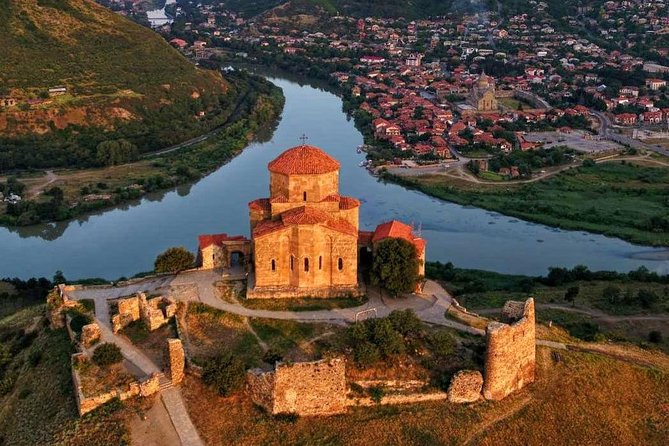
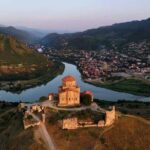
- Jvari Monastery: the “two-rivers meet” viewpoint that anchors the whole day
- Gori and Stalin: useful if you want the Soviet layer (not required)
- Uplistsikhe Cave Town: rock-hewn storytelling with your tickets handled
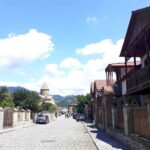
- Mtskheta and Svetitskhoveli: UNESCO old capital plus a major Christian tradition
- Transportation and comfort: why the car choice matters more than you think
- What’s included vs not included (so you don’t get surprised)
- Who this tour fits best (and who might want a different day)
- Should you book this four-stop heritage tour?
- FAQ
- How long is the tour?
- Where does the tour start and is pickup included?
- Is this a private tour?
- What’s included in the price?
- Are the Stalin Museum tickets included?
- Do I need cash?
- Is lunch included?
- Is there a vegetarian option?
- Can children join?
Key highlights I’d plan around
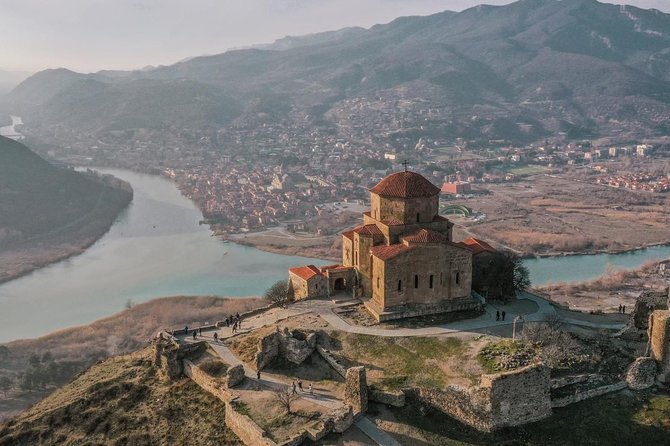
- Jvari’s river confluence view from a mountain top with Mtkvari and Aragvi merging below
- UNESCO-linked Mtskheta and the chance to see Svetitskhoveli Cathedral as a key Christian site
- Uplistsikhe “Lord’s Fortress” with cave-town tickets handled for you
- Optional Stalin Museum in Gori if you want Soviet history alongside Georgian antiquity
- Clean, petrol-only car transport and hotel pickup/drop-off in Tbilisi
- Levan Tours guidance with a reputation for on-time, friendly service and a comfortable mini-van vibe
A private heritage day with smart pacing (and a real price check)
At $113 per person for a 7 to 8 hour private tour, you’re paying for three things: a driver, a guide, and fewer bottlenecks. That matters on a day like this. You’re covering multiple locations that don’t “sit next to each other” in a casual, strollable way—so the value isn’t just the sights, it’s getting there efficiently.
The tour includes hotel pickup and drop-off in Tbilisi, transport in an air-conditioned private vehicle, guiding, planning, and petrol/car service. It also includes a bottle of fresh Georgian water, which is small but practical when you’re out for most of the day.
Where you should double-check value: the Stalin Museum stop is optional, and the entrance fee and train-related tickets there are not included. The program lists about 15 GEL per person (roughly $6) for that museum area and train tickets. If you’re not interested in Soviet history, you can treat that as a flexible decision—save your money for lunch, snacks, or souvenirs.
More Mtskheta and Jvari UNESCO runs we have made from Tbilisi
Jvari Monastery: the “two-rivers meet” viewpoint that anchors the whole day
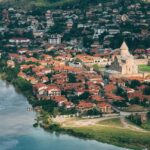
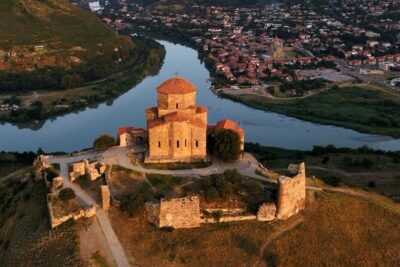
Your first major stop is Jvari Monastery, a 6th-century Georgian Orthodox site that’s part of the UNESCO-recognized heritage landscape. Jvari sits on a rocky mountaintop at the confluence of the Mtkvari and Aragvi rivers, looking down over Mtskheta.
The reason this stop works so well on a guided route is simple: you don’t just see a church. From here, you get the geography that helped make Mtskheta important in the first place. Watching the rivers come together is also the fastest way to understand why people built sacred places where they could control sightlines and routes.
Practical notes that matter:
- Time on site: about 1 hour
- The program marks admission as free for this stop
- Bring a layer if it’s breezy on the hilltop, even if Tbilisi feels warm
I like Jvari because it’s the kind of place where the view does half the explaining. You’ll get the setting for Georgia’s religious history without needing a lecture to make it click.
Gori and Stalin: useful if you want the Soviet layer (not required)
Next comes Gori, where you have the option to visit the Joseph Stalin Museum. This stop is specifically framed around what Stalin’s life and presence looked like in his hometown—his garden/home, and items connected to his bulletproof train.
This is the only part of the day that’s truly optional, and that’s a big deal. If you’re not in the mood for Soviet history, you can skip it and keep your energy for the older sites.
If you do go:
- Plan around 40 minutes
- The museum ticket is not included (the program notes about 15 GEL per person for the area and train tickets)
- The tour’s “extra options” payment note says you’ll need cash for add-ons, so don’t assume cards will cover everything
My take: this isn’t a must for everyone. But it’s a strong contrast stop. You’ll go from ancient sacred geography to 20th-century political myth-making. That contrast can make both eras feel sharper.
Uplistsikhe Cave Town: rock-hewn storytelling with your tickets handled
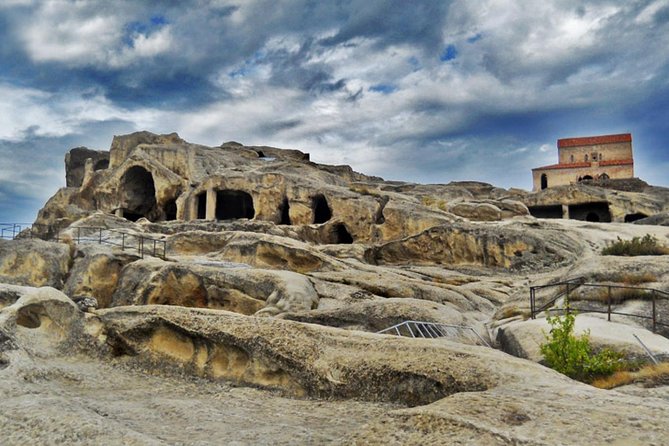
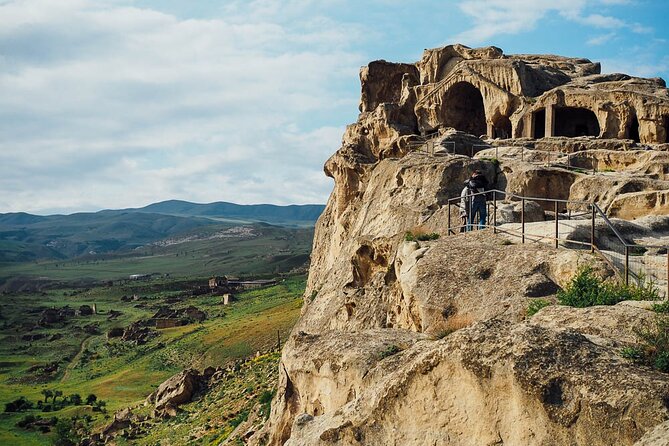
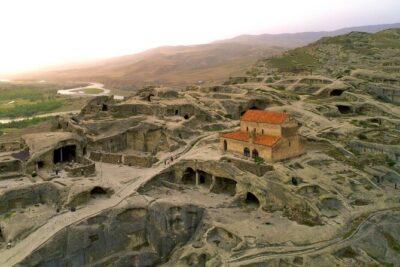
Then you shift from the river-and-cathedral day into something much more physical: Uplistsikhe, literally the Lord’s Fortress. This place is an abandoned rock-hewn town with a long timeline—founded around 1000 BC in the Late Bronze Age, and continuously inhabited until the 13th century AD.
That span is why Uplistsikhe is worth time. You’re not looking at one era preserved like a museum diorama. You’re walking through a place that absorbed different lives across centuries. Even without “perfect familiarity” with Georgian archaeology, the feel of a cave town gives you a fast, human understanding of how people lived when survival meant stone, shade, and protection.
What the tour includes here:
- About 2 hours at Uplistsikhe
- Uplistsikhe tickets are included in the price
- You also get fresh Georgian water as part of the day
What to do with your 2 hours (so you don’t rush):
- Follow your guide’s explanations and pick a few structures to focus on rather than trying to see everything at once.
- Take time just to orient yourself. Rock-hewn towns can feel confusing if you don’t know what you’re looking for.
I also appreciate that Uplistsikhe is a “ticket-included” moment. When a stop has an entrance fee, it’s where tours either save you time or waste it. Here, it saves you effort.
Mtskheta and Svetitskhoveli: UNESCO old capital plus a major Christian tradition
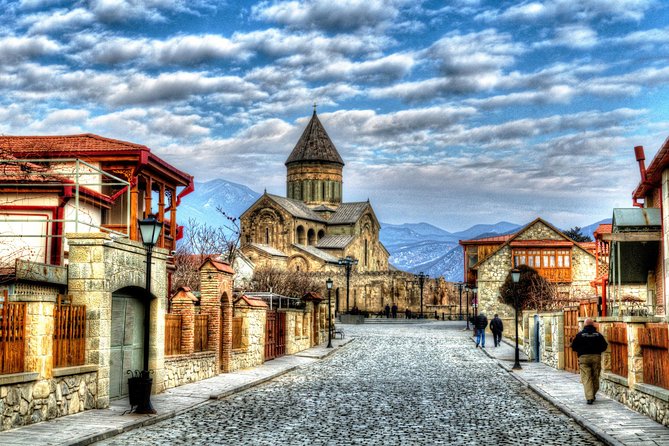
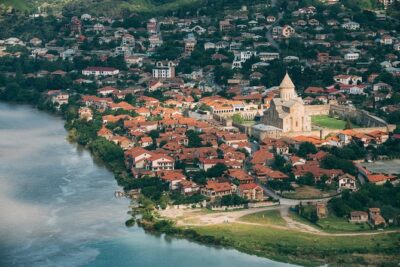
After Uplistsikhe, you come back into the heart of the story with Mtskheta, the ancient capital of Kartli (East Georgian Kingdom). The timeline in the background is big: Kartli’s kingdom stretches from the 3rd century BC to the 5th century AD, and in 337 Christianity was proclaimed the official religion of Georgia. That’s the kind of historical anchor that makes the churches here feel more than decorative.
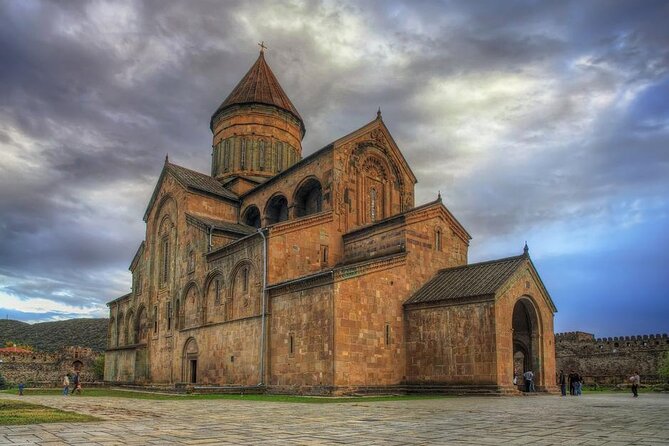
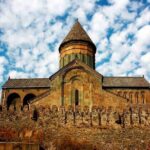
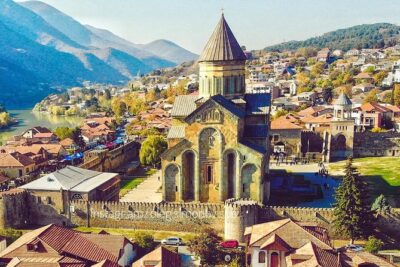
In Mtskheta, you visit Svetitskhoveli Cathedral, one of the main Christian churches in Georgia, with a tradition tied to the buried mantle of Jesus Christ inside. You also return for Jvari views again as part of this Mtskheta-focused segment, which is a clever way to help the earlier landscape “settle” in your mind once you’ve seen the city.
This stop group includes:
- Mtskheta city (old capital, UNESCO)
- Svetitskhoveli Cathedral
- Another shot at Jvari’s viewpoint (the river confluence view)
Practical note:
- The program lists admission as free for this segment
- Time on site: about 1 hour
I like this structure because it doesn’t just throw monuments at you. It gives you a loop: view the geography, see the sacred monuments, then return to the view so you can connect the “why” to the “what.”
More Gori and Uplistsikhe cave-town days we have traced from Tbilisi


Transportation and comfort: why the car choice matters more than you think
This tour uses clean, safe, comfortable cars and notes that they run only on petrol (no installed natural gas). That’s not something you’d normally think about when picking a sightseeing day, but it does signal a focus on safety and predictability.
Other comfort/value touches:
- Air-conditioned private vehicle
- Hotel pickup and drop-off
- A private tour format, so it’s only your group (no random mix-and-match strangers)
- Group discounts are mentioned, and the tour uses a mobile ticket approach
And from the practical-service side, there’s a consistent vibe here: Levan is described as prompt and friendly, and the mini-van setup is described as clean, comfortable, and spacious. When you’re spending most of the day in transit, that kind of reliability makes the tour feel smoother.
What’s included vs not included (so you don’t get surprised)
Here’s the money picture in plain terms.
Included in the tour price:
- Transportation (private, air-conditioned)
- Guiding and planning
- Car service/petrol fees
- Tickets for Uplistsikhe
- One bottle of fresh Georgian water
- Hotel pickup and drop-off in Tbilisi
Not included:
- Lunch
- Personal purchases (souvenirs, wine, etc.)
- Ticket fee for the Stalin Museum/trains (listed as about 15 GEL per person, around $6)
Also important:
- For additional options, you’ll need cash.
So if you’re thinking about paying for the museum entry and anything train-related, bring some.
If you keep that straight, the day stays easy. No last-minute panic. No hunting for currency while you’re already pressed for time.
Who this tour fits best (and who might want a different day)
This is a strong match if you want:
- A single guided day that covers Mtskheta, Jvari, Uplistsikhe, and Gori
- Sacred sites with real context (not just photos)
- A blend of Georgian Orthodox tradition and Soviet-era contrast
- A private setup where you can move at a pace that suits your group
It’s less ideal if:
- You prefer shorter days with more wandering on your own
- You’re not interested in the Stalin Museum at all (you can skip it, but the overall day still runs long)
- You hate paying extra on-site with cash—since the program flags cash for add-ons
One more practical thought: the day includes multiple religious settings. Dress modestly out of respect (and for comfort), especially if you’re visiting cathedral spaces.
Should you book this four-stop heritage tour?
I’d book it if you want a guided “best hits” day that still feels grounded in place. You get Jvari and Mtskheta with unforgettable views and major Christian tradition, then Uplistsikhe with tickets already covered. Add the optional Stalin Museum only if you want the 20th-century layer—it’s there when you need contrast.
I wouldn’t book it if you’re optimizing for a relaxed, short outing. This is a full-day circuit, and the value depends on you actually using the car-and-guide time wisely.
If your plan is to see Georgia’s big story beats in one day, this private tour is a practical, efficient way to do it—especially with Levan’s reputation for being on time, friendly, and easy to work with.
FAQ
How long is the tour?
It’s scheduled for about 7 to 8 hours.
Where does the tour start and is pickup included?
Pickup and drop-off are included for hotels in Tbilisi.
Is this a private tour?
Yes. It’s a private tour/activity, and only your group participates.
What’s included in the price?
Transportation, guiding, planning, private car service/petrol costs, Uplistsikhe tickets, and a bottle of fresh Georgian water are included.
Are the Stalin Museum tickets included?
No. The Stalin Museum entrance and related train tickets are not included, and the program notes a fee of about 15 GEL per person.
Do I need cash?
For payment of additional options, you need cash.
Is lunch included?
No, lunch isn’t included.
Is there a vegetarian option?
Yes, a vegetarian option is available if you advise the provider at booking.
Can children join?
Children must be accompanied by an adult.
More from Our Tbilisi Review Desk

More Gori and Uplistsikhe Cave-Town Days
More Mtskheta and Jvari UNESCO Runs
Not quite your thing? More Tbilisi tours and day trips from our review desk




Mtskheta & Jvari UNESCO Trips, compared.
 ★ 5.0Day Trip to Mtskheta Gori and UplistsikheFrom $291,801 reviews
 ★ 5.0Mtskheta,Jvari,Bazaar,wine tasting,Chronicles of GeorgiaFrom $20730 reviews
 ★ 5.0Mtskheta-Gori-UplistsikheFrom $90112 reviews
 ★ 4.5Mtskheta, Jvari, gori, uflistsikhe, history and panorama (group tours)From $19107 reviews
 ★ 5.0Mtskheta-Jvari-Uplistsike-Chronicle of Georgia, PRIVATE TripFrom $68105 reviews
 ★ 4.5Tbilisi – Mtskheta – Jvari. Full City Tour on Hop On Hop Off BusFrom $4091 reviews
 ★ 4.5Ancient Georgia Group Tour: Mtskheta,Jvari, Gori, UplistsikheFrom $2473 reviews
 ★ 5.0Ancient Mtskheta and Chronicle of Georgia half day tourFrom $6566 reviews
Browse the lists this tour appears in