
Reviewed · MTSKHETA & JVARI UNESCO TRIPS
Day Tour to Mtskheta, Gori (Stalin museum) and Uplistsikhe
Four sites. One long, satisfying day.
This tour is interesting because it mixes UNESCO roots with the heavy symbolism of Stalin’s legacy and then flips to a rock-cut cave city. I like the door-to-door pickup anywhere in Tbilisi and the comfort of an air-conditioned private car, so you start calm and you stay that way even when the day runs long.
I also like the human factor: when you get a strong driver-guide (people mention Giorgi), the trip turns into more than a checklist. You’ll get explanations in English, room to ask questions, and help finding good viewpoints for photos.
One consideration: ticketed stops are not included in the price (and the tour notes that entry-paid places may be handled by on-site staff rather than the driver guiding inside), so you should plan for extra spending at the Stalin Museum, Gori Fortress, and Uplistsikhe.
In This Review
- Quick hits you’ll feel from day one
- Price and Logistics: what $95 really covers
- Door-to-door pickup and the pace of a 7–8 hour day
- Mtskheta: UNESCO coronations and a free first stop
- Gori’s Stalin Museum: six halls, one very pointed narrative
- Gori Fortress on the hill: Erekle II and strategic views
- Uplistsikhe cave town: streets, sewer system, and a secret tunnel legend
- The ride back to Tbilisi: how to turn the last hours into real value
- What can go right (and what to watch for) with your driver-guide
- Should you book this day trip to Mtskheta, Gori, and Uplistsikhe?
- FAQ
- How long is the tour?
- What does the price include?
- What is not included in the price?
- Where does pickup happen?
- Is the tour private or shared?
- Will I get a ticket on my phone?
- Is there an English option?
- Are service animals allowed?
- When should I book, and can I cancel?
Quick hits you’ll feel from day one
- Pickup anywhere in Tbilisi means no stress about meeting points or schedules.
- Private, air-conditioned vehicle keeps the day comfortable for a 7–8 hour loop.
- Mtskheta is free entry on arrival, so you start with an easy win.
- Stalin Museum is built around six chronological halls, so you see the story in order.
- Uplistsikhe is an actual open-air cave city with streets, gates, and even a secret tunnel legend.
- Giorgi comes up for praise for patience, flexibility, and adapting to what your group wants.
Price and Logistics: what $95 really covers
At $95 per person, you’re mainly paying for the transportation and the time. The tour includes private transportation and an air-conditioned vehicle, plus pickup from anywhere in Tbilisi (including hotels and airports). It also includes an English option and a mobile ticket.
What you do not pay for in that price: all fees and taxes. Practically, that means you should budget extra for entry at the places that list tickets as not included (Stalin Museum, Gori Fortress, and Uplistsikhe). Mtskheta is the exception here—its stop lists admission as free.
Time matters on a route like this. You’re looking at roughly 7 to 8 hours total, with about 2 hours at each stop. That’s a good rhythm if you want history plus time to walk around. It’s also why the comfort of a private car is more than a luxury—it keeps the day from turning into a sweaty commute.
More Mtskheta and Jvari UNESCO runs we have made from Tbilisi
Door-to-door pickup and the pace of a 7–8 hour day
This is set up as a true private tour: only your group rides together. That matters because you can move at a pace that fits your questions, photo stops, and energy level.
Pickup is flexible—send your location and they’ll come to you in Tbilisi, even from places like hotels. In a city where plans can shift, that convenience is real value.
Your day will likely feel like three mini-adventures plus one change of mood:
1) a heritage town (Mtskheta),
2) a difficult political museum moment in Gori,
3) the fortress viewpoint above town,
4) and then Uplistsikhe’s cave city exploration.
If you’re sensitive to long drives, pack water and wear comfortable shoes. Even when the schedule is smooth, you’ll be on your feet at least at the cave city and fortress area.
Mtskheta: UNESCO coronations and a free first stop
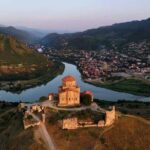
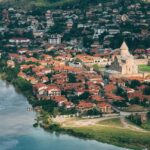
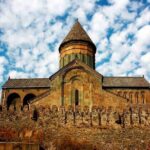
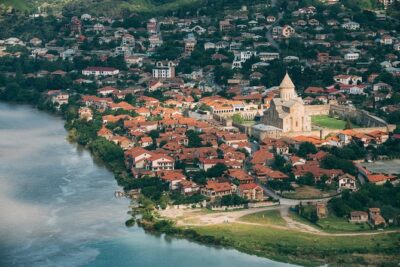
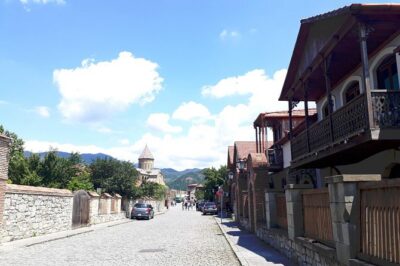
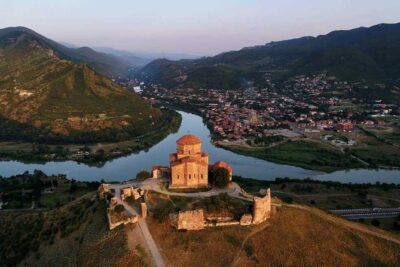
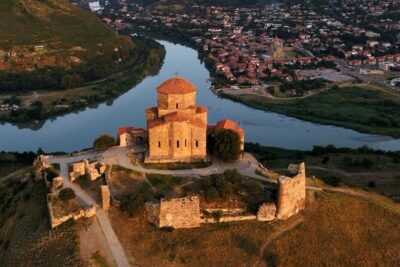
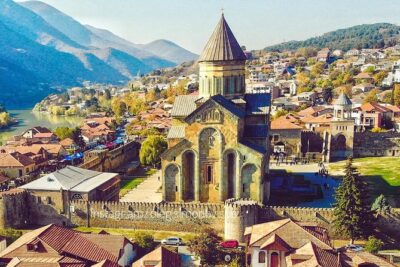
Mtskheta is one of Georgia’s oldest cities, tied to ancient tribes and recognized by UNESCO as a World Heritage Site. The key idea to keep in mind: this wasn’t just a pretty town. It was tied to power. It served as the early capital of the Kingdom of Iberia and, for centuries, acted as the place for coronations and royal burials.
That context helps when you’re walking around. You’re not just seeing old stones; you’re seeing the stage where authority changed hands. When a stop is only 2 hours, the best way to enjoy it is to focus on the main sites and let the story connect in your head—capital, coronations, burials, then later chapters.
Good news: the tour lists the admission ticket for Mtskheta as free, so you can spend your time on the walking and not on ticket friction.
Gori’s Stalin Museum: six halls, one very pointed narrative
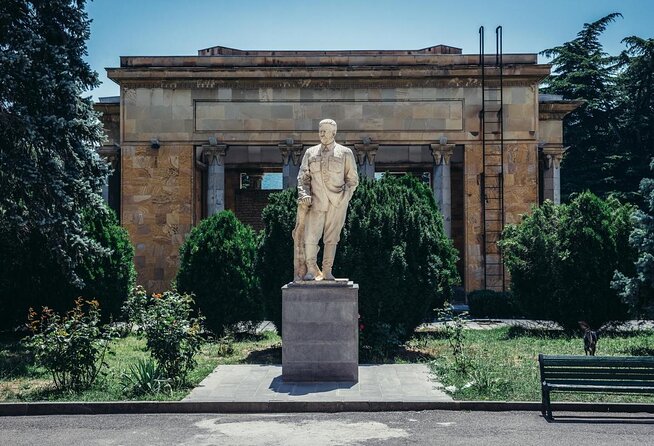
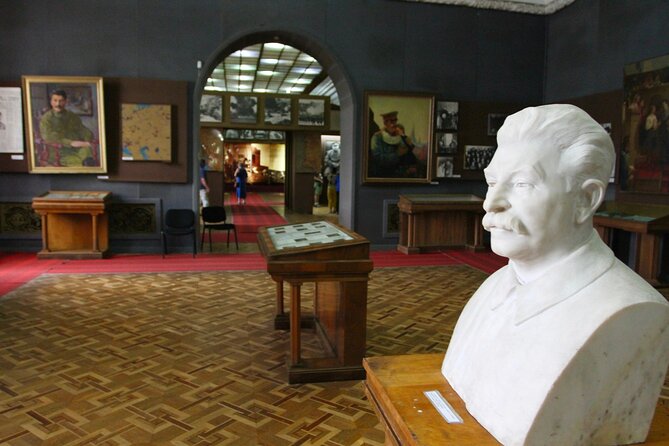
Gori is where the tour turns heavier. You can often stop near the house where Joseph Stalin was born for photos. Then you head to the Stalin Museum complex, which opened in 1957 near that birthplace.
Here’s what’s specific about the museum, and why it’s worth your attention:
- The complex includes the memorial house, Stalin’s carriage, and a two-storey exhibition building.
- Exhibits are divided into six halls, roughly in chronological order.
- You’ll see many items that are described as actually or allegedly connected to Stalin—office furniture, personal effects, and gifts made to him over the years.
- The museum ends with one of twelve copies of the death mask taken shortly after his death.
That last detail gives the museum a strong, final punch. It’s not a museum that stays neutral about why it was created. Even if you already know the broad history, being able to see how the story is organized—hall by hall—makes your visit more coherent.
Practical tip: expect this stop to be more reflective than scenic. Bring your questions. If you want a guide who can explain context in plain English, this is the place where a strong driver like Giorgi often makes a difference, because you can connect the exhibits to what you’re seeing outside.
Admission is not included for this stop, so plan extra time for entry and extra money for tickets.
Gori Fortress on the hill: Erekle II and strategic views
After the museum, you’ll head to the Gori Fortress, sitting in the center of Gori on a high rocky hill. The fort’s early presence is tied to much older settlement layers, but the fortress as you’d understand it in the written record is first mentioned in the 13th century.
Why people bother with a fortress stop on a day like this: because the views do the explaining. From up there, you can understand why a place could matter strategically.
A few specifics to look for as you walk around:
- It was important for controlling the Shida Kartli region; conquest helped with domination over the wider area.
- Over centuries it was renovated and reshaped.
- The fortress got its current appearance in 1774, after repair by King Erekle II.
- Early after unification with Russia, a Russian army grenadier battalion was stationed there. Later, it lost that strategic role.
Admission is not included here either, so budget for it. Also, since you’ll be walking on uneven surfaces, comfortable shoes matter more than you’d think for a “just a couple hours” stop.
If the museum felt like the past was speaking loudly, the fortress is the place where the past speaks with geography.
More Gori and Uplistsikhe cave-town days we have traced from Tbilisi


Uplistsikhe cave town: streets, sewer system, and a secret tunnel legend
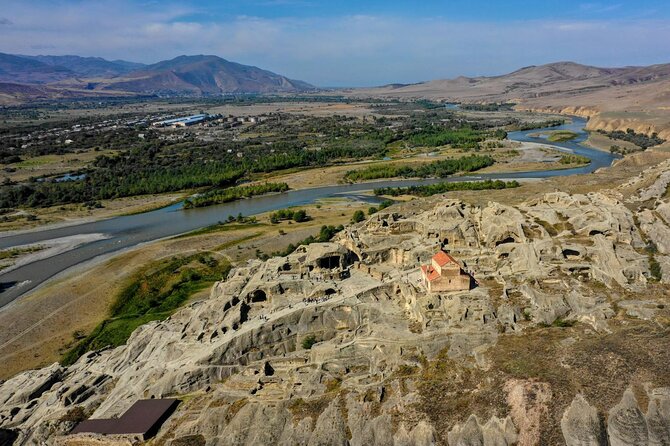
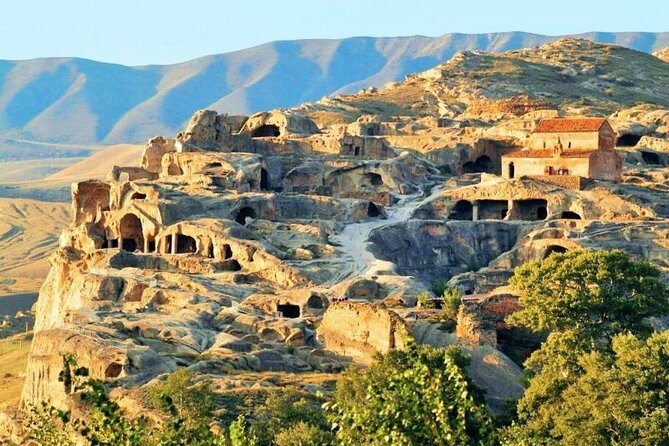
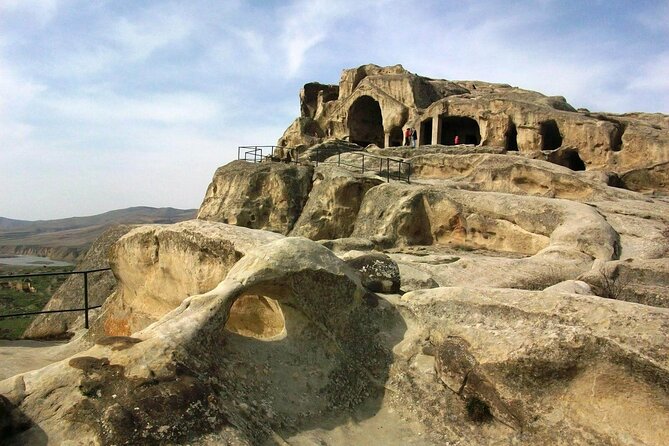
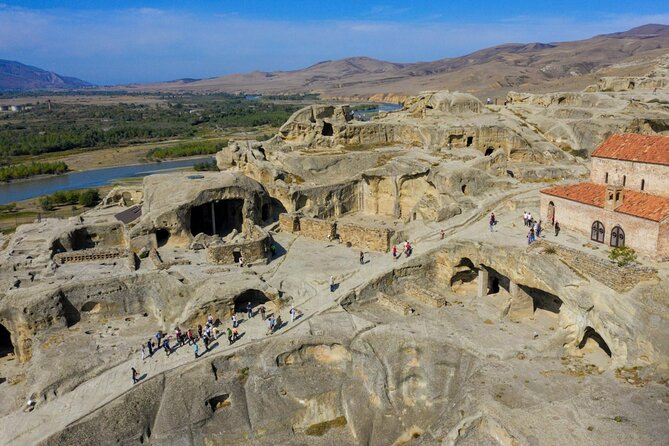
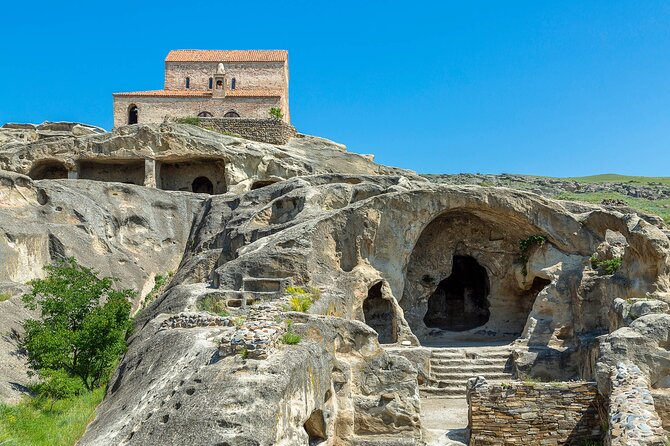
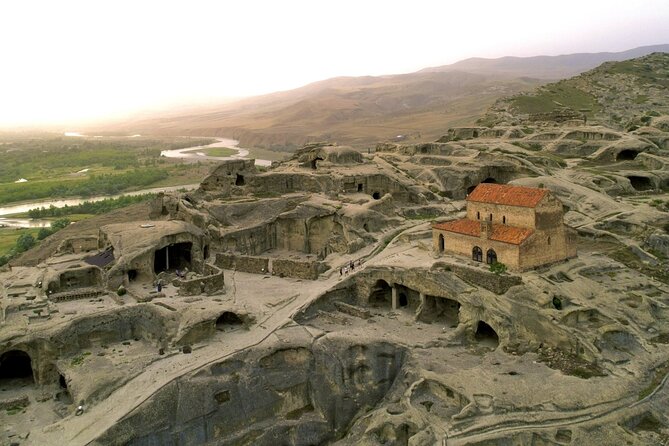
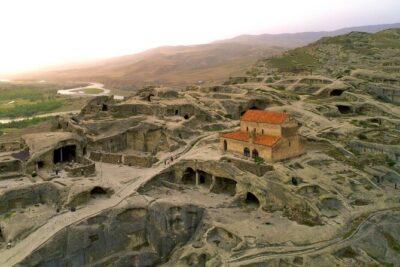
Then comes the big tone shift: Uplistsikhe. This is a rock-hewn town—an open-air museum—and one of the oldest settlements in the Caucasus.
What I like about Uplistsikhe is that it’s not just “cool caves.” The site is described as a full city layout, with:
- streets and squares
- four gates
- a sewer system
- and even a secret tunnel that leads to the river Mtkvari
It’s also an easy place to picture everyday life in a landscape that feels otherworldly. You’re surrounded by carved structures, and the layout helps your brain do the work.
There’s also a legend attached to how it was built: slaves supposedly excavated the city with a pickaxe said to have iron on one side and gold on the other. The story says once the pickaxe wore out, the slave earned freedom and precious metal.
That legend might not change the physical site, but it adds a human edge to what you’re seeing. It’s a reminder that this kind of building required a lot of labor, planning, and grit—whether you treat the legend as literal history or metaphor.
Admission is not included at Uplistsikhe, and 2 hours is a realistic time window if you want photos and a steady walk without rushing. Bring water, especially if the weather is hot.
The ride back to Tbilisi: how to turn the last hours into real value
You’ll finish back in Tbilisi, and the tour notes that they’ll recommend good restaurants for traditional Georgian dishes.
This is where you can get real value out of the day. You’ve already seen three strong, different parts of Georgia’s story—royal heritage, political memory, and ancient settlement engineering. A proper Georgian meal is a clean way to land the day without turning the evening into another rushed errand list.
If you want to keep the day flowing, aim for a restaurant that’s close to where you’ll stay so you don’t fight traffic right after a long car day.
Also, keep in mind that the day is about travel and entry-time combined. If you’re the type who likes to stretch the evening, choose dinner places that won’t have you scrambling for a table.
What can go right (and what to watch for) with your driver-guide
This trip’s quality often comes down to the person behind the wheel. In the positive experiences, Giorgi (also seen as Georgi) is praised for being friendly, patient, very informative, and flexible—making adjustments based on preferences and helping people find better photo angles.
But here’s the honest consideration: one downside that shows up is miscommunication or limited inside guidance at ticketed sites. The tour’s own explanation is that the driver may not accompany you into locations where entry is paid, since those sites typically have their own staff. That can be totally normal and still feel disappointing if you expected a full walk-through at every entry point.
My practical advice: at pickup, say clearly what you want:
- full explanations at each stop
- time for photos
- and confirmation you’ll hit all major stops
If you’re expecting an active guide inside every building, ask about how they’ll handle guided time once you’re at ticketed sites.
Should you book this day trip to Mtskheta, Gori, and Uplistsikhe?
Book it if you want a structured day that combines major Georgian landmarks in one loop, with hotel pickup and comfortable transport. It’s a strong choice if you like mixing types of history—UNESCO heritage, museum narratives, fortress viewpoints, and an open-air cave city.
Skip it or choose a different option if you dislike political or heavy historical topics. The Stalin Museum stop is not a light detour, and you should be comfortable with that tone. Also, go in expecting that you’ll pay separate entry fees for some sites, so $95 is the transport cost more than a fully packaged ticket bundle.
If you do book, plan for practical comfort: water, good walking shoes, and a willingness to slow down for a couple of photo moments. This is the kind of day where the story lands best when you stop thinking of it as three stops and start seeing it as one long conversation about Georgia—power, memory, and place carved into rock.
FAQ
How long is the tour?
The duration is about 7 to 8 hours.
What does the price include?
The price includes private transportation in an air-conditioned vehicle.
What is not included in the price?
All fees and taxes are not included. Site admissions may require separate payment, except Mtskheta which lists a free admission ticket.
Where does pickup happen?
Pickup is available at any place in Tbilisi, including hotels and airports. You just need to write your location when booking.
Is the tour private or shared?
It’s a private tour/activity, meaning only your group participates.
Will I get a ticket on my phone?
Yes, a mobile ticket is offered.
Is there an English option?
The tour is offered in English.
Are service animals allowed?
Yes, service animals are allowed.
When should I book, and can I cancel?
Confirmation is received at the time of booking. Cancellation is free up to 24 hours in advance for a full refund.
More from Our Tbilisi Review Desk



More Gori and Uplistsikhe Cave-Town Days
More Mtskheta and Jvari UNESCO Runs
Not quite your thing? More Tbilisi tours and day trips from our review desk




Mtskheta & Jvari UNESCO Trips, compared.
 ★ 5.0Day Trip to Mtskheta Gori and UplistsikheFrom $291,801 reviews
 ★ 5.0Mtskheta,Jvari,Bazaar,wine tasting,Chronicles of GeorgiaFrom $20730 reviews
 ★ 5.0Mtskheta-Gori-UplistsikheFrom $90112 reviews
 ★ 4.5Mtskheta, Jvari, gori, uflistsikhe, history and panorama (group tours)From $19107 reviews
 ★ 5.0Mtskheta-Jvari-Uplistsike-Chronicle of Georgia, PRIVATE TripFrom $68105 reviews
 ★ 4.5Tbilisi – Mtskheta – Jvari. Full City Tour on Hop On Hop Off BusFrom $4091 reviews
 ★ 4.5Ancient Georgia Group Tour: Mtskheta,Jvari, Gori, UplistsikheFrom $2473 reviews
 ★ 5.0Ancient Mtskheta and Chronicle of Georgia half day tourFrom $6566 reviews
Browse the lists this tour appears in