
Reviewed · SOVIET & BRUTALIST TBILISI
Chiatura. Soviet Past in the present. + Katskhi pillar
Chiatura feels like a time machine with good shoes. This private day trip ties together Soviet industry, working cable cars for magnesium miners, and two spiritual stops perched above the valley. I love how the private guide time makes it easy to ask questions as you go, and I like that you get real hands-on visuals of abandoned infrastructure, not just roadside photos. One thing to consider: you’ll be doing stairs at Mgvimevi, so bring comfortable footwear and a moderate fitness level.
You’ll start with the town of Chiatura, where old factories and Soviet-era mining systems sit in a living, working landscape. Then comes Katskhi Pillar, a 40-meter limestone monolith with a monastery on top, followed by Mgvimevi Monastery—frescoes, stone carving, and the kind of approach that’s half sightseeing, half workout. The value is solid for a private format: air-conditioned transport, WiFi onboard, and bottled water and snacks are included, while admission tickets at the sites are free. The only likely snag is timing: it’s a full 8–10 hour day, so you’ll want to avoid late nights before.
In This Review
- Quick Take: What Makes This Tour Worth Your Time
- A Soviet Mining Town and a Georgian Monolith—Why This Day Works
- Price and What You Actually Get for $150
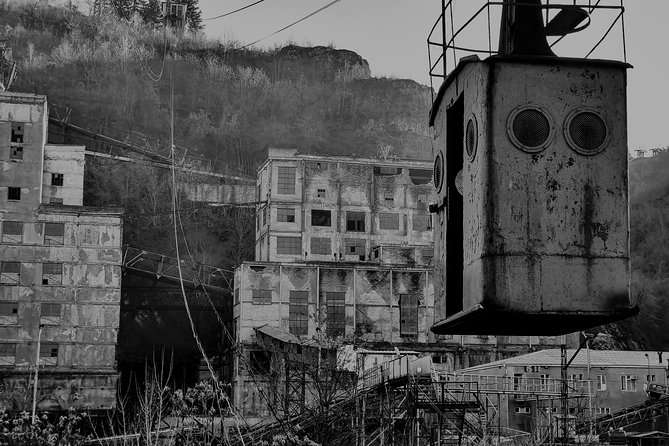
- Chiatura’s Cable Cars and Factory Ruins: USSR in the Real World
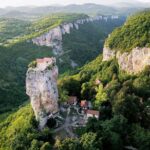
- Katskhi Pillar: The 40-Meter Limestone Monolith with a Monastery
- Mgvimevi Monastery: Steps, a Tunnel, Frescoes, and Stone Carving
- Drive Time from Tbilisi and How to Plan Your Day
- Who This Tour Suits Best (and Who Might Skip It)
- What About Lunch and Snacks?
- Practical Tips So You Enjoy Every Stop
- Should You Book This Tour?
- FAQ
- How long is the Chiatura and Katskhi Pillar tour?
- Where does the tour start?
- Is this a private tour?
- What’s included in the price?
- Is lunch included?
- Are admission tickets required for the stops?
- What should I expect in terms of activity level?
- Is the tour offered in English?
- What is the cancellation policy?
Quick Take: What Makes This Tour Worth Your Time
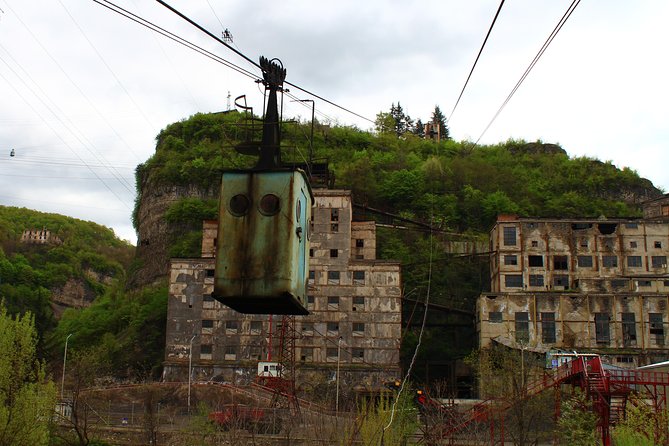
- USSR-era Chiatura cable cars still operating for magnesium miners
- Private, undivided guide attention with room for real history talk
- Free admissions at Chiatura, Katskhi Pillar, and Mgvimevi Monastery
- Katskhi Pillar’s 40-meter scale, plus monastery views
- Mgvimevi’s steps and tunnel approach to stone carvings and frescoes
- Hotel pickup and drop-off in air-conditioned comfort, with snacks and water
A Soviet Mining Town and a Georgian Monolith—Why This Day Works
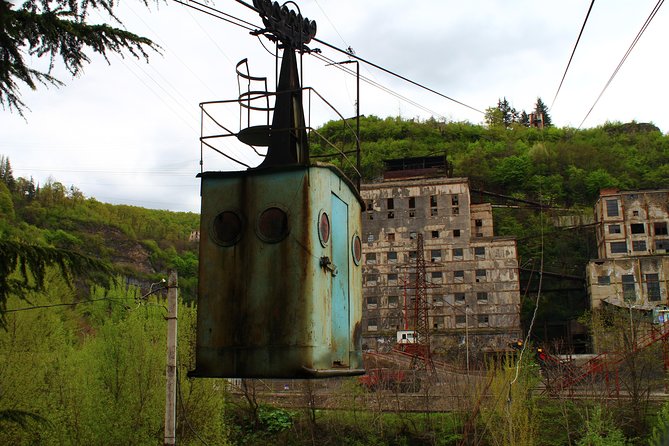
If you like your travel a little off the well-lit path, this route makes a strong case. Chiatura isn’t a museum-style stop. It’s a real town shaped by Soviet mining, with cable-car infrastructure that still connects the industry. That gives the day a pulse: you’re not just looking back at history; you’re seeing how it still affects daily life.
Then you jump from metal and industry to limestone and faith. Katskhi Pillar is dramatic in a quiet way—one big natural monolith, 40 meters high, with a monastery perched on top. After that, Mgvimevi Monastery brings you into a more intimate experience: 13th-century stonework, frescoes, and that physical approach through steps and a tunnel.
For a short stay in Georgia, this kind of pairing is smart. It’s not only about seeing places. It’s about understanding the contrast: how work carved the valley in the Soviet era, and how spiritual sites have been placed there for centuries.
More Soviet and brutalist Tbilisi walks we have wandered off the tourist trail
Price and What You Actually Get for $150
At $150 per person, this tour is clearly positioned as a private, full-day experience rather than a budget group bus. That matters because you get undivided attention from your guide and a schedule that stays efficient without feeling rushed.
Here’s what you’re paying for in practical terms:
- Hotel pickup and drop-off from Tbilisi (and pickup can start from other cities if you want)
- Air-conditioned vehicle and private transportation
- WiFi onboard
- Snacks and bottled water (helpful on a long day)
- Free admission at the three main stops
- Mobile ticket plus all fees and taxes included
What’s not included is also clear: lunch. That’s the one cost you’ll likely add on your own, so plan to buy something simple near your route or bring a light option if it fits your style.
If you’re trying to squeeze this into a tight itinerary, the private format helps a lot. You can ask questions, adjust your pace a bit, and spend more time where you’re most interested—Soviet ruins, views, or religious art.
Chiatura’s Cable Cars and Factory Ruins: USSR in the Real World
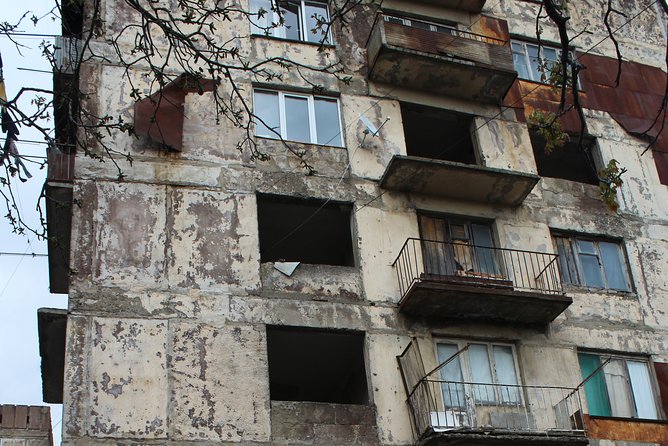
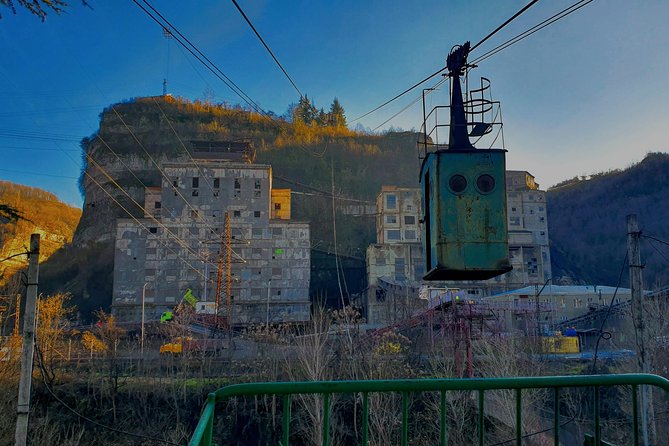
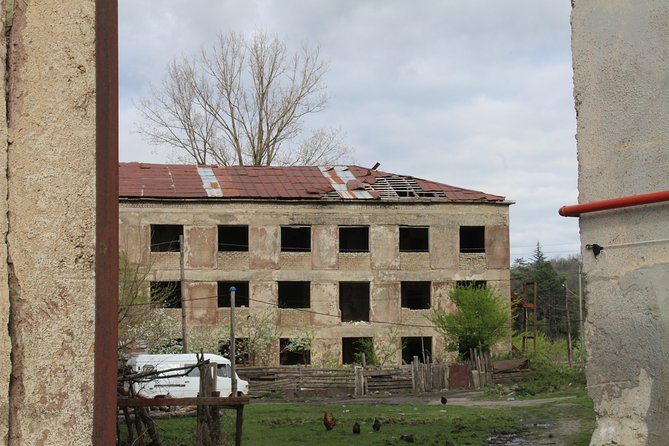
Chiatura is the heart of the day, and it’s where the tour’s theme becomes tangible. This town is known for Soviet-era cable cars that were built to support magnesium mining, and they still operate for that work. Seeing cable cars in use changes the feel immediately. You get more than a set of old tracks; you get an active system with the surrounding town built around it.
You’ll have about two hours here, with admission free. The time is enough to walk, look closely at remnants of the old industrial setup, and take in the views from different angles. The stop is also described as having beautiful nature alongside the industrial feel, so the scenery isn’t an afterthought. It’s part of the experience.
A couple of practical notes make this stop easier:
- Bring a camera and be ready for wide-angle views. The town and its structures were designed around steep terrain.
- Wear shoes that can handle uneven ground. Industrial areas often have rough patches and stairs.
If your guide is David, the focus tends to be on making the mining story make sense—how Georgia’s history connects to what you’re seeing, not just where it happened. If your guide is Irakli, the day leans into Georgian life and conversation, which can make the same sights feel more personal.
Katskhi Pillar: The 40-Meter Limestone Monolith with a Monastery
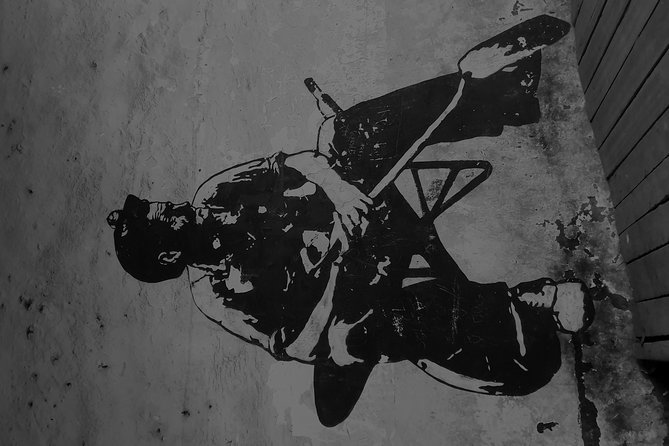
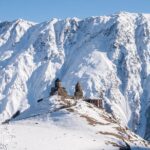
After Chiatura, Katskhi Pillar offers a clean change of pace. You’re looking at a natural limestone monolith that’s 40 meters high, with a monastery built on top. Even when the time on paper is short—about 30 minutes—this kind of stop lands because it’s visually simple. One towering form. One religious site. Big scale.
You’ll get free admission here as well, so there’s no extra ticket step to slow you down. The best way to enjoy it is to treat the time as a photo-and-perception window. You want to look up, then look again after you’ve found a better vantage point. From certain angles, it’s easier to appreciate how the monastery clings to rock.
The potential drawback is obvious but worth saying: because you’re visiting a perched site, the experience is more about views and structure than wandering. If you want long meandering hikes, keep expectations grounded. This is a short, focused stop that works best when paired with Chiatura and Mgvimevi.
Mgvimevi Monastery: Steps, a Tunnel, Frescoes, and Stone Carving
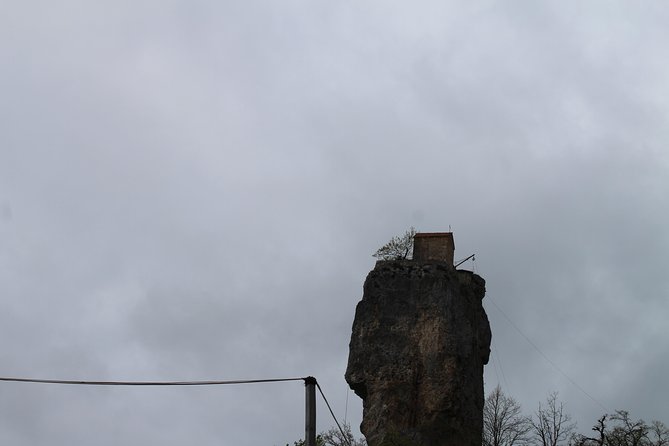
Mgvimevi Monastery is where the day becomes hands-on in a different way. This is a 13th-century monastery with stone carvings and frescoes, and the setting is described as spectacular. The approach is part of the attraction: you go up through steps and a tunnel to reach the main sights.
Your time is about 20 minutes and admission is free. That’s not enough to do it slowly like a museum, but it’s plenty to take in the main details if you’re ready to focus. The frescoes and carving matter because they’re the visual proof of age and craftsmanship. This is where you can stop thinking only about Soviet industry and start noticing how religious art has survived—and been maintained—across centuries.
What to watch for:
- The stairs and tunnel approach means you should move steadily and keep an eye on footing.
- Bring your camera, but also leave a moment without it. The carvings and frescoes reward close attention.
If you have any mobility limits, this is the stop that will ask more of you than the other two. The tour’s general note is moderate physical fitness, and Mgvimevi is the clearest reason why.



Drive Time from Tbilisi and How to Plan Your Day
This is listed as a 8 to 10 hour outing, starting with pickup in Tbilisi. That timeframe is typical for a day trip that includes three separate, geographically distinct stops. The benefit of the air-conditioned private transport is that you can stay comfortable while the scenery changes.
What I like about this pacing is that it prevents two common day-trip problems:
1) You’re not stuck at one stop for so long you lose momentum.
2) You’re not rushing through all three without time to actually look.
Still, treat it like a full day. If you’re pairing it with another plan the same evening, aim for an earlier dinner rather than a late one. Your body will likely notice the stairs at Mgvimevi, even if you’re generally fit.
A small but useful detail: WiFi onboard can help you quickly map viewpoints or check train schedules back in Tbilisi—handy when you’re traveling outside the usual tourist circuit.
Who This Tour Suits Best (and Who Might Skip It)
This tour is a great match if you want:
- Authentic, off-the-main-road sights tied to a specific theme (Soviet industry and Georgian religious sites)
- A private guide who can handle questions and adapt the vibe
- A day that’s more about looking closely than “collecting checkmarks”
You’ll likely enjoy it most if you’re comfortable with:
- A moderate level of walking
- Stairs and a tunnel at Mgvimevi
- Spending a full day away from central Tbilisi
You might skip it if your travel style is mostly flat, relaxed sightseeing with minimal steps. The tour is doable, but it’s not a stroller-friendly promise based on what’s described.
Service animals are allowed, and the tour is described as near public transportation, but since it’s built around pickup and private transport, you’ll mainly experience it through the driver-and-guide rhythm.
What About Lunch and Snacks?
Lunch isn’t included, but you do get snacks and bottled water. That’s exactly the kind of inclusion that keeps the day smooth. When you have long gaps between food stops, people get cranky fast. Water and small snacks reduce that risk, especially on days with a few stair-heavy segments.
For lunch, plan to buy something nearby on your own. Since the tour doesn’t specify a lunch stop, treat it as a flexible decision rather than a guaranteed restaurant moment.
Practical Tips So You Enjoy Every Stop
A few small choices can make this day much more comfortable, especially for the monastery approach:
- Wear good walking shoes for steps and uneven industrial terrain at Chiatura.
- Bring a camera with a charged battery. You’ll want photos of both the cable-car infrastructure and the monolith.
- Pack a light layer. Even with an air-conditioned car, the stops themselves can feel different from the ride.
- Use the downtime well: if your guide is David, ask about how magnesium mining shaped the region; if your guide is Irakli, ask about everyday Georgian life and culture to add context to the sites.
Also, since the tour runs in English, think about your questions ahead of time. The private format makes it worth asking something specific, not just generic history.
Should You Book This Tour?
I’d book it if you want a day trip that feels like a story with chapters: Soviet-era industry at Chiatura, towering geology at Katskhi Pillar, and 13th-century craftsmanship at Mgvimevi. The value is strongest if you like private guidance and you’re comfortable with moderate movement.
This tour is especially appealing when:
- You’re staying in Tbilisi and want one focused day outside the usual tourist circuit
- You care about how history shows up in real places, not just in staged exhibits
- You want free admissions at all three major stops
Hold off if you need a mostly seated, low-steps day. The steps and tunnel at Mgvimevi are the main reason.
FAQ
How long is the Chiatura and Katskhi Pillar tour?
It runs about 8 to 10 hours total.
Where does the tour start?
The tour is based in Tbilisi, Georgia, and hotel pickup and drop-off are offered. Pickup can also start from other cities if you wish.
Is this a private tour?
Yes. It’s a private tour/activity, and only your group will participate.
What’s included in the price?
Included are all fees and taxes, an air-conditioned vehicle, private transportation, and WiFi on board. The overview also notes snacks, bottled water, and A/C transfers with hotel pickup and drop-off.
Is lunch included?
No. Lunch is not included.
Are admission tickets required for the stops?
Admission is noted as free for Chiatura, Katskhi Pillar, and Monastery Mgvimevi.
What should I expect in terms of activity level?
You should have a moderate physical fitness level. Mgvimevi involves going up through steps and a tunnel.
Is the tour offered in English?
Yes. It’s offered in English.
What is the cancellation policy?
You can cancel for a full refund up to 24 hours in advance of the experience start time. If you cancel less than 24 hours before, the amount paid is not refunded.
More from Our Tbilisi Review Desk
More Soviet and Brutalist Tbilisi Walks

Not quite your thing? More Tbilisi tours and day trips from our review desk




Soviet & Brutalist Tbilisi, compared.
 ★ 5.01 Day Private Armenia: UNESCO, Soviet & Curated Family LunchFrom $135106 reviews
 ★ 5.0Tbilisi old town & soviet heritage – Private driver-guided TourFrom $7783 reviews
 ★ 5.0Armenia: 1 Day Soviet gems, UNESCO + Family lunch (Small group)From $4968 reviews
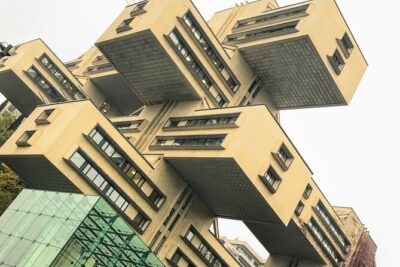 ★ 5.0Brutal Tbilisi: Urban exploration and untold storiesFrom $7559 reviews
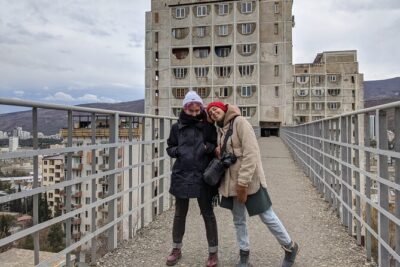 ★ 5.0Soviet Tbilisi Tour – Off the beaten pathFrom $4945 reviews
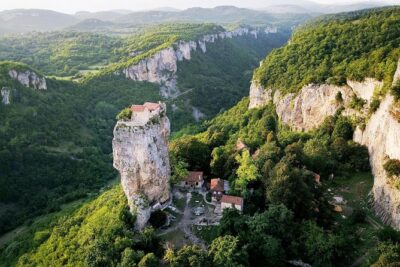 ★ 5.0Soviet past – Private day tour to Chiatura, Katskhi pillar and ChroniclesFrom $14929 reviews
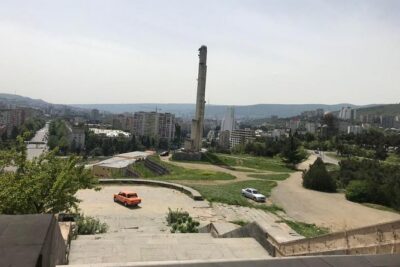 ★ 5.0Concrete Giants TourFrom $5420 reviews
 ★ 4.5Soviet Story – Private day trip to Chiatura, Stalin’s museum and Katskhi pillarFrom $2015 reviews
Browse the lists this tour appears in