
Reviewed · SOVIET & BRUTALIST TBILISI
Chiatura and Katskhi Pillar One Day Urbex Tour
Cable cars and cliff monasteries, one hard day. This day-trip tour puts you in western Georgia’s industrial backstory, then ends with the strange, quiet drama of Katskhi Pillar. I like how the route mixes big, iconic landmarks with working Soviet-era infrastructure, not just museum-style viewing.
What I especially like: the Stalin-era cable car system in Chiatura is still in use, so you’re seeing history with moving parts. The other standout for me is the monastic stop—Mgvimevi Monastery has an 8th-century core with later wall art and a tunnel under the church, which makes it feel layered rather than frozen in time.
One drawback to plan around: the day involves a long drive (about 2.5 hours each way) plus cable cars and elevated viewpoints, so it’s not a great match if you get motion sickness or feel unsafe around heights.
In This Review
- Key things to know before you go
- Georgia’s industrial past in Chiatura and Katskhi
- How the private small-group day runs (and who Alex/Aleksi can help)
- Mgvimevi Monastery: murals, icons, and a rare wooden door
- Katskhi Pillar and Monk Maxime
- Chiatura cableways: ride the Soviet-era system
- Chiatura town walk: Soviet architecture you can actually feel
- Drive time, heights, and comfort planning from Tbilisi
- Price and value for $123: what you’re really buying
- Should you book this tour?
- FAQ
- How long is the Chiatura and Katskhi Pillar one-day tour?
- Where does the tour start?
- What does the tour cost?
- Is lunch included?
- What sites do we visit during the day?
- Are entrance tickets included?
- Is the tour offered in English?
- Are cable cars part of the experience?
- What’s the maximum number of people in the cable car?
- Is the tour suitable for people with mobility issues or fear of heights?
Key things to know before you go
- Private-style attention: it’s a private activity, so pacing is flexible and you won’t be herded through stops.
- Katskhi Pillar’s one-resident story: you’ll learn about monk Maxime, the sole resident.
- Working cable cars: you’re riding the Chiatura tram system, including passenger cars linked to mine areas.
- Soviet visuals in real stations: some cableway stations show murals of Soviet heroes.
- Some lines may be closed: repairs can affect which cable segments you’re able to ride.
- Comfort matters: cable cars can feel tight/enclosed, and viewpoints require a basic comfort level with heights.
Georgia’s industrial past in Chiatura and Katskhi
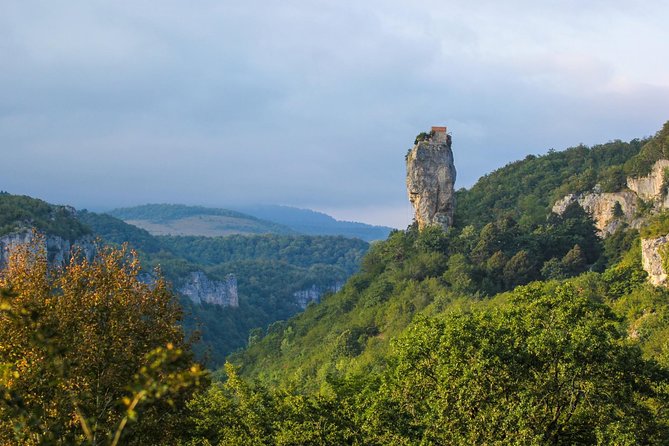
This tour is built around a very specific mood: industrial Georgia, with a side of mystery. Chiatura and the surrounding industrial corridor (including the Zestaponi area) show how the country’s work-and-industry history shaped entire towns. Then Katskhi Pillar swings the day into something quieter and more spiritual, right where limestone rises out of the landscape like a question.
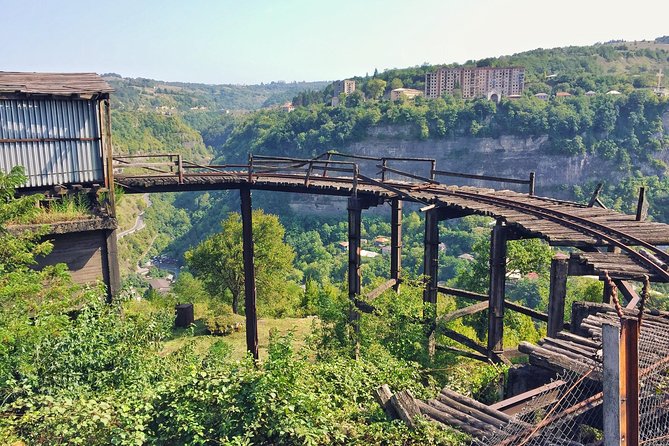
If you’re the type who likes places that feel lived-in—even when they’re old—Chiatura delivers. The cableways are described as Stalin-era engineering and are still functioning. That matters because you’re not only looking at abandoned relics; you’re seeing how the system still moves people through the Qvirilia River gorge.
I also like that the time is structured. You get one monastery stop that’s heavy on detail, one natural monolith with a human story, then hours in Chiatura for the cable car experience and a slower walk through the center.
More Soviet and brutalist Tbilisi walks we have wandered off the tourist trail
How the private small-group day runs (and who Alex/Aleksi can help)
The tour is designed as a private activity, meaning it’s just your group with your guide. In one group experience, the guide Aleksi ended up with the day feeling truly personal—no waiting on other parties, and the pacing stayed relaxed. That kind of setup is ideal if you like asking follow-ups, taking photos without rushing, or spending extra minutes near a viewpoint if the light is good.
The day typically starts with pickup for private tours, and you’ll get a local guide plus bottled water. The tour operates in English, which helps if you want clear context for what you’re seeing—especially at a place like Mgvimevi Monastery, where the story is in the layers.
If your guide is Alex or Aleksi (names that have come up for this tour), you should expect a confident, structured explanation of the history you’re walking through. And since the route is fairly time-sensitive, that guidance helps you focus on what’s most worth your attention.
Mgvimevi Monastery: murals, icons, and a rare wooden door
Mgvimevi Monastery is the kind of stop you remember because it refuses to be one thing. The complex includes an 8th-century monastery church with decorated façades—crosses and ornamental borders—and wall paintings that span centuries. You’ll see mural artwork from the 8th century, plus later painting work from the 16th century.
What makes it more than pretty walls is the archaeology of the place. There’s an old fresco that was discovered under a newer layer, and you’ll also hear about portraits of a nobleman Rati from the Racha Region with his wife and his brother Niania Kakhaberisdze. That gives the monastery a human timeline, not just a date on a sign.
Two “you can’t miss this” items are part of the story too: an engraved icon and a very rare curved wooden door made in the 11th century. Those important objects are kept at the Georgian National Museum, so at the monastery you’re getting the site itself plus the context of what moved off-site.
The complex also includes a partly cliff-carved small church and a two-storey bell tower built from the 12th–14th centuries. Plan for about 45 minutes here, and remember that the tunnel under the church is part of the site character.
Katskhi Pillar and Monk Maxime
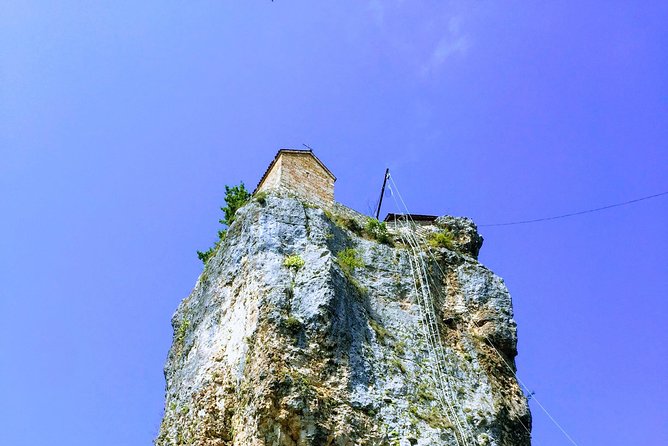
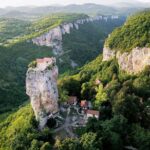
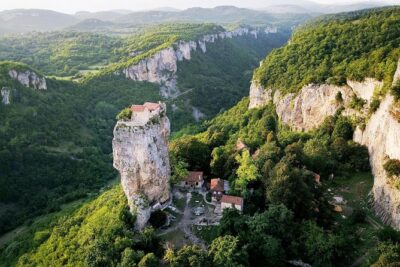
Katskhi Pillar is one of those places where the geography does half the storytelling. It’s described as a limestone monolith near the town of Chiatura, and it’s not just a viewpoint—it’s a spiritual reference point.
The key human detail is the reason people care: you’ll learn about monk Maxime, the sole resident. That single-person connection changes how you look at the pillar. Instead of seeing only a rock you photograph, you’re understanding how a retreat lives inside extreme surroundings.
Like the monastery, this is a relatively short stop—about 45 minutes—which helps keep the day moving before the long Chiatura block. The tour also keeps the pacing practical. You get the main spiritual idea, then you shift to industrial Georgia without feeling mentally exhausted.
If you’re sensitive to heights, do take the whole day seriously here. The broader experience includes elevated viewpoints, old cable cars, and spaces that can feel enclosed.
Chiatura cableways: ride the Soviet-era system
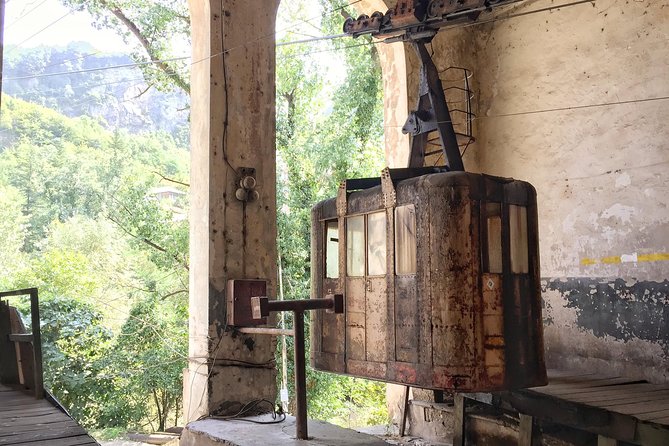
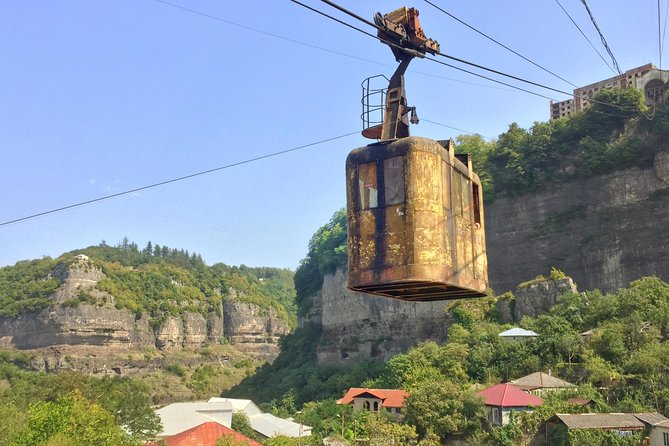
This is the star portion of the day. The Chiatura cableways are a Stalin-era aerial tram system that still operates and serves as the main way to get around. The description is very specific: the cables run over the Qvirilia River gorge and connect the town to mines above.
Passenger and cargo aren’t mixed in the same way: there are 10 cars for passengers and 2 cars for manganese transport. For a lot of people, that detail makes the whole thing feel more “real”—this isn’t just tourism infrastructure. It’s a working transport system with a Soviet industrial logic still visible in how the cars and stations are set up.
You’ll spend about 3 hours in the cableway and Chiatura area, including rides across a stretch of roughly 6 kilometers. Some stations have murals of Soviet heroes, which adds texture beyond the engineering. If you like architecture that tells you how people once thought about work, power, and movement, you’ll notice that these stations are built like statements.
Two practical notes from the experience data matter a lot:
- The maximum cable car capacity is 4 people, so you may wait a bit depending on timing.
- Some cable lines can be closed or under repair, so you might not be able to ride every segment.
Also, the tour guidance is clear: it isn’t suitable for travelers with mobility issues or a fear of heights, since the route includes riding old cable cars and reaching elevated viewpoints.
A few more Tbilisi tours and Georgian day trips worth a look


Chiatura town walk: Soviet architecture you can actually feel
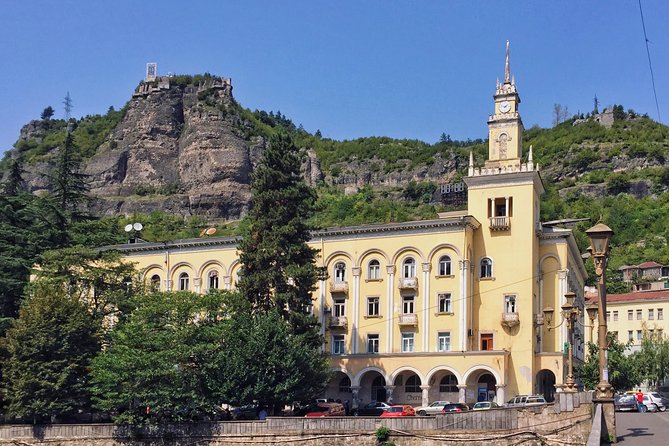
After the cable car time, you get about 2 hours in Chiatura itself. This part is less about a single headline sight and more about atmosphere—especially if you care about Soviet-era architecture and how it looks in a real town.
The tour description notes that the walk around the center feels pleasant. That’s important, because Chiatura can hit you as industrial and intense during the cable car experience, and the town walk is your decompression. You get time to look slowly at buildings, street rhythm, and the way the town’s layout works with the gorge.
This is also where photography tends to land well. Cableways can make great stills, but the center gives you a calmer frame: Soviet forms with everyday life around them. If you’re the type who likes to notice small urban details—window shapes, signage style, building proportions—you’ll find plenty here.
It’s also a good place to use your guide well. Ask what to notice in Soviet planning, and you’ll usually get quick context that makes the streets feel readable.
Drive time, heights, and comfort planning from Tbilisi
The tour runs from Tbilisi and includes a long drive: roughly 2.5 hours each way. That means your day can feel packed even though the stops are short. The upside is that you get a lot of variety, but the downside is that you need to plan for comfort.
If you’re prone to motion sickness or have back problems, the ride is a real consideration. You’ll be sitting for a significant chunk of the day before you even start the cable car portion.
Then there’s the vertical part. You’ll ride old cable cars and visit elevated viewpoints. The experience is explicitly flagged as not suitable for travelers with mobility issues or a fear of heights. Even for people who are okay with heights, this is the kind of day where you should wear practical clothing and keep expectations realistic.
Weather matters too. The experience is subject to favorable conditions, and because parts of it rely on outdoor viewpoints and cable operations, poor weather can change what’s possible.
Price and value for $123: what you’re really buying
At $123 per person, you’re paying for a whole-day, transport-heavy circuit with a local guide and multiple distinct settings: a monastic complex with layered mural history, a natural monolith tied to monk Maxime, and the working Chiatura cableways.
That value is easier to see when you break down what’s included versus what’s not:
- Included: bottled water, a local guide, and hotel pickup only for private tours.
- Not included: lunch.
- Admissions: the key sites listed come with free admission tickets.
So the cost isn’t about paying entry fees. It’s about logistics, time, and guided interpretation. If you choose the private setup, you also get the convenience of pickup/transfer, which matters on a day with long travel times.
You also get group flexibility through the private nature of the day. In real use, that can mean a smoother schedule and less waiting. For people who like to move at a comfortable pace, that attention is part of what you’re paying for—not just the sightseeing.
Should you book this tour?
Book it if you want a Georgian day that mixes industrial-urban structure with monastic cliff atmosphere, and you like seeing how history still functions in everyday life. I’d also recommend it if you care about Soviet-era engineering details and appreciate guided context that explains what you’re actually looking at—especially on the cableways.
Skip it (or choose something else) if you’re uncomfortable with heights, enclosed/tight spaces, or you know a long drive will make you feel unwell. The route is not built for mobility limitations either.
If you’re on the fence, ask yourself one simple question: do you want a day where the main draw is a working system (cable cars) plus a human story (monk Maxime)? If yes, this tour is very likely worth your time.
FAQ
How long is the Chiatura and Katskhi Pillar one-day tour?
The total duration is about 12 hours.
Where does the tour start?
It starts with hotel pick-up for private tours. For other setups, the meeting point is handled by contacting you to clarify pickup time and location.
What does the tour cost?
The price is $123.00 per person.
Is lunch included?
No. Lunch is not included.
What sites do we visit during the day?
You’ll visit Mgvimevi Monastery, Katskhi Pillar, and the Chiatura cableways and Chiatura town area, then return to Tbilisi in the evening.
Are entrance tickets included?
For the listed stops, admission tickets are free.
Is the tour offered in English?
Yes, it’s offered in English.
Are cable cars part of the experience?
Yes. You’ll ride the Chiatura cableways, and some cable lines may be closed or under repair.
What’s the maximum number of people in the cable car?
The maximum capacity of the cable car is 4 people.
Is the tour suitable for people with mobility issues or fear of heights?
No. It’s not suitable for travelers with mobility issues or a fear of heights, since it includes old cable cars and elevated viewpoints. It’s also not recommended for motion sickness or back problems due to the long drive.
More Tbilisi Tours and Georgian Day Trips



More from Our Tbilisi Review Desk
More Soviet and Brutalist Tbilisi Walks
Not quite your thing? More Tbilisi tours and day trips from our review desk




Soviet & Brutalist Tbilisi, compared.
 ★ 5.01 Day Private Armenia: UNESCO, Soviet & Curated Family LunchFrom $135106 reviews
 ★ 5.0Tbilisi old town & soviet heritage – Private driver-guided TourFrom $7783 reviews
 ★ 5.0Armenia: 1 Day Soviet gems, UNESCO + Family lunch (Small group)From $4968 reviews
 ★ 5.0Brutal Tbilisi: Urban exploration and untold storiesFrom $7559 reviews
 ★ 5.0Soviet Tbilisi Tour – Off the beaten pathFrom $4945 reviews
 ★ 5.0Soviet past – Private day tour to Chiatura, Katskhi pillar and ChroniclesFrom $14929 reviews
 ★ 5.0Concrete Giants TourFrom $5420 reviews
 ★ 4.5Soviet Story – Private day trip to Chiatura, Stalin’s museum and Katskhi pillarFrom $2015 reviews
Browse the lists this tour appears in