
Reviewed · MTSKHETA & JVARI UNESCO TRIPS
Uplistsikhe-Borjomi-Gori-Mtskheta
Cave cities, churches, and mineral water on one day. This private Georgia route strings together Jvari’s epic viewpoint, Borjomi nature and mineral water, and Mtskheta’s famous cathedral relics, all with a driver-guide who keeps the story human. If you get a guide like Mamuka (often paired with Anna), the day tends to feel warm, flexible, and easy to follow.
I especially like two things: the panorama factor (Jvari gives you the Aragvi and Kura meeting at the right angle), and the hands-on variety of sites (rock-cut Uplistsikhe, cathedral treasures, and Borjomi’s real mineral-water tradition). You’re not stuck doing one type of stop.
The main consideration is the pace. It’s a 7–9 hour day with multiple locations, and some of the ticket costs are extra (cable car, plus admissions for places like the Stalin museum and Uplistsikhe).
In This Review
- Key highlights worth planning around
- A smart 7–9 hour route from Tbilisi
- Jvari Church over Mtskheta: the view and the layered centuries
- Borjomi-Kharagauli National Park: drive-by nature that sets up the main stop
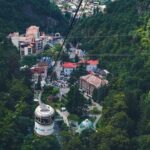
- Borjomi Central Park: mineral water and optional cable car views
- Gori and the Stalin house-museum in 40 minutes
- Uplistsikhe cave town: Lord’s Fortress carved into rock
- Back to Mtskheta: Svetitskhoveli Cathedral and its four sanctities
- Price and logistics: what $179 per group really buys
- Practical tips for a smooth day
- Should you book this tour?
- FAQ
- Where does the tour start and end?
- What time does the tour begin?
- How long is the tour?
- Is this a private tour?
- How much does it cost for a group?
- Are tickets included for all stops?
- Is there a mobile ticket?
Key highlights worth planning around
- Private driver-guide service, often with English support and a friendly, accommodating vibe
- Jvari Church viewpoint over Mtskheta and the rivers Aragvi and Kura merging
- Borjomi mineral water in the Central Park, then optional cable car for views
- Gori quick visit to the Stalin house-museum in a tight 40-minute window
- Uplistsikhe rock-hewn cave town history from around 1000 BC to the 13th century
- Mtskheta’s Svetitskhoveli cathedral (1010–1029) protecting four major Orthodox sanctities
A smart 7–9 hour route from Tbilisi
This is a long-but-doable day trip designed to hit major highlights in a logical loop: north from Tbilisi toward Mtskheta, then westward to Borjomi and Gori, before returning to Mtskheta for the cathedral. You start at 9:00 am and end back at the meeting point, with the whole thing running about 7 to 9 hours.
Because it’s private (up to 3 people per group), you’re not fighting crowds or getting shoved into the “group herd” pace. You can also ask practical questions on the ride—about what to photograph, how much time to spend, or what to skip if you’re tired.
The flip side of the convenience is that you’ll need good shoes and a flexible mindset. Some of the stops involve walking on uneven ground, and time in each place is intentionally short.
More Mtskheta and Jvari UNESCO runs we have made from Tbilisi
Jvari Church over Mtskheta: the view and the layered centuries
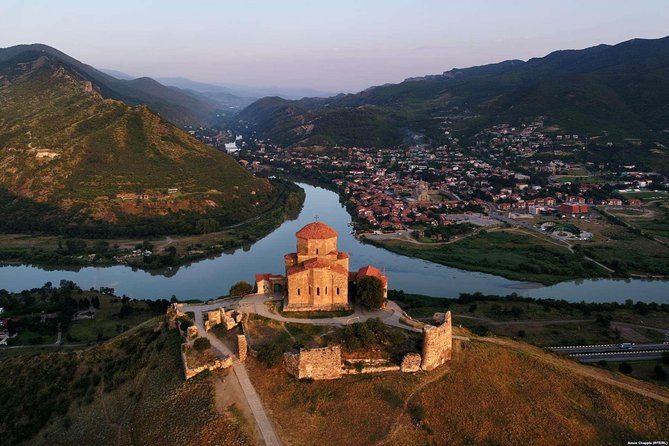
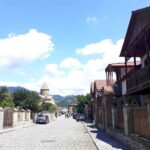
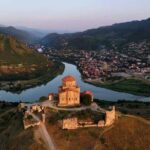
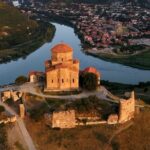
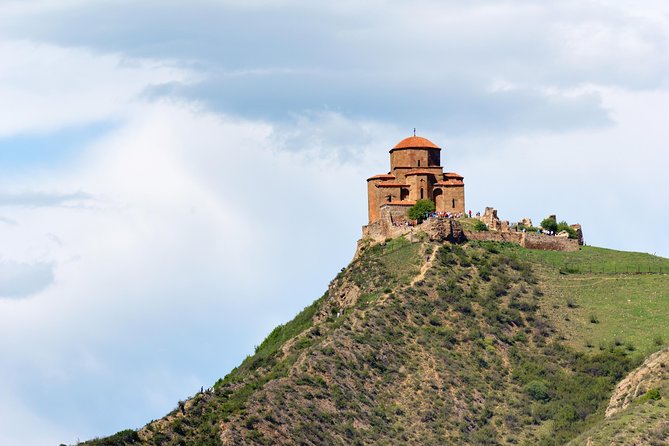
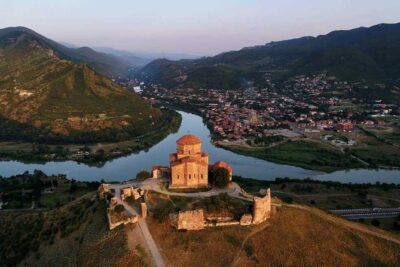
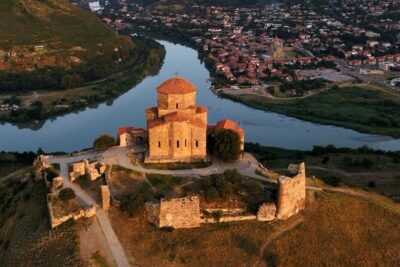
Jvari is one of those places where the scenery explains the site. You go there soon after leaving Tbilisi, and the payoff is the panoramic outlook over Mtskheta, the mountains, and the dramatic meeting of the rivers Aragvi and Kura (Mtkvari). It’s the kind of view that helps everything else on the day click into place.
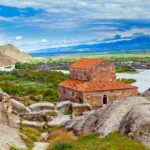
Jvari also has serious age behind it. Christianity took hold in Georgia in the early period, and construction of the Jvari Monastery started in the 4th century (not just some later “fake-old” version). Then the main big church came later, in the 11th century, so you’re seeing a blend of eras rather than one single moment in time.
Your time here is about 30 minutes, and the admission is free. That’s enough to take in the viewpoint, snap photos, and read the basics without feeling rushed the way you sometimes do at bigger sites.
Practical note: this is a viewpoint church. Even if the walk is short, you’ll want layers and good grip underfoot, especially when weather turns.
Borjomi-Kharagauli National Park: drive-by nature that sets up the main stop
Between Mtskheta and Borjomi, you pass through Borjomi-Kharagauli National Park. Even when you’re not walking, the drive itself helps you understand why Borjomi became more than just a town with a mineral-water brand.
The park is described as one of the largest protected areas in Europe, which tells you the region isn’t small and manicured. Expect a more “real Georgia” feel: hills, valleys, and the sense that you’re leaving the city behind even before you arrive.
This is also a good mental buffer. After Jvari’s church-and-view combo, a change of scenery keeps the day from feeling like a checklist.
Borjomi Central Park: mineral water and optional cable car views
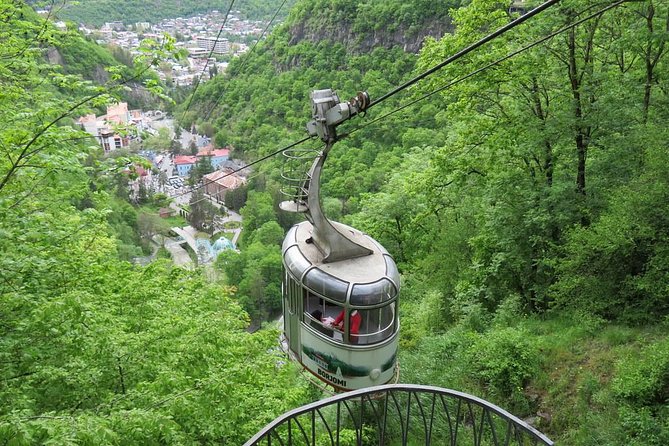
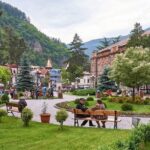
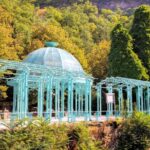
Once you reach Borjomi Central Park, you get the tradition part of the trip. Borjomi sits around 800–900 meters above sea level, and the central park is the classic place to try the natural mineral water right where it’s part of everyday life.
You’ll have about 45 minutes here. The time is built for two options: you can walk the park and sample the water, or you can add the cable car to reach a plateau with views over Borjomi, including a look toward a lake located above the city.
One key detail: the cable car admission is not included. That doesn’t make the stop less worthwhile—it just means you should decide on the ride based on your energy and weather. If the day is clear, the cable car time is a strong use of your minutes. If it’s rainy or foggy, you might still enjoy the park walk without the extra cost.
Either way, this stop gives you a different kind of “culture.” It’s not museums and relics today—it’s how people move through their landscape and drink the thing the region is known for.
Gori and the Stalin house-museum in 40 minutes
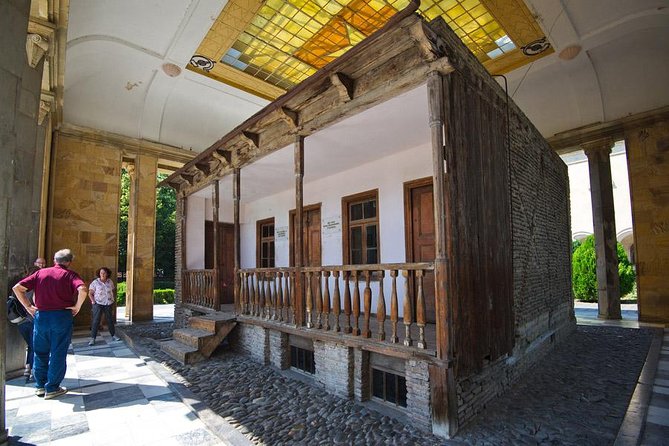
After Borjomi, you head to Gori, Joseph Stalin’s birthplace. This stop is shorter—about 40 minutes—and the point is not a slow, deep research session. It’s more like a focused historical visit that fits into a full-day route.
The setting is in and around Stalin’s house-museum, which matters because it gives you context for the man and the era through a tangible place, not just photos. You’re in the Kartlia valley region where Gori sits near the confluence of the Kura and the Liakhi, surrounded by mountains. Even if the museum time flies, the city’s geographic framing is part of the experience.
Admissions here are not included, so plan for that cost if you want to go inside fully rather than just look from outside. If you don’t care about this topic, you might find the time feels a bit tight, but if you’re even mildly curious about Soviet history and how it shows up in everyday memory, this is a compact way to engage.
More Gori and Uplistsikhe cave-town days we have traced from Tbilisi

Uplistsikhe cave town: Lord’s Fortress carved into rock
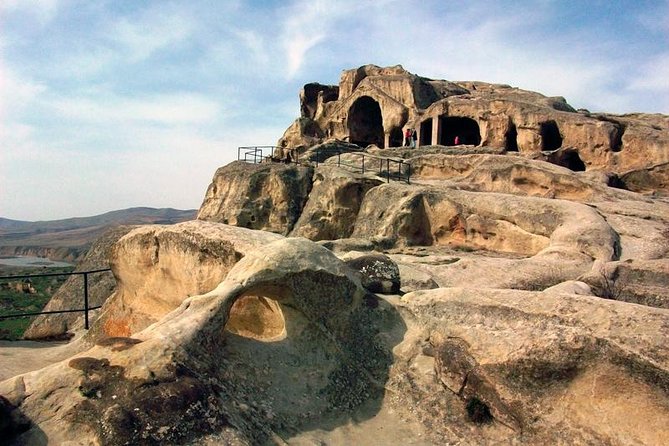
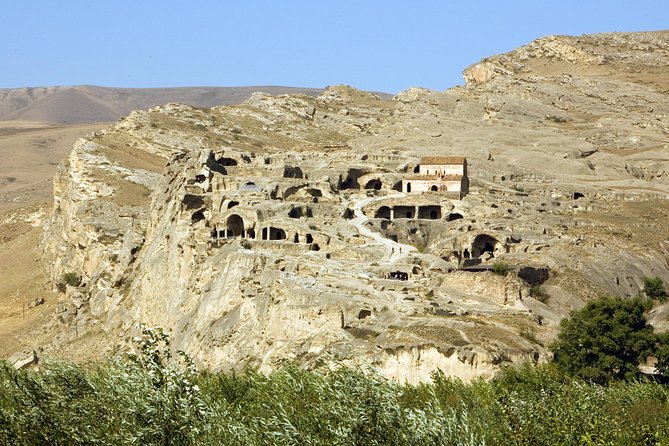
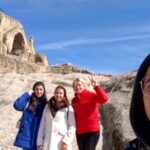
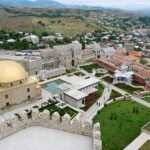
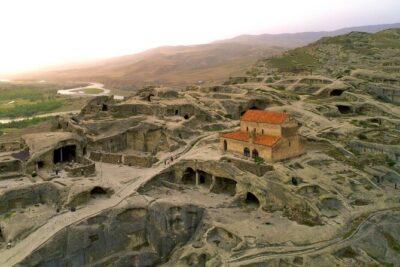
Then comes one of the most visually memorable stops of the day: Uplistsikhe. The name translates to Lord’s Fortress, and what you’re seeing is an abandoned rock-hewn town that once carried major weight in Georgian history.
Uplistsikhe was founded around 1000 BC (late Bronze Age), and it was inhabited until the 13th century AD. The site’s importance stretches longer than people expect: between the 6th century BC and the 11th century AD, Uplistsikhe was one of the most important political and religious centers of pre-Christian Kartli—a predecessor of the Georgian state. At its peak, the city is described as housing around 20,000 people.
Today, you’re not touring a whole living city. You’re walking through what remains, including the area called Shida Qalaq, which is described as about 40,000 square meters. The scale is big enough that you’ll want a guide’s help to understand what you’re looking at—doorways, spaces, and the way the rock shapes the town layout.
Your time here is about 40 minutes, and admission is not included. With cave towns, the practical issue is comfort and footing. Wear shoes that can handle uneven rock and dust, and bring water if you tend to get thirsty.
If you like architecture that feels old without needing imagination, Uplistsikhe is the stop that does that best.
Back to Mtskheta: Svetitskhoveli Cathedral and its four sanctities
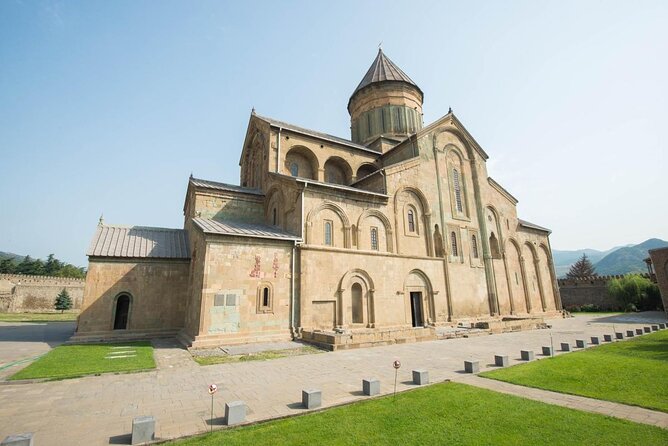
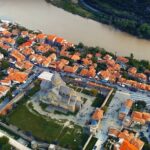
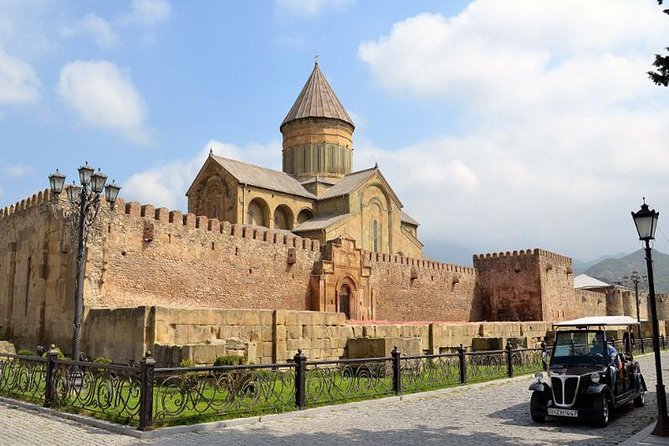
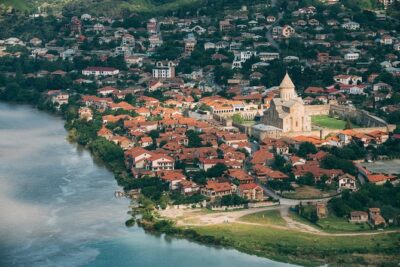
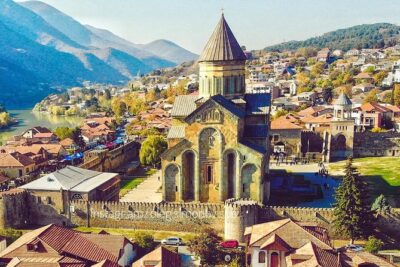
Mtskheta is the old capital energy of the day, and Svetitskhoveli Cathedral is where it becomes tangible. Construction began in 1010 and finished in 1029, and the cathedral is famous for holding four major Orthodox sanctities.
Here’s the core detail that makes it more than a pretty building: the cathedral is said to protect the Mantle of Isaiah the prophet, the robe of Jesus Christ, a particle of Andrew the Apostle, and a wood cross with small particles connected to the cross where Jesus was cast. That list is heavy with meaning, and even if you’re not deeply religious, it helps you understand why this place matters to people.
Your visit is about 30 minutes, and admission is free. That short window is enough to see the cathedral interior respectfully, take a few photos where allowed, and walk away with the right context.
This stop also makes the earlier one smarter. Jvari’s viewpoint gives you geography and scale; Svetitskhoveli gives you why this region became sacred and central.
Price and logistics: what $179 per group really buys
The price is $179.00 per group for up to 3 people, with private service. For a day trip that strings together five major locations with a personal driver-guide, that can be good value—especially compared with booking multiple public transport segments and losing control of your timing.
Two reasons this pricing tends to work:
- You’re paying for time efficiency. The distance and the planning between Borjomi, Gori, Uplistsikhe, and Mtskheta are easier when someone else handles the routing.
- You’re paying for context. With a guide-driver, you’re not just looking at places—you’re getting the “why this mattered” layer, which matters a lot at sites like Jvari and Svetitskhoveli.
Budget note: some admissions are free (Jvari and Svetitskhoveli), while others are not included (cable car, Stalin museum, and Uplistsikhe). So your final spend can vary a bit depending on what you choose to enter.
Practical tips for a smooth day
To get the most out of the route, I’d plan around comfort and smart choices.
1) Wear sturdy shoes. Uplistsikhe is rock-hewn, and surfaces aren’t always friendly underfoot.
2) Dress in layers. Church visits and viewpoints can feel cooler than the city, and weather can shift through the day.
3) Decide early on the cable car. If conditions look clear, it’s worth considering because you’re going up for views. If not, the park still gives you a satisfying Borjomi experience.
4) Have a small cash plan for extras. Admissions for some stops and the cable car aren’t included, so it’s easier if you aren’t scrambling mid-day.
If you want the full value of a private tour, ask your guide to point out the main features to look for at each stop. That one habit turns 30–40 minutes into a much richer experience.
Should you book this tour?
Book it if you want one day that covers a lot of Georgia’s “big themes”: sacred sites, Soviet-era history, rock-cut archaeology, and the Borjomi mineral-water tradition. It’s also a great fit if you’re traveling as a small group (up to 3) and you’d rather have a personal schedule than a crowded bus rhythm.
Skip it (or adjust expectations) if you prefer slower travel and long museum time. This route is efficient, not leisurely, and some stops are intentionally short—especially the Stalin museum. Also, if you dislike walking on uneven ground, plan for comfort at Uplistsikhe.
Overall, the day makes sense. Jvari and Svetitskhoveli give you the spiritual and historical backbone, Borjomi adds nature and a real local ritual, and Uplistsikhe gives you the wow-factor architecture. It’s a compact “Georgia inside Georgia” kind of day.
FAQ
Where does the tour start and end?
It starts in Tbilisi, Georgia and ends back at the same meeting point.
What time does the tour begin?
The start time is 9:00 am.
How long is the tour?
The duration is approximately 7 to 9 hours.
Is this a private tour?
Yes. It’s a private tour/activity, and only your group participates.
How much does it cost for a group?
The price is $179.00 per group (up to 3).
Are tickets included for all stops?
No. Jvari Church and Svetitskhoveli Cathedral are free admission, while Borjomi cable car, the Stalin house-museum, and Uplistsikhe are not included.
Is there a mobile ticket?
Yes. The tour provides a mobile ticket.
More Vardzia Cave City and Borjomi Escapes
More Gori and Uplistsikhe Cave-Town Days
More Mtskheta and Jvari UNESCO Runs
Not quite your thing? More Tbilisi tours and day trips from our review desk



Mtskheta & Jvari UNESCO Trips, compared.
 ★ 5.0Day Trip to Mtskheta Gori and UplistsikheFrom $291,801 reviews
 ★ 5.0Mtskheta,Jvari,Bazaar,wine tasting,Chronicles of GeorgiaFrom $20730 reviews
 ★ 5.0Mtskheta-Gori-UplistsikheFrom $90112 reviews
 ★ 4.5Mtskheta, Jvari, gori, uflistsikhe, history and panorama (group tours)From $19107 reviews
 ★ 5.0Mtskheta-Jvari-Uplistsike-Chronicle of Georgia, PRIVATE TripFrom $68105 reviews
 ★ 4.5Tbilisi – Mtskheta – Jvari. Full City Tour on Hop On Hop Off BusFrom $4091 reviews
 ★ 4.5Ancient Georgia Group Tour: Mtskheta,Jvari, Gori, UplistsikheFrom $2473 reviews
 ★ 5.0Ancient Mtskheta and Chronicle of Georgia half day tourFrom $6566 reviews
Browse the lists this tour appears in