
Reviewed · MTSKHETA & JVARI UNESCO TRIPS
UNESCO Gems of Mtskheta – Old Capital of Georgia
Old stone, big stories, and river views. In just a few focused hours, this private UNESCO-style route connects UNESCO sights in Mtskheta with the outlook from Jvari, the power of Svetitskhoveli Cathedral, a craft-and-souvenir break, and the quieter mood at Samtavro. I also really like the door-to-door pickup from anywhere in Tbilisi, so you spend less time figuring out logistics and more time actually looking at what matters.
One thing to watch: guide service isn’t included, so the best experience may depend on whether you add a guide at checkout. Also plan for car time, since the route is built around multiple sites outside Tbilisi.
In This Review
- Key highlights to know before you go
- Mtskheta’s role in Georgia’s turning points
- Jvari Monastery: the Cross church above Aragvi and Mtkvari
- Svetitskhoveli Cathedral: coronations, burials, and a revered spot under the nave
- Mtskheta Flea Market stop: souvenirs that feel local
- Samtavro Church: a calm final stop with centuries of tradition
- The Mtskheta driving rhythm: short tour timing vs. full-day expectations
- Guide service in English: what you get and when to add it
- Price and value: what $89 really covers
- Who this suits best in Georgia
- Should you book this UNESCO Gems of Mtskheta tour?
- FAQ
- How long is the UNESCO Gems of Mtskheta experience?
- What is the price per person?
- Is pickup from my accommodation included?
- Is the tour private?
- What language is the tour offered in?
- Are admission tickets included for the stops?
- Do I get a guide included?
- Do I need to print anything to use the ticket?
- When will I get confirmation after booking?
- Can I cancel for a full refund?
Key highlights to know before you go
- UNESCO-listed core of Mtskheta in one tight route
- Jvari Monastery’s river confluence views (Aragvi and Mtkvari)
- Svetitskhoveli Cathedral with legendary religious significance and free entry
- A focused shopping stop at the Mtskheta Flea Market for local crafts
- Samtavro Church as a peaceful closing note in green surroundings
Mtskheta’s role in Georgia’s turning points
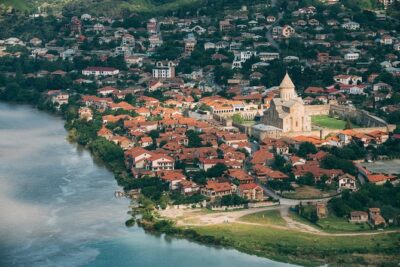
Mtskheta sits at the center of the story of eastern Georgia. It was the ancient capital of Kartli long before Tbilisi became the political hub, and even after that shift, Mtskheta kept its religious importance. That matters because the sights you’ll see don’t feel like random monuments stacked together. They feel like places where decisions were made, prayers were repeated for centuries, and kings were crowned or buried.
This tour’s appeal is that it’s designed for people who want more than a drive-by. You get time to look up at the architecture, pause at viewpoints, and step inside spaces that still shape how Georgia tells its past. With door-to-door pickup and private transportation, you also avoid the typical stress of trying to stitch together buses, taxis, and timing on your own.
More Mtskheta and Jvari UNESCO runs we have made from Tbilisi
Jvari Monastery: the Cross church above Aragvi and Mtkvari
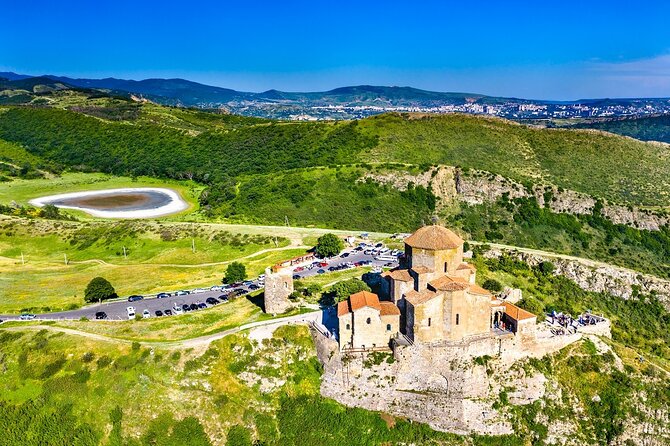
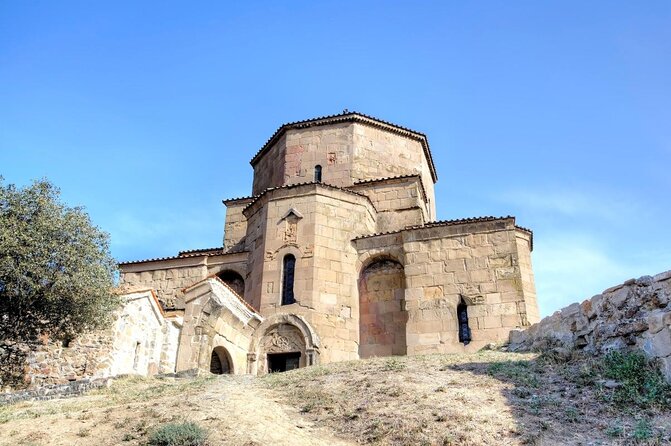
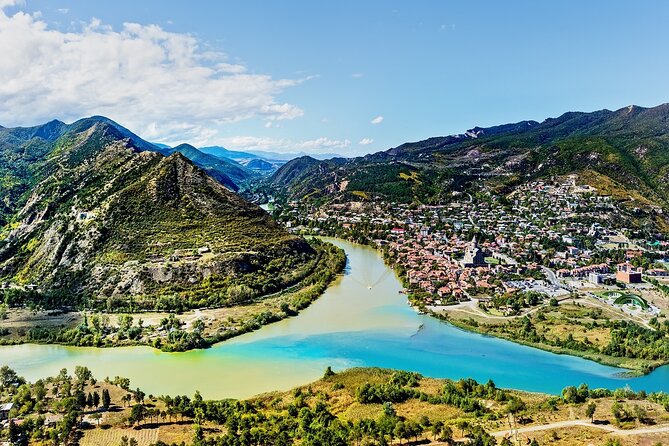
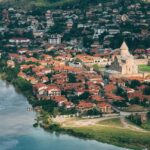
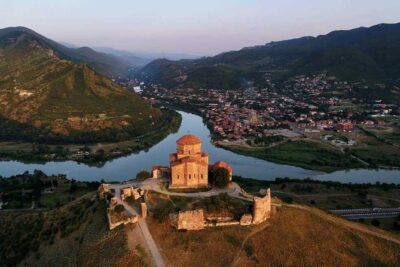
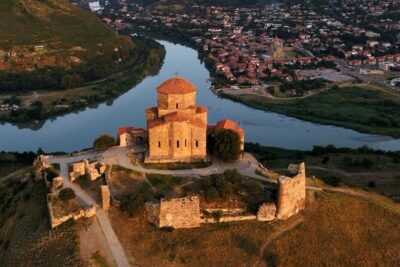
Your first stop is Jvari Monastery, one of the oldest churches in Georgia. The name Jvari translates as cross, and it’s easy to see why the location was chosen. You’re up high, with views over the ancient capital Mtskheta and the confluence of two rivers: the Aragvi and the Mtkvari.
You’ll have about 30 minutes here, and admission is free. That short time is plenty if you do the simple thing: slow down and take in the view first, then come back to the church itself. From the viewpoint, Mtskheta starts to make sense. The city isn’t just buildings—it’s a geography of power and symbolism, where seeing the rivers means understanding the routes people once depended on.
If you like photography, this is a strong first stop because light changes quickly when you’re looking out over a valley. I’d also suggest wearing shoes you’re comfortable walking in, since viewpoints and surrounding paths can be uneven.
Svetitskhoveli Cathedral: coronations, burials, and a revered spot under the nave
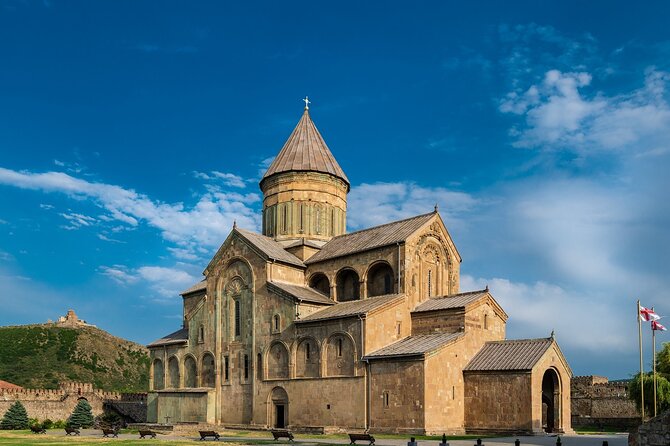
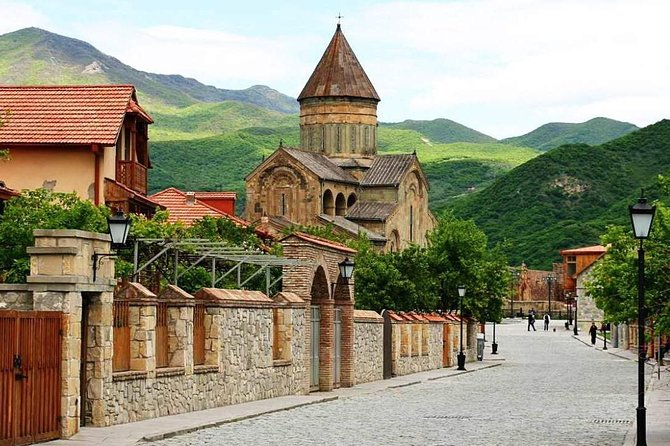
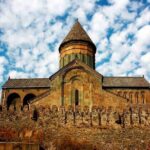
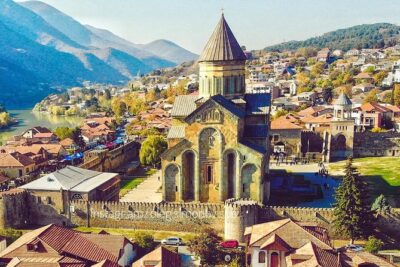
Next comes Svetitskhoveli Cathedral, the big one for the national story. Mtskheta became the place where Christianity was proclaimed as the official religion of Georgia in 337, and even after the capital moved to Tbilisi in the 5th century, Mtskheta stayed central for coronations and burial traditions. The seat of the Patriarch was also tied to this setting.
Svetitskhoveli dates from the 11th century, which you can feel in its role as part of Georgia’s golden age of church architecture. It’s often described as the mother cathedral of Georgia, and it has the practical weight of being linked to many kings, family members, and patriarchs.
You’ll have about 40 minutes here, with free admission. The most meaningful detail you’ll hear is about a revered object: part of the robe of Jesus Christ is believed to lie beneath the central nave, under a square pillar with colorful frescoes showing the conversion of Kartli. Whether you’re religious or not, that belief helps explain the emotion people attach to the building. It’s not only style and stonework. It’s also a physical connection to a story people keep returning to.
Because you’re inside a major cathedral, keep it respectful in both dress and behavior. If you want to go beyond seeing and actually understanding what you’re looking at, this is the stop where adding a guide makes the biggest difference. A good explanation turns a room into a timeline.
Mtskheta Flea Market stop: souvenirs that feel local
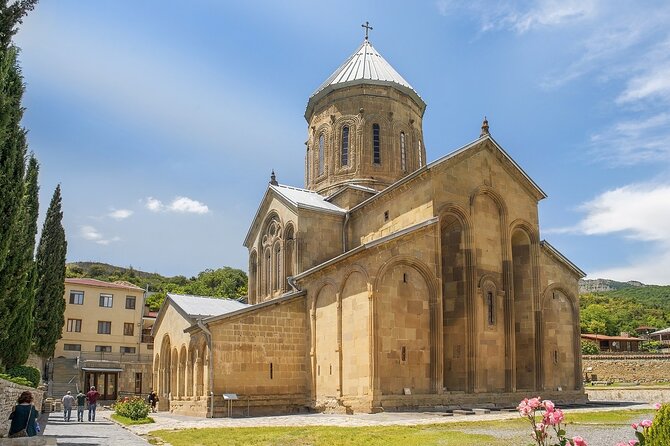
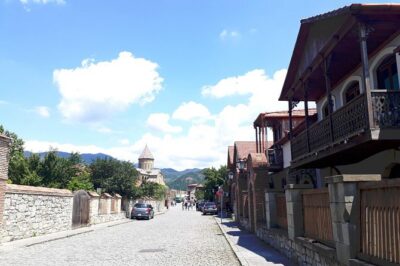
After the cathedral, you shift tone with a stop in Mtskheta for shopping at the Flea Market. You’ll usually get around 40 minutes for this, and it’s free to enter.
This isn’t about finding one perfect item. It’s about browsing. The market is where you can meet local artisans and look at Georgian handcrafts up close—traditional textiles, hand-carved wooden keepsakes, and other small objects that carry the feel of how things are made locally rather than mass-produced elsewhere.
Here’s my practical advice: don’t buy immediately. Take a lap, check prices and materials, and then return if something still feels right after you’ve seen alternatives. Also, keep an eye on what you can realistically carry. A monastery morning plus a market means you might want a small day bag and a plan for water.
If you like crafts, this stop gives you something many history-focused tours skip: the everyday cultural layer that still keeps Mtskheta alive.
Samtavro Church: a calm final stop with centuries of tradition
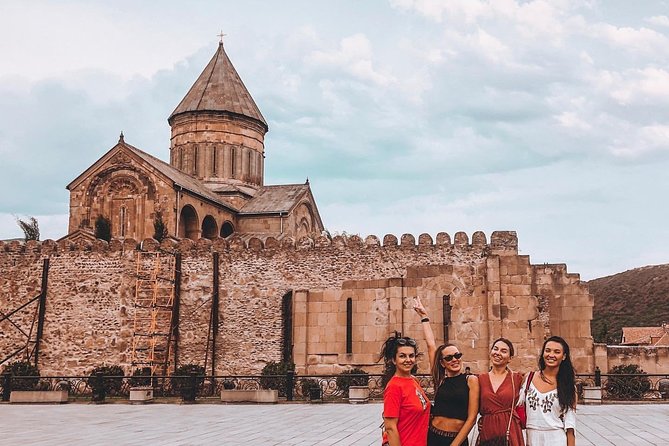
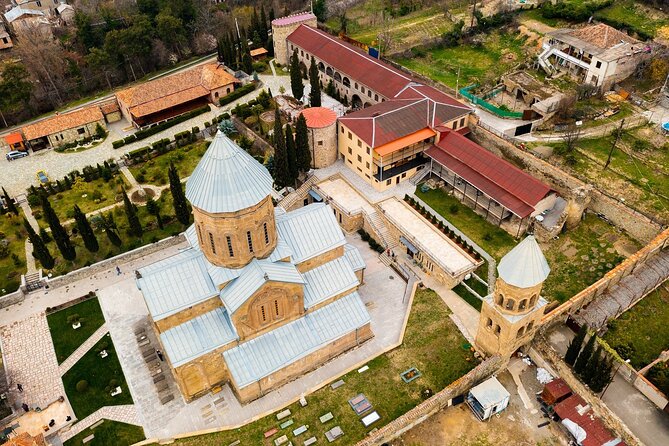
You end with Samtavro Church and its monastery grounds. This is a quieter way to close the route, set in green surroundings. You’ll have about 40 minutes, and admission is free.
Samtavro is the kind of stop that works best if you let it slow you down a bit. After the more monumental feeling of Jvari’s wide views and Svetitskhoveli’s weighty central importance, Samtavro gives you space to absorb details in a less intense setting. The architecture here reflects centuries of Georgian religious tradition, but the mood matters too. You’ll feel like you’re in a spiritual place rather than only a sightseeing stop.
If you’re traveling with someone who gets tired of churches after a while, this is often the easiest sell. The setting is peaceful, and you can appreciate the design and atmosphere without forcing a lot of fast museum-style attention.




The Mtskheta driving rhythm: short tour timing vs. full-day expectations
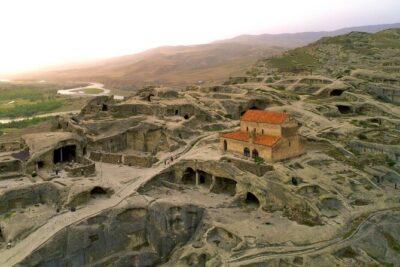
The tour is listed as about 3 hours, which can feel surprising given how far Mtskheta is from central Tbilisi for most itineraries. At the same time, the overall concept is described as a day trip that links Mtskheta with Uplistsikhe and Gori. That means your exact schedule can vary.
Here’s how to handle it without stress: before you go, confirm what’s actually included in your specific booking—especially whether you’re doing only the Mtskheta UNESCO core or whether the plan continues onward to Uplistsikhe and Gori. The safest assumption is that this version has a strong focus on the Mtskheta monuments, since those are the clearly timed stops.
Either way, plan for car time. Bring water, use layers if the weather shifts, and wear comfortable shoes. You’ll get several short site visits rather than one long museum session, so your comfort matters more than you’d think.
Guide service in English: what you get and when to add it
The tour is offered in English, and you can book it as a private experience for only your group. Pick-up and drop-off are included, plus private transportation and 24/7 online support.
But guide service is not included by default. During checkout, you can add a guide if you want help with context and storytelling.
In the reviews tied to this experience, names come up. Luka is described as willing to share stories and add real comments to what you’re seeing, which turns the sites into an easier-to-follow narrative. Catherine is also mentioned as excellent—eager to speak and discuss what you’re looking at, plus good pacing with stops so the driving doesn’t feel like punishment.
If you’re the kind of person who likes history facts and meaning behind religious art, I’d strongly consider adding the guide. If you’re more into atmosphere and architecture on your own, you can still have a satisfying day, especially since admission is free for the listed stops.
Price and value: what $89 really covers
At $89 per person, the value is mostly about what’s included for the price: door-to-door pickup, private transportation, and drop-off back at your place in Tbilisi. The site admissions for the stops you visit are listed as free, so you’re not stacking extra costs on top.
The main trade-off is that guide service isn’t included unless you add it at checkout. So if you want the richest explanation, your final cost depends on whether you choose to pay for a guide.
You also get a mobile ticket and 24/7 online support. I like those details because they reduce the small friction points that can pop up when you’re hopping between sites and time slots.
If you’re traveling as a small group, private transportation can feel especially efficient. Even if the total time is only a few hours, it’s often less tiring than trying to coordinate multiple legs yourself.
Who this suits best in Georgia
This is a good match if you want:
- a focused UNESCO circuit tied to Mtskheta’s key sites
- private transport with door-to-door convenience
- free admission stops and a manageable time commitment
- a mix of monumental church architecture plus a cultural shopping moment
It’s also a solid choice if you don’t want a full day tied up in one long excursion—though, as mentioned, you should verify whether your booking stays within Mtskheta or extends to Uplistsikhe and Gori. Most people can take part, and it’s described as suitable for a wide range of travelers.
If you’re a “churches only” person, you might wish the schedule included more time per stop. If you’re a “I want context with my photos” person, adding a guide is your best upgrade.
Should you book this UNESCO Gems of Mtskheta tour?
Book it if you want an efficient, private way to see Mtskheta’s most important UNESCO-linked landmarks, and you like the idea of mixing grand religious architecture with a real local market stop. The door-to-door pickup and free admissions make it feel like a good deal, especially for groups who don’t want to spend brainpower on transport.
Skip or at least double-check the fit if you’re expecting an all-day drive that clearly covers Uplistsikhe and Gori in the same way every time. The timed stops you’ll definitely get are the Mtskheta UNESCO core, so confirm the broader scope for your exact booking.
If you do book, my best tip is to treat Jvari and Svetitskhoveli as your two “slow down” moments. Then use the market stop like a breather and a chance to bring home something you can actually hold onto.
FAQ
How long is the UNESCO Gems of Mtskheta experience?
It lasts about 3 hours.
What is the price per person?
The price is $89.00 per person.
Is pickup from my accommodation included?
Yes. Pickup from your hotel or apartment is included, and the driver meets you at your doorstep. Drop-off at your accommodation is also included.
Is the tour private?
Yes. It’s a private tour/activity, and only your group participates.
What language is the tour offered in?
The tour is offered in English.
Are admission tickets included for the stops?
Admission tickets are listed as free for the stops described.
Do I get a guide included?
Guide service is not included by default. You can add it during checkout.
Do I need to print anything to use the ticket?
No. You’ll have a mobile ticket.
When will I get confirmation after booking?
Confirmation is received at the time of booking.
Can I cancel for a full refund?
Yes. Free cancellation is available if you cancel up to 24 hours in advance of the experience start time.
More from Our Tbilisi Review Desk

More Mtskheta and Jvari UNESCO Runs


Not quite your thing? More Tbilisi tours and day trips from our review desk









Mtskheta & Jvari UNESCO Trips, compared.
 ★ 5.0Day Trip to Mtskheta Gori and UplistsikheFrom $291,801 reviews
 ★ 5.0Mtskheta,Jvari,Bazaar,wine tasting,Chronicles of GeorgiaFrom $20730 reviews
 ★ 5.0Mtskheta-Gori-UplistsikheFrom $90112 reviews
 ★ 4.5Mtskheta, Jvari, gori, uflistsikhe, history and panorama (group tours)From $19107 reviews
 ★ 5.0Mtskheta-Jvari-Uplistsike-Chronicle of Georgia, PRIVATE TripFrom $68105 reviews
 ★ 4.5Tbilisi – Mtskheta – Jvari. Full City Tour on Hop On Hop Off BusFrom $4091 reviews
 ★ 4.5Ancient Georgia Group Tour: Mtskheta,Jvari, Gori, UplistsikheFrom $2473 reviews
 ★ 5.0Ancient Mtskheta and Chronicle of Georgia half day tourFrom $6566 reviews
Browse the lists this tour appears in