
Reviewed · MTSKHETA & JVARI UNESCO TRIPS
Tbilisi City, Jvari Monastery, Uplistsikhe caves, Mtskheta city Private Day Trip
Tbilisi and the nearby holy sites in one day. This private route strings together UNESCO-listed Mtskheta plus Uplistsikhe cave town, then finishes with the best-known sights of Old Tbilisi. It’s a lot of ground, but the pacing is built for a first-time feel of Georgia.
I really like the fact that you get hotel pickup and a dedicated driver/guide, so you spend less time figuring out logistics and more time looking. I also like that the itinerary mixes big views (Jvari) with hands-on atmosphere (Abanotubani sulfur baths and the cave city).
One possible drawback: it’s a long day, and only Uplistsikhe cave town has admissions listed as not included. If you’re counting every expense or you hate time in the car, plan your expectations for a packed schedule.
In This Review
- Key things I think are worth your attention
- Price and logistics: what $150 really buys you
- Start smart: how pickup sets the tone for the whole day
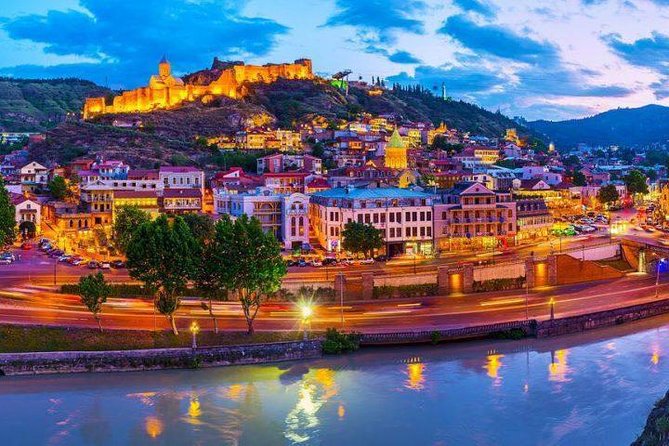
- Old Tbilisi and Abanotubani sulfur baths: the city’s living backdrop
- Bridge of Peace and Mtatsminda: views plus a little fun
- Markets in the plan: Meidan Bazaar and the souvenir reality check
- Mtskheta and the UNESCO core: Jvari’s rivers, Svetitskhoveli’s gravitas
- Uplistsikhe cave town: rock-carved history with practical tradeoffs
- Back in Tbilisi: monuments, streets, and the Sameba finale
- Comfort and pacing: private guide benefits vs a full timetable
- Who this tour fits best (and who should tweak expectations)
- Is it worth booking at $150 per person?
- Should you book this private day trip?
- FAQ
- What time does the tour start?
- How long is the day trip?
- Is this tour private or group-based?
- Does the tour include hotel pickup and drop-off?
- What transportation is included?
- Are tickets and admissions included?
- Is food included?
Key things I think are worth your attention
- Hotel pickup and private transport: you start fresh at 8:30am instead of negotiating rides.
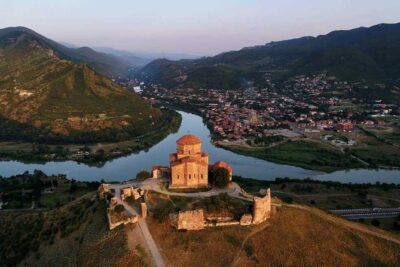
- Jvari Monastery viewpoints: you get the classic look at the place where two river colors meet.
- Svetitskhoveli Cathedral in Mtskheta: one of the UNESCO anchors of Georgia’s early Christian story.
- Uplistsikhe rock-cut cave city: 1 hour that’s best with good walking shoes.
- Old Tbilisi highlights on return: Old Town, sulfur baths area, Bridge of Peace, Shardeni Street, and more.
Price and logistics: what $150 really buys you
At $150 per person, this tour isn’t cheap, but it’s not random either. You’re paying for a private vehicle, hotel pickup/drop-off, a driver/guide, and fuel—plus a full-day route that covers both the Tbilisi core and major sites outside the city.
The biggest value is time. If you try to build this yourself, you’ll spend energy on routing, timing, and tickets. Here, your day is designed so you can see Mtskheta + Uplistsikhe and still come back for a structured Tbilisi sightseeing pass.
Do expect a steady rhythm: early start, multiple stops, and then back to Tbilisi for monuments and neighborhoods. This is ideal if you like a plan and hate wasting half-days. It’s not ideal if you want slow wandering with lots of free time.
More Mtskheta and Jvari UNESCO runs we have made from Tbilisi
Start smart: how pickup sets the tone for the whole day
The tour meets at 8:30am with pickup from your hotel or port area. From there, the day is run by George’s team, with George introduced as your friend in Georgia. That matters more than people think—because in a private format, you’re not just being transported; you’re being guided.
Because it’s private, you can ask questions as you go, and your guide can adjust pacing at the stops where you linger. That’s a real advantage when you’re mixing scenic viewpoints, religious sites, and a cave town.
Also, the tour offers a mobile ticket. That helps on the day of—less paperwork, less hunting around for confirmations.
Old Tbilisi and Abanotubani sulfur baths: the city’s living backdrop
Old Tbilisi is one of those areas where the label is older than the current administrative boundaries. In plain terms, it’s the historical core people come to see, and the timing here works because you’re in the right mood early in the day.
One of my favorite ways to understand Tbilisi is through Abanotubani. This neighborhood is famous for the domed brick roofs of the subterranean bathhouses. And the story is literal: the city’s name connects to the hot springs under this area.
This stop is short—about 30 minutes—so it’s best used for orientation and atmosphere. Walk around the bathhouse roofs, soak in the old-world feel, and then keep moving before the rest of the day steals your focus.
Practical note: this is an area people associate with baths, so dress and footwork matter. Even if you’re not entering a bathhouse, wear shoes you trust on uneven ground.
Bridge of Peace and Mtatsminda: views plus a little fun
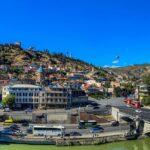
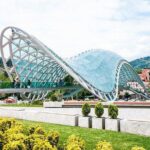
The Bridge of Peace is a bow-shaped pedestrian crossing over the Kura River, lit with LED lights at night. During the day, it’s still worth it for the clean lines and for how it frames the river and downtown.
From there, you head up to Mtatsminda Amusement Park for about 45 minutes. This is a good break in the day because you get two things: fun options (rides and a big Ferris wheel) and a wide view over Tbilisi from the mountain.
If you’re traveling with kids, this park is an easy win. If you’re traveling solo or as a couple, you can still enjoy it without committing to every ride—just grab the view time and keep the day on track.
Keep in mind: a view-only stop can still take longer than you expect if you’re taking pictures. Build in patience.
Markets in the plan: Meidan Bazaar and the souvenir reality check
Your Tbilisi tour includes a stop at Meidan Bazaar for around 20 minutes. The best way to treat this kind of market stop is like a sampler, not a shopping mission.
The market is the place for postcards, magnets, wine and brandy, handmade toys, and national-style items like hats and costumes. Even if you do zero buying, it helps you understand what Georgia looks like to visitors.
If you want souvenirs, this is where you compare and decide quickly. If you don’t, focus on the feel and move on. A short market visit can be fun; a long one can drain your energy before the big monuments later.
Food and drinks aren’t included, so if you’re hungry, plan to snack near where you are or wait for a meal break not covered by the tour.
More Old Tbilisi walking tours through the balconied backstreets




Mtskheta and the UNESCO core: Jvari’s rivers, Svetitskhoveli’s gravitas
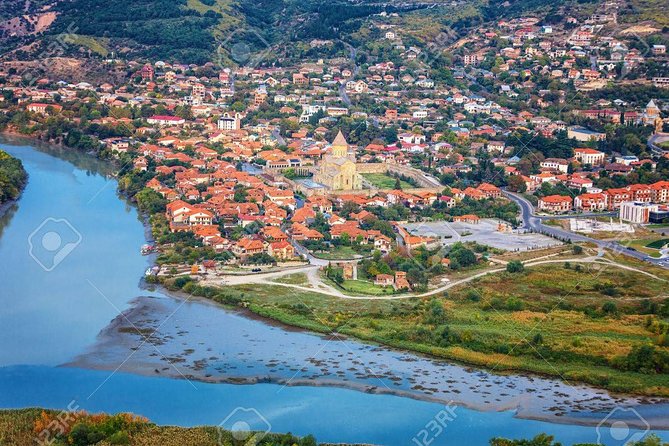
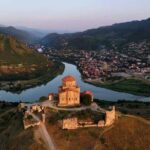
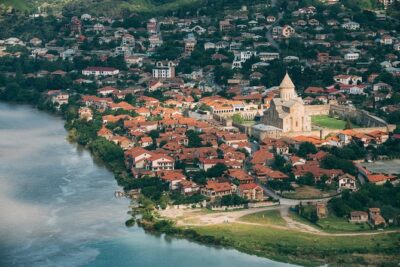
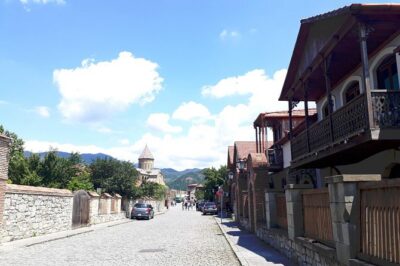
The day shifts from city to sacred landscape when you reach Mtskheta, Georgia’s old capital. Two major stops anchor this part: Jvari Church and Svetitskhoveli Cathedral. Both are listed as UNESCO World Heritage sites, and they’re the kind of places that make the rest of the day feel more meaningful.
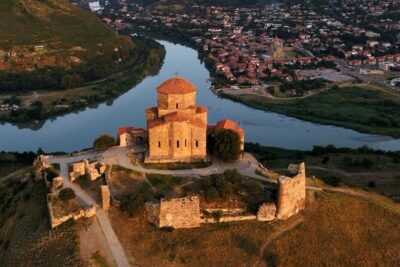
At Jvari Monastery, you get about 30 minutes and the famous viewpoint. The big idea here is the view of the meeting point of two rivers, described as joining two color rivers in one place. It’s also a sixth-century Georgian Orthodox site, so you’re not just looking at scenery—you’re looking at a long-standing spiritual location.
A good way to enjoy Jvari in limited time is to slow down for the view first, then read the surroundings as you walk. If you rush straight to the buildings, you miss why people remember this stop.
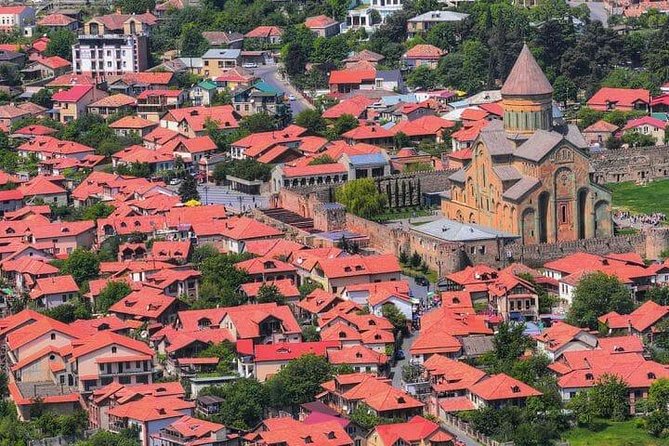
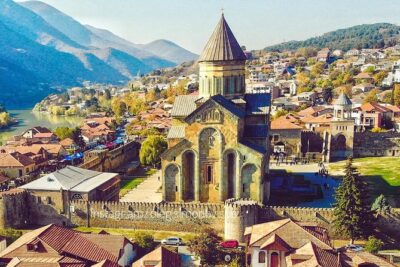
Next comes Svetitskhoveli Cathedral in Mtskheta for another 30 minutes. The cathedral is a masterpiece of the early Middle Ages and recognized by UNESCO as well. Even if architecture isn’t your thing, the cathedral helps you connect the dots between faith, empire, and identity in Georgia.
Dress respectfully. This is an active religious context, and it’s worth taking a minute to adjust clothing before you step inside areas with more ceremonial focus.
Uplistsikhe cave town: rock-carved history with practical tradeoffs
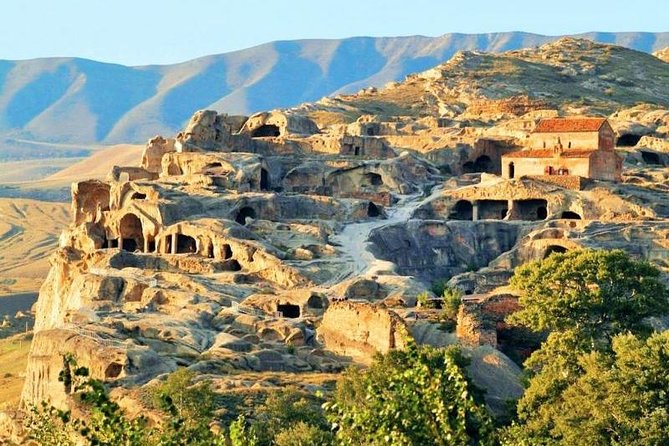
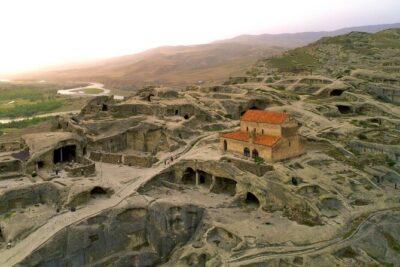
Then you head to Uplistsikhe near Gori for about 1 hour. This is an ancient rock-hewn town, meaning you’ll walk through spaces that were carved from the earth rather than built as modern structures.
This is one of those experiences where imagination does half the work. You can look at doorways, grooves, and surviving features and quickly picture a whole settlement in motion. It’s also different from the cathedral stops—more everyday life vibe, less ceremonial.
Admissions for Uplistsikhe are listed as not included, so budget for that on your day. You’ll also want good shoes. Cave-town paths can be uneven, and one hour disappears fast when you’re watching your footing.
Because the stop is limited to about an hour, the best strategy is to pick one route through the main areas and then circle back for the viewpoints. Don’t try to see everything twice.
Back in Tbilisi: monuments, streets, and the Sameba finale
Once you’re back in Tbilisi, the tour becomes a “greatest hits” sweep. It’s not random—it’s a way to help you get your bearings before you explore on your own later.
You’ll start from the Metekhi Church area and then see a lineup of downtown icons: Rike Park, the Bridge of Peace again as a downtown landmark, and major squares like Freedom Square. You also pass by the Rustaveli Avenue corridor and see the Saint Giorgi monument.
From there, you’ll visit areas tied to the city’s character, including the sulfur bath zone again and the pedestrian streets like Shardeni Street and Erekle second street. These are the places that feel most like a human-scale Tbilisi, with daily life and older street patterns.
The tour also includes the Mother of Georgia monument, which helps explain the country’s modern national storytelling. And it includes the waterfall stop—an easy win if you like quick photogenic moments between bigger sightseeing anchors.
Finally, you reach Sameba Church—noted as the biggest church in Georgia. That last stop gives the day a clear high point, especially if you like architecture and large-scale landmarks.
One more practical thought: with this many stops, your job is to choose what to photograph and what to simply notice. If you try to capture everything, you’ll lose the feel of the day.
Comfort and pacing: private guide benefits vs a full timetable
This is a private tour, and that changes the whole experience. Instead of joining a big bus group, you’re riding with a single team, and the day is managed like a conversation: you can ask questions, get context at stops, and keep moving when it makes sense.
The itinerary includes short time blocks at several points (often around 15–30 minutes). That’s perfect for first-time orientation, but it’s not designed for deep study. If you want to read every sign or linger inside multiple chapels, you’ll need extra time beyond the tour.
The upside is momentum. You won’t hit that end-of-day slump where you’ve seen one neighborhood and nothing else. The downside is you have less room for sudden surprises or long, spontaneous walks.
Who this tour fits best (and who should tweak expectations)
This private day trip is best for you if:
- You want a strong first-pass introduction to both Tbilisi and nearby Mtskheta
- You like seeing major sights with a guide who can explain what matters
- You’re okay with a packed schedule that still feels structured
It’s not the best match if you want a slow, flexible day with long breaks built in. It also may not suit you if you hate paying separate admission fees for certain stops, especially since Uplistsikhe is listed as not included.
Still, the overall pattern is logical: viewpoint first for context, religious sites for meaning, a cave town for a different type of history, then Tbilisi sights so your evening feels connected to what you learned.
Is it worth booking at $150 per person?
Here’s how I’d judge the value. You’re paying for private transport across multiple regions, plus hotel pickup and a driver/guide. Then you’re getting a full Tbilisi highlights sweep with iconic neighborhoods and monuments, plus major Mtskheta UNESCO stops and Uplistsikhe.
If you were to hire a driver for the same route on your own, the cost could easily creep up—especially when you add the time you’d spend organizing everything. The private format also reduces hassle, which is worth real money if you’re short on vacation days.
The main thing to confirm in advance is what admissions are covered in practice for each stop, since the tour notes say tickets are not included overall but also list admission tickets as included for many city stops. If you’re budgeting tightly, ask the provider to clarify exactly what you’ll pay for at Uplistsikhe and what’s handled for the other stops.
With that said, for a first-time mix of Tbilisi + Mtskheta + Uplistsikhe, $150 can feel fair—especially because the day is shaped so you come away with a coherent story of the region.
Should you book this private day trip?
Yes, if you want a guided, high-output day that links Tbilisi’s identity to the nearby historical spine of Georgia. The standout strengths are the Jvari viewpoint, the UNESCO Mtskheta stops, and the return to Tbilisi’s key streets and monuments so you can orient yourself fast.
Book if your travel style is: plan helps me enjoy. I like having a driver, I like knowing what I’m looking at, and I don’t mind a full day.
Hold off or ask more questions if you prefer long independent time, or if you’re very sensitive to additional admission fees—especially for Uplistsikhe. For everyone else, this is a practical way to see a lot of Georgia without turning your day into a puzzle.
FAQ
What time does the tour start?
The tour start time is 8:30am.
How long is the day trip?
It runs for about 9 to 10 hours.
Is this tour private or group-based?
It’s a private tour/activity, meaning only your group participates.
Does the tour include hotel pickup and drop-off?
Yes. It includes hotel/port pickup and drop-off.
What transportation is included?
You get transport by private vehicle and a driver/guide with fuel surcharge covered.
Are tickets and admissions included?
Tickets and admissions are not listed as included overall, but the schedule shows admission tickets included for several stops and Uplistsikhe cave town not included.
Is food included?
No. Food and drinks are not included. You’ll need to plan meals on your own.
More Gori and Uplistsikhe Cave-Town Days

More Old Tbilisi Walking Tours
More Mtskheta and Jvari UNESCO Runs
Not quite your thing? More Tbilisi tours and day trips from our review desk




Mtskheta & Jvari UNESCO Trips, compared.
 ★ 5.0Day Trip to Mtskheta Gori and UplistsikheFrom $291,801 reviews
 ★ 5.0Mtskheta,Jvari,Bazaar,wine tasting,Chronicles of GeorgiaFrom $20730 reviews
 ★ 5.0Mtskheta-Gori-UplistsikheFrom $90112 reviews
 ★ 4.5Mtskheta, Jvari, gori, uflistsikhe, history and panorama (group tours)From $19107 reviews
 ★ 5.0Mtskheta-Jvari-Uplistsike-Chronicle of Georgia, PRIVATE TripFrom $68105 reviews
 ★ 4.5Tbilisi – Mtskheta – Jvari. Full City Tour on Hop On Hop Off BusFrom $4091 reviews
 ★ 4.5Ancient Georgia Group Tour: Mtskheta,Jvari, Gori, UplistsikheFrom $2473 reviews
 ★ 5.0Ancient Mtskheta and Chronicle of Georgia half day tourFrom $6566 reviews
Browse the lists this tour appears in