
Reviewed · MTSKHETA & JVARI UNESCO TRIPS
Mtskheta Tour with All UNESCO Sites & Ancient Ruins
Nine hours, five UNESCO stops, one big wow. This Mtskheta tour strings together Georgia’s early Christian landmarks in a way that feels both efficient and meaningful—top views at Jvari, then cathedral-scale reverence at Svetitskhoveli, and quieter monastery moments afterward. I like the hassle-free pickup from your hotel and the comfort of a private air-conditioned vehicle, which makes the whole day feel easier from the start.
What I like even more is the guiding style: you’re not just standing in front of old stones, you’re learning how the sites connect—architecture, legends, and religious history—while still getting time to breathe and look around. One thing to plan for: this is an active day, with walking on uneven old-town terrain and stairs, plus dress rules inside churches.
In This Review
- Why This Mtskheta UNESCO Day Trip Feels Like the Real Thing
- Key Highlights You’ll Remember
- Getting There Comfortably: Pickup, Vehicle, and a Sensible Start
- Jvari Church: 6th-Century Architecture Plus a View Worth the Climb
- Svetitskhoveli Cathedral: The Living Pillar, Royal Burials, and a Mantle Legend
- Samtavro Church: Saint Nino’s Footprint and Layers of Rebuilding
- Shio-Mgvime Monastery: A Hermit’s Cave and Strict Early Design
- Walking the Old Town Without Burning Out
- The Value Question: Is $127.50 Worth It?
- Who This Tour Suits Best (And Who Might Feel Cramped)
- A Word on the Guides’ Impact
- Should You Book This Mtskheta UNESCO Day Trip?
- FAQ
- How long is the Mtskheta tour?
- What sites are included?
- Is hotel pickup included?
- Are the entrances expensive?
- What language is the tour in?
- Is lunch included?
- Do I need to follow a dress code?
- Is this a private tour?
Why This Mtskheta UNESCO Day Trip Feels Like the Real Thing
You’re leaving Tbilisi and stepping into an older Georgia where Christianity is written into the stone. Mtskheta’s churches and monasteries aren’t treated like museum props. They’re still working spiritual places, so the atmosphere is different the moment you arrive.
The tour is also set up for low stress. It starts at 9:00 am, includes hotel pickup, and runs for about 9 hours. You’ll ride in a private vehicle with your group, and you’ll have a guide in English.
And yes, the sites are UNESCO-listed, but what matters more is the texture: early-medieval churches that have survived, later additions that changed the buildings, and even scars from past rulers. It’s history you can see with your eyes, not just read on a sign.
Key Highlights You’ll Remember
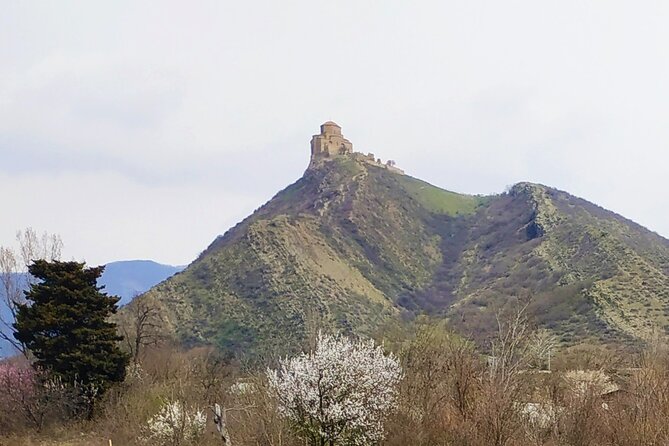
- Jvari Church on the mountaintop: a rare Early Medieval Georgian church and big water-and-ridge views
- Svetitskhoveli Cathedral’s Living Pillar story: Christ’s mantle legend plus royal burial history
- Free entry at most stops: Jvari, Svetitskhoveli, Samtavro, and Shio-Mgvime list free admission tickets
- Two monastery vibes: Samtavro feels royal and layered; Shio-Mgvime feels strict and cave-worn
- Guides who pace the day: you’ll get explanations and time to look, not a sprint-through itinerary
- Dress-and-shoes practicality: headscarves/dresses for women and comfortable shoes for stairs
More Mtskheta and Jvari UNESCO runs we have made from Tbilisi
Getting There Comfortably: Pickup, Vehicle, and a Sensible Start
The day begins with convenience. You can count on pickup from your hotel, which matters because Tbilisi traffic can be unpredictable when you’re trying to reach an out-of-town site on time. From there, you’re in a private air-conditioned vehicle, which is a relief during warm months or if the weather swings.
This tour is offered in English, and it’s a private tour/activity, meaning it’s only your group. That usually makes a difference with pacing and questions. If you want your guide to slow down at a detail—an inscription, a feature in the façade, or a building layout—you’re more likely to get that attention.
Jvari Church: 6th-Century Architecture Plus a View Worth the Climb
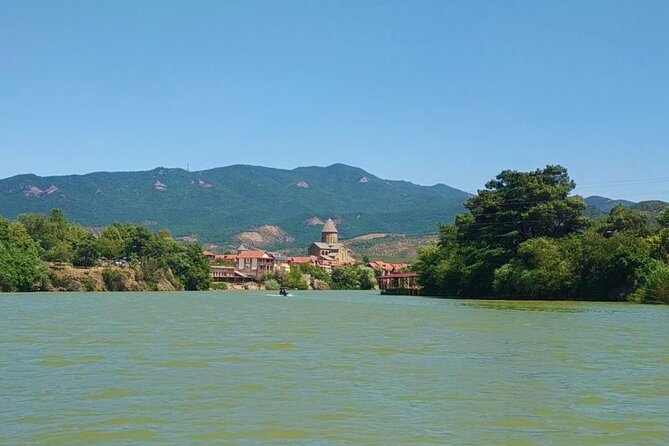
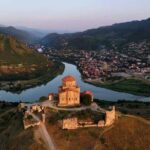
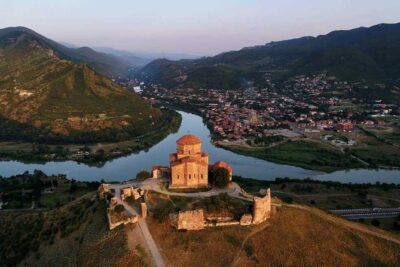
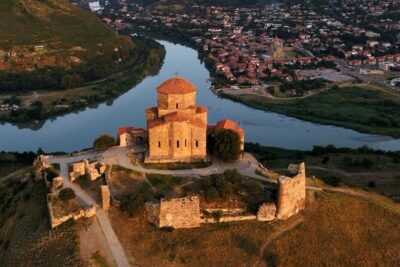
Your first stop is Jvari Church, tied to the sixth-century Georgian Orthodox monastic world. What makes Jvari special is that it’s often described as a rare case of an Early Medieval Georgian church that survived to the present day with major parts still intact. In other words, you’re not just touring ruins—you’re seeing something close to its original self.
Jvari sits on Jvari Mount at 656 meters above sea level. That location is not incidental. The church is known for its harmony with the natural environment, which is a fancy way of saying the building and the setting feel designed to match each other. When you look out from the mount, you get that combination of stone + sky + river-and-ridge geography that sticks in your memory.
You’ll have about 30 minutes here. Admission is free, so this is one of those stops where your time is the real currency. Wear shoes you trust—this isn’t a flat stroll.
Svetitskhoveli Cathedral: The Living Pillar, Royal Burials, and a Mantle Legend
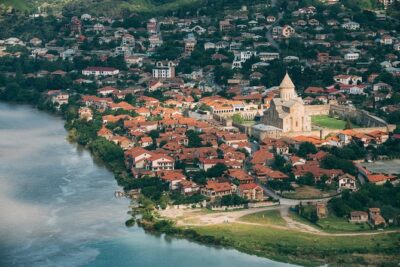
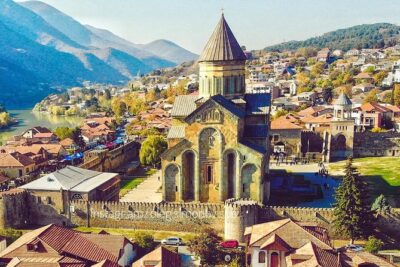
Next up is Svetitskhoveli Cathedral, the Cathedral of the Living Pillar. This is the kind of stop where your brain goes into slow mode. It’s one of the most venerated Orthodox churches in the region, and the building carries layers of meaning: spiritual importance, royal burial history, and a famous Christian legend tied to the mantle of Jesus.
A few anchor facts to help you read the cathedral while you’re there:
- It’s recognized by UNESCO and dates to multiple eras, with the site itself going back to the early fourth century.
- The current cross-in-square structure was completed between 1010 and 1029.
- The medieval Georgian architect Arsukisdze is associated with completing this structure.
- It’s known as the burial place of the claimed mantle, which is part of why it became so important.
Even if you’re not deep into religious history, the building’s scale and details communicate why it matters. The exterior architecture is described as a well-preserved example of typical 11th-century decorations.
There’s also a harder truth that explains why some art feels different than you might expect. Frescoes were lost after being whitewashed by Russian Imperial authorities, and the cathedral is often described as an endangered cultural landmark. Standing there, you get a sense of survival—what was kept, what was changed, and what still tells the story.
Plan about 1 hour at Svetitskhoveli. Admission is free, but your real job is to use the time to look slowly: façades, structural rhythm, and the way the space holds light.
Samtavro Church: Saint Nino’s Footprint and Layers of Rebuilding
Samtavro Church and the monastery complex are smaller than Svetitskhoveli, but that doesn’t mean less impact. This stop is where you feel the long arc of devotion—starting early, then reshaped by later rulers.
Here’s what frames Samtavro:
- It was founded in the 4th century by King Mirian III, with a small church built by Saint Nino.
- The main temple is stylistically dated to the first half of the 11th century.
- It’s associated with building or rebuilding linked to King George I and Catholicos-Patriarch Melchizedek I.
- The complex combines the Transfiguration Church and the Nunnery of St. Nino.
- It’s UNESCO-protected.
What I like about Samtavro is the way it balances “origin story” with visible later architecture. You don’t have to be able to identify every style cue to feel the timeline. Your guide’s job here is to connect the dots so the different parts feel like one living site rather than separate objects.
You’ll have about 30 minutes. Keep it simple: take a couple of calm moments inside, then look outside to understand how the complex sits in its setting.



Shio-Mgvime Monastery: A Hermit’s Cave and Strict Early Design
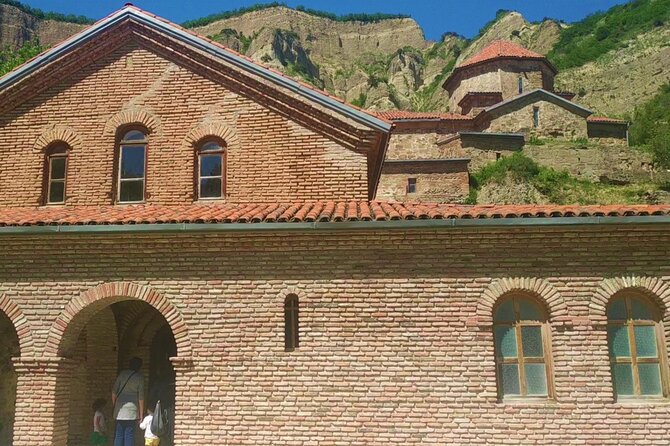
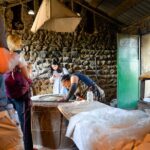
Shio-Mgvime is the monastery stop that feels most “textured.” The origin story is vivid: St. Shio spent his last years as a hermit in a deep cave. That detail matters because it explains the tone of the architecture—plain, strict, and focused on spiritual life rather than spectacle.
The monastery dates back to the 6th century and is associated with St. Shio, one of the Thirteen Assyrian Fathers who came to Georgia as Christian missionaries. The earliest building connected to the monastery is described as a cruciform church with a very plain and strict design, dating to the 560s–580s.
If you’re the type who loves architecture details, you’ll get a few memorable ones here:
- The cruciform church has an octagonal dome.
- The dome is covered with a conic floor.
- An older stone iconostasis was once housed here and is now at the Art Museum of Georgia.
The monastery was altered later (11th and 18th centuries), but it retained original architecture elements. That “changed over time but not erased” theme is all over Mtskheta.
Expect about 1 hour at Shio-Mgvime. Again, admission is free, so this is all about using your time well: look closely at the church form, then step back and notice the way the cave-and-monastery story shapes how you experience the space.
Walking the Old Town Without Burning Out
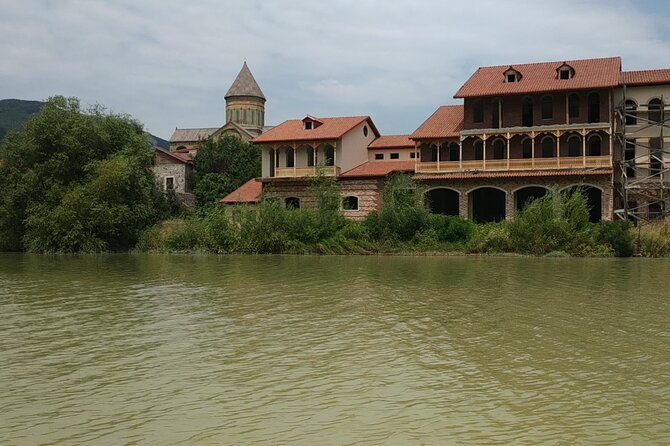
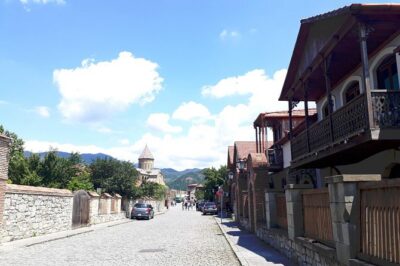
This tour includes walking in Mtskheta’s old town with various terrain, stairs, and some uneven ground. It’s not extreme hiking, but it is real walking. Comfortable shoes are not a suggestion if you want to enjoy the day.
My practical advice:
- Wear shoes with grip and support.
- Keep your day bag light, so you’re not fighting zippers and straps while moving between churches.
- If you’re sensitive to heat or cold, layer up. Churches can be cooler than the sun outside.
There’s also the dress code to respect. In Georgian Orthodox churches:
- Women need headscarves and dresses.
- Short trousers for men are forbidden.
- Scarves and dresses can be found near some church entrances.
This is easy to handle if you plan for it. If you don’t want to hunt at the door, bring your own headscarf. If you do need to borrow or buy one on-site, expect that you’ll want a simple, neutral option that covers properly and fits comfortably for pictures and walking.
The Value Question: Is $127.50 Worth It?
At $127.50 per person for about 9 hours, this is priced like a serious day trip from Tbilisi—not a casual taxi-and-see-a-church plan. The value comes from what’s included and what’s protected from the chaos.
Here’s where the cost makes sense:
- Hotel pickup removes one of the biggest friction points.
- A private air-conditioned vehicle keeps the day comfortable.
- The tour is guided in English, which matters because these sites are layered. The guide helps you connect what you’re seeing to why it matters.
- Admission tickets are listed as free for the main stops: Jvari, Svetitskhoveli, Samtavro, and Shio-Mgvime.
You’re also paying for time structure. Four major stops, about 30–60 minutes at each, plus a walk through older parts of town, is a sensible way to cover what matters without feeling lost.
Lunch depends on the option you choose. A budget tour option does not include lunch, but you’ll stop in a restaurant. If you book a Tour with Lunch option, the provider says they’ll use your dietary restrictions to offer lunch. So if food matters to you, pick your option carefully rather than hoping it works out on the day.
Who This Tour Suits Best (And Who Might Feel Cramped)
This works especially well if you:
- Want a focused day trip built around UNESCO sites in Mtskheta.
- Like historical explanations tied directly to the physical places.
- Prefer a private setup for comfort and pacing rather than squeezing into a mixed group.
- Want a guide who helps you understand details, not just where to stand for a photo.
It may feel like a lot if you:
- Struggle with stairs or don’t like walking on uneven ground.
- Need lots of downtime between stops. The day is designed to keep you moving, even though you’re not rushed at each location.
If you’re traveling with older family members or anyone with mobility limits, you’ll want to think hard about footwear and how you’ll manage stairs, since walking is part of the experience.
A Word on the Guides’ Impact
This is one of those tours where the guide can make or break the day. The standout pattern from the experience’s overall feedback is that guides tell stories in a way that holds attention and helps you understand what you’re seeing. Names that come up include Giorgi and Mr George, both described as excellent at sharing historical details and giving time to breathe inside the sites rather than pushing you through.
That matters because Mtskheta’s churches can look similar at first glance if you’re just scanning for the biggest building. When your guide explains what you’re looking at—like why Jvari’s architecture type is important or what Svetitskhoveli’s Living Pillar meaning connects to—you get more out of every minute.
Should You Book This Mtskheta UNESCO Day Trip?
I think you should book it if your goal is a well-paced UNESCO-focused day trip from Tbilisi that balances comfort, expert guidance, and real spiritual sites. The free admission at the main stops plus hotel pickup makes it feel like a smart value choice for the money.
Skip it—or at least consider another pace—if you want a low-walking day or you’re likely to struggle with church dress rules and stairs. Also, remember the tour requires good weather. If conditions are poor, you may be offered a different date or a full refund, so watch the forecast before you get attached to a specific day.
If you’re excited by early Christian architecture, royal burial legends, and monastery stories tied to specific places, this day trip is a strong fit.
FAQ
How long is the Mtskheta tour?
The tour is approximately 9 hours.
What sites are included?
You’ll visit Jvari Church, Svetitskhoveli Cathedral, Samtavro Church, and Shio-Mgvime Monastery.
Is hotel pickup included?
Yes, hassle-free hotel pickup is included.
Are the entrances expensive?
The tour information lists free admission tickets for Jvari Church, Svetitskhoveli Cathedral, Samtavro Church, and Shio-Mgvime Monastery.
What language is the tour in?
The tour is offered in English.
Is lunch included?
It depends on the option. The budget tour option does not include lunch, but you will stop in a restaurant to have lunch. If you book a Tour with Lunch option, lunch can be offered, and the provider asks about dietary restrictions when you book.
Do I need to follow a dress code?
Yes. Women need headscarves and dresses in Georgian Orthodox churches, and short trousers for men are forbidden. Scarves and dresses can also be found near some church entrances.
Is this a private tour?
Yes. It’s a private tour/activity, and only your group will participate.
More Tbilisi Tours and Georgian Day Trips



More from Our Tbilisi Review Desk
More Mtskheta and Jvari UNESCO Runs


Not quite your thing? More Tbilisi tours and day trips from our review desk






Mtskheta & Jvari UNESCO Trips, compared.
 ★ 5.0Day Trip to Mtskheta Gori and UplistsikheFrom $291,801 reviews
 ★ 5.0Mtskheta,Jvari,Bazaar,wine tasting,Chronicles of GeorgiaFrom $20730 reviews
 ★ 5.0Mtskheta-Gori-UplistsikheFrom $90112 reviews
 ★ 4.5Mtskheta, Jvari, gori, uflistsikhe, history and panorama (group tours)From $19107 reviews
 ★ 5.0Mtskheta-Jvari-Uplistsike-Chronicle of Georgia, PRIVATE TripFrom $68105 reviews
 ★ 4.5Tbilisi – Mtskheta – Jvari. Full City Tour on Hop On Hop Off BusFrom $4091 reviews
 ★ 4.5Ancient Georgia Group Tour: Mtskheta,Jvari, Gori, UplistsikheFrom $2473 reviews
 ★ 5.0Ancient Mtskheta and Chronicle of Georgia half day tourFrom $6566 reviews
Browse the lists this tour appears in