
Reviewed · MTSKHETA & JVARI UNESCO TRIPS
Group Day Tour of Mtskheta,Jvari,Samtavro
A hilltop church with big views can change your whole day. This Mtskheta loop turns Tbilisi into a quick crash course on Georgia’s early Christianity, starting with Jvari Monastery and finishing with a taste of the old capital, Mtskheta. Two things I really like: you get admissions bundled in for the major sites, and the group size stays small (max 15), so the guide can actually keep the day moving without rushing you.
I also love how the stops connect into one story. You’ll go from the UNESCO Jvari Church (built in the 6th century) to the iconic Svetitskhoveli Cathedral and then to Samtavro Church, which ties back to the people linked with Georgia’s Christian conversion. One drawback to plan for: with a 3–4 hour total duration, time at each place is tight, so if you want long, quiet museum-style wandering, this may feel a bit fast.
In This Review
- Key things that make this tour worth your time
- A $19 day trip that actually covers the highlights
- Getting from Tbilisi: comfort matters when the day is short
- Stop 1: Jvari Monastery and the hilltop UNESCO moment
- Stop 2: Svetitskhoveli Cathedral and the Robe of Christ tradition
- Stop 3: Samtavro Church and the royal-tomb connection
- Stop 4: Mtskheta town time to reset your eyes
- How the small group experience changes the day
- What to do before you go (so you enjoy Jvari, Svetitskhoveli, Samtavro more)
- Value check: does $19 feel worth it?
- Should you book this Mtskheta, Jvari, Samtavro day tour?
- FAQ
- FAQ
- How much does the tour cost?
- How long is the tour?
- What language is the tour offered in?
- What’s included in the price?
- Are meals included?
- Where does the tour start?
- What are the main stops on the tour?
- Is there a mobile ticket?
- How large is the group?
- What is the cancellation policy?
Key things that make this tour worth your time
- Tickets included at Jvari, Svetitskhoveli, and Samtavro (saves money and reduces hassle)
- Small group cap of 15 with an English-speaking professional guide
- UNESCO Jvari views from a hilltop overlooking Mtskheta
- Svetitskhoveli’s centerpiece story, including the Robe of Christ tradition
- Royal tomb stop at Samtavro, tied to King Mirian III and Georgia’s Christian shift
A $19 day trip that actually covers the highlights
At $19 per person, this is priced like a budget-friendly sampler. The best part isn’t just the low cost—it’s what’s included. Your ride is covered (air-conditioned vehicle), you have WiFi on board, and the guide is included. More importantly, the tour includes admission tickets for the three main churches/monastery stops, so you’re not hit with extra fees right after you arrive.
The full experience runs about 3 to 4 hours, starting at 12:00 pm and ending back where you meet. Transportation time is already built in, which is both a blessing and a heads-up. It’s great if you want an organized taste of Mtskheta without planning logistics. It’s less great if you’re the kind of traveler who likes to linger for a long time at one site. Think: a well-paced highlights reel, not an all-day slow stroll.
More Mtskheta and Jvari UNESCO runs we have made from Tbilisi
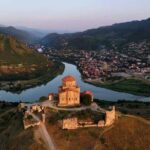
Getting from Tbilisi: comfort matters when the day is short
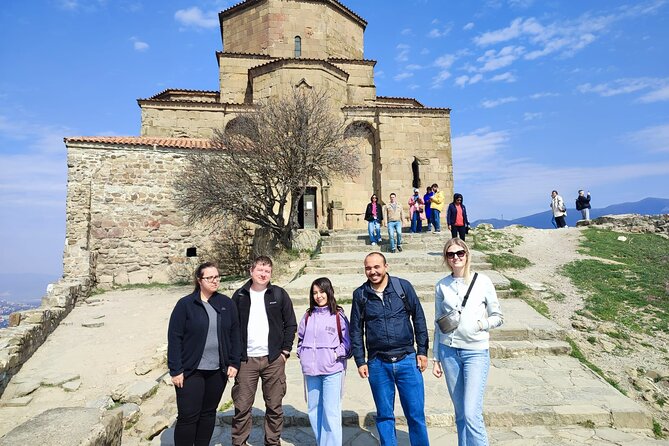
Meeting at 15 Abano St in Tbilisi, you’ll board an air-conditioned vehicle and head out with an English-speaking guide. Since the whole program is only a few hours, comfort helps. The WiFi on board is a nice bonus for quick messages, maps, or posting a view photo before you lose service.
One practical tip: because your time on-site is limited, show up ready to move. Use that first travel stretch to set your expectations: you’ll get just enough time to see the key architectural features and absorb the big stories behind each religious site.
And because it’s capped at 15 travelers, you’re less likely to get stuck waiting at entrances or losing your place. That matters on churches where you might have to pause for other groups.
Stop 1: Jvari Monastery and the hilltop UNESCO moment
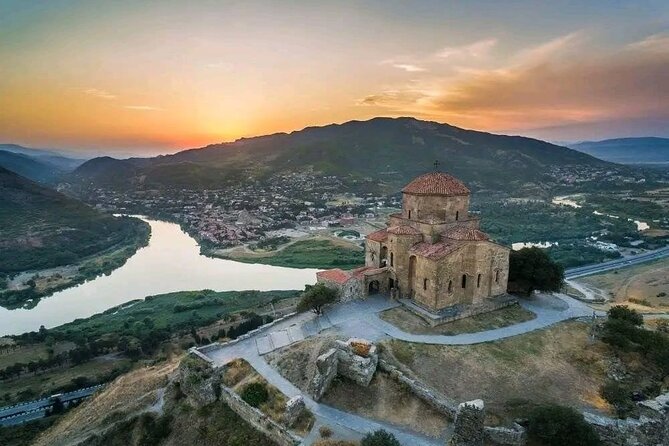
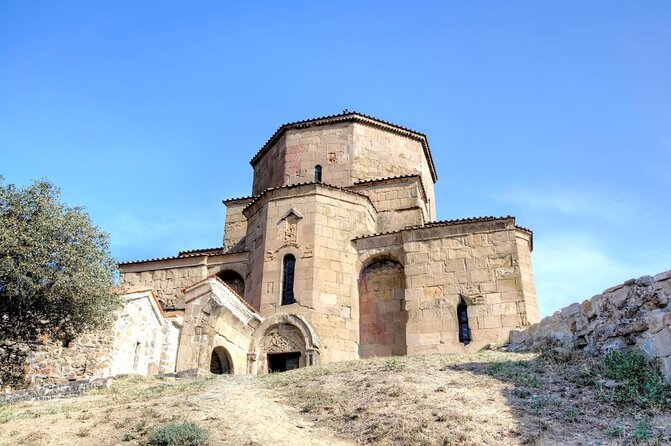
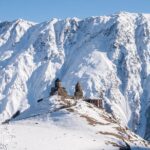
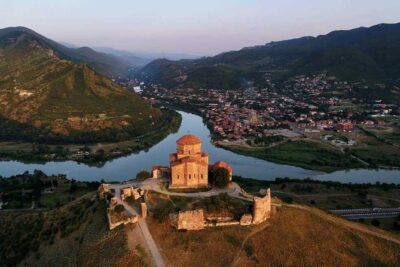
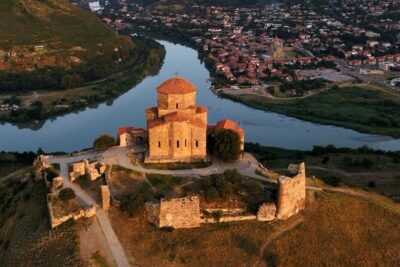
Your first major stop is Jvari Monastery (Jvari Church), a UNESCO World Heritage site perched on a hilltop overlooking Mtskheta, Georgia’s former capital. This is the kind of place where the setting is part of the attraction. Even before you focus on the building, you’re already looking at the landscape that helped shape why this spot mattered.
Jvari is built on the tradition tied to Saint Nino, who is said to have erected a wooden cross where the church stands. Construction began in the 6th century, and what’s there today reflects centuries of rebuilding and renovation. It’s also not just one architectural style. The church is described as a mix of Georgian, Armenian, and Byzantine influences, and it features a four-apsed design.
You’ll have about 40 minutes here, with the admission ticket included. That’s a solid chunk for a church stop—enough time to take in the overall shape, look for the distinctive design elements, and still enjoy the view from the hill. The main thing to remember: when you’re on an overlook like this, wind and sun can change quickly, so dress like you’re going to a viewpoint, not only a church.
Why this stop is worth it: Jvari gives you the “big picture.” The view explains why religious sites were often built on high ground. And the architecture helps you see Georgia’s Christian story as something layered and long-lasting—not a one-moment event.
Stop 2: Svetitskhoveli Cathedral and the Robe of Christ tradition
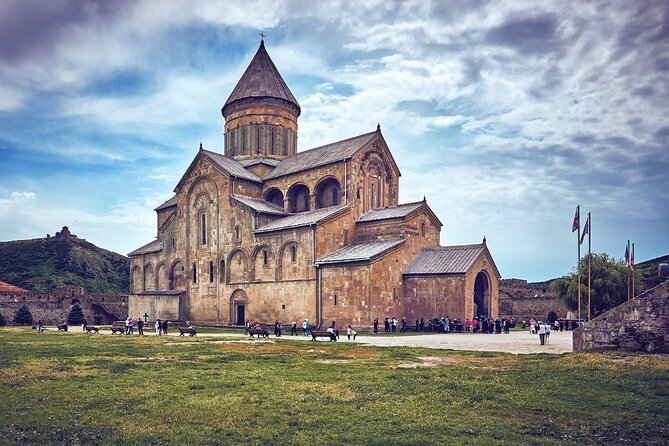
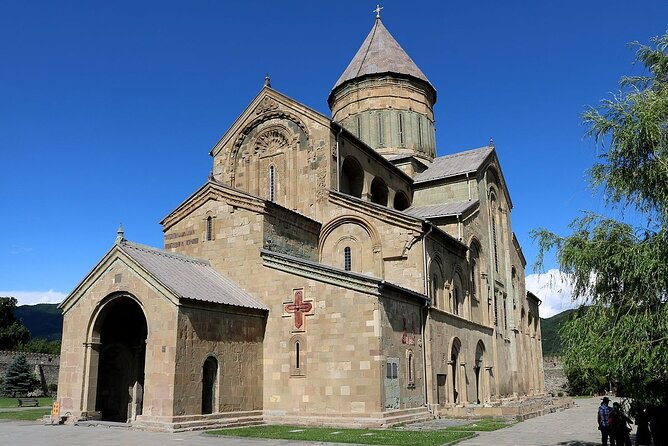
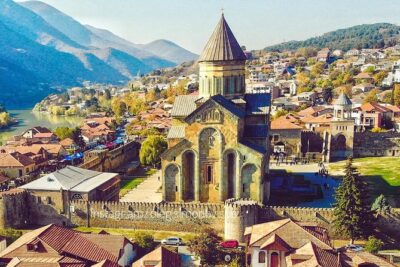
Next up is Svetitskhoveli Cathedral, one of the most famous stops in the Mtskheta story. The cathedral’s timeline is deep: it was originally built in the 4th century, then rebuilt many times. The current structure dates to the 11th century, and it also reflects a blend of styles—Georgian, Byzantine, and Persian influences.
If Jvari is about sweeping views, Svetitskhoveli is about detail. The cathedral is known for intricate stonework, frescoes, and ornate decoration. This is a place where you benefit from having a guide point out what you’re looking at—especially if you’re not used to reading church architecture.
Svetitskhoveli is also famous for something that sounds almost like a legend but is treated as a central religious tradition: it is said to house the Robe of Christ, described as a seamless garment worn during Jesus’ crucifixion.
You’ll spend about 1 hour here, and the admission ticket is included. That hour is actually well balanced for this kind of site: enough time to look at the main interior elements, pause for the most important visual features, and still keep the day on schedule.
Possible drawback to consider: if you’re not that interested in church interiors and you want pure scenery, you might feel slightly “stuck indoors” compared to the hilltop Jvari stop. The upside is that the cathedral’s decorations and stonework are exactly the kind of thing you miss if you rush.
Stop 3: Samtavro Church and the royal-tomb connection
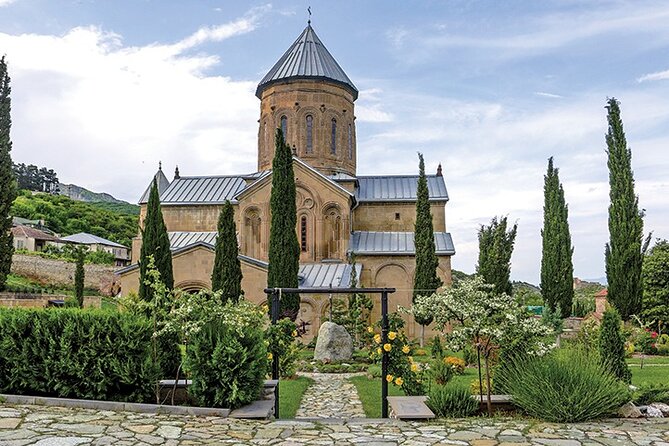
Your third stop is Samtavro Church (part of Samtavro Monastery). This site is described as a historic religious and cultural landmark in Mtskheta, playing a role in Georgian history for over a thousand years. Like the others, it has roots in early Christianity and has been rebuilt over time.
Samtavro is said to have been founded in the 4th century, with the current structure dating to the 11th century. You’ll again see the same theme of layered architectural influence, including Georgian, Byzantine, and Persian styles. The interior focus here is frescoes, intricate stonework, and ornate decoration—the same “look closer” approach as Svetitskhoveli, just with a different atmosphere.
The real hook for many visitors is what’s connected to power and conversion. Samtavro houses the tombs of Georgian kings and queens, including King Mirian III, who is linked to converting Georgia to Christianity in the 4th century.
You’ll have about 30 minutes at Samtavro, with the admission ticket included. Thirty minutes is short, but it’s enough to catch the frescoes and understand the key tomb connections if you’re paying attention to the guide’s explanations. If you’re the type who takes lots of photos and stops to read every sign, you may wish you had more time—so choose your “must-see” elements before you enter.
Why this stop lands: Samtavro adds a human dimension. Instead of only architecture and geography, it ties the religious story to specific named figures and royal tombs. It makes the whole day feel more personal and less like a list of famous buildings.


Stop 4: Mtskheta town time to reset your eyes
After the churches, you get a breather with a short time in Mtskheta itself—about 30 minutes, and it’s free time (no ticket required for this portion). Mtskheta is described as one of the oldest continuously inhabited cities and a major religious and cultural center.
This is a smart pacing choice. When you’ve spent time in monumental churches, it’s easy to get “all religious all the time.” A little time in the town lets you reset: look around, take in street life, and get your bearings so you understand where the sites fit into daily geography.
Because the town stop is brief, treat it as a chance to orient yourself rather than a full sightseeing walk. If you want a longer stroll, this is also where you can decide if you’d like to come back later for a slower visit.
How the small group experience changes the day
A max group size of 15 travelers is a big deal on a day like this. When the group stays small, you usually get:
- Better timing control at entrances and viewpoints
- More chances for the guide to answer questions without the group falling behind
- Less “lost in the crowd” stress
Also, since the tour is offered in English and you have a professional guide, you’re not left to guess what you’re seeing. The architecture mix across the day—Georgian, Byzantine, and Persian influences showing up in different ways—can be confusing if you don’t have context. A guide’s explanations help you see patterns instead of just collecting photos.
I also appreciate that the tour uses a mobile ticket system. It’s one less thing to manage while you’re moving through religious sites where you’ll want your hands free.
What to do before you go (so you enjoy Jvari, Svetitskhoveli, Samtavro more)
This tour is short, so a little prep pays off.
1) Dress with church visits in mind. Even without explicit rules listed, you’ll be entering active sacred spaces. Bring something that feels respectful and comfortable.
2) Plan for the hill. Jvari is on a hilltop. If it’s sunny, protect your head and eyes; if it’s windy, be ready.
3) Choose your focus. In one day you’ll see three major sites. Pick what you care about most—views, frescoes, stonework, or the stories connected to saints and royal tombs—so you don’t get overwhelmed.
4) Use the ride time. WiFi is available on board, but more importantly, let the guide set the stage before you arrive at each stop. You’ll “read” the buildings faster.
Value check: does $19 feel worth it?
For many city day trips, the cost covers the vehicle and guide, while major entrances cost extra. Here, you get admission tickets included for Jvari, Svetitskhoveli, and Samtavro, which makes the $19 price feel less like a bargain and more like a straightforward deal.
You’re also getting transportation from central Tbilisi (meeting at 15 Abano St) and an English-speaking guide for a few hours. Meals are not included, so budget for a snack or something simple on your own before or after. But that’s normal for a half-day cultural program, and it keeps the tour price lower.
If you want a focused, efficient day—especially if you don’t want to figure out routes and timing on your own—this one makes a lot of sense.
Should you book this Mtskheta, Jvari, Samtavro day tour?
Yes, if you want a high-impact, short day that hits the core of Georgia’s Christian heritage around Mtskheta. It’s especially a good match if you care about UNESCO sites, architectural mixes across centuries, and the named traditions linked to figures like Saint Nino and King Mirian III.
Don’t book if your ideal trip is slow and loose, with lots of time to linger at a single site for photos, quiet study, or long walks. This tour moves. You’ll leave with the highlights, not a week’s worth of church-by-church exploration.
FAQ
FAQ
How much does the tour cost?
The tour costs $19.00 per person.
How long is the tour?
It runs about 3 to 4 hours total.
What language is the tour offered in?
The tour is offered in English.
What’s included in the price?
Included are an air-conditioned vehicle, WiFi on board, a professional guide, and admission tickets for Jvari Monastery, Svetitskhoveli Cathedral, and Samtavro Church.
Are meals included?
No, meals are not included.
Where does the tour start?
It starts at 15 Abano St, Tbilisi, Georgia.
What are the main stops on the tour?
The tour visits Jvari Monastery, Svetitskhoveli Cathedral, Samtavro Church, and includes a short stop in Mtskheta.
Is there a mobile ticket?
Yes, it includes a mobile ticket.
How large is the group?
The tour has a maximum of 15 travelers.
What is the cancellation policy?
You can cancel for a full refund up to 24 hours in advance of the experience’s start time. If you cancel less than 24 hours before, you don’t receive a refund.
More Tbilisi Tours and Georgian Day Trips



More from Our Tbilisi Review Desk
More Mtskheta and Jvari UNESCO Runs

Not quite your thing? More Tbilisi tours and day trips from our review desk






Mtskheta & Jvari UNESCO Trips, compared.
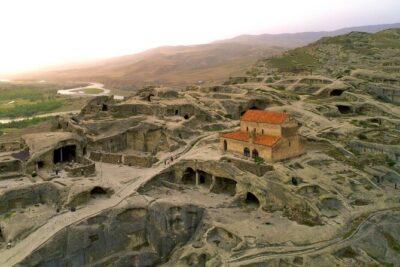 ★ 5.0Day Trip to Mtskheta Gori and UplistsikheFrom $291,801 reviews
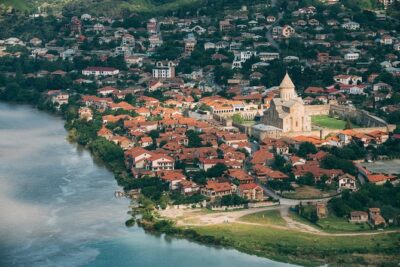 ★ 5.0Mtskheta,Jvari,Bazaar,wine tasting,Chronicles of GeorgiaFrom $20730 reviews
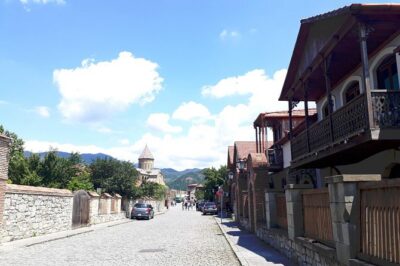 ★ 5.0Mtskheta-Gori-UplistsikheFrom $90112 reviews
 ★ 4.5Mtskheta, Jvari, gori, uflistsikhe, history and panorama (group tours)From $19107 reviews
 ★ 5.0Mtskheta-Jvari-Uplistsike-Chronicle of Georgia, PRIVATE TripFrom $68105 reviews
 ★ 4.5Tbilisi – Mtskheta – Jvari. Full City Tour on Hop On Hop Off BusFrom $4091 reviews
 ★ 4.5Ancient Georgia Group Tour: Mtskheta,Jvari, Gori, UplistsikheFrom $2473 reviews
 ★ 5.0Ancient Mtskheta and Chronicle of Georgia half day tourFrom $6566 reviews
Browse the lists this tour appears in