
Reviewed · OLD TBILISI WALKING TOURS
Tbilisi Explorer: Essential Walking Tour for First-Timers
Tbilisi makes more sense when you walk it. This private loop strings together iconic sights and tucked-in corners, with free-entry stops and a one-way cable car to help you see the city in a practical, first-timer way. You’ll start in the center and finish right where you began, so the day feels easy to map and repeat.
Two things I really like: the tour can match your pace and even handle families without steamrolling the schedule. I’ve also seen guides take real care with the tourist-trap stuff, so you spend less time second-guessing what’s worth your money. One thing to consider is that you’ll be moving on foot through neighborhoods and religious sites, so plan for a steady walk and a strict dress code.
In This Review
- Key Points That Make This Tour Worth Your Time
- Why This Tbilisi Walk Works So Well for First-Timers
- Freedom Square to Tbilisi Wall Ruins: Starting at the Center
- Anchiskhati Basilica and the Rules for Visiting Churches
- Old Town Tbilisi: The Part You’ll Want to Return To
- Bridge of Peace to Rike Park: Modern Views, Easy Photos
- Kartlis Deda on Sololaki Hill: The City’s Big Symbol
- Sioni Cathedral and Metekhi Cathedral: Two Church Stops, Two Atmospheres
- Jumah Mosque: Architecture That Confuses First Glances
- Sayat-Nova, St Kevork, and the Story Behind a Monument
- Rezo Gabriadze Marionette Theater: Culture Without the Museum Fatigue
- Sergey Parajanov Monument: Film That Connects Across Cultures
- Shardeni Street and the Easy Wander You’ll Actually Enjoy
- Rike to Narikala Area: Where Cable Views Meet the River
- The Toaster Sculpture: A Small, Odd Stop That’s Fun
- Meidan Bazaar: If You Want Souvenirs Without Stress
- Falcon and Pheasant Fountain: The Founding Legend Reminder
- Dzveli Tbilisi Sulphur Waterfall: The Wow Moment in the City Center
- Final Religious Landmark and the Route Back
- Pace, Clothes, and the Little Things That Matter
- Price and Value: Is $41 a Good Deal?
- Should You Book This Tbilisi Explorer Walk?
- FAQ
- How long is the Tbilisi Explorer tour?
- Where do I meet, and where does the tour end?
- What is included in the price?
- Is the cable car ride included?
- Is this a private tour?
- Are the main stops free to enter?
- What should I wear for churches and museums?
- What happens if the weather is bad?
- Can I cancel and get a refund?
Key Points That Make This Tour Worth Your Time
- Freedom Square orientation so you can place the rest of the city fast
- Oldest and biggest faith sites on a route that’s walkable (with required coverage)
- Bridge of Peace + Rike Park views that connect newer Tbilisi to the old streets
- Culture stops tied to Armenian, Georgian, and film legends you’ll actually remember
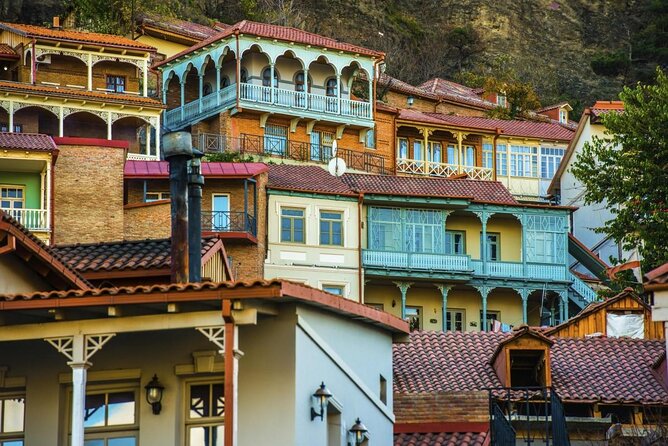
- Old Town walking time plus a few quick “special-feeling” detours like the sulphur waterfall
Why This Tbilisi Walk Works So Well for First-Timers
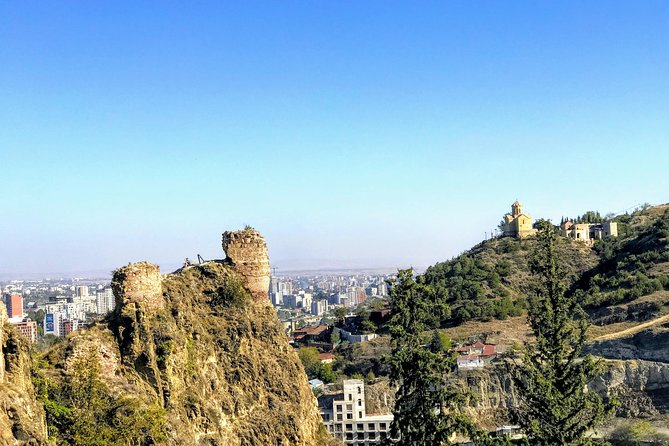
If you only have a day (or even half a day) to get your bearings, this kind of route is gold. You’re not just ticking off landmarks. You’re getting a guided sense of geography: where the hills pull you, where the river cuts the city, and how the old streets connect to newer viewpoints.
This is private, so you’re not stuck matching 20 strangers’ speed. In past tours, guides like Gio have been praised for keeping pace with fast walkers, while others (like Jonah) have been noted for tailoring to a family’s timeline. That flexibility matters in Tbilisi, because some streets are slow, some are steep, and some stops are quick photo breaks.
The best part for many people is the mix of “big picture” and “human scale.” You’ll pass major squares and major churches, but you’ll also spend time on atmospheric streets such as Shardeni Street and the Old Town lanes where life feels close to the ground.
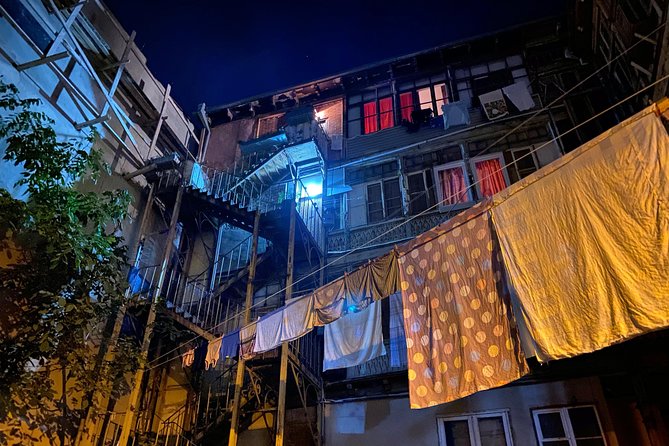
More Old Tbilisi walking tours through the balconied backstreets


Freedom Square to Tbilisi Wall Ruins: Starting at the Center
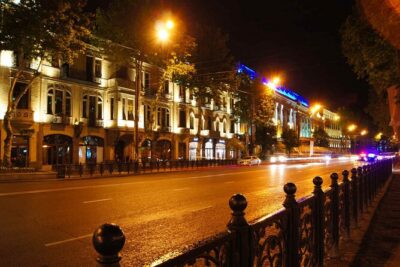
You kick off at Freedom Square, at the eastern end of Rustaveli Avenue. It’s a major hub now, but what you’re really learning is why Tbilisi grew the way it did: this is where the city’s movement concentrates, so it’s an ideal launching pad.
The name history also tells a story. Freedom Square has been called Erivansky or Paskevich-Erivansky Square under Imperial Russia, and later Beria Square and Lenin Square under the Soviet era. Even if you don’t memorize the dates, you’ll start noticing the layers everywhere in Tbilisi.
From there, you head to the Tbilisi Wall Ruins, an old part of the city that adds context to all the “modern city” photos you’ll take later. Ruins like these are easy to overlook when you’re sightseeing alone, because you’re busy chasing the next pretty building. On a guided walk, they become a quick lesson in the city’s older boundaries.
Anchiskhati Basilica and the Rules for Visiting Churches
One of the stops I’d put near the top is Anchiskhati Basilica. This is the oldest surviving church in Tbilisi, dated to the sixth century, and it belongs to the Georgian Orthodox Church. Even with a quick visit, it’s the kind of place that helps you understand how long this city has been shaping lives around faith and community.
Keep your outfit ready for entry. The tour requires a dress code for worship sites and selected museums: no shorts or sleeveless tops, and knees and shoulders must be covered for both men and women. It’s not something you want to deal with at the door, so pack a light layer that you can actually wear in warm weather.
After Anchiskhati, you continue through the Old Town area. Even when individual stops are brief, the walking time gives you the feel of the neighborhood: stone, stairways, small courtyards, and places where you sense everyday rhythm instead of only tourism.
Old Town Tbilisi: The Part You’ll Want to Return To
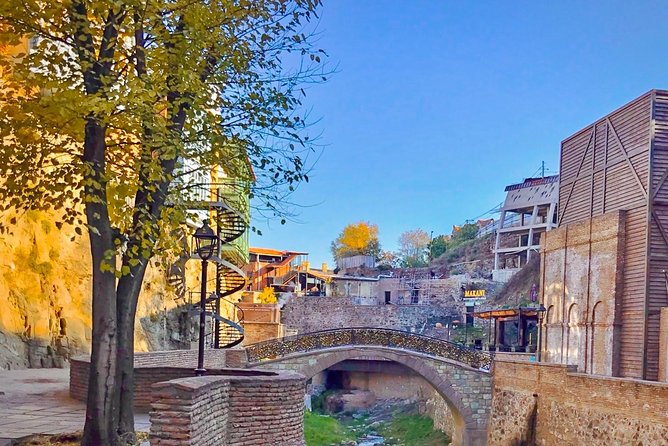
When the route reaches Old Town Tbilisi, you’re getting more than a photo stop. This is where restaurants and small eateries cluster, where old buildings sit close to the street, and where theater and local culture show up in the everyday scene.
I like Old Town best in the middle of a walk, not at the end of the day when your legs are done. Here, it works because you’re already warmed up to the geography. You can glance at details while your guide gives you context, then save some free time (if you have it) for your own wandering after the tour.
Bridge of Peace to Rike Park: Modern Views, Easy Photos
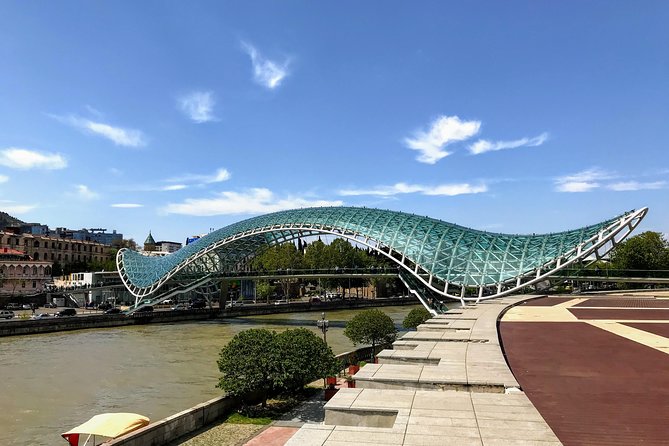
Next comes the Bridge of Peace, one of Tbilisi’s newer landmarks, opened in 2010 over the River Mtkvari (also known as the Kura River). It’s the kind of sight that instantly tells you the city didn’t stop evolving with the old streets. The bridge is also useful for orientation: the river becomes your visual divider, and suddenly the map in your head clicks.
You also reach Rike Park, a public recreation area popular with families and tourists. It’s a good place to slow down for a moment, breathe, and let the city open up around you. Think of it as your “reset” stop—especially helpful if you’ve been walking steadily and want a quick break without losing the momentum.
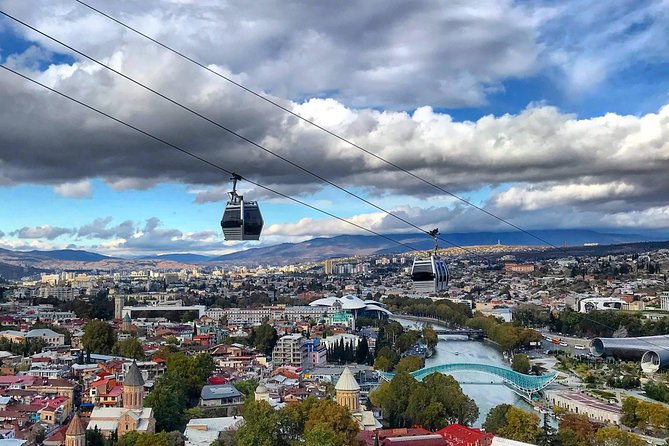
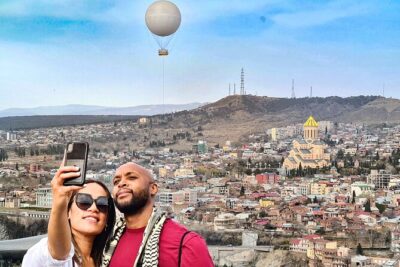
About the skyline views: you’ll also see the connection point for the aerial tramway system in the area (the tour data says the aerial tramway is not included). Still, simply seeing where it operates helps you understand how locals and visitors move between riverside spaces and the fortress area above.
During the tour, you do have a cable car ride (one-way) included. That’s a smart add for first-timers because it gives you a higher-angle view without you needing to climb everything on foot.




Kartlis Deda on Sololaki Hill: The City’s Big Symbol
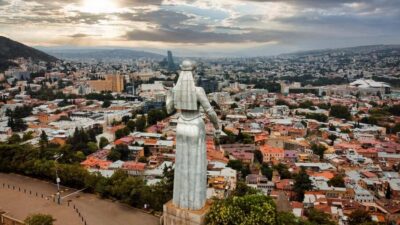
Then there’s Kartlis Deda, a monument on top of Sololaki hill. It was erected in 1958 for Tbilisi’s 1500th anniversary, and the figure is a 20-meter aluminum woman in Georgian national dress designed by sculptor Elguja Amashukeli.
This stop is less about the statue itself and more about what it means. Big monuments like this are your shortcut to understanding local symbolism—how the city frames identity in plain sight. Also, when you’re walking so much at ground level, a hilltop viewpoint gives your brain a different kind of information.
If you’re the type who likes history in the form of objects you can actually point at, this is a good one.
Sioni Cathedral and Metekhi Cathedral: Two Church Stops, Two Atmospheres

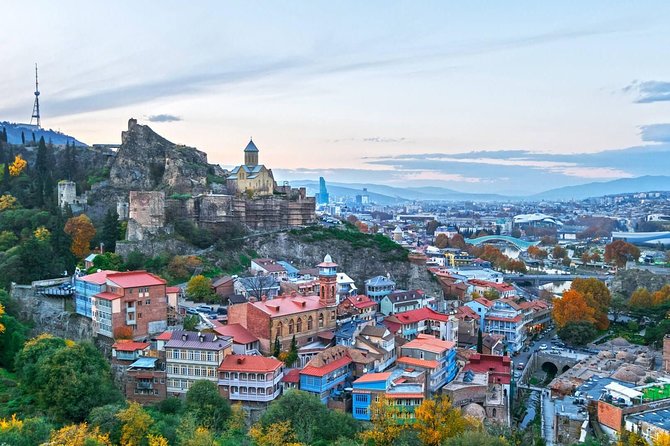
The tour includes Sioni Cathedral of the Dormition, named after Mount Zion in Jerusalem following a medieval Georgian tradition. It’s another major Georgian Orthodox site, and the visit is a chance to compare atmosphere. Anchiskhati is older in date; Sioni feels like a core spiritual center for the city’s present.
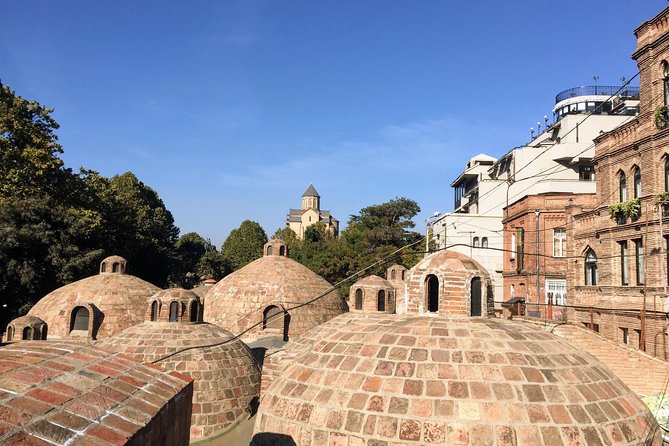
Later, you also reach Metekhi Cathedral (the 12th century), standing near the rocky bank of the Kura. Metekhi’s setting changes the feel of the visit—water nearby, cliffs behind, and a view angle that makes you feel the geography of the river bend.
Both church stops follow the same dress logic. If you’re already covered and comfortable, you’ll enjoy these more. If you’re not, you might spend mental energy worrying about entry instead of focusing on the place.
Jumah Mosque: Architecture That Confuses First Glances
A really interesting stop is the Jumah Mosque (Friday Mosque) in the heart of Old Town. The tour notes that its architecture is unique and you may not realize it’s a mosque at first glance. That’s a great reminder that religious architecture in Tbilisi isn’t all one style.
Another notable detail: it’s one of the few mosques worldwide where Shias and Sunnis pray together. That’s not the kind of fact you learn from wandering alone, and it adds a deeper layer to how Old Town functions day to day.
Like the churches, you’ll need to be ready for the dress code.
Sayat-Nova, St Kevork, and the Story Behind a Monument
You’ll then come to the Monument of Sayat-Nova, honoring the Armenian poet and musician known as Sayat – Nova (Harutyun Sayadian). This sculpture, created by Guya Djaparidze and Kokha Koridze, sits near the northern wall of St Kevork Armenian church.
The guide context here matters. The route includes a specific story: Sayat – Nova reportedly hid with other Christians at the church during an attack by shah Aga Mohamed Kadjar in 1795, and he was later killed on the doorstep and is buried there. Even if you only catch the outline, you’ll walk away linking the poetic figure to a real physical place.
That’s one reason I like this tour format. Monuments stop being decorative when a guide gives you a grounded story.
Rezo Gabriadze Marionette Theater: Culture Without the Museum Fatigue
The Rezo Gabriadze Marionette Theater is next, opened in 1981 and now a beloved part of Tbilisi’s cultural scene. It’s a shorter stop, but it’s also a refreshing one if you’re tired of only churches and squares.
This is the kind of stop that makes a walking tour feel human. It suggests the city has an arts rhythm beyond big institutions, and it gives you another thread to follow when you’re planning what to do after the tour.
Sergey Parajanov Monument: Film That Connects Across Cultures
You’ll also see the Sergey Paradzhanov (Parajanov) Monument, tied to the filmmaker whose works brought world praise. The tour references major films, including Shadows of Forgotten Ancestors (1964), The Colour of Pomegranates or Sayat-Nova (1969), The Legend of Suram Fortress (1985), and Ashik-Kerib (1988).
What I like about this stop is that it connects Georgian and Armenian identity to cinema. If you’re even passingly interested in film, this monument gives you a mental hook, because you can remember the name and the works later when you look up the movies.
Shardeni Street and the Easy Wander You’ll Actually Enjoy
Next is Jan Shardeni Street, one of Tbilisi’s most popular pedestrian streets. The tour makes a point of it because it’s where many first-timers finally feel like they’re inside the city’s “character.”
This is a place for slow walking, not rushing. You’ll see why it’s so memorable: stone facades, restaurants, and small side streets that tempt you to drift off. Plan for a bit of time here so you can stop for a drink or snack if you want. If you’re trying to shop, you’ll also notice how sellers cluster in areas like this, which is why having a guide who can steer you around the most pushy spots can be a big help.
Rike to Narikala Area: Where Cable Views Meet the River
This tour route naturally moves between lower riverside areas and higher viewpoints. As you approach the aerial tramway area (not included), you’ll see why this part of the city is designed for movement. The river isn’t just scenic; it shapes travel lines.
Since the tour includes a cable car ride one-way, you get a built-in chance to look down, not only across. For first-timers, that one ride can save you from spending the entire trip guessing where things are.
The Toaster Sculpture: A Small, Odd Stop That’s Fun
A fun diversion on the way is the Sculpture the Toaster. It shows a man holding a horn modeled on an ancient Colchian statuette sometimes nicknamed tamada.
This is a light moment in the day, and I mean that as a compliment. When your feet get tired, small oddities like this keep the tour from feeling like a checklist.
Meidan Bazaar: If You Want Souvenirs Without Stress
Then you reach Meidan Bazaar. The practical angle here is simple: if you don’t want to wander endlessly looking for souvenirs, this gives you a concentrated area to browse. The stop is short, so treat it as a “quick scan” rather than a deep shopping session.
If your guide is paying attention to what you want (gifts, local snacks, small crafts), you can use the time more effectively than if you were trying to bargain blind.
Falcon and Pheasant Fountain: The Founding Legend Reminder
There’s also a Monument Fountain featuring falcon and pheasant. The tour links it to a legend about how Tbilisi was established in the fifth century by King Vakhtang Gorgasal.
Even if you’ve heard a founding story before, a fountain as a landmark works well because it’s physical and repeatable in your mind. It gives you a point of orientation again, like a map marker you can revisit when you’re walking later on your own.
Dzveli Tbilisi Sulphur Waterfall: The Wow Moment in the City Center
One of the most memorable stops is Dzveli Tbilisi Sulphur Waterfall. The tour calls it a real waterfall in the city center, and that contrast is the point: you’re in an urban walk, then suddenly there’s water energy right where you didn’t expect it.
This is also a great reset stop for photos, short rest, and just soaking in the unexpected. Even if you only stay briefly, the sense of place makes it worth the time.
Final Religious Landmark and the Route Back
The tour wraps up with Metekhi Cathedral earlier in the day and then finishes back at your meeting point at the Freedom Square area. Your day ends where it started, which makes it much easier to head off to dinner without feeling lost.
If you want, you can use the route’s structure as a template for planning the rest of your trip. You now know where the city’s core sits, where the river viewpoint zones are, and which neighborhood streets feel most “Tbilisi” to you.
Pace, Clothes, and the Little Things That Matter
This experience is built for people with moderate physical fitness, since you’re on your feet and moving from stop to stop. The timing is tight but realistic—many stops are around 15 minutes, with a couple longer breaks such as Old Town time and the river-area park time.
Clothes matter more than you’d think because of the dress code for places of worship and selected museums. I’d rather wear the covered outfit all day than scramble for a fix right before a cathedral.
Also, the tour is near public transportation, and service animals are allowed. No hotel pickup is included, so plan to arrive at 2 Freedom Square on time and ready to walk.
And yes, weather counts. The experience requires good weather, so if conditions are poor, you might be offered a different date or a refund.
Price and Value: Is $41 a Good Deal?
$41 per person sounds like a “quick tour” price, but it’s more than a short stroll because you get a private guide, lots of walkable stops, and a one-way cable car ride included. For first-timers, that cable car piece alone can justify the value, because it gives you an instant viewpoint without needing to plan tickets and routes separately.
Most of the stops are free to enter in the context of the tour experience, including major churches and the Old Town walking time. That means you’re paying mainly for guidance, time-saving route design, and the parts that require organizing.
The private setup also helps you get better mileage out of your time. If you’re fast and want to cover more, your guide can match that. If you’re traveling with a toddler or need to slow down, guides have been praised for adjusting. That flexibility is part of what you’re paying for.
Should You Book This Tbilisi Explorer Walk?
I’d book it if you’re new to Tbilisi and want your first day to feel organized. It’s also a smart choice if you like walking but don’t want to guess which sights are worth your limited time, especially with the combination of classic landmarks, Old Town streets, and a mix of Georgian and Armenian cultural stops.
Skip it only if you can’t follow the dress code or you hate walking through a day of short stops. This route works best when you’re willing to be out in the city, step by step, and accept that each stop is brief by design.
FAQ
How long is the Tbilisi Explorer tour?
It runs about 1 hour 30 minutes to 2 hours.
Where do I meet, and where does the tour end?
You start at 2 Freedom Square, Tbilisi, Georgia, and the tour ends back at the meeting point.
What is included in the price?
You get a local guide, a private tour, and a one-way cable car ride.
Is the cable car ride included?
Yes, a one-way cable car ride is included.
Is this a private tour?
Yes. Only your group participates.
Are the main stops free to enter?
The tour notes free entry for many stops. One aerial tramway option is listed as not included.
What should I wear for churches and museums?
You need covered knees and shoulders. No shorts or sleeveless tops are allowed, and you may risk refused entry if you don’t comply.
What happens if the weather is bad?
The experience requires good weather. If it’s canceled due to poor weather, you’ll be offered a different date or a full refund.
Can I cancel and get a refund?
Yes. You can cancel up to 24 hours in advance for a full refund. If you cancel less than 24 hours before the start time, the amount paid is not refunded.
More Tbilisi Tours and Georgian Day Trips


More from Our Tbilisi Review Desk
More Old Tbilisi Walking Tours



Not quite your thing? More Tbilisi tours and day trips from our review desk








Old Tbilisi Walking Tours, compared.
 ★ 5.0Tbilisi Walking Tour Including Cable Car and Traditional BakeryFrom $191,310 reviews
 ★ 5.0Evening Walking & Talking Tour with Wine & Boat RideFrom $10572 reviews
 ★ 5.0Kakheti;City of Love Sighnaghi, Bodbe. KTW. Wine House Group tourFrom $16376 reviews
 ★ 5.0Old Tbilisi Highlights walking tour with wine & 10 tastingsFrom $15276 reviews
 ★ 5.0Old Tbilisi Tour: Private Walking Tour With Wine TastingFrom $39273 reviews
 ★ 5.0Private Tbilisi Food Tour: 9 Tastings Walk in Bohemian DistrictFrom $79227 reviews
 ★ 5.0Old and New City Guided Tour with 2 Cable Car RidesFrom $39176 reviews
 ★ 5.0Tbilisi Old Town Walking Tour with a Local GuideFrom $38168 reviews
Browse the lists this tour appears in