
Reviewed · OLD TBILISI WALKING TOURS
Tbilisi city tour by Visit-geo
Tbilisi clicks into focus fast on this tour. It’s a guided one-day route that mixes old-city viewpoints with modern landmarks, and it comes with pickup, private-vehicle transport, and bottled water. You’ll rack up major sights without having to stitch your own plan.
I especially like the Rike-Narikala cable car for those big 360° city views, plus the fact that the ride connects you to the hilltop quickly. I also love walking Rike Park, where the pathways form a large-scale map of Georgia when viewed from above—an unusual detail that makes the park feel like more than just a place to stroll.
One thing to keep in mind: the schedule is tight at each stop, and even the cable car ride is described as lasting only a couple of minutes—great for views, but not for lingering.
In This Review
- Key highlights you’ll feel the moment you arrive
- Why this Tbilisi route works so well
- Getting started: pickup, private transport, and the time to confirm
- Narikala Fortress: the hilltop orientation point
- Rike-Narikala Cable Car: 360° views with one tradeoff
- Rike Park: a park that doubles as a Georgia map
- Abanotubani sulphur baths area: free to enter, pay for the experience
- Holy Trinity Cathedral and the hill above the river
- Metekhi neighborhood: cliffside views and church lore
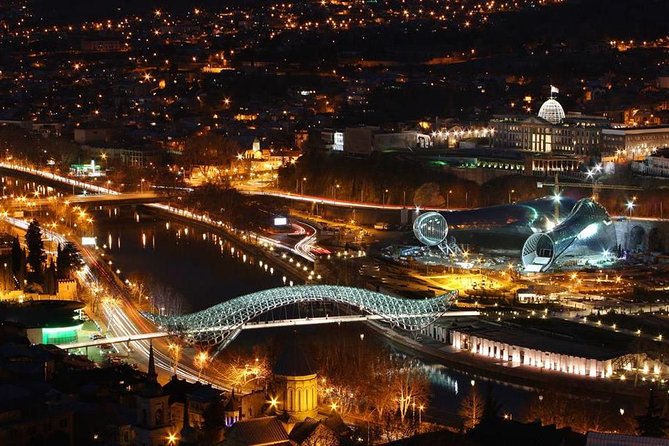
- Bridge of Peace: one walk, two worlds, and great photos
- Turtle Lake: local recreation with an added cultural stop
- Mtatsminda Amusement Park: free entry, paid fun, and evening views
- Price and value: what $40 gets you, and what costs extra
- The guides: Giorgi and Omar bring the story to life
- Who this Tbilisi tour suits best
- Should you book Visit-geo’s Tbilisi city tour?
- FAQ
- How much does the Tbilisi city tour cost?
- How long is the tour?
- Is pickup included?
- Is this a private tour?
- What’s included in the price?
- What isn’t included?
- Are there free admission stops?
- What about the Rike-Narikala cable car?
- Is free cancellation available?
Key highlights you’ll feel the moment you arrive
- Narikala Fortress views over Tbilisi and the Mtkvari River from a steep hill
- Rike-Narikala cable car opened in 2012, for easy hilltop access and 360° panoramas (ticket not included)
- Rike Park’s Georgia-shaped layout, including meandering pathways that depict regions
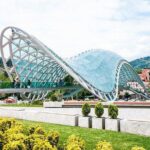
- Bridge of Peace photo angles, a pedestrian link between Rike Park and the old town (and a 2012 Top-13 unusual bridge)
- Abanotubani sulphur baths area, free to enter, with bath pricing handled separately
- Mtatsminda Park recreation, free entry with attractions and rides extra, especially fun in the evening
Why this Tbilisi route works so well
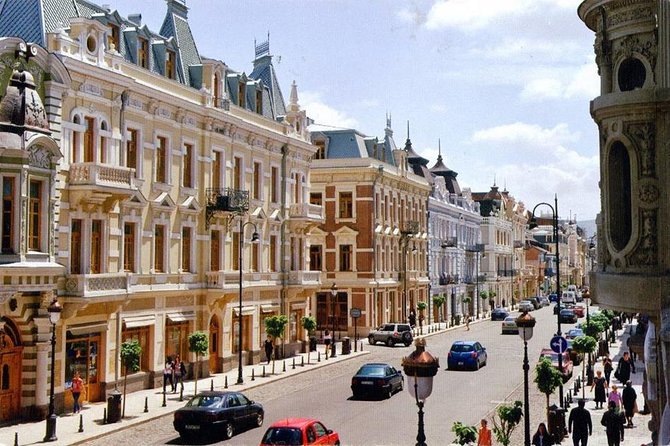
Tbilisi has a way of rewarding the person who looks up. This tour is built around viewpoints—fortress walls, cathedral hills, river bridges—so you’re not just moving through streets. You get a clear sense of where the city sits along the Mtkvari (Kura) River and how the old and new parts fit together.
You’ll also move efficiently. The plan strings together major sights that are close enough to make sense in one day, but varied enough that you don’t feel stuck in one theme. One moment you’re at an ancient hill fortress; the next you’re in a park designed like a giant geography lesson.
More Old Tbilisi walking tours through the balconied backstreets

Getting started: pickup, private transport, and the time to confirm
This is a private tour, meaning it’s only your group in the vehicle—no joining random strangers mid-ride. Transport is by private car with fuel and parking handled, and bottled water (0.5L per person) is included.
One practical note: the start time is listed as 11:30 pm. That sounds late for a tour built around landmarks and daytime fun, so I’d confirm the exact start time with Visit-geo when you book. If you’re aiming for sunset views (and Mtatsminda can be best later), you’ll want the timing to match your day.
The total length is 4 to 8 hours (approx.). That wide range usually means the guide can adjust based on your pace, photo stops, or how long you want to spend around places like the baths area or amusement park.
Narikala Fortress: the hilltop orientation point
Your tour begins at Narikala Fortress, an ancient fortress overlooking Tbilisi and the Mtkvari River. The fortress area is described as two walled sections on a steep hill, lying between the sulfur baths and the botanical gardens.
In about 50 minutes, this stop works as a “get your bearings fast” moment. Before you zoom into the rest of the city, you’ll see the shape of Tbilisi from above—river curves, hillside neighborhoods, and the way bridges tie everything together.
Admission here is listed as free on the tour plan. What can be the drawback? Hill terrain means you’ll want comfortable shoes. Even if you don’t walk the full perimeter, the viewpoints are worth the climb.
Rike-Narikala Cable Car: 360° views with one tradeoff
Next comes the Rike-Narikala cable car connecting Rike Park (left bank) with Narikala Fortress (hilltop). The cable car opened in 2012, and the pitch is simple: big views through large windows plus an easy ride up the slope.
The ride is short—only about a couple of minutes, which is called out as the only real complaint in the tour notes. Translation: you’ll get the panorama, but you won’t have much time to linger like you would at an overlook platform.
The cable car is listed as not included, and the tour description mentions a price of about 1 Lari for the ride. Since exact costs can shift, I’d budget for it when you plan your day.
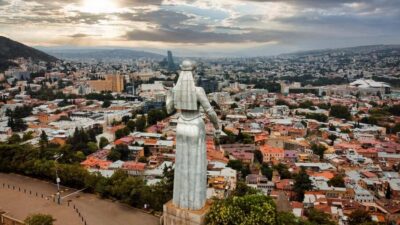
Once you step out at the hilltop, the tour notes suggest turning either toward the Kartlis Deda statue or back toward Narikala Fortress, depending on your direction and interests. This is a nice moment to decide what kind of photos you want: fortress-first angles or statue-and-panorama angles.
Rike Park: a park that doubles as a Georgia map
From the hilltop, you’ll spend around 40 minutes in Rike Park, located on the left bank of the Mtkvari River. It’s described as one of Tbilisi’s newer artistically appointed parks, right in the heart of the city.
Here’s what I find genuinely useful about this stop: the park’s design isn’t random. From above, it creates a large-scale map of Georgia, and the meandering pathways are said to depict different regions. Even if you can’t see the full map view from your feet, the idea keeps the walk interesting.
Rike Park is free to enter, and it’s easy to connect to the old town via the pedestrian Bridge of Peace. That matters because it turns your sightseeing into a real walking route instead of hopping between isolated points.


Abanotubani sulphur baths area: free to enter, pay for the experience
After the river and parks, the tour moves to Abanotubani, the historic sulphur baths area. The plan sets aside about 40 minutes here.
The key practical idea: the area is listed as free to enter, but if you want to actually use the bath facilities, pricing varies by bath and is not included in the tour cost. So you can treat this as either a quick cultural stop for architecture and atmosphere, or as your on-the-ground wellness moment.
The tour notes also flag timing: Abanotubani can feel especially good in colder months (October to March). If you’re visiting outside that window, you might still enjoy it for the vibe, but you’ll likely enjoy the stroll even more if you’re not planning to soak.
Holy Trinity Cathedral and the hill above the river
Next you’ll head to Tbilisi Holy Trinity Cathedral (also called Tsminda Sameba). The church is listed as built in 2004, and it’s framed as the symbol of new Georgia.
Plan for about 30 minutes. This is not a long worship stop—it’s a “see why everyone photographs this place” moment. The cathedral is described as breathtaking in size and as the highest church in Georgia, reaching 101 meters.
Admission is listed as free in the tour plan. One consideration: cathedral areas can involve stairs and open viewpoints, so bring footwear that works well if you end up moving around more than you expected.
Metekhi neighborhood: cliffside views and church lore
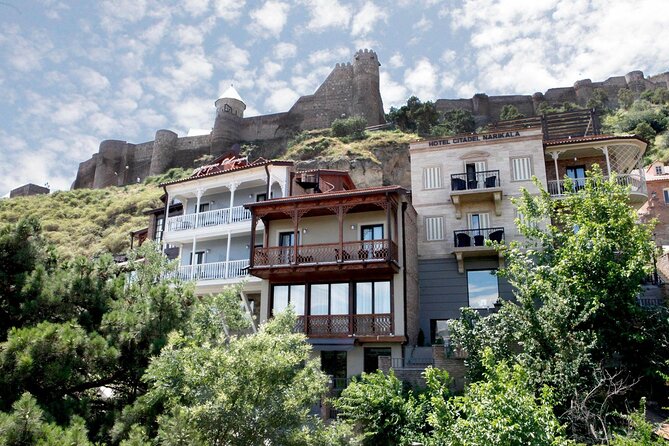
The tour also includes Metekhi, a historic neighborhood sitting on an elevated cliff overlooking the Mtkvari River. It’s associated with Metekhi Church of Assumption.
You’ll also pick up some historical context in the tour description: the name Metekhi dates back to the 12th century and is said to mean area around the palace, and tradition links the area with Saint Shushanik. The note adds that structures didn’t survive a Mongol invasion in 1235.
Because no specific duration is listed for Metekhi in the outline, treat this as a shorter “context and views” stop rather than a full deep-dive. It works well if your guide uses it to connect the story of the city with what you’re seeing around you.
Bridge of Peace: one walk, two worlds, and great photos
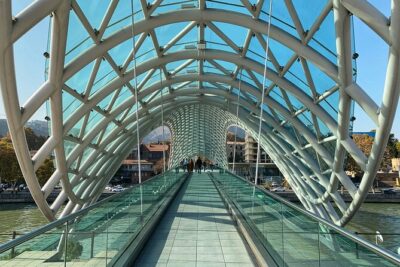
Now you connect Rike Park to the old town by way of the Bridge of Peace. It’s listed for about 20 minutes, and it’s one of those simple stretches that can produce outsize results.
From here you get scenic views of Tbilisi, with the tour notes calling out especially good photo moments around sunrise, sunset, or night. If your tour timing lines up, try to pause long enough to watch the light change.
A fun factual detail in the tour plan: in 2012, the Bridge of Peace was included in the Top-13 most unusual bridges in the world. That’s worth remembering because it gives the bridge more personality than a typical river crossing.
Turtle Lake: local recreation with an added cultural stop
After the river core, the tour continues to Turtle Lake for about 1 hour. Turtle Lake is framed as one of the most popular recreation spots for Tbilisians.
The tour description also mentions an open-air ethnographic museum on the slope: a miniature model of Georgia. Admission for this area is listed as free, so you can spend your hour doing a mix of walking, people-watching, and checking out that miniature-model angle if it interests you.
If you want a break from big monuments, Turtle Lake is a smart pacing move. The drawback is that it can feel more like “time to wander” than “time to tick off another landmark,” so set your expectations accordingly.
Mtatsminda Amusement Park: free entry, paid fun, and evening views
To finish, the tour heads to Mtatsminda Amusement Park on Mount Mtatsminda, overlooking the city. You’ll have about 2 hours here.
The plan says the park is free to enter, but attraction fees are not included. That’s the main practical point: the hours allow for browsing and views, but if you want rides (carousels, water slides, roller-coaster, dark ride, funicular, and a big Ferris wheel are all mentioned), you’ll need to pay those extras separately.
The tour notes emphasize evening: it can be especially spectacular later in the day. So if you’re flexible with timing, plan your energy so you’re not exhausted by the time you reach the mountaintop.
Price and value: what $40 gets you, and what costs extra
The price is $40 per person for a guided tour covering major sights over 4 to 8 hours. For that money, you’re paying for a real guide and logistics: driver/guide support, private vehicle transport, fuel surcharge, car parking fee, and bottled water (0.5L per person). That’s the part that usually saves you time and hassle, especially if you’re trying to see a lot in one day.
Where extra money can pop up:
- The Rike-Narikala cable car ticket is not included
- Lunch is not included
- Sulphur baths in Abanotubani: area is free, but bath pricing differs by facility and isn’t included
- At Mtatsminda Park, attraction fees are not included
On balance, I think this is good value if you want an organized route that hits the big names (fortress, parks, cathedral, bridges, and viewpoints) without you coordinating transportation between them. If you prefer a slower day with long museum visits and unhurried wandering, you might find the “major sights first” approach a bit brisk.
The guides: Giorgi and Omar bring the story to life
The tour experience has strong signals that the guide matters. In particular, names like Giorgi and Omar show up with praise for being polite and punctual, plus helping with history questions and adjusting when you’re traveling with kids.
If you get a guide with strong English and a habit of answering questions, the route gets more interesting. These stops aren’t just photo spots; they connect to how Tbilisi grew, why landmarks were built where they are, and what the river and hills mean for the city’s layout.
Who this Tbilisi tour suits best
This tour fits best if you:
- Want a one-day highlights plan without having to map everything yourself
- Like mix-and-match sightseeing: fortress + modern cathedral + parks + viewpoints
- Prefer private touring (your group sets the pace)
- Are okay with some stops being shorter because you’re covering more ground
It’s also a solid choice for families who want an easy structure. The tour plan’s stop variety gives kids different types of places to focus on—parks, views, and then the amusement park.
Should you book Visit-geo’s Tbilisi city tour?
If you want a practical route that hits Tbilisi’s best-known viewpoints and photo stops in one day, I’d say yes—especially because the tour includes private transport, water, and a guided flow that links sites logically. The “mostly free entry” approach to many stops also keeps your budget predictable, as long as you plan for the few extras (cable car, baths, lunch, and amusement rides).
Before you book, do two things: confirm the start time listed as 11:30 pm, and decide in advance whether you want to spend money on the cable car, sulphur baths, or Mtatsminda rides. Once you do that, you’ll get a smooth, high-reward day across Tbilisi’s hills, river bridges, and city skyline.
FAQ
How much does the Tbilisi city tour cost?
It costs $40.00 per person.
How long is the tour?
The tour duration is approximately 4 to 8 hours.
Is pickup included?
Pickup is offered.
Is this a private tour?
Yes. It’s a private tour/activity, so only your group participates.
What’s included in the price?
Included items are the driver/guide, bottled water (0.5 l per person), private tour, transport by private vehicle, fuel surcharge, and car parking fee.
What isn’t included?
Lunch isn’t included. Attraction fees (like at Mtatsminda) and the Rike-Narikala cable car ticket are also not included, and sulphur bath prices (if you use the baths) differ by bath.
Are there free admission stops?
Many stops are listed as free to enter, including Narikala Fortress, Rike Park, Abanotubani area, Holy Trinity Cathedral, Bridge of Peace, Turtle Lake, and Mtatsminda Park entry.
What about the Rike-Narikala cable car?
The cable car admission ticket is not included in the tour cost, and the tour notes mention a fare of about 1 Lari.
Is free cancellation available?
Yes, you can cancel up to 24 hours in advance for a full refund.
More Tbilisi Tours and Georgian Day Trips

More from Our Tbilisi Review Desk
More Old Tbilisi Walking Tours



Not quite your thing? More Tbilisi tours and day trips from our review desk



Old Tbilisi Walking Tours, compared.
 ★ 5.0Tbilisi Walking Tour Including Cable Car and Traditional BakeryFrom $191,310 reviews
 ★ 5.0Evening Walking & Talking Tour with Wine & Boat RideFrom $10572 reviews
 ★ 5.0Kakheti;City of Love Sighnaghi, Bodbe. KTW. Wine House Group tourFrom $16376 reviews
 ★ 5.0Old Tbilisi Highlights walking tour with wine & 10 tastingsFrom $15276 reviews
 ★ 5.0Old Tbilisi Tour: Private Walking Tour With Wine TastingFrom $39273 reviews
 ★ 5.0Private Tbilisi Food Tour: 9 Tastings Walk in Bohemian DistrictFrom $79227 reviews
 ★ 5.0Old and New City Guided Tour with 2 Cable Car RidesFrom $39176 reviews
 ★ 5.0Tbilisi Old Town Walking Tour with a Local GuideFrom $38168 reviews
Browse the lists this tour appears in