

Reviewed · OLD TBILISI WALKING TOURS
Private Walking Tbilisi City Tour
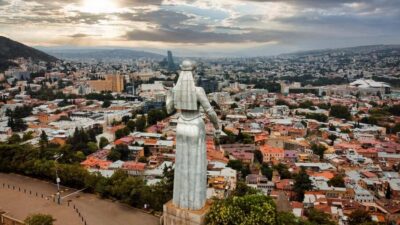
Tbilisi rewards slow steps, especially with a guide who connects the landmarks to meaning. This private 4-hour walk is built around the city’s signature mix of old churches, Soviet-era icons, and modern viewpoints, and it includes the cable car up to the Mother of Georgia Statue. I like the way the route keeps moving without feeling rushed, and I love the symbol stops: wine-and-sword Kartlis Deda, the LED Bridge of Peace, and sulfur-bath Abanotubani. One thing to consider: it’s mostly on foot, and if you want a bigger-area drive-by tour, this may feel like a smaller slice for the $45 price.
Because it’s private, your group sets the pace and your guide can answer questions on the spot. In guide reviews, names like Luka, Nico, Mariam, David, Nino, Sally, and Roma show up again and again for strong English, lively storytelling, and even small service touches like helping with photos or adjusting to requests. The only real constraint is practical: the cable car won’t operate during windy weather, and church entry follows a simple dress rule (no shorts; women need their head covered).
In This Review
- Key things I’d plan for on this Tbilisi walk
- Hotel pickup and the “first hour” vibe in Tbilisi
- Metekhi Cathedral and Vakhtang: why the river keeps showing up
- Europe Square and Rike Park: where the city’s modern face starts talking
- Cable car to Mother of Georgia: the view that makes the price make sense
- Bridge of Peace and the LED trick: take five minutes seriously
- Patriarchate seminary and the Old Town stair-steps
- Sioni Cathedral, Rezo Gabriadze’s clock tower, and Georgian theater magic
- Tamada statue and Shardeni Street: toast culture meets street life
- Abanotubani sulfur baths and Leghvtakhevi waterfall for contrast
- Price and what you actually get for $45
- Who this private walking tour fits best
- Should you book? My honest take
- FAQ
- How long is the private walking tour?
- Is hotel pickup and drop-off included?
- What does the tour include besides the walking?
- Is the tour private, or will I be mixed with other people?
- What language is the tour offered in?
- What should I wear for churches?
- Will the cable car always run?
Key things I’d plan for on this Tbilisi walk
- Cable car included: you get the ride up for the Mother of Georgia views, not just a ground-level photo stop.
- Church etiquette matters: plan for head covering in churches and skip shorts.
- A “symbols” route: Mother of Georgia, Kartlis Deda, and even Tamada toast culture are woven into the walk.
- Modern-to-old transitions: Bridge of Peace and Rike Park lead you right toward the older neighborhoods.
- Sulfur-bath district time: Abanotubani is included, so you’re not forced to learn by guesswork.
- Short, efficient duration: ~4 hours means you’ll see a lot, but you won’t linger for hours at any single site.
Hotel pickup and the “first hour” vibe in Tbilisi
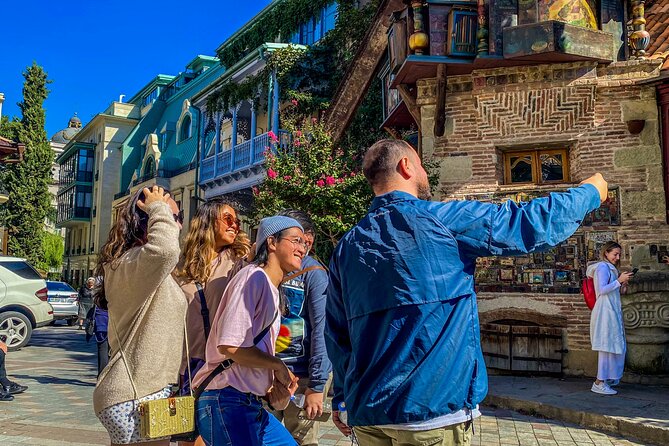
The experience starts with a simple setup: your guide meets you at the hotel reception for pickup and later drops you back at your hotel. That matters in Tbilisi because the city is hilly and the streets can feel like a maze on your first day. You also get a starting point that feels welcoming—there’s a meeting space where you can find music, board games, and even a glass of wine. Even if you’re picked up from your hotel, it sets the tone: this is meant to be a friendly introduction, not a rigid checklist.
Timing is also part of the value. The tour runs about 4 hours, which is long enough to connect dots between landmarks, but short enough to keep you fresh. You’re booked with an average lead time of about 20 days, which is a hint that good guides and convenient slots can go quickly when plans are flexible on your trip.
If you want the best experience, come with one goal: figure out how Tbilisi “works.” Where the viewpoints are, where the Old Town energy begins, and why people care about churches, baths, and toast culture. This tour is built for that.
More Old Tbilisi walking tours through the balconied backstreets


Metekhi Cathedral and Vakhtang: why the river keeps showing up
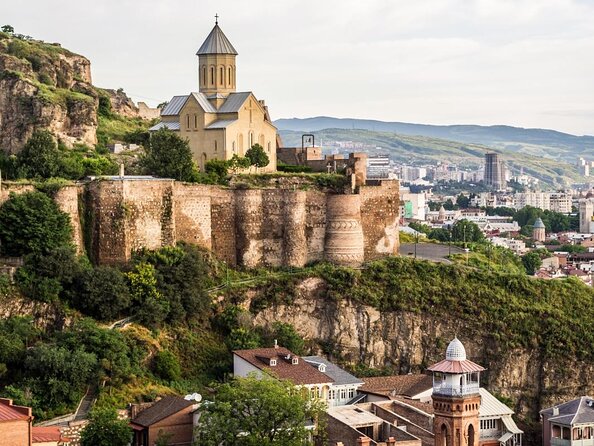
Early on, you’ll head to Metekhi Cathedral, perched on a cliff plateau above the Mtkvari River. The setting is dramatic, but the guide focus is the human story behind the place. You’ll hear how this location has long been tied to Georgian Orthodox tradition, including legends connected to Vakhtang Gorgasali and the movement of saints and relics.
Right after, the route gives you the Monument of King Vakhtang Gorgasali. It’s a quick stop by design, but it’s more than a photo moment. Vakhtang is linked with major turning points—conflict with the Sasanian power, church organization traditions, and even stories about the founding of Tbilisi. You’ll walk away understanding why certain names keep echoing through Georgian history.
Practical note: if you’re sensitive to stairs or uneven ground, take it slow. The best views in Tbilisi often come with steps.
Europe Square and Rike Park: where the city’s modern face starts talking
From there, you cross Europe Square, with time set aside for a quick explanation of Georgia’s relationship with the European Union. This stop is short, but it helps you decode the modern layers of the city without making the whole walk political.
Then you move into Rike Park, on the left bank of the river. This is where Tbilisi shows its playful side. Expect entertainment-style features like singing and dancing fountains, artificial climbing walls, children’s maze, and mega-chess boards. The park also acts like a gateway: it’s an easy find because the entrance sits by the pedestrian Bridge of Peace, and it’s where the cable car station starts for Narikala Fortress—which also connects you to today’s biggest viewpoint payoff.
If you’re traveling with kids or you simply like seeing what locals actually use for weekend time, Rike is a nice reset between the more serious church stops.
Cable car to Mother of Georgia: the view that makes the price make sense

The centerpiece transport is the Rike–Narikala Cable Car ride up to reach the area of the Mother of Georgia Statue. This is included, and it’s the kind of item that often costs extra on your own. Getting it here—at the right point in the walk—turns the route from “good history stroll” into “proper Tbilisi viewpoint session.”
Once you’re at Kartlis Deda, you’ll learn why the statue is more than a big figure on a hill. In the left hand, Kartlis Deda holds a bowl of wine to welcome friends. In the right hand, she has a sword for enemies. It’s a simple design, but it’s also a cultural message that you’ll see reflected in the city’s hospitality style—especially around traditional toasts.
If the weather is windy, watch the real-world note here: cable cars may not operate during windy weather. Since the tour runs in all weather conditions, your guide may adjust pacing rather than cancel the whole day.
Bridge of Peace and the LED trick: take five minutes seriously
Next comes the Bridge of Peace, a pedestrian glass-and-steel bow-shaped bridge over the Mtkvari River. It’s one of those places you can see from far away, but the details reward close viewing. You’ll learn it was opened in May 2010 and brought to Georgia in unassembled components from Italy.
The practical detail you should not skip: the bridge has more than 10,000 LED bulbs, and they switch on daily 90 minutes before sunset. If you time it right, you’ll catch the lighting effect even during the walk. If you don’t, you’ll still get the architectural glow once evening starts, since the bridge is designed to be visible at night.
This stop is also a nice “photo break” in a route that otherwise keeps you walking.
More private Tbilisi tours at your own pace




Patriarchate seminary and the Old Town stair-steps
A short pause at the Patriarchate of Georgia area (including the spiritual seminary) gives you a different kind of context—less tourist brochure, more place-based understanding of how religious life shapes the city. You’ll hear interesting facts about the setting and why it’s significant.
Then the walk climbs into the older neighborhood zone with Anchiskhati Basilica. Anchiskhati is tied to the 6th century, and you’ll hear the storyline behind the name and the tradition around moving a Christ icon. It also connects to church leadership families and calligraphy traditions. Even if you’re not a church architecture person, this stop helps you see why Georgian culture places value on faith, art, and lineage.
What I like about this portion is balance: it’s not just “this is old.” Your guide gives a reason why it stayed important.
Sioni Cathedral, Rezo Gabriadze’s clock tower, and Georgian theater magic

Two major church moments appear close together:
- Sioni Cathedral Church, another important landmark in one of Tbilisi’s oldest districts.
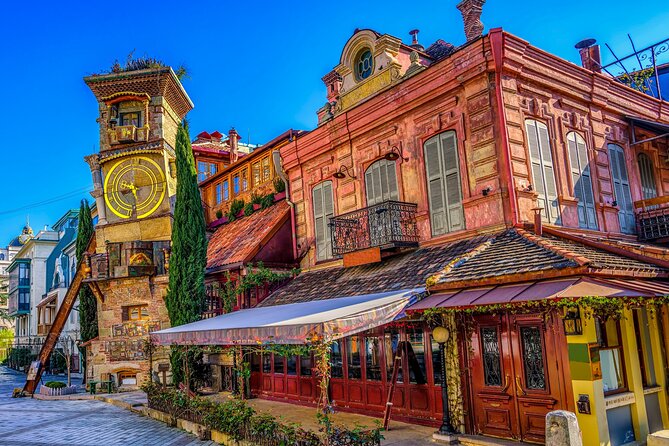
- Rezo Gabriadze Marionette Theater with its clock tower, where an angel comes out each hour to ring a bell.
The clock tower stop is charming, but also smart. It shows how Tbilisi blends whimsy with identity. The guide will point out that the tower is decorated with hundreds of tiles designed by Rezo himself, and it’s why locals and visitors remember it so easily.
The puppet show timing is also specific: you can catch a performance twice a day at 12:00 and 19:00, featuring The Circle of Life. So if your walk happens to line up with those times, you’ll get a bonus cultural stop without paying extra or doing separate planning.
This is also where the tour’s private format helps. You can pause longer outside if you’re watching the mechanism or move on faster if you want a quicker march.
Tamada statue and Shardeni Street: toast culture meets street life

Then you hit the Tamada (Toastmaster) Statue—a short stop built around the tradition of toastmastering in Georgia. It’s easy to treat toast culture like “just drinking,” but with a guide it becomes social structure: who speaks, how hospitality works, and why toasts are a serious part of bonding.
After that, you walk onto Jan Shardeni Street, one of the best-known pedestrian streets in Tbilisi Old Town. This is the part where you feel the city’s rhythm—shops, cafes, and people doing the normal human things tourists rarely time correctly. You’ll have enough time to look around and get your bearings for later independent wandering.
If you want an easy strategy: use this stop to decide where you’ll have your next coffee or dessert. The best walking tours help you “choose your next move,” not just show you the past.
Abanotubani sulfur baths and Leghvtakhevi waterfall for contrast
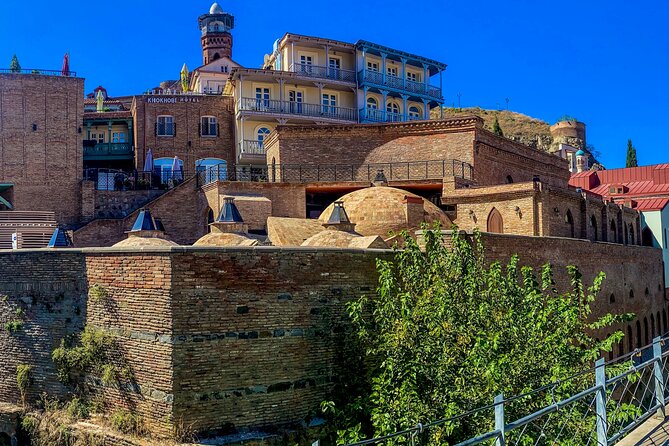
You’ll also reach Abanotubani, the sulfur bath district in Old Town. The key idea is simple: there’s a whole street of bathhouses using hot springs from the area. Even if you don’t plan to soak, the district is a must-see because it’s part of how locals understand comfort and tradition.
Right after, the tour shifts mood again to Leghvtakhevi Waterfall. This spot is known as a cooling place during hot weather, popular with Georgians and foreigners alike. It’s a good contrast with Abanotubani: instead of steam and stone, you get air movement and water sound.
This portion is a reminder of why Tbilisi is visually interesting. The city can move from religious monuments to everyday pleasure spots in a short distance.
Price and what you actually get for $45
At $45 per person for about 4 hours, this tour sits in the “solid value” category if your priority is a guided introduction that covers key Tbilisi identity points.
Here’s why the pricing can make sense:
- Private guide plus hotel pickup and drop-off reduces your stress on day one.
- Cable car ride is included, which is a real cost and also a real time-saver for viewpoints.
- You get a route that covers multiple districts, so you’re not stuck “in one neighborhood.”
A fair drawback shows up in the feedback: the route is focused, and some people may feel it’s not wide enough if they expected a larger-area tour by car. If your travel style is that you want maximum ground covered per minute, you might wish this were a longer outing or paired with additional transport stops.
Who this private walking tour fits best
This works best for you if:
- You want a confident first pass through Tbilisi’s major landmarks.
- You care about meaning—church legends, symbolic statues, and traditions like toastmastering.
- You prefer a guide who can tailor pacing and answer questions.
It may not fit as well if:
- You want a full-day whirlwind or a lot of driving between distant sights.
- You dislike walking on uneven streets or you’re traveling with mobility limits (the tour is walking-focused, even with pickup).
If you’re traveling solo, as a couple, or with a small group, private format is a win. Also, the tour is offered in English, so language support should be straightforward.
Should you book? My honest take
I’d book this if you’re planning your first day (or first two days) in Tbilisi and you want your bearings fast—with the cable car and the big viewpoint payoff already built in. The mix of church landmarks, modern icons like Bridge of Peace, and “lived-in” stops like Shardeni Street and Abanotubani makes the city feel connected instead of random.
Skip it only if you’re chasing maximum distance covered or you know you’ll be disappointed by a walk-based route. In that case, you might prefer a different format that leans harder on car transfers.
FAQ
How long is the private walking tour?
It runs for about 4 hours.
Is hotel pickup and drop-off included?
Yes. Your guide meets you at the hotel reception for pickup and returns you to the hotel for drop-off.
What does the tour include besides the walking?
It includes a cable car ride to reach the area of the Mother of Georgia Statue, plus online support.
Is the tour private, or will I be mixed with other people?
This is private. Only your group participates.
What language is the tour offered in?
The tour is offered in English.
What should I wear for churches?
Church entry rules apply: no shorts, and women need to cover their heads.
Will the cable car always run?
No. Cable cars won’t be operating during windy weather.
More Tbilisi Tours and Georgian Day Trips



More from Our Tbilisi Review Desk



More Old Tbilisi Walking Tours

Not quite your thing? More Tbilisi tours and day trips from our review desk









Old Tbilisi Walking Tours, compared.
 ★ 5.0Tbilisi Walking Tour Including Cable Car and Traditional BakeryFrom $191,310 reviews
 ★ 5.0Evening Walking & Talking Tour with Wine & Boat RideFrom $10572 reviews
 ★ 5.0Kakheti;City of Love Sighnaghi, Bodbe. KTW. Wine House Group tourFrom $16376 reviews
 ★ 5.0Old Tbilisi Highlights walking tour with wine & 10 tastingsFrom $15276 reviews
 ★ 5.0Old Tbilisi Tour: Private Walking Tour With Wine TastingFrom $39273 reviews
 ★ 5.0Private Tbilisi Food Tour: 9 Tastings Walk in Bohemian DistrictFrom $79227 reviews
 ★ 5.0Old and New City Guided Tour with 2 Cable Car RidesFrom $39176 reviews
 ★ 5.0Tbilisi Old Town Walking Tour with a Local GuideFrom $38168 reviews
Browse the lists this tour appears in