
Reviewed · OLD TBILISI WALKING TOURS
Private Walking Tbilisi City Tour (Day Trip)
Tbilisi reads like a living museum. I like that this day trip strings together Old Tbilisi legends and multi-faith landmarks in one guided loop, and I also like the practical touch of bottled water to keep you going. You’ll cover major viewpoints and big names without needing to plan every stop yourself.
The main thing to consider is that this is a long walking day (about 6 to 7 hours). You’ll be on uneven historic streets and up and down around hilltop and church areas, and the tour doesn’t include transportation, so you’ll want comfortable shoes and an easy way to reach the meeting spot.
In This Review
- Key things to know before your Tbilisi walk
- What this tour is really good at
- Price and value: $59 for a full guided day
- Starting with Narikala Fortress and the Old City hilltop
- Sulfur baths and the warm-water legend in Old Town
- Rustaveli Avenue: the straight-line contrast to old Tbilisi
- Abanotubani and the hot-springs story that shapes the city
- The Great Synagogue of Tbilisi: eclectic architecture with migration history
- Metekhi Cathedral and the power-and-residence angle
- Bridge of Peace: modern design, a useful walking landmark
- Rike Park, Kartlis Deda, and Tbilisoba
- Anchiskhati Basilica: the “oldest surviving” anchor point
- Sioni Cathedral: a main church with a complicated rebuild story
- Leselidze Street and Rezo Gabriadze Marionette Theater
- Dzveli Tbilisi Sulphur Waterfall: a 22-meter pause point
- The walking rhythm: what a 6–7 hour day feels like
- Who should book this tour
- Should you book this Tbilisi walking tour?
- FAQ
- How long is the Tbilisi city walking tour?
- Is transportation included?
- What’s included in the price?
- Is the tour offered in English?
- What if the weather is bad?
- Can I cancel for a full refund?
Key things to know before your Tbilisi walk
- A guide with you the whole way: you get context, not just photos
- Multi-faith stops on the same route: churches, a mosque area, and the Great Synagogue
- Most entries are free, with Narikala fortress including an admission ticket
- Built-in Old City legends: hot springs, warm water, and Vakhtang Gorgasali show up repeatedly
- A clear mix of old and newer Tbilisi: Rustaveli Avenue to the Bridge of Peace
- Small comforts matter: bottled water is included
What this tour is really good at
This is a guided walking day through Tbilisi’s most story-heavy zones: Old Town hillside areas, historic church clusters, and the city’s iconic modern landmarks—then it brings you back through more of the old city again. You’re not just ticking off sights; the guide’s job is to connect the dots so the capital starts making sense as a place where different faiths and eras overlap.
The price point is also hard to beat for a full day with a professional guide. At $59 per person for about 6–7 hours, you’re mostly paying for interpretation and route flow—especially helpful in a city where neighborhoods can look close together on a map but feel totally different once you’re walking them.
One extra practical note: the tour is shared (there’s a maximum of 100 travelers). That’s usually fine for a walking tour, but it does mean you’ll occasionally wait for the group at viewpoints and steps.
More Old Tbilisi walking tours through the balconied backstreets

Price and value: $59 for a full guided day
Let’s break down what you’re actually getting.
- You pay for a professional guide plus bottled water.
- You also get most stops without entrance fees (many are listed as free).
- Narikala fortress includes an admission ticket as part of the route.
Transportation is not included. That’s normal for a walking tour, but it can change the real cost depending on where your hotel is. If you’re staying central, it’s easy to make the tour cost feel like a bargain. If you’re farther out, factor in the time and money to get to the meeting point, since you’re ending back there.
In short: this is good value if you want a structured day where someone else handles the order of sights and the background behind them.
Starting with Narikala Fortress and the Old City hilltop
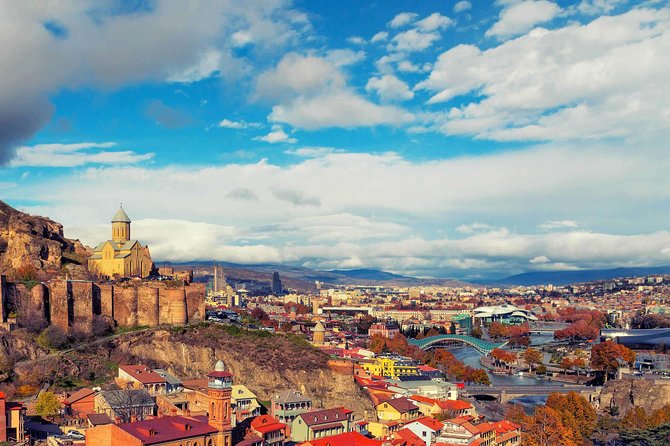
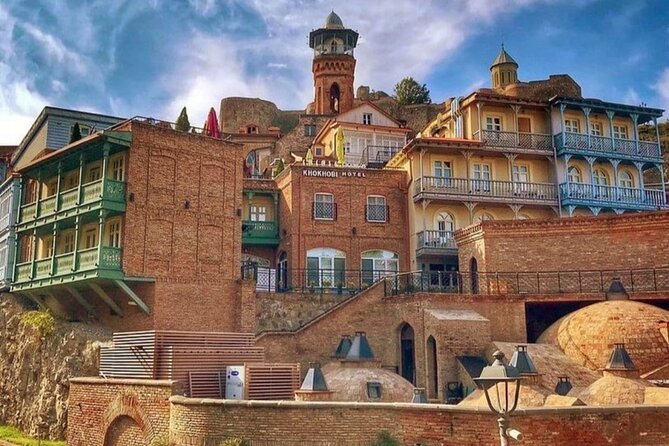
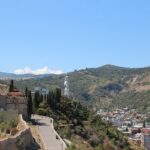
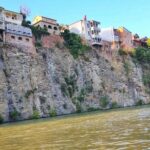
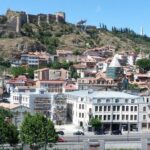
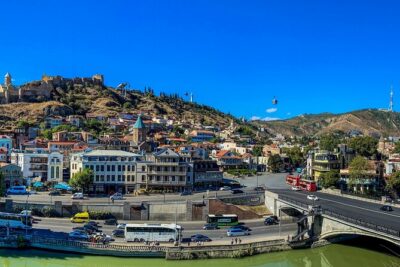
Your day begins around Narikala Fortress, the kind of place where Tbilisi instantly shows off its layered personality. This area is where you get the classic Old Town skyline—typical Tbilisi houses with balconies—and the fortress viewpoint that makes the city feel like it’s stacked in tiers.
What I like about this start is that it sets the “why” early. From this hill zone, the tour points out a cluster of major sites that represent different eras and traditions, including:
- Narikala Fortress itself (with an admission ticket included)
- Anchiskhati church (listed as 6th century) in the same broader area
- Holy Trinity Cathedral, plus Catholic and Gregorian churches
- A Muslim mosque presence in the mix (the highlights specifically mention Jumah Mosque)
- The synagogue, plus Ateshga, the temple of pagans
You should expect short stops and lots of context. It’s not a slow museum pace. The goal is to give you a mental map fast: which buildings belong to which period, and how Old Town developed upward from the city wall.
Drawback to keep in mind: hilltop areas mean stairs and uneven ground. If you’re traveling with mobility limits, the timing and walking nature might be something to think through.
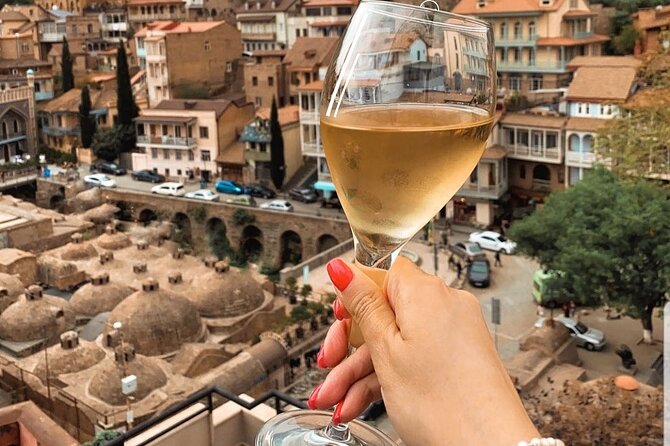
Sulfur baths and the warm-water legend in Old Town
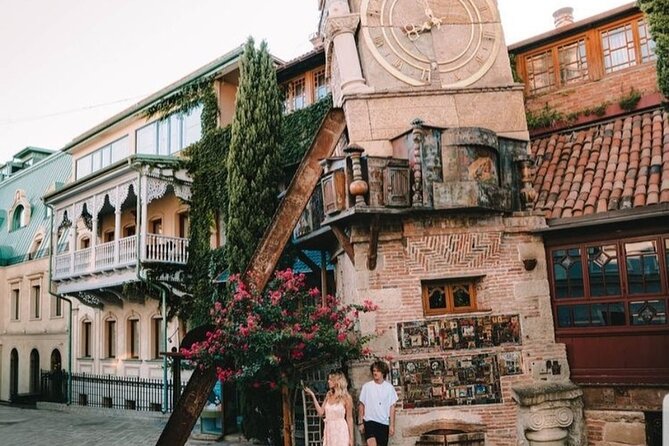
Next you shift to the sulfur-bath area tied to the city’s most famous idea: warm water. Tbilisi’s name is linked to Vakhtang Gorgasali and the legend that explains the word tbili as warm. The tour also points you toward the king’s sculpture viewpoint on the Metekhi plateau that looks out toward the baths.
You’ll stop at Sulfur Bath 5. The good part here is that even if you don’t go in for a soak, you’re learning why the baths matter historically and culturally. Tbilisi’s sulfur baths aren’t just a tourist thing; they’re one of the city’s identity anchors.
This segment is quick (about 30 minutes) and the admission is listed as free for this stop. That makes it a low-commitment way to connect legend, geography, and daily life in Old Town.
Rustaveli Avenue: the straight-line contrast to old Tbilisi
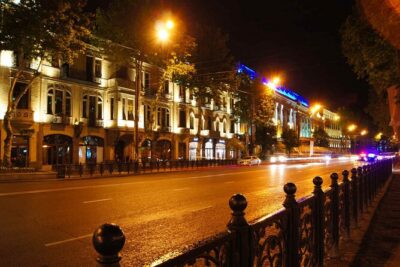
After the historic clusters, the tour moves to Rustaveli Avenue, a different tempo. This is where the new Tbilisi shows up—more formal streetscape, prominent theaters, and the kind of civic architecture that signals the 20th century onward.
What you’ll see includes famous cultural buildings such as:
- the Drama Theater named after Rustaveli
- the State Academic Theater of Opera and Ballet named after Zakaria Paliashvili
- nearby landmarks like a 1st gymnasium and art salons
Even if you don’t go inside, this stop helps you understand that Tbilisi isn’t only Old Town. It has a modern cultural spine too, and you notice that difference immediately when you walk from old stone and courtyards toward a main boulevard.
More private Tbilisi tours at your own pace




Abanotubani and the hot-springs story that shapes the city
Then you return to Old Tbilisi through Abanotubani, one of the most historic parts of town. This is where the famous hot springs legend comes in: Vakhtang Gorgasali’s falcon falls, hot springs are discovered, and the new capital is founded.
This is the kind of stop that works best when you let it play out in your imagination. The buildings and bathhouses make more sense when you know the story behind why the area formed where it did. You’ll spend about 15 minutes here, long enough to orient yourself and take photos without turning it into a slow sit-down.
The value of a stop like this is simple: it turns your city walk into a narrative.
The Great Synagogue of Tbilisi: eclectic architecture with migration history
Next is The Great Synagogue of Tbilisi, also called the Georgian Synagogue. This one is especially interesting because it’s tied to a specific migration story: it was built from 1895 to 1903 by Georgian Jews from Akhaltsikhe who moved to Tbilisi in the late 19th century.
The building is described as eclectic style, and even a brief exterior look gives you a sense of how faith communities expressed themselves through architecture as they settled into a changing capital.
The stop is short (about 15 minutes), and the admission is listed as free. If you’re someone who likes seeing how multiple communities lived side by side, this is an important moment in the day.
Metekhi Cathedral and the power-and-residence angle
At Metekhi Cathedral, you get a different kind of story than the baths. Here it’s about royal presence and defensive power, not just spirituality.
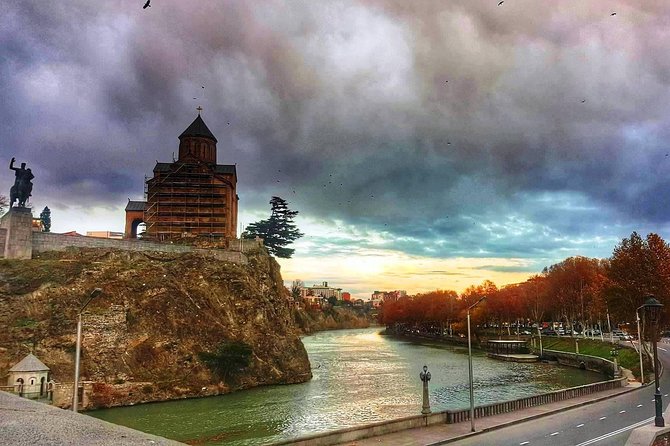
King Vakhtang I Gorgasali erected a church and a fort at this site, which also served as a king’s residence. The name Metekhi is described as dating back to the 12th century and meaning area around the palace.
You’ll also see how the tour keeps reconnecting ideas: earlier you were learning about warm water and the king’s legends; now you’re seeing the king’s physical footprint in stone and location. That kind of thematic repetition makes the day feel cohesive.
This is another quick stop (about 15 minutes) and listed as free.
Bridge of Peace: modern design, a useful walking landmark
The Bridge of Peace is a sharp visual shift. Built between 2009 and 2010, designed by Italian architect Michele De Luci, and with lighting systems attributed to French Philip Martino, it’s basically a modern line across the river that makes photos easy and navigation simpler.
The timing here is brief (about 15 minutes), and everything about the bridge works as a reset point: you’ve been in historic zones, then suddenly you’re in a modern civic viewpoint. It helps you keep track of where you are spatially, especially if you later explore on your own.
Rike Park, Kartlis Deda, and Tbilisoba
As you move through Rike Park, the tour points you to a place known for festivals like Tbilisoba. Even if you’re not there during a festival, it’s a useful stop because it’s where locals and visitors naturally drift.
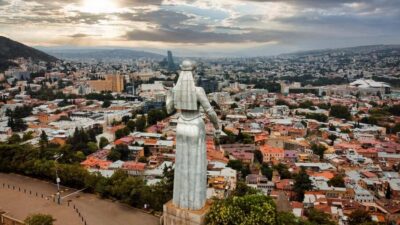
Then you reach Kartlis Deda, a major symbol of Georgia. The figure is described as meeting friends with wine and enemies with a sword. That’s more than just a catchy description—the statue gives you a quick, memorable symbol that ties the country’s identity to this city space.
Both stops are short (about 15 minutes each), but they’re important for two reasons:
1) they anchor the walk in famous Georgian iconography
2) they help you understand how public art and symbols shape a city’s feel
Anchiskhati Basilica: the “oldest surviving” anchor point
Next is Anchiskhati Basilica, listed as the oldest of survived churches in Georgia and associated with the 6th century. If you’re trying to understand why Tbilisi feels ancient even when it’s not all ancient-looking, this is a key stop.
The tour also adds a modern connection: the church is linked to the art studio of famous Georgian sculptor Elguja Amashukeli, who created the symbol of Georgia, Kartlis Deda. That’s a great example of how the tour ties together different time periods—ancient religious space connected to a much more recent national icon.
Expect about 15 minutes here, with the stop described as admission free.
Sioni Cathedral: a main church with a complicated rebuild story
Then you reach Sioni Cathedral Church, described as built in the 6th and 7th centuries. It has been destroyed and reconstructed multiple times by foreign invaders, and the current church is based on a 13th-century version with changes from the 17th to 19th centuries.
This stop is one of the best for grasping how history worked here: buildings don’t just stand. They get hit, rebuilt, reshaped, and sometimes repurposed into the identity of a later era.
The tour notes that Sioni served as the main Georgian Orthodox Cathedral and the seat of Catholicos-Patriarch until Holy Trinity Cathedral was consecrated. That detail matters because it tells you that the city’s religious center shifted in time, not just architecture.
Again, expect around 15 minutes and admission listed as free.
Leselidze Street and Rezo Gabriadze Marionette Theater
Two final stops in this cluster give you a good balance of street character and pop-culture legacy.
Leselidze is described as a street combining old and new parts of the city. This is the kind of stop that’s more about atmosphere than monuments. It helps you see how Tbilisi layered itself instead of wiping the slate clean.
Then there’s Rezo Gabriadze Marionette Theater, one of Tbilisi’s most recognizable sights. The tour describes daily show performances and that the show is widely popular because of its depth and soul. Even without going deep into the story, this theater stop signals something important: in Tbilisi, the arts aren’t tucked away. They’re part of the streetscape.
This segment is brief (about 10 minutes for the theater; about 15 for Leselidze).
Dzveli Tbilisi Sulphur Waterfall: a 22-meter pause point
Near the end, you hit Dzveli Tbilisi Sulphur Waterfall, located at Leghvtakhevi. It’s described as 22 meters tall, with the name coming from the Georgian word leghvi meaning fig, tied to fig trees that once surrounded the area.
This is one of those stops that changes your sense of what a sulfur-bath city can include. Instead of only baths in basements and courtyards, you see water doing something dramatic in the open. It’s also a natural pause in the walk—about 20 minutes—so you can regroup, take photos, and catch your breath.
The walking rhythm: what a 6–7 hour day feels like
The timing is designed to keep things moving: most stops are 10–20 minutes, with a longer chunk at Narikala (50 minutes) and the sulfur bath (30 minutes). That structure is useful if you don’t want to spend your whole day waiting inside.
But it also means you should treat each stop like a orientation visit. You’ll likely get a clear understanding of each place, yet you won’t have long unstructured time for lingering. If you love slow travel, plan a little extra solo time afterward in the neighborhoods that hook you most.
Also: because this tour ends back at the meeting spot, you’ll be able to head out quickly to dinner afterward. You’re not stuck figuring out a new drop-off location.
Who should book this tour
This tour is a strong fit if you:
- want a structured day in Old Tbilisi without building your own route
- like context as much as photos, especially around religion and history
- want to see both the old center and modern anchors like Rustaveli Avenue and the Bridge of Peace
- prefer guided pacing over self-guided wandering when time is tight
It may be less ideal if:
- you need minimal walking or flat ground
- you’re hoping for lots of entry time inside major buildings
- you’re far from the meeting point and don’t want to pay for transportation separately
Should you book this Tbilisi walking tour?
If you’re spending limited time in Tbilisi and you want the city to make sense quickly, I’d book it. The mix of major viewpoints, multi-faith landmarks, and iconic Georgian symbols gives you a day that feels both practical and meaningful. Plus, the fact that many stops are listed as free keeps the day from turning into constant ticket math.
Just be honest about comfort: expect a real walking day and bring shoes that handle cobblestones and slopes. If that part works for you, this is an efficient way to see a lot of Tbilisi in one go.
FAQ
How long is the Tbilisi city walking tour?
The tour runs about 6 to 7 hours.
Is transportation included?
No. Transportation is not included, and the experience ends back at the meeting point.
What’s included in the price?
The price includes a professional guide service and complimentary bottled water. Narikala fortress has an admission ticket included, while many other listed stops are free.
Is the tour offered in English?
Yes, it is offered in English.
What if the weather is bad?
The experience requires good weather. If it’s canceled due to poor weather, you’ll be offered a different date or a full refund.
Can I cancel for a full refund?
Yes. You can cancel up to 24 hours in advance for a full refund. If you cancel less than 24 hours before the start time, the amount paid won’t be refunded.
More Tbilisi Tours and Georgian Day Trips



More from Our Tbilisi Review Desk

More Old Tbilisi Walking Tours

Not quite your thing? More Tbilisi tours and day trips from our review desk






Old Tbilisi Walking Tours, compared.
 ★ 5.0Tbilisi Walking Tour Including Cable Car and Traditional BakeryFrom $191,310 reviews
 ★ 5.0Evening Walking & Talking Tour with Wine & Boat RideFrom $10572 reviews
 ★ 5.0Kakheti;City of Love Sighnaghi, Bodbe. KTW. Wine House Group tourFrom $16376 reviews
 ★ 5.0Old Tbilisi Highlights walking tour with wine & 10 tastingsFrom $15276 reviews
 ★ 5.0Old Tbilisi Tour: Private Walking Tour With Wine TastingFrom $39273 reviews
 ★ 5.0Private Tbilisi Food Tour: 9 Tastings Walk in Bohemian DistrictFrom $79227 reviews
 ★ 5.0Old and New City Guided Tour with 2 Cable Car RidesFrom $39176 reviews
 ★ 5.0Tbilisi Old Town Walking Tour with a Local GuideFrom $38168 reviews
Browse the lists this tour appears in