
Reviewed · OLD TBILISI WALKING TOURS
Explore Tbilisi Full Day Tour ( 3KM stroll rest by the car)
Tbilisi, packed into one manageable day. This full-day plan strings together Liberty Square, the medieval wall ruins, modern landmarks like the Bridge of Peace, and big photo moments down to Abanotubani’s sulfur-bath district, with about 3 km of strolling and plenty of car time. If you want history and views without spending your whole day hopping blocks on foot, this format works.
What I like most is the way the day is guided end-to-end by a certified guide, and the storytelling style that shows up in the feedback for guides like George Berulava and Giorgi. The other big win is how the itinerary mixes quick passes (for those must-see exteriors) with a few real stop-ins where you can actually look, take photos, and breathe. The one drawback to plan for: the day runs long, around 10 hours 50 minutes, and some key extras are not included, especially the Mtatsminda funicular ticket and meals.
In This Review
- Key highlights before you go
- How this 10-hour Tbilisi day stays easy on your feet
- Meeting at Freedom Square and getting oriented fast
- Liberty Square to Tbilisi wall ruins: boundaries you can still feel
- Clock Tower and Rezo Gabriadze: modern surprises on old streets
- Churches you pass by, and why a quick stop still matters
- The Bridge of Peace and the Rike to Europe Square viewpoint chain
- Metekhi Cathedral: one of the best view stops on the route
- Avlabari khinkali lunch break: good fuel, but your wallet decides
- Holy Trinity Cathedral and the Chronicles monument: short visits, big statements
- Mtatsminda by funicular: pay the ticket, enjoy the break
- Kartlis Deda and Abanotubani: Soviet monuments and sulfur baths
- The Antique Archaeological Museum and a donation-entry reminder
- Ending at Restaurant Alani: dinner is part of the rhythm
- Price and what it really buys you
- Who this tour suits best
- Quick planning tips you’ll be glad you followed
- Should you book Explore Tbilisi Full Day?
- FAQ
- How long is the Explore Tbilisi Full Day Tour?
- Where does the tour start and end?
- Is this tour private?
- What language is the tour offered in?
- Is lunch included?
- How much does the Mtatsminda funicular ticket cost?
- Are restrooms available during the tour?
- Does the tour run in bad weather?
Key highlights before you go
- 3 km stroll, car rest built in so you can keep moving without wearing down your legs.
- A guide-led route that connects landmarks into a single story instead of random sightseeing.
- Modern Tbilisi hits like the Bridge of Peace and Rike/Europe Square viewpoints, not just old churches.
- Christians and Soviet-era monuments in one sweep, from Metekhi Cathedral to Holy Trinity and Kartlis Deda.
- Mtatsminda fun with a funicular ride (ticket extra) and 60 minutes at the amusement park.
- Ending with dinner downtown at Restaurant Alani, after you’ve seen the sulfur baths and an old-city museum.
How this 10-hour Tbilisi day stays easy on your feet
This tour is long on time but short on walking. The tour title literally signals the strategy: you do a 3 km stroll and then lean on the car for the in-between stretches. That matters in Tbilisi, where you’ll often find steep bits, uneven sidewalks, and sudden changes in hill height. Here, you’re not stuck doing everything on foot to connect the city’s layers.
You start in the Freedom Square area and finish back at the same meeting point. The day is set for a 10:00 am start, and the total time runs about 10 hours 50 minutes, so you’re committing to a full schedule rather than a quick hit. Still, the rhythm is reasonable: the itinerary repeatedly alternates short walk segments with car rides, then builds in short photo stops where you can keep momentum.
Also, this is a private tour. That’s a big deal if you’re traveling with friends or family, or if you just prefer a guide who can adjust to your pace without a crowd. It’s offered in English, and you get a mobile ticket.
More Old Tbilisi walking tours through the balconied backstreets

Meeting at Freedom Square and getting oriented fast
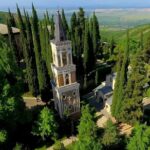
The first timing trick is getting your bearings early. You meet at the Freedom Square/Liberty Square area and the guide directs you to gather at the Liberty Square park at the only bus stop there. The day’s opening goal is practical: you get an explanation of Tbilisi’s central square and how it formed, plus context on the neighborhoods you’ll be moving through.
You’re then close to the first look-out and monuments, so you’re not spending the morning wandering while everything feels disconnected. In a city with multiple “layers” of history, this kind of early orientation helps. After that, you do a commemorative photo and transition onward.
One small logistics detail I’d plan around: there’s a WC onsite near Liberty Square for 1 GEL per person. It’s not a free, always-available situation everywhere, so I’d treat restroom stops as something to handle when you have them rather than waiting until you’re uncomfortable.
Liberty Square to Tbilisi wall ruins: boundaries you can still feel
From Liberty Square, you head to the Tbilisi Wall Ruins, the medieval city boundaries you can see because they were uncovered during a new bypass construction. This is one of those stops that feels like it gives you an instant “map in your head.” You start to understand how the city’s center was protected and what “old Tbilisi” likely guarded and expanded.
The walk between stops is short—about 250 meters—and the visit window is about 30 minutes including that movement. Then it’s photo and continue.
This is also a good spot to use your guide’s storytelling. If the person leading you is a good humor-and-context type (names like George Berulava and Giorgi come up in the feedback), you’ll get more than a quick glance at stones. You’ll get the reason these ruins sit where they do, and why it’s not just random old rock.
Restrooms here are also paid onsite (1 GEL per person). Again, don’t count on every stop having free facilities.
Clock Tower and Rezo Gabriadze: modern surprises on old streets

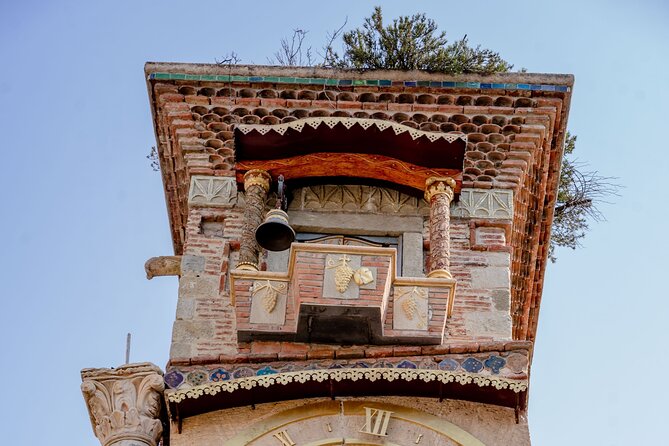
Next comes the Clock Tower area tied to Rezo Gabriadze. This is a chance to see Tbilisi’s “modern with character” side. The guide is set to highlight why the building is unusual and share interesting details—and you should expect a bit of surprise at this stop, even if it’s just the way the story unfolds around the landmark.
Time is again tight and efficient: about 30 minutes total, with walking of roughly 300 meters between locations. After that, you do a photo and keep rolling.
This stop is valuable because it breaks the rhythm. If your mental image of Tbilisi is all churches and courtyards, this is where you remind yourself the city is still producing distinctive architecture and public art. It also keeps the tour from feeling like “only” heritage sightseeing.
Churches you pass by, and why a quick stop still matters
Several stops are listed as pass-by photo moments rather than full visits, including the Anchiskhati Basilica (a church built in the 6th century A.D.) and the Patriarchate of Georgia.
At first, you might wonder if photo-only time is worth it. For this itinerary, yes—because the tour uses those quick windows to keep your schedule intact while still letting you see the exteriors you came for. If you’re the type who likes to build a mental visual map, these pass-by points help you connect where you are in the city.
You also get to mix this with deeper look time at other religious sites later, so the early passes don’t steal the day. If you’re planning your photos, keep your camera/phone handy right as you arrive, because these segments are short by design.
A few more Tbilisi tours and Georgian day trips worth a look


The Bridge of Peace and the Rike to Europe Square viewpoint chain
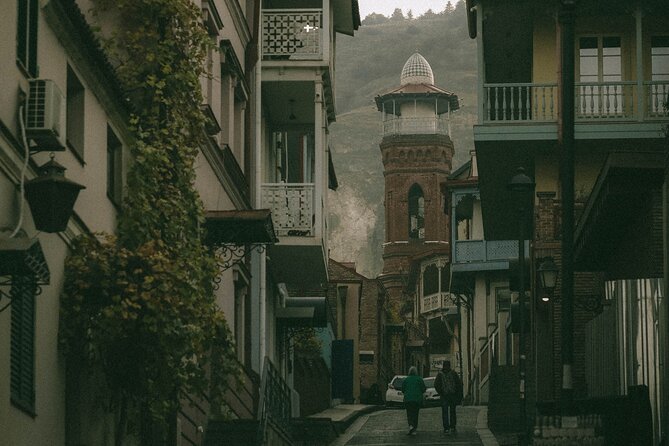
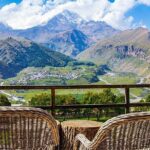
Then the tour flips toward wide-open views and riverside modernity. The Bridge of Peace is the key crossing here: it’s a modern 151 meters bridge over the Mtkvari (Kura) River, and the guide will walk you through it at street level.
This isn’t just “look at a bridge.” You get a guided path that sets up the rest of the skyline moments—Rike Park, then Europe Square, with another guided thread through Georgian history and a photo break.
These are the stops where I think you’ll feel the biggest payoff for the car-and-walk rhythm. From street level you can take in the river, the shapes of buildings around the boulevard, and the way this city layers old and new so close together.
Restroom note: near the Bridge of Peace and Europe Square, WCs are available onsite for 2 GEL and 1 GEL per person, respectively. Plan around that. Tbilisi isn’t always set up like a theme park where every corner is a sure restroom.
Metekhi Cathedral: one of the best view stops on the route
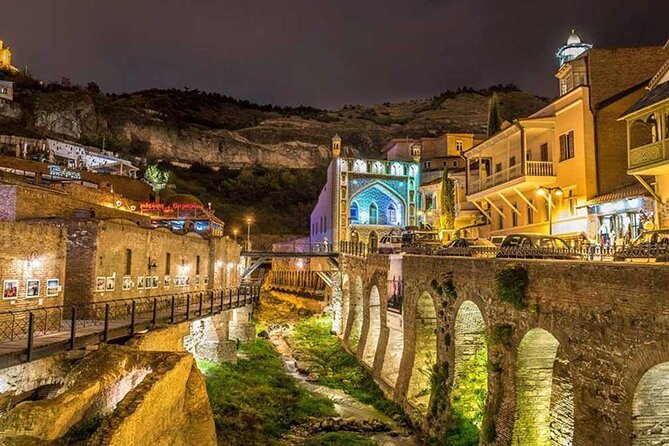
After Europe Square, you move to Metekhi Cathedral. This stop is timed to work: you get a guide-led walk to the cathedral area and—most importantly—fascinating views over Old Town.
The visit window is around 30 minutes, including about 200 meters of walking. The key detail here is that the value is partly visual. Even if you’re not the type who spends a long time inside churches, this is a viewpoint stop that justifies itself.
Also check restroom reality: WC not available on site for this stop. If you’re the kind of traveler who stays comfy by planning restroom breaks, you’ll want to use earlier WC opportunities.
Avlabari khinkali lunch break: good fuel, but your wallet decides
Then you get the midday reset at the Khinkali House in Avlabari (ხინკლის სახლი ავლაბარში). Here’s how the tour handles it: a team member with the car comes, and you’re dropped at the Georgian restaurant. You get about 1 hour 15 minutes for lunch, with WC available for free at the restaurant.
What isn’t included matters: the “Admission Ticket Not Included” label indicates you pay for what you eat. The meal itself is part of the experience, but it’s not part of the tour price.
My practical advice: if you’re budgeting, set aside a lunch amount before you go. If you’re hungry (and after that earlier walking chain you probably will be), you’ll want the freedom to order what looks good without doing math mid-meal.
Holy Trinity Cathedral and the Chronicles monument: short visits, big statements
In the afternoon, the tour brings you to two major landmark stops that feel very different from the older street scenes.
First is the Tbilisi Holy Trinity Cathedral of Georgia. You travel by car for up to 20 minutes, then get about 40 minutes to visit. You don’t do a long hike here: walking is about 200 meters or less, and there’s a WC onsite for free.
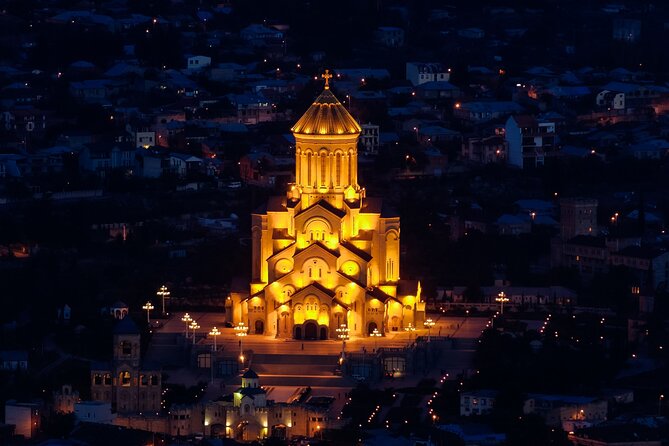
This cathedral is described as modern and tall, and the bigger point for you is what it’s set up to deliver: an important cultural visit with quick, high-impact time. You’re not trapped in a long schedule; you get a focused window to see the building and then move on.
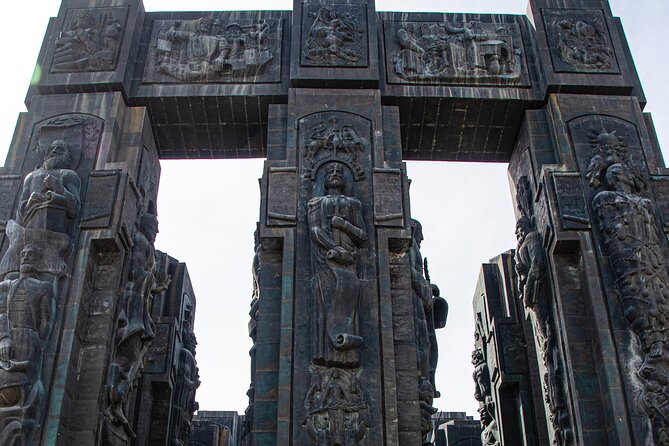
Next is the Chronicles of Georgia monument, created during the Soviet period by Zurab Tsereteli. You travel by car for up to 30 minutes, then get around 30 minutes to visit, with about 400 meters of walking. The main hook is the theme: the monument emphasizes around 2000 years of Christianity and 3000 years of the Georgian state—and there are stunning views over Tbilisi.
There’s also a paid restroom note: WC available for 2 GEL per person at this stop. Again, it’s not hard to plan around, but it’s the kind of detail that makes a day feel smoother.
Mtatsminda by funicular: pay the ticket, enjoy the break
After the monuments, the tour takes you to the funicular. This is one of the few parts where the tour explicitly asks you to add a paid activity.
You take the funicular to Mtatsminda Park. The lower station is where you’re provided with tickets. The ticket price is 10 GEL per person, and it’s not included. Walking inside the park area is up to about 400 meters.
Once you’re at the amusement park, you get 60 minutes of free time. The guide meets you at the exit when your time ends. You’re not being herded from attraction to attraction. You can snack, walk around, and enjoy the atmosphere at your own pace within that hour.
If you’re the sort of traveler who hates “open time” because it feels like wasted minutes, this is still worth it. Mtatsminda gives you one last change of pace before the day winds down, and the funicular itself is part of the fun.
WC here is listed as available for free.
Kartlis Deda and Abanotubani: Soviet monuments and sulfur baths
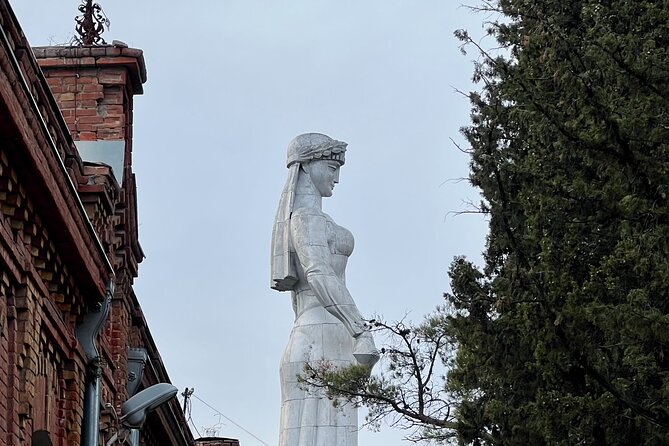
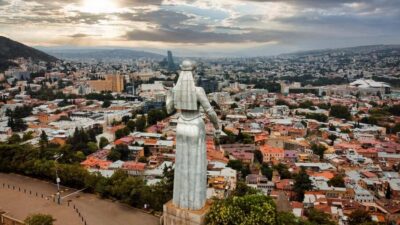
Then comes Kartlis Deda (Mother of Georgia). You travel by car for up to 15 minutes, then have about 15 minutes to visit. Walking is about 250 meters, and there’s a photo stop built in. WCs are available for 2 GEL per person on site.
This monument is tied to Georgia’s 1500th anniversary narrative of Tbilisi and the way Georgian women are symbolized. Even with limited time, it gives you another lens on the city’s identity—how it has used public art to express values and history.
After that, you head to Abanotubani, the famous sulfur-bath district described as the birthplace of sulfur waters and Tbilisi. You travel by car for up to 30 minutes, then have about 30 minutes to explore, with walking of around 150 meters. There’s an “old-town feel” to sulfur-bath neighborhoods, and this one is central to how visitors picture Tbilisi.
The catch: WC not available on site here. If you’ll be lingering for photos or the smell of old stone baths gets you curious, plan around restroom timing beforehand.
The Antique Archaeological Museum and a donation-entry reminder
Next up is the Tbilisi Antique Archaeological Museum. This part is close by, and you walk no more than 5 minutes from the drop-off. The visit time is about 15 minutes, and the museum entry is based on donation with set prices listed—so you’re not guessing endlessly, but you should expect to pay a contribution if you enter.
Walking is minimal—about 100 meters—and there’s a WC available for free onsite.
This stop is valuable because it grounds all the earlier “Tbilisi layers” talk in something physical. You get reminded that the city’s age isn’t just bragging; the place has deep material remains.
Ending at Restaurant Alani: dinner is part of the rhythm
The final stop is dinner at Restaurant Alani, described as the last destination of the tour. You walk no more than 50 meters to reach it and get about 60 minutes to visit the restaurant.
WC is available for free onsite. The dinner itself is not listed as included, so budget for what you order.
What makes this a smart ending is pacing. You’ve already toured the sulfur baths district and a small archaeology museum; dinner gives you a final place to sit, swap impressions, and decompress before the day ends back at the meeting point.
Price and what it really buys you
At $80.83 per person, you’re paying for a full-day, guide-led route with private transportation, an air-conditioned vehicle, all fees and taxes, and bottled water. For a day this long, the value depends on two things:
1) How much you appreciate guided connections.
You’re seeing scattered areas that would be harder to chain efficiently on your own. The guide helps you interpret what you’re looking at, and the feedback around guides like George Berulava and Giorgi is heavy on humor and story-driven explanations.
2) How much you budget for extras.
Lunch, dinner, and the funicular ticket are not included. The Mtatsminda funicular is 10 GEL per person and meals are ordered at the restaurant. If you’re the kind of traveler who plans meals as part of the experience and enjoys paying for them, that’s fine. If you’re trying to keep the day all-in at one fixed price, you’ll want to account for those additional costs before booking.
A practical way to think about it: you’re buying transportation, time management, and interpretation. You’re not buying the right to eat for free or skip ticketed attractions.
Who this tour suits best
This fits best if you want a structured day that covers a lot of iconic Tbilisi without turning your trip into a footrace. It’s especially good for:
- First-timers who want a clean route through old center, Soviet-era monuments, modern skyline stops, and the Mtatsminda viewpoint area
- Travelers who prefer short visits and photo moments rather than long museum marathons
- People who want a guide with personality, based on repeated praise for guides like George Berulava and Giorgi
If you hate long days or you strongly dislike paying extra for meals and the funicular ticket, you might feel squeezed by the schedule.
Quick planning tips you’ll be glad you followed
- Wear shoes you can walk in for 3 km total, but also tolerate short uneven bits.
- Keep some small cash ready for paid WCs where noted (often 1–2 GEL).
- Expect you’ll pay for lunch, dinner, and the Mtatsminda funicular ticket.
- Bring a light layer: the day is long, and weather swings can matter when you’re outdoors for photos.
- If your group includes people who need restroom timing, this tour includes some “WC not available” stops, so plan your buffer moments.
Should you book Explore Tbilisi Full Day?
Yes, if you want a guided, efficient day that shows Tbilisi’s main identities in one sweep: old stone, modern bridges, big viewpoints, and the sulfur-bath area. The biggest reason to book is the pacing: about 3 km of walking while the car handles the distance, plus a guide-led route that keeps the day from feeling like disconnected stops.
Skip it or think twice if your priority is “only included meals and fixed costs” or if you don’t like long schedules running close to 11 hours. This is built to maximize sights and transitions, not to linger for hours in one place.
FAQ
How long is the Explore Tbilisi Full Day Tour?
It lasts about 10 hours 50 minutes (approx.).
Where does the tour start and end?
It starts at Freedom Square, Tbilisi, Georgia, and ends back at the same meeting point.
Is this tour private?
Yes. It’s a private tour/activity, so only your group participates.
What language is the tour offered in?
The tour is offered in English.
Is lunch included?
Lunch is provided as a restaurant stop, but the tour data lists the lunch stop as admission not included, so you should plan to pay for what you order.
How much does the Mtatsminda funicular ticket cost?
The funicular ticket is 10 GEL per person, and it’s not included in the tour price.
Are restrooms available during the tour?
Some stops list onsite restrooms with a fee (often 1–2 GEL), some list restrooms as free, and at least a couple stops note no restroom on site, such as Metekhi Cathedral and Abanotubani.
Does the tour run in bad weather?
The tour requires good weather. If it’s canceled due to poor weather, you’ll be offered a different date or a full refund.
More Tbilisi Tours and Georgian Day Trips


More from Our Tbilisi Review Desk

More Old Tbilisi Walking Tours



Not quite your thing? More Tbilisi tours and day trips from our review desk





Old Tbilisi Walking Tours, compared.
 ★ 5.0Tbilisi Walking Tour Including Cable Car and Traditional BakeryFrom $191,310 reviews
 ★ 5.0Evening Walking & Talking Tour with Wine & Boat RideFrom $10572 reviews
 ★ 5.0Kakheti;City of Love Sighnaghi, Bodbe. KTW. Wine House Group tourFrom $16376 reviews
 ★ 5.0Old Tbilisi Highlights walking tour with wine & 10 tastingsFrom $15276 reviews
 ★ 5.0Old Tbilisi Tour: Private Walking Tour With Wine TastingFrom $39273 reviews
 ★ 5.0Private Tbilisi Food Tour: 9 Tastings Walk in Bohemian DistrictFrom $79227 reviews
 ★ 5.0Old and New City Guided Tour with 2 Cable Car RidesFrom $39176 reviews
 ★ 5.0Tbilisi Old Town Walking Tour with a Local GuideFrom $38168 reviews
Browse the lists this tour appears in