
Reviewed · OLD TBILISI WALKING TOURS
Discover Tbilisi: Hidden Gems and Iconic Sights Walking Tour
Tbilisi hits you fast on foot. This 2.5-to-3.5 hour walking tour gives you a local guide’s route through the city’s standout landmarks, from Freedom Square to Old Town viewpoints, with plenty of chances to pause for photos. I especially love the Old Town sightline moments that make Tbilisi feel cinematic.
My second favorite part is how smoothly the walk layers different eras and faiths, so you understand why Freedom Square, ancient churches, and places like the Jumah Mosque sit so close together. One thing to plan for: a dress code applies at places of worship and some museums, meaning knees and shoulders must be covered (no shorts or sleeveless tops).
In This Review
- Key highlights you’ll actually feel on the walk
- Freedom Square as your “start here” map
- The Old City’s “quiet ruins” and why they matter
- Anchiskhati Basilica: the 6th-century anchor
- Bridge of Peace and the photo-to-walk connection
- Shardeni Street and Old Town: where the city becomes walkable
- Rezo Gabriadze Marionette Theater: arts with a local pulse
- Monuments to Sergey Parajanov and Sayat-Nova
- Sioni Cathedral and Jumah Mosque: faith side-by-side
- Rike Park and the Bridge-and-River rhythm
- Great Synagogue and Tbilisi’s Jewish heritage
- The Toaster sculpture and other street-statue surprises
- Meidan Bazaar and the sulfur waterfall: city life, not museum life
- The Narikala view option: aerial tramway ticket not included
- Price and value: why $9 often feels like a steal
- Timing, walking pace, and what to bring
- Who should book this Tbilisi walk
- Should you book this tour or skip it?
- FAQ
- How long is the Discover Tbilisi walking tour?
- What does it cost?
- Is admission included for the sights?
- Is the cable car or tram included?
- Where does the tour start?
- What’s the dress code for this tour?
- How many people are in the group?
- What happens if weather is bad or the minimum number of travelers isn’t met?
Key highlights you’ll actually feel on the walk
- Small group pace: capped at about 12–15 people, so you can ask questions without getting lost in the crowd
- Big-photo stops in Old Town: viewpoints around Narikala area energy and classic streets for great phone pics
- Tbilisi history in real locations: from the 6th-century Anchiskhati Basilica to Soviet-era square names you’ll recognize on sight
- Peaceful city mixing: Georgian Orthodox, Armenian Apostolic sites, a mosque with shared Sunni and Shia worship, and a synagogue in the same broader area
- Bridge of Peace as a “where you are” landmark: opened in 2010 over the Mtkvari River, perfect for orientation and skyline photos
Freedom Square as your “start here” map
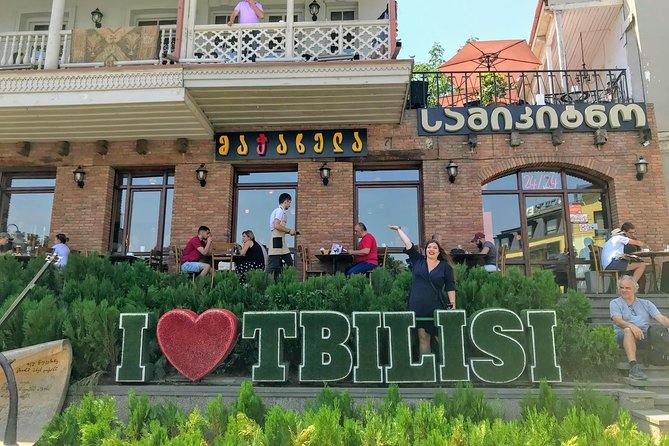
The walk begins at Freedom Square (Svobody Square) at the eastern end of Rustaveli Avenue, so you’re starting from a central point that’s easy to reference for the rest of your trip. The square’s name history alone is a quick education: it’s been called Erivansky or Paskevich-Erivansky Square under Imperial Russia, then Beria Square and Lenin Square during the Soviet era. That context makes the whole city feel less random.
You’ll also get your first dose of Tbilisi’s layout—broad avenues, then tighter old lanes branching off. It’s the right warm-up, because the tour quickly moves from open space into older streets where the stories feel more personal.
More Old Tbilisi walking tours through the balconied backstreets

The Old City’s “quiet ruins” and why they matter
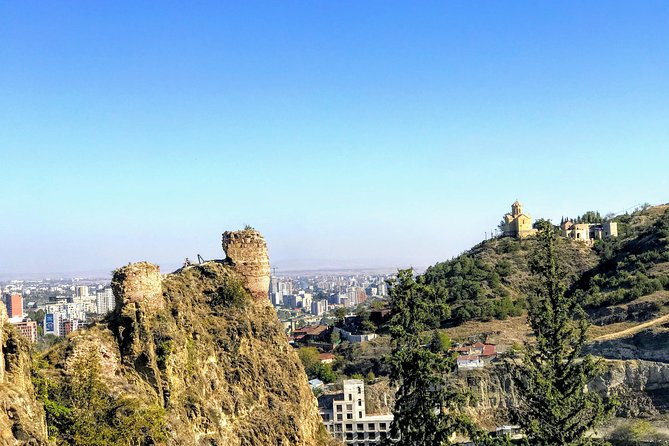
Right after Freedom Square, the tour heads toward the Tbilisi Wall Ruins, in the older part of the city. These are the kind of remnants you’d usually walk past without a second glance. But with a guide framing what you’re seeing, they become a clue: Tbilisi didn’t develop all at once. It grew, shifted, rebuilt, and left traces.
This is also a nice breather stop—short, low-cost, and good for resetting your eyes after the big square views. If you’re hoping to get your bearings fast, this early rhythm helps.
Anchiskhati Basilica: the 6th-century anchor
One of the strongest “wow, that’s old” moments is the Anchiskhati Basilica of St Mary, dating to the 6th century and described as the oldest surviving church in Tbilisi. Even if you don’t consider yourself a church-and-architecture person, this stop works because it gives you a time anchor. You can feel the shift from modern Tbilisi back into the long timeline of the city.
This is also where your planning matters. The tour uses dress-code rules at worship places, so bring a light layer if your outfit is too bare for indoor or sacred spaces. It’s not the time to improvise.
Bridge of Peace and the photo-to-walk connection
Next comes one of the tour’s easiest favorites for photos: the Bridge of Peace, opened in 2010 over the Mtkvari River (also called the Kura). This stop isn’t only about the structure. It helps you understand where the river shapes the city—Old Town sits against it, while newer park spaces and overlooks feel like they grew out of the river’s edge.
If you like taking skyline shots, this is your moment to slow down and frame the city with the bridge as a clear reference point. It’s also an easy landmark to remember later when you’re exploring on your own.
Shardeni Street and Old Town: where the city becomes walkable
Then you get to Jan Shardeni Street, one of Tbilisi’s best-known pedestrian streets. It’s popular for a reason: it’s easy to wander, and it’s full of the texture that makes Old Town feel like Old Town—tight lanes, small surprises, and plenty of places to stop for a drink or snack.
After that, you’ll spend time in Old Town Tbilisi itself, with time for a slower drift through restaurant areas and older buildings, plus theater and street-life energy. This part is valuable because you’re not just ticking off sights. You’re experiencing the parts of Tbilisi you’ll want to revisit later for dinner, coffee, or an evening stroll.




Rezo Gabriadze Marionette Theater: arts with a local pulse
One more short stop that adds character is the Rezo Gabriadze Marionette Theater, opened in 1981. Puppet theater doesn’t sound like a headline attraction, but in Tbilisi it’s a cultural touchstone. A guide helps you connect the arts to the city’s identity, so it doesn’t feel like a random detour.
If you’re the kind of traveler who likes seeing how a place spends its free time, this stop delivers.
Monuments to Sergey Parajanov and Sayat-Nova
Two monuments help you understand Tbilisi as a crossroads of cultures. The tour includes a Sergey Parajanov Monument, honoring the filmmaker behind works such as Shadows of Forgotten Ancestors, The Colour of Pomegranates, Sayat-Nova, and The Legend of Suram Fortress, plus Ashik-Kerib. The point here isn’t just celebrity. It’s that Parajanov’s artistic impact connects Georgia to a broader regional imagination.
You’ll also see the Monument of Sayat-Nova, dedicated to the Armenian poet and musician Sayat-Nova (Harutyun Sayadian). It’s located near the northern wall of St Kevork Armenian church, and the tour frames the connection between his story and the church’s place in local history. If you’re interested in how Georgian and Armenian histories overlap in real neighborhoods, this is one of the better stops.
Sioni Cathedral and Jumah Mosque: faith side-by-side
The walk continues with Sioni Cathedral of the Dormition, a Georgian Orthodox cathedral named after Mount Zion (in Jerusalem). You’ll often recognize the general look of Orthodox churches, but the value here is learning what makes this one part of the tradition of naming churches after Holy Land locations.
Then comes Jumah Mosque, in the heart of the Old Town. What makes it stand out is that worship is shared: it’s described as a mosque where Shias and Sunnis pray together. The tour also notes that the architecture is unique enough that you might not identify it as a mosque at first glance, which is exactly why a guided walk helps. It trains your eye to spot meaning, not just shapes.
Again, keep dress code in mind. A quick scarf or layer can save your day.
Rike Park and the Bridge-and-River rhythm
After the religious and monument stops, the tour shifts to Rike Park, a public recreation area popular with families and tourists for strolling. Paired with the earlier river/bridge stops, it gives you a full picture of the river zone: historic Old Town on one side, and modern public space on the other.
If you’re feeling the “walk fatigue” at this point, Rike Park is a good place to reset your energy because it’s less about standing and more about breathing. It also helps you transition from monuments back into streets and small-town details.
Great Synagogue and Tbilisi’s Jewish heritage
Next is the Great Synagogue of Tbilisi, built from 1895 to 1903 in an eclectic style. The tour frames it as built by Georgian Jews from Akhaltsikhe who migrated to Tbilisi in the late 19th century, so the building connects architecture to a specific community story.
This stop is useful for two reasons. First, it expands your understanding of who shaped the city’s neighborhood life. Second, it adds another “how to read Tbilisi” layer, especially if you’re only expecting churches and Soviet-era architecture.
The Toaster sculpture and other street-statue surprises
Tbilisi loves playful public art, and the walk uses that to keep the experience from turning into pure sightseeing. You’ll see Sculpture the Toaster, modeled on an ancient Colchian statuette and affectionately known as tamada. The humor matters because it lowers the seriousness and makes the city feel human.
You’ll also pass the Monument to Sofiko Chiaureli, a Soviet Georgian actress. With these shorter statue stops, the guide’s role becomes clear: they help you interpret why the city preserves these people and symbols in public space.
Meidan Bazaar and the sulfur waterfall: city life, not museum life
Time for the kind of stop you remember after the trip ends: Meidan Bazaar, where you can browse if you’re looking for souvenirs or just want to watch everyday Tbilisi commerce in action.
Then you’ll hit Dzveli Tbilisi Sulphur Waterfall, described as a real waterfall right in the city center. This is the sort of detail that makes Tbilisi feel full of surprises. It’s also a strong “last-quarter payoff” stop because it’s visually different from everything else on the route.
If you plan your schedule tightly, this is where I’d prioritize time to look slowly and take photos.
The Narikala view option: aerial tramway ticket not included
One practical note: there’s an option around Narikala via the aerial tramway, described as connecting Rike Park with Narikala (fortress overlooking the city). The tour data says the tramway ticket is not included, so you’ll need to pay separately if you want it.
This is worth it if you want that high perspective—especially if it’s your first day and you’re trying to understand where the fortress sits relative to Old Town.
Price and value: why $9 often feels like a steal
At $9 per person, this tour is priced more like a public walking introduction than a heavy-ticket attraction. What you’re really buying isn’t just access—it’s time, route logic, and storytelling that turns a bunch of separate sights into a connected understanding of Tbilisi.
Because most listed stops have free admission, your money goes primarily toward a guide and the “how to see it” part. That’s why small-group size matters here: with fewer people, you get better interaction and can keep your questions going without the guide rushing you out the door.
Timing, walking pace, and what to bring
Expect about 2 hours 30 minutes to 3 hours 30 minutes, and plan for a moderate walking day in older streets. The tour sets expectations for moderate physical fitness, which is code for: you’ll be on your feet, and you may encounter uneven pavement.
What to bring is simple:
- Comfortable shoes for Old Town streets
- A light layer or scarf for worship-site dress requirements
- A charged phone for photo stops around bridges and old lanes
If you’re worried about heat or stamina, pick a morning slot if possible. The guide energy can make a big difference, and several guides in the experience history are praised for keeping the walk lively even on hot days.
Who should book this Tbilisi walk
This tour is a great fit if you’re:
- Visiting Tbilisi for the first time and want a fast orientation
- Interested in how Georgia connects with Armenian and Jewish histories in the same city space
- The type who likes asking questions and getting local pointers for food and street-level plans
It also works well for solo travelers because group size stays small, and guides are described as patient and attentive. If you’re traveling with kids, one guide example includes being mindful and checking that children were comfortable, which is reassuring if your group needs a gentle pace.
Should you book this tour or skip it?
Book it if you want a low-cost way to understand Tbilisi beyond the obvious highlights. For $9, you get a guided path through iconic places like Freedom Square and Bridge of Peace, plus a run of important religious and cultural sites, plus real-feeling Old Town streets like Shardeni Street and Meidan Bazaar.
Consider skipping—or at least be prepared—if you know you struggle with dress-code rules for churches and mosques. With a bit of planning (cover knees and shoulders), that drawback disappears fast.
If you want the clearest first-day return on time, this is one of the best ways to start.
FAQ
How long is the Discover Tbilisi walking tour?
The tour runs about 2 hours 30 minutes to 3 hours 30 minutes.
What does it cost?
It’s priced at $9.00 per person.
Is admission included for the sights?
The listed stops show free admission for most places. The aerial tramway option is specifically noted as not included.
Is the cable car or tram included?
No. Hotel pick-up is not included, and the cable car/tram component is not included in the base price. The aerial tramway ticket is not included.
Where does the tour start?
The tour meets at BurberryFreedom Square, შალვა დადიანის ქუჩა, Mtawminda 0105, Georgia.
What’s the dress code for this tour?
A dress code is required for places of worship and selected museums: no shorts or sleeveless tops. Knees and shoulders must be covered for both men and women.
How many people are in the group?
The tour is capped at a maximum of 15 travelers (the highlights also mention a small group of up to 12).
What happens if weather is bad or the minimum number of travelers isn’t met?
The experience requires good weather. If it’s canceled due to poor weather, you’ll be offered a different date or a full refund. If the minimum number of travelers isn’t met, you’ll be offered a different date/experience or a full refund.
More Tbilisi Tours and Georgian Day Trips


More from Our Tbilisi Review Desk
More Old Tbilisi Walking Tours



Not quite your thing? More Tbilisi tours and day trips from our review desk








Old Tbilisi Walking Tours, compared.
 ★ 5.0Tbilisi Walking Tour Including Cable Car and Traditional BakeryFrom $191,310 reviews
 ★ 5.0Evening Walking & Talking Tour with Wine & Boat RideFrom $10572 reviews
 ★ 5.0Kakheti;City of Love Sighnaghi, Bodbe. KTW. Wine House Group tourFrom $16376 reviews
 ★ 5.0Old Tbilisi Highlights walking tour with wine & 10 tastingsFrom $15276 reviews
 ★ 5.0Old Tbilisi Tour: Private Walking Tour With Wine TastingFrom $39273 reviews
 ★ 5.0Private Tbilisi Food Tour: 9 Tastings Walk in Bohemian DistrictFrom $79227 reviews
 ★ 5.0Old and New City Guided Tour with 2 Cable Car RidesFrom $39176 reviews
 ★ 5.0Tbilisi Old Town Walking Tour with a Local GuideFrom $38168 reviews
Browse the lists this tour appears in