
Reviewed · 4-DAY EXPERIENCES
Discover Georgia: A 4-Day Private tour from Tbilisi
Four days, zero guesswork, lots of Georgia. This private route strings together Tbilisi icons, UNESCO Mtskheta, and the mountain church of Gergeti with a driver and an English-speaking guide. It’s a smart way to see western Georgia without bouncing between agencies or trying to time everything yourself.
I love that the logistics are handled for you: hotel pickup, private transportation, and entrance fees are covered for most stops. I also like the mix of sightseeing styles, from a Kura River boat ride and Tbilisi bath district atmosphere to wine tasting in Kakheti.
One consideration: tickets for Uplistsikhe Cave Town and the Stalin Museum are listed as not included, so you’ll want to budget for those two add-ons. Also, expect real travel time between regions, not just quick hops.
In This Review
- Key things to love about this 4-day private Georgia route
- Why this 4 days works so well when you base in Tbilisi
- Day 1 in Tbilisi: churches, bath history, a river boat, then Narikala at night
- Kakheti Day: wine tastings, Badiauri bread, Bodbe monastery, and Sighnaghi’s big views
- Day 3: cave town curiosity, Gori lunch, then Mtskheta’s UNESCO hits
- Day 4: Georgian Military Highway highlights, Zhinvali and Ananuri, then Kazbegi’s Gergeti Church
- Price and logistics: what $369 per person buys (and where you might pay extra)
- Guide quality is the difference-maker, and names you’ll recognize
- Practical tips so you don’t waste time or get cranky
- Should you book this private 4-day Georgia tour from Tbilisi?
- FAQ
- How long is the Discover Georgia private tour from Tbilisi?
- Is this tour private, and is it offered in English?
- What is included in the price?
- Are airport transfers and hotel pickup included?
- Are meals included?
- Are all attraction tickets included?
- Can I get a full refund if I cancel?
Key things to love about this 4-day private Georgia route
- A true private setup with only your group participating.
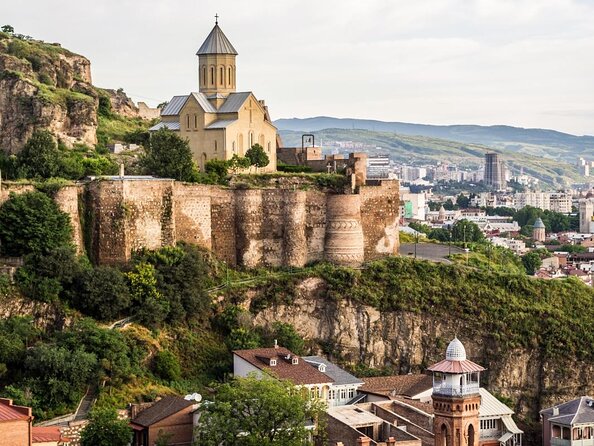
- Tbilisi by water and hilltop views, including a Kura River boat ride and Narikala Fortress.
- Kakheti with food and wine, plus a traditional bakery stop in Badiauri.
- UNESCO sites at Mtskheta’s viewpoint: Jvari and Svetitskhoveli Cathedral.
- The Georgian Military Highway focus with Zhinvali, Ananuri, and the Gergeti panorama.
- Guide names that keep popping up in feedback, including Nugo (plus Anna and Sora).
Why this 4 days works so well when you base in Tbilisi
If you’re staying in Tbilisi and want to see more than just the city, this style of tour is practical. You get one home base, then a private team takes you outward in four themed days, with your schedule set for you.
The itinerary also has a good rhythm: old streets first, then vineyards and monasteries, then UNESCO at Mtskheta, and finally big mountain scenery on the Georgian Military Highway. That matters because Georgia’s “best of” spread out—trying to DIY all that without a plan can turn into a lot of wasted time.
And because it’s private, you can move at your pace. Your guide can keep things efficient when you’re eager, or slow down when you’re the type who wants to stand and stare at a view for a few extra minutes.
More private Tbilisi tours at your own pace



Day 1 in Tbilisi: churches, bath history, a river boat, then Narikala at night
You start the day with hotel pickup in Tbilisi, then your guide maps the city’s story through a string of distinct neighborhoods and landmarks. It’s not just “look at this, next.” It’s more like a guided walk through why Tbilisi looks the way it does—religion, trade routes, and the city’s famous hot springs all in one day.
Sameba (Holy Trinity) Cathedral is a strong opener. Construction began in 1995 and finished in 2004, and the cathedral is described as one of the biggest Orthodox cathedrals in the world. If you want a quick sense of modern Georgia’s faith and identity, this gives it to you fast.
Then you shift from official grandeur to one of Tbilisi’s more unusual public artworks: Chronicle of Georgia by Zurab Tsereteli. The story behind the sculpture—especially how the West got familiar with his work through the Tear of Grief—adds a geopolitical layer that many casual city walks skip.
From there, you head into Abanotubani, the bath district. The hot mineral waters here are described as ancient, and the whole area is built around that idea. It’s a great place to learn that Tbilisi isn’t only a “pretty city”—it’s also a city built on practical traditions.
Next comes one of the most fun logistics decisions of the day: a Kura River boat trip. The boat ride is timed so you get views of old town surroundings along the Mtkvari (Kura), the Metekhi cathedral area, the sulfur bath district, Rike Park, and the Peace Bridge. Even if you’re not usually a boat person, this is efficient because it gives you multiple sights from one position.
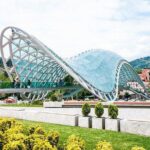
The Bridge of Peace is part of that river storyline. You’ll see it as a symbol of “renewed Tbilisi,” officially opened in 2010. The architect (Michele de Luca) and lighting designer (Philippe Martino) are part of the context too, which makes the bridge feel less random and more designed.
After the river, you go back to a classic religious landmark: Metekhi Cathedral. The main sanctuary includes the tomb of St. Shushanik, and the guide explains how the remains were transferred to this temple after an ecclesiastical split. You’ll also hear the detail about Queen Tamar honoring Shushanik, which is exactly the kind of human detail that makes old churches feel alive.
To break up the cathedral focus, you then visit Leghvtakhevi waterfall in a gorge tied to the old city. The height (22 meters) gives you a real sense of scale, and the name links back to figs—meaning you’re not just looking at stone and water, you’re learning local naming logic.
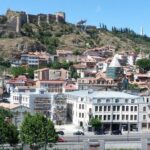
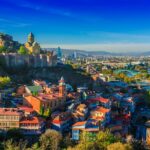
Finally, you end with the kind of stop that makes Tbilisi hard to forget: Narikala Fortress. The views are described as dramatic from almost everywhere in the city, and the fortress is noted as especially stunning at night. You’ll also pass the layout logic—between the sulfur baths and the Tbilisi Botanical Garden—which helps you understand the hill’s geography.
The rest of the day rounds out with major city streets: Rustaveli Avenue, Freedom Square, and then Shardeni Street, known for art galleries, handmade crafts, and bars and restaurants. Even if you don’t spend much time lingering, Shardeni gives you that “this is where people actually hang out” feeling.
Kakheti Day: wine tastings, Badiauri bread, Bodbe monastery, and Sighnaghi’s big views
Day 2 is the region day, aimed at Georgia’s famous grape culture and monastery calm. The driving time is part of the experience here. It’s not only about stopping—it’s about changing setting from Tbilisi’s city energy into vineyards and hilltop towns.
You start in the Kakheti area at a traditional winemaking operation. The description notes it was established in 2001 and uses traditional Georgian winemaking techniques alongside modern technology. For you, that means the tasting isn’t only about flavor—it’s also about how Georgia keeps old methods while using today’s tools.
Then there’s a genuinely Georgia stop that feels small but matters: Badiauri for Georgian bread and cheese. The tour notes Toni’s puri, Georgian bread cooked in a Tone. That’s a practical, memorable break, because you’re not waiting for a formal meal to eat something great—you’re sampling something local and immediate.
Next: Bodbe Monastery of St. Nino. It’s described as a place with historical and spiritual significance, with architecture, frescoes, and gardens. It’s also a good change of pace—more quiet, more walking, less “drive-by.”
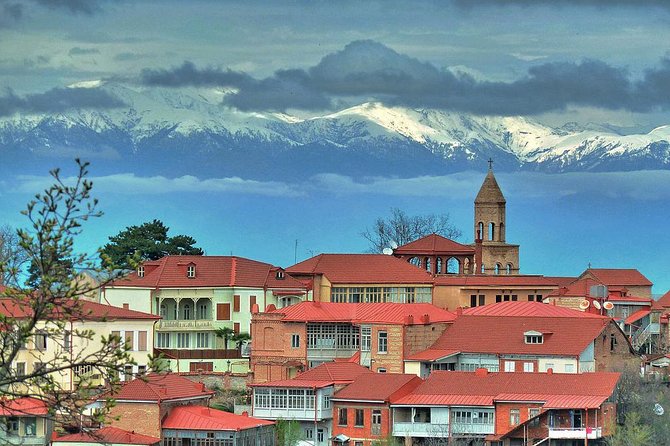
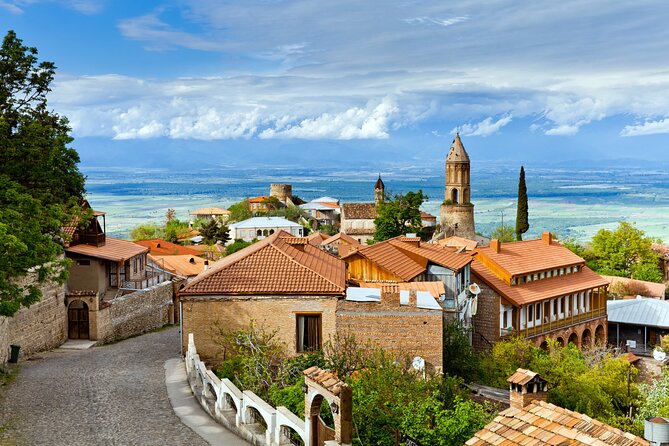
Then you head to Sighnaghi, often called the City of Love, set on a hill. You’ll get views over the Alazani Valley and a leisurely walk through narrow streets lined with colorful buildings. What I like about this kind of timing is that your eyes get a reward after a few hours on the road.
Wine culture shows up again in the Sighnaghi portion, with grape varieties listed like Khikhvi, Rkatsiteli, and Grdzelmtevana. Even if you don’t memorize the names, you’ll likely come away with a clearer sense of why “Georgian wine” is not one thing.
Lunch is built in as time with a view. Meals aren’t listed as included, so you’ll pay for what you order, but the tour does give you the window to eat well without scrambling for a place yourself.
Day 3: cave town curiosity, Gori lunch, then Mtskheta’s UNESCO hits
Day 3 is for people who like a mix: ancient sites, a Soviet-era detour, and then two UNESCO giants that feel like they belong together.
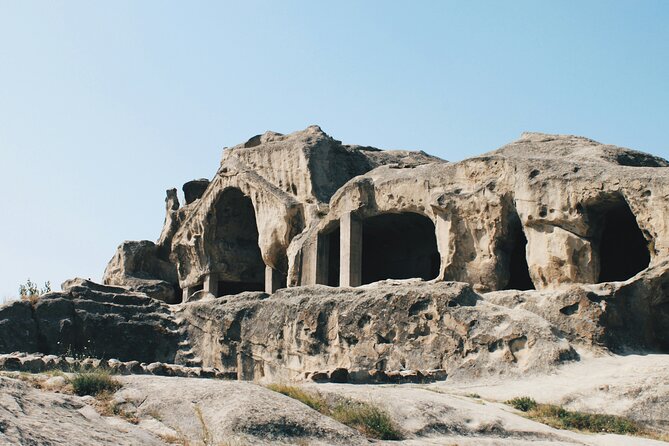
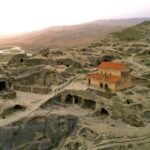
You begin with Uplistsikhe Cave Town, an antique rock-hewn settlement with structures spanning early Iron Age to late Middle Ages. The description emphasizes the mix of rock-cut cultures influenced by Anatolia and Iran, plus pagan and Christian architectural layers. That combination is why cave cities can be so fascinating: you’re looking at a place that kept changing its meaning.
One note for your budget: Uplistsikhe’s admission is listed as not included, so you should plan for a ticket cost on the day. It’s also the kind of stop where comfortable shoes help, because rock-cut sites can mean uneven ground.
Then you move to Gori for lunch at a local restaurant. The time block is focused, giving you a chance to eat Georgian food without spending the day hunting down places. This is also a nice way to break up long travel with something normal—plates, cutlery, and a real chance to sit.
After lunch, there’s a stop that turns many people’s eyebrows up: Stalin Museum. The museum is dedicated to Joseph Stalin and includes a Soviet-era feel, plus Stalin’s original house and a railway carriage. The ticket is listed as not included, so again, you’ll want to budget.
If you’d rather spend your time on pure Georgian culture, this is still worth knowing about. It explains part of Georgia’s 20th-century reality, and it changes the emotional tone of the day right before you return to older sacred monuments.
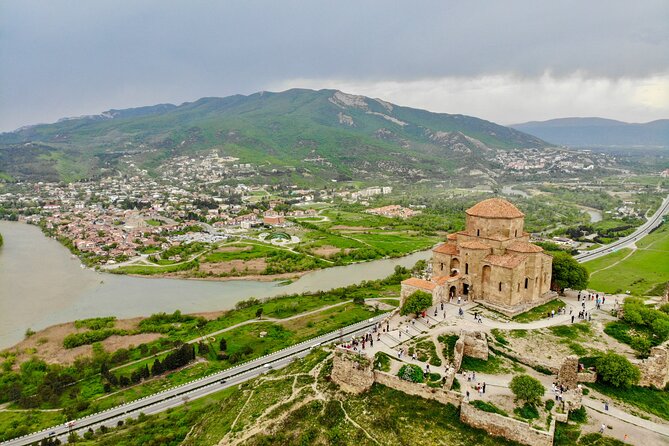
Then you go to Jvari Church. This is the Monastery of the Cross viewpoint near Mtskheta, described as a 6th-century Georgian Orthodox site. The tour notes it’s listed as UNESCO World Heritage along with other Mtskheta structures, and it sits at a confluence of rivers with wide views over the area.
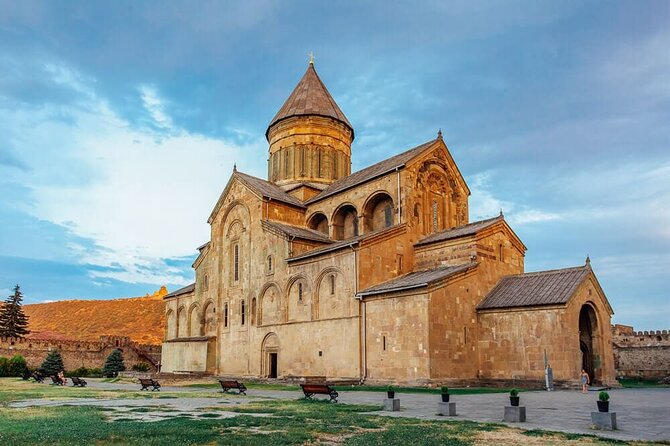
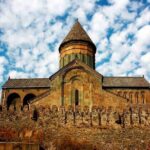
From the viewpoint energy, you step into Svetitskhoveli Cathedral. It’s described as the second-largest church in Georgia after Holy Trinity Cathedral, and it’s venerated as the burial site of Christ’s robe. That’s a dramatic claim in the spiritual sense, and it comes through in how central and respected this site is in the region.
Timing-wise, Svetitskhoveli gets more time than Jvari, so you have space to see details rather than only take a photo and rush away. If you like to read plaques and look up at stonework, this is your stop.
Day 4: Georgian Military Highway highlights, Zhinvali and Ananuri, then Kazbegi’s Gergeti Church
Day 4 is your “mountains day,” and it’s built around a classic route: Zhinvali, Ananuri, a friendship monument viewpoint, then up to Gergeti Trinity Church near Kazbegi.
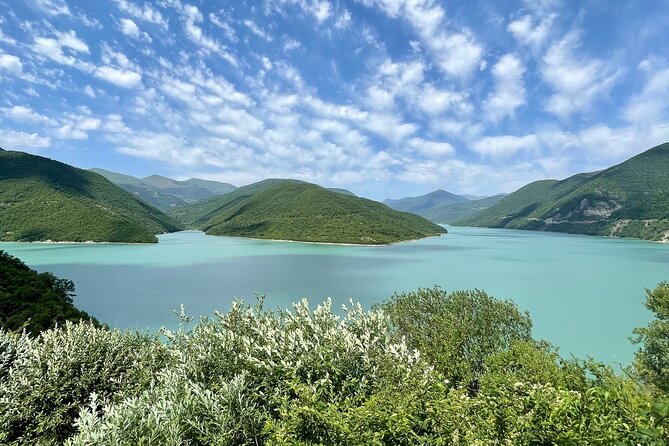
You start at Zhinvali Water Reservoir, an artificial reservoir on the Aragvi formed by a hydroelectric dam. The tour frames this as a scenic drive element—so even before you reach the castles and churches, the area gives you that “Georgia has big weather and big scale” feeling.
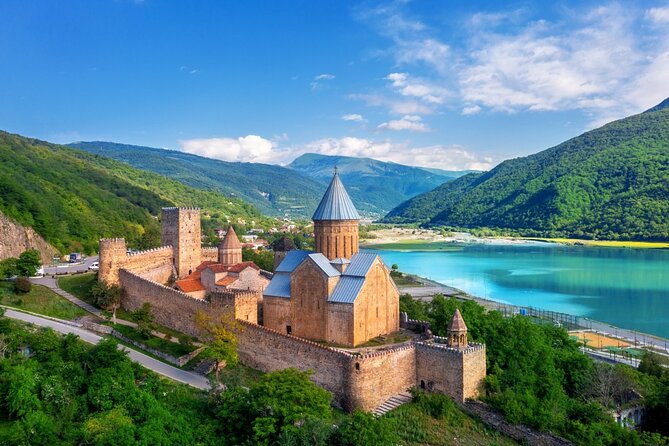
Then you visit Ananuri Fortified Castle Ensemble. The complex is described as a late feudal architectural set from the 16th–17th centuries, with the area connected to the dukes dynasty. It’s also tied to older trade routes, since it sits along the main route leading north, now called the Georgian Military Highway.
You’ll get specifics that help you appreciate what you’re seeing: the highlights include the castle, bell tower, three churches, and carved walls. The tour also notes the distance from Tbilisi is about 74 km (roughly 1 hour), and it calls out driving along the reservoir as part of the experience—blue water, mountain river vibes, and that slow shift into higher elevations.
For lunch, you stop at Pasanauri, with time to try many traditional Georgian dishes in a pleasant atmosphere. Meals aren’t included, but the point here is you get a planned place to eat instead of “good luck.”
Next is the Russian Georgian Friendship Monument, built in 1983 to mark the Treaty of Georgievsk bicentennial and Soviet friendship. It’s located on the Georgian Military Highway between Gudauri and Jvari Pass, and it overlooks the Devil’s Valley. If you’re the type who likes contextual scenery—monuments that explain politics through geography—this fits.
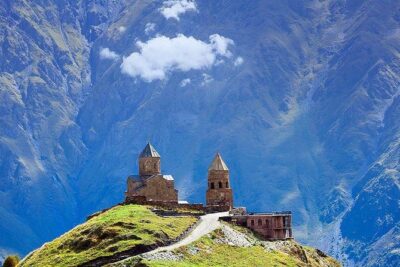
Then comes the high point for views: Gergeti Trinity Church near Stepantsminda (Kazbegi area). The description puts it at about 2,170 meters above sea level, built in the 14th century, and notes it as the only cross-cupola church in Khevi province. It also explains why it mattered historically, including how relics from Mtskheta were brought here for safekeeping.
On the practical side, you’ll get an epic panoramic view from the church, including Mount Kazbegi at 5,047 meters. This is one of those stops where your camera won’t tell the whole story. Stand back, look around, and let the height sink in.
You end with time in the Stepantsminda area. The tour includes a mention of a hotel option called Rooms Hotel Kazbegi with a terrace view and a lobby bar, but lodging is not included in the tour price. Still, having the day end here is useful if you’re continuing your trip in the mountains.
A few more Tbilisi tours and Georgian day trips worth a look

Price and logistics: what $369 per person buys (and where you might pay extra)
The headline price is $369 per person for about four days of private guiding. In value terms, that matters because this isn’t just a “car rental with a list.” You get a professional guide, private transportation throughout, and wine tasting included.
It also includes private airport transfers, plus private transfers to and from the airport—helpful if you arrive and want the first day to run smoothly. Pickup from your hotel happens each day, which is the kind of detail that saves time and stress.
Most entrance fees are listed as free, which suggests the tour is set up to cover access for the big sights. The two exceptions called out are Uplistsikhe Cave Town and the Stalin Museum, both marked as ticket not included.
Meals are not included, and that’s normal for tours like this. The good part is that lunch times are built in (Gori and Pasanauri), and the tour gives you designated time windows instead of leaving you hungry and lost.
One more value note: group discounts are listed as a feature. Since this is private, splitting the cost with family or friends can make the per-person value much stronger.
Guide quality is the difference-maker, and names you’ll recognize
This kind of tour lives or dies by the guide. The tour format is packed—Tbilisi to Kakheti to Mtskheta to Kazbegi—so the guide has to keep context flowing without turning it into a lecture.
In feedback, the guide name Nugo shows up as a standout—often praised as warm, professional, and attentive. Other guide names that come up include Anna and Sora, described as making the trip easier and more enjoyable. That’s a good signal that you’re not just getting route recitation; you’re getting real human handling of the day.
If you like to ask questions, this is the best kind of private tour. You can point at a church, a bridge, or a fort and ask why it looks like that. In a group tour, you’d get rushed. Here, you’ve got time.
Practical tips so you don’t waste time or get cranky
Wear comfortable clothes. That sounds basic, but it matters because you’ll go from city walking to cave-town rock surfaces to mountain viewpoints where weather can shift fast.
Bring a little extra cash or a card you can use for ticketed stops that are not included, especially Uplistsikhe and the Stalin Museum. If you skip these tickets mentally, you might get surprised at the register.
Also, plan on photo time at the big viewpoint stops. Narikala Fortress and Gergeti Trinity Church are the kind of places where a quick photo isn’t enough. Give yourself a few minutes of “no rushing” even if your itinerary runs tight.
Finally, if you’re a first-time Georgia visitor, let the guide’s order do the work. The tour is arranged to build meaning: modern cathedral first, then cultural neighborhoods, then Georgian wine country, then sacred Mtskheta monuments, then Kazbegi heights.
Should you book this private 4-day Georgia tour from Tbilisi?
I’d book it if you want a guided path through western Georgia’s must-sees and you prefer private pacing over crowded group chaos. It’s especially appealing if you value smooth logistics—hotel pickup, private transportation, and a guide doing the explaining so you can focus on the places.
I’d pass or modify if you’re skipping Soviet-era content and you don’t want to pay extra for the two ticketed stops listed. Also, if you only want Tbilisi and nothing beyond, four days like this may feel like too much travel.
If you’re the kind of traveler who likes a well-timed mix of churches, cities, monasteries, and mountain views, this tour is a strong fit.
FAQ
How long is the Discover Georgia private tour from Tbilisi?
It runs for 4 days on an approximate schedule. Each day includes hotel pickup and a set set of stops.
Is this tour private, and is it offered in English?
Yes, it’s a private tour/activity, so only your group participates. It’s offered in English.
What is included in the price?
The tour includes a professional guide service, private transportation, wine tasting, and private transfers from and to the airport. Entrance fees are listed as included for most stops.
Are airport transfers and hotel pickup included?
Private transfers from the airport and to the airport are included. Each day also starts with pickup from your hotel in Tbilisi.
Are meals included?
Lunch and dinner are not included. The day includes time blocks where you can eat, but you’ll pay for what you choose.
Are all attraction tickets included?
Not all. Uplistsikhe Cave Town and the Stalin Museum are listed as ticket not included. Most other stops are listed as free.
Can I get a full refund if I cancel?
Yes, you can cancel for a full refund if you cancel at least 24 hours in advance of the experience’s start time.
If you want, tell me your travel month and how many people are in your group, and I’ll suggest which day stops are the best priorities (and which you can skip) based on your interests.
More Private Tbilisi Days with Your Own Guide

More Tbilisi Tours and Georgian Day Trips


More from Our Tbilisi Review Desk
Not quite your thing? More Tbilisi tours and day trips from our review desk



4-Day Experiences, compared.
 ★ 5.0Private 4-Day Tours & Transfers from Tbilisi to Top Georgia SpotsFrom $43036 reviews
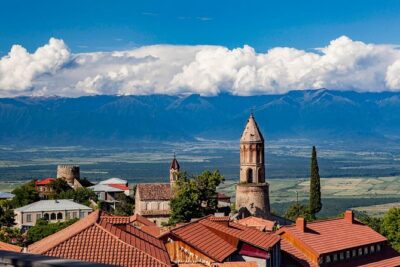 ★ 5.0Private 4 days Food & Wine and Sightseeing tour to Kakheti, Kazbegi, Mtskheta.From $1025 reviews
 ★ 5.0Best of Georgia – 3 or 4 days private tour with transfers and guideFrom $39921 reviews
 ★ 5.0From Tbilisi: 4-day Tour in Georgia with Airport TransfersFrom $34518 reviews
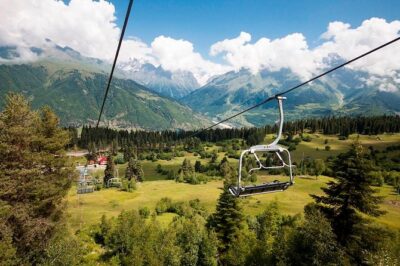 ★ 5.04-Day Tour in Svaneti – Mestia/UshguliFrom $4807 reviews
 ★ 5.0Batumi 4 Days TourFrom $3816 reviews
 ★ 5.0From Tbilisi: Svaneti 4 Days Private tour (Mestia, Ushguli)From $4806 reviews
 ★ 5.04-day tour by Visit-Geo – Take a glimpse on Georgia!From $2106 reviews
Browse the lists this tour appears in