

Reviewed · OLD TBILISI WALKING TOURS
Classic Tbilisi Walking Tour
A cable car ride makes the whole walk feel worth it. This Classic Tbilisi Walking Tour strings together key squares and hillside sights, with an expert guide to connect the dots across centuries.
I especially like the focus on historical layers you can actually see in the streets, from Soviet-era echoes to much older religious traces. I also love the built-in payoff of taking the aerial cable car up to Narikala Fortress for city views that change how you understand Tbilisi’s layout.
One thing to consider: the route includes walking on uneven streets and stairs (the church area is uphill), so comfortable shoes and church-ready dress matter more than you might expect.
In This Review
- Key points you will care about
- Starting at Freedom Square: an efficient morning launch
- Sololaki streets and Soviet-era context you can actually use
- Betlemi Churches: stairs up, and a surprising older layer underneath
- Bridge of Peace: the modern breather over the Mtkvari River
- Narikala Fortress by cable car: the included payoff
- Abanotubani and the sulfur-bathhouse district finish
- Price and value: what $134 really covers
- Tour length, group size, and what it feels like day-of
- How the guide style changes your experience (and why it matters)
- What to wear and bring (so the stairs don’t win)
- Who should book this tour
- Should you book the Classic Tbilisi Walking Tour?
- FAQ
- What time does the tour start and where do I meet?
- How long is the Classic Tbilisi Walking Tour?
- What is included in the price?
- What should I wear for the church stops?
- Is the tour only for good weather?
- Where does the tour end?
Key points you will care about
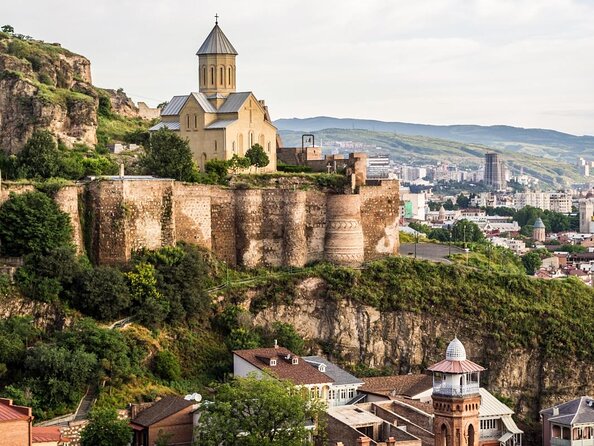
- Freedom Square to Sololaki: a fast start on central, recently renovated streets
- English-led guiding: an energetic, flexible style of interpretation that helps you remember what you saw
- Betlemi Churches area: you’ll spot remnants tied to a much older Zoroastrian Fire Temple
- Bridge of Peace: modern glass-and-steel design crossing the Mtkvari River on foot
- Aerial cable car to Narikala: included, with hilltop views and big photo angles
- Abanotubani ending: finish near the Monument Fountain Falcon and Pheasant in the Sulfur Bathhouse district
Starting at Freedom Square: an efficient morning launch

Tbilisi works best when you get oriented early, and this tour is designed to do that. You meet at 10:00 am at Chronograph2 in Freedom Square (right by the old city hall area). It’s a smart meeting spot because it keeps you close to the core of the old city, so you’re not wasting your first hours figuring out routes.
From there, you’ll head into Sololaki, starting on streets described as recently renovated. That matters for two reasons. First, it makes the walking easier on your feet and eyes. Second, it gives you a clearer sense of how the city is evolving while still keeping the old layout.
If you want a “get your bearings fast” start, this is one of the best ways to do it without a car, taxi, or guesswork.
More Old Tbilisi walking tours through the balconied backstreets


Sololaki streets and Soviet-era context you can actually use
The tour keeps moving through parts of the city that feel like they belong to different time periods. You’ll spend time around Freedom Square and then reach Lado Gudiashvili Square, described as newly renovated, which gives you a visible marker of how Tbilisi updates public spaces.
Along the way, you’ll learn about Tbilisi’s Soviet-era history. The value here is not just dates. It’s how those decades left physical and cultural traces you can still read today—through architecture choices, city planning habits, and the way neighborhoods connect. With a guide steering the story, you get a better “why” than just a “what.”
You also walk sections that take you from square to neighborhood scale, including following Asatiani Street toward the Kldisubani district. That street-to-district shift is where a guided walk earns its keep: you’re not just sightseeing—you’re mapping.
Betlemi Churches: stairs up, and a surprising older layer underneath
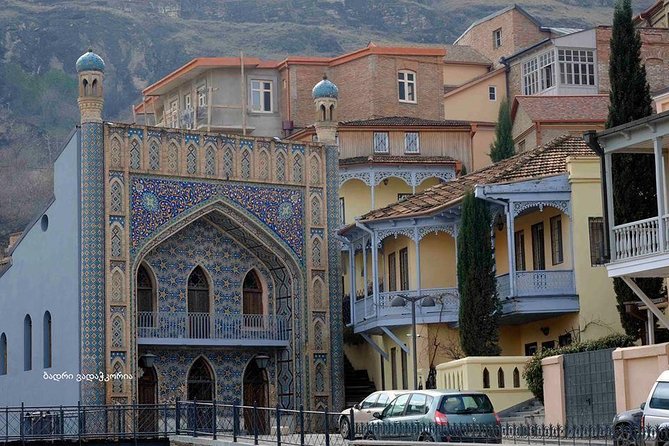
One of the most interesting stops is the Lower and Upper Betlemi Churches area. The route goes uphill, so plan for some stairs and sloped sidewalks even if the tour duration stays tight.
Here’s what makes this more than a quick photo stop. You’re walking to churches while also learning about the remains of a Zoroastrian Ateshgah Fire Temple from the 5th century. That’s the kind of detail that helps you understand Tbilisi as a place where religious and cultural layers overlap, rather than a single story frozen in time.
Views from this higher section are mentioned as a highlight. Practical tip: bring your phone battery plan (battery drain happens when you’re constantly looking over edges and roofs), and if you’re sensitive to heights, take the viewing spots slowly.
Church dress rules are clearly noted: women are expected to wear a head scarf and dress, and men should wear long trousers. If you’re arriving with summer shorts, you’ll either need to adjust quickly or accept that you may get turned back or asked to cover up.
Bridge of Peace: the modern breather over the Mtkvari River
Next comes the Bridge of Peace, described as a contemporary pedestrian bridge shaped like a bow over the Mtkvari River. It’s the classic “walk and look up” moment: glass and steel, modern lines, and a river view that gives you a different angle on the city.
This stop is only about 30 minutes, which keeps the day moving, but it still gives you enough time to cross at a comfortable pace and snap photos without feeling rushed.
Why it’s worth including: it’s a visual reset. After older religious sites and hillside angles, the bridge helps you see Tbilisi as a functioning modern city, not just a museum of stone and history. It also sets you up mentally for the next big elevation jump—Narikala.
Narikala Fortress by cable car: the included payoff
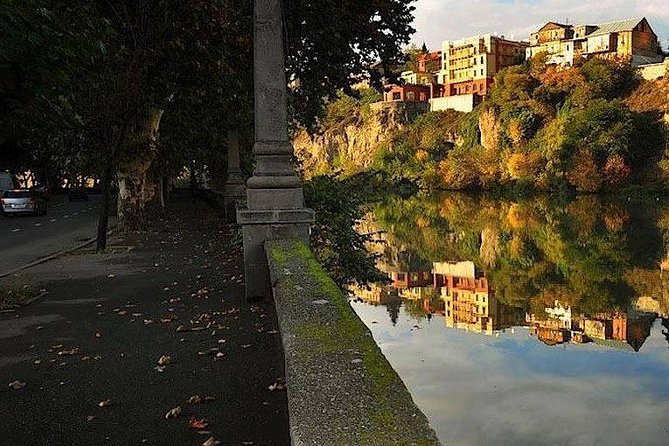
The tour then takes you to the aerial cable car station for the ride up to Narikala Fortress. The fortress dates back to the 4th century, and the hilltop setting is the point. You’ll spend about 1 hour at the fortress area, and the main reward is the views.
Because the cable car ride is included, you’re not negotiating tickets, schedules, or lines on your own. More importantly, it changes the physical feel of the tour. Instead of spending the whole morning climbing, you get a lift that lets you conserve energy for sightseeing and walking once you reach the top.
At the fortress, take your time with angles. You’ll likely be looking down over neighborhoods, rooftops, and the river corridor. This is the moment when many people finally see how Tbilisi’s geography shapes everything—where people built, where sightlines matter, and why the older sites sit where they do.
One more practical note: if you’re going in colder weather, plan for wind at the top. The tour says it runs in all weather, so you’ll want layers.



Abanotubani and the sulfur-bathhouse district finish
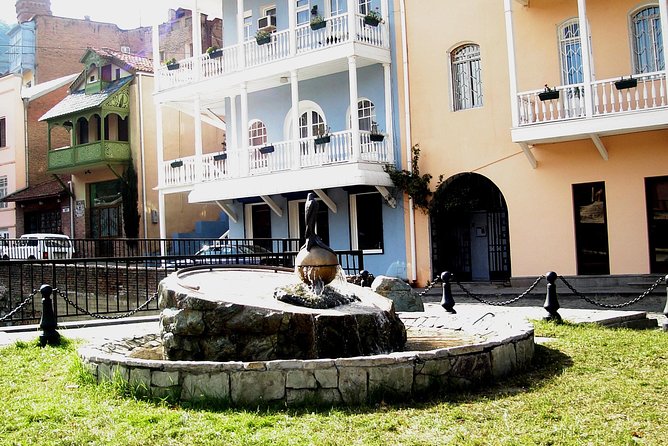
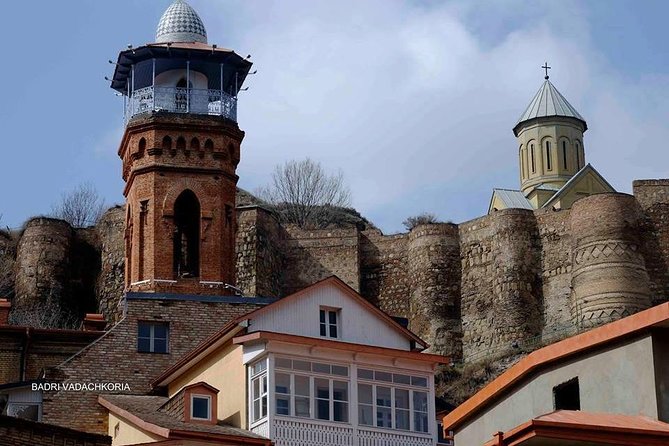
After the fortress, the tour heads down toward Abanotubani, moving through the Sulfur Bathhouse area, and it reconnects you back toward Meidan Square and nearby surroundings.
The end point is near the Monument Fountain Falcon and Pheasant in Abanotubani. It’s a strong place to finish because the area feels distinct—more atmospheric, more grounded in everyday Tbilisi life—and it’s a natural launching point if you want to keep exploring on your own after the 3-hour tour.
This is where your earlier walking becomes useful. You’ll understand where you are relative to major squares, why the river matters, and how the hillside sections connect back to the lower districts.
Price and value: what $134 really covers
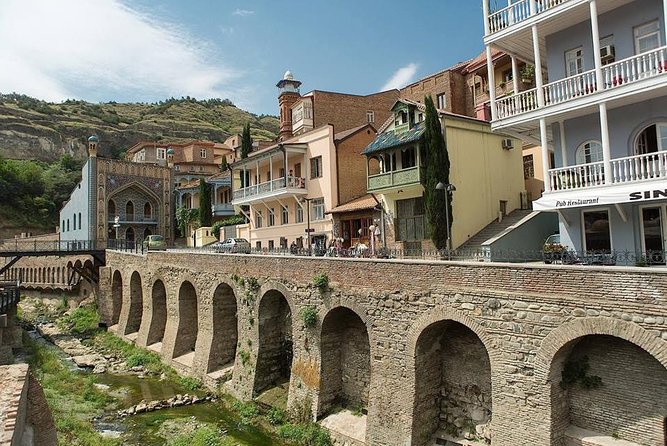
At $134 per person for about 3 hours, the headline price can look steep until you break down what’s included. You’re paying for a professional guide plus the aerial cable car ride to Narikala Fortress.
Most of the stops are free to access, and the tour does not include meals or transportation to and from your hotel. So the real question is whether you want guided interpretation in English plus the included cable car—because that combo saves time and effort you’d otherwise spend figuring out.
If you’re visiting for a long weekend or you want to get the most meaning from your first day, this kind of orientation tour tends to pay off. You’ll walk away with a mental map and context, which makes your later self-guided wanderings far more satisfying.
Tour length, group size, and what it feels like day-of
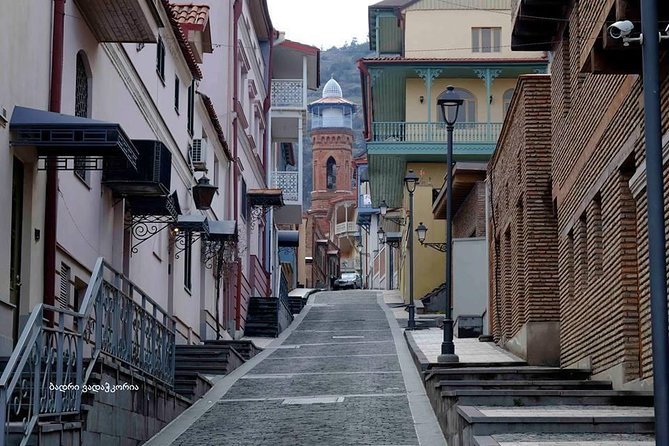
The tour is listed at about 3 hours, which is a comfortable length for seeing a lot without burning the whole day.
The group maximum is 99 travelers, but the experience still depends on how the operator manages the walk and how your guide works with the group. The important part for you: you won’t have a private, slow pace. This is structured sightseeing, and the stops have set time blocks, so wear shoes you don’t mind breaking in.
The tour runs in all weather conditions, so if rain is in the forecast, you should dress for it rather than hoping for a reroute.
How the guide style changes your experience (and why it matters)
The best part of this tour for many people is the guiding. One set of comments highlights Eka as a young guide who’s friendly, engaging, knowledgeable, funny, and flexible when it comes to preferences. That combination is rare. It’s not just facts—it’s the ability to read the group mood and keep the story flowing.
Even if your guide isn’t Eka, the format should still feel interactive: you’re guided through streets and viewpoints, with time at stops to ask questions and adjust pace.
Also, one review notes wine tastings and a couple of wines purchased, paired with Georgian music and dancing at a nearby dinner the following night. Those details aren’t listed as guaranteed inclusions in the tour summary you have here, but the broader takeaway is useful: a good guide can point you toward good local add-ons that extend your experience after the official walking route ends.
What to wear and bring (so the stairs don’t win)
This tour has a clear church dress note, and it also includes uphill walking. Here’s how I’d prep:
- Wear comfortable walking shoes with grip.
- Bring a head scarf if you want to comfortably enter church areas as required.
- If you’re traveling in warm weather, plan a light layer you can use to meet the long trousers expectation.
- Bring a small rain layer or umbrella plan because the tour runs in all weather.
If you ignore dress code, you might lose time, and it can also put you in an awkward situation at the church entrance. Better to show up ready.
Who should book this tour
This one fits best if you want:
- a guided way to connect history to actual streets and buildings
- an easy win for viewpoints via the included cable car
- a first-day orientation you can build on later
It’s also a good choice if you dislike the idea of piecing together multiple attractions solo. The route does the planning for you: squares, churches, river crossing, then the fortress, then Abanotubani.
You might skip it if you prefer a very slow, photography-only schedule. This walk is structured, and the timing at each stop matters.
Should you book the Classic Tbilisi Walking Tour?
Yes, if you’re looking for a smart first pass through the city that balances old Tbilisi layers with modern sights—and you want help interpreting what you’re seeing. The included cable car to Narikala is the kind of value that justifies the price, and the guide-driven context (including Soviet-era threads) makes the walk feel like more than a checklist.
If you’re tight on time, traveling with limited stamina for stairs, or you’re not interested in church areas, you might find it less aligned with your style. But for most people wanting a strong, story-rich introduction to Tbilisi, this is a very dependable choice.
FAQ
What time does the tour start and where do I meet?
The tour starts at 10:00 am. You meet at Chronograph2 in Freedom Square (T’bilisi 0105, Georgia).
How long is the Classic Tbilisi Walking Tour?
It’s listed as about 3 hours.
What is included in the price?
The tour includes a professional guide and a ride on the aerial cable car to Narikala Fortress.
What should I wear for the church stops?
The tour notes a dress code for churches: women should wear a head scarf and dress, and men should wear long trousers.
Is the tour only for good weather?
No. It operates in all weather conditions, so dress appropriately for what’s happening outside.
Where does the tour end?
It ends in Abanotubani, near the Monument Fountain Falcon and Pheasant.
More Tbilisi Tours and Georgian Day Trips



More from Our Tbilisi Review Desk
More Old Tbilisi Walking Tours



Not quite your thing? More Tbilisi tours and day trips from our review desk





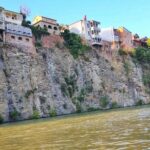




Old Tbilisi Walking Tours, compared.
 ★ 5.0Tbilisi Walking Tour Including Cable Car and Traditional BakeryFrom $191,310 reviews
 ★ 5.0Evening Walking & Talking Tour with Wine & Boat RideFrom $10572 reviews
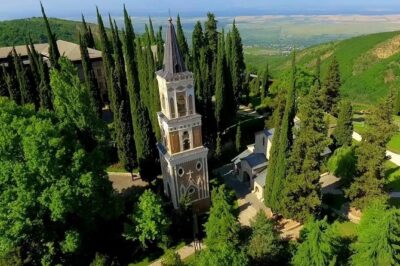 ★ 5.0Kakheti;City of Love Sighnaghi, Bodbe. KTW. Wine House Group tourFrom $16376 reviews
 ★ 5.0Old Tbilisi Highlights walking tour with wine & 10 tastingsFrom $15276 reviews
 ★ 5.0Old Tbilisi Tour: Private Walking Tour With Wine TastingFrom $39273 reviews
 ★ 5.0Private Tbilisi Food Tour: 9 Tastings Walk in Bohemian DistrictFrom $79227 reviews
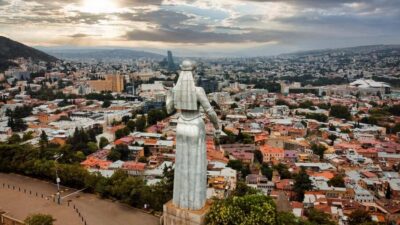 ★ 5.0Old and New City Guided Tour with 2 Cable Car RidesFrom $39176 reviews
 ★ 5.0Tbilisi Old Town Walking Tour with a Local GuideFrom $38168 reviews
Browse the lists this tour appears in