
Reviewed · OLD TBILISI WALKING TOURS
Alternative walking tour New Tiflis and backstreets
Tbilisi has another side, and it walks. This alternative route through New Tiflis swaps the postcard loop for everyday streets, theatre energy, and photo stops with real local texture. I particularly like how it mixes big-history landmarks with places you might miss on your own, and I love the pacing that keeps it fun rather than museum-mode. One thing to plan for: it is a lot of walking in mixed neighborhoods, so comfortable shoes matter.
My second favorite part is the variety of spaces you hit in just about 3 hours: from a flea market for vintage hunting to Fabrika Tbilisi where a Soviet sewing factory became a creative gathering spot. If you want a guide who can answer your questions about art, architecture, and daily life, this style of tour fits well. The main drawback is simple—this is not Old Town—so if you came specifically for narrow medieval streets, you’ll need a separate plan for that.
In This Review
- Key things to know before you go
- New Tiflis, not Old Town: what this walk is really about
- Liberty Square: starting with St. George and the city’s meeting point energy
- Orbeliani Square and the Presidential Palace exterior
- Dry Bridge Flea Market: vintage hunting with a story
- Agmashenebeli Avenue: Art Nouveau façades and theatre culture
- Roses Park: a slower walk and a real scent reminder
- Fabrika Tbilisi: Soviet sewing factory to creative social space
- St. Peter and Paul Roman Catholic Church: baroque details you can spot fast
- Marjanishvili Theatre: art nouveau drama with a 2006 reopening
- Marjanishvili Square finish: metro access and easy dinner plans
- Price and value: what $30 buys you in real terms
- Practical tips for this 3 km backstreet route
- Should you book this Alternative Walking Tour of New Tiflis?
- FAQ
- How long is the Alternative Walking Tour New Tiflis and backstreets?
- How much does the tour cost?
- What language is the tour offered in?
- Where do I meet the guide?
- Where does the tour end?
- Is the wine tasting included in the price?
- Are admissions required for the stops?
- Is hotel pick-up included?
- How much walking is involved?
- What group size should I expect?
Key things to know before you go
- A guided walk focused on New Tiflis backstreets, not the classic Old Town circuit
- Small group size (max 10), which makes it easier to ask questions and move at a relaxed pace
- Stops blend history + everyday life, including markets, parks, churches, and theatres
- Fabrika Tbilisi shows how Tbilisi reuses older Soviet structures for current culture
- Wine tasting is included, so it feels like more than a standard sightseeing stroll
New Tiflis, not Old Town: what this walk is really about
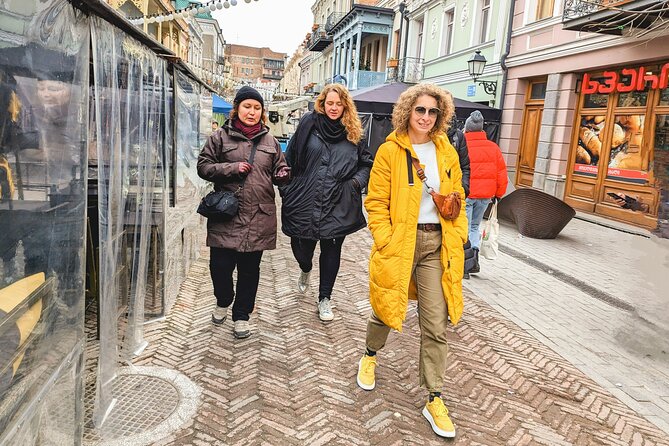
This is the kind of tour that helps you get your bearings in Tbilisi’s modern city areas. You won’t spend your whole day chasing the same skyline views or repeating the same Old Town highlights. Instead, you’ll move through squares, main arteries, and quieter side streets where locals actually eat, shop, and hang out.
The route is built for a relaxed pace: you should be able to comfortably walk roughly 3 km total. Time per stop is short enough to keep things lively, but long enough to read details on façades, peek into markets, and stroll through small pocket spaces like parks and courtyards.
Also, the tone is practical. Your guide service and English narration do the heavy lifting—stories, architectural context, and what to notice along the way. If your guide is Oksana (she’s been mentioned as the lead in past tours), expect a warm, question-friendly style where she ties what you’re seeing to Georgia and Tbilisi’s past and present.
One more note that matters for comfort: you’ll pass busy streets at points. If traffic noise bothers you, just know you’re in a real city, not a quiet theme park.
More Old Tbilisi walking tours through the balconied backstreets
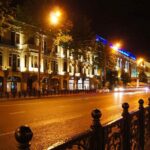
Liberty Square: starting with St. George and the city’s meeting point energy
Your tour kicks off at Liberty Square (also known as Tavisuplebis Moedani), right by the entrance of the Burberry shop. This is an easy starting point because it’s central and connected to the metro. It’s also a place with a lot of symbolic weight.
The square’s centerpiece is the statue of St. George slaying the dragon, which ties directly to Georgia’s struggle for freedom and independence. Around you, you’ll see major civic buildings including the Georgian National Museum and Tbilisi City Hall. Even if you don’t go inside anywhere right away, you’re standing in the middle of a political-and-cultural stage that still matters.
If you’ve only seen Tbilisi from viewpoints, Liberty Square is a good reality check. It feels like where the city gathers for demonstrations and celebrations—New Year’s Eve and Independence Day are specifically noted as times when this square comes alive.
Practical tip: use this first stop to orient yourself. Take a minute to plan your next metro move or where you want dinner later, because you’ll finish in the theatre district area.
Orbeliani Square and the Presidential Palace exterior
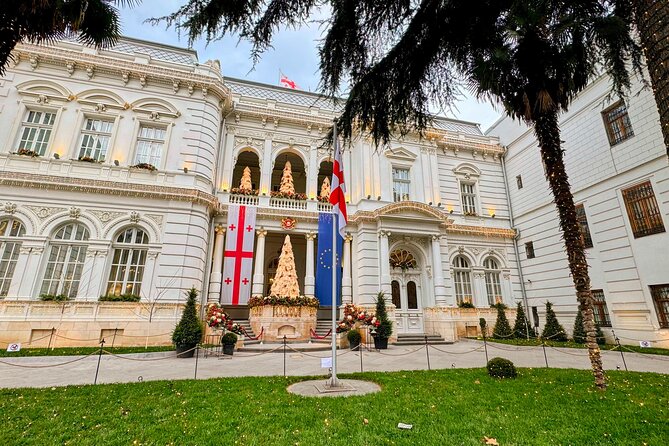
Next you head to Orbeliani Square, where the main photo subject is Orbeliani Palace, the official residence of Georgia’s President. You won’t go inside, but the exterior architecture is still the point. The palace dates to the 18th century, and you can read layers of Georgian elite life in its ornate presence.
Orbeliani Square also gives you a break in the middle of the walking flow. It’s surrounded by cafes and restaurants, so you can reset your legs and your attention span. If you want coffee, this is a reasonable moment to mentally flag nearby options.
One of the best parts here is the flower market. Expect colorful blooms and fragrant herbs, and yes, it’s a great place for quick photos. What I like about this stop is that it’s not just architecture—it’s sensory street life.
A small consideration: if you’re not into shopping and you prefer monuments over markets, keep your eyes up for architecture first, then enjoy the market without feeling obligated to buy anything.
Dry Bridge Flea Market: vintage hunting with a story
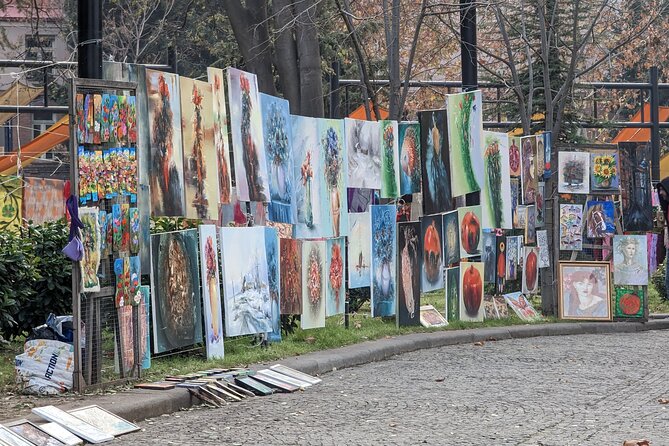
From Orbeliani Square, you’ll reach the Dry Bridge Flea Market. This is one of those places where the value is not just the items—it’s the chase. Stalls can include antique goods, vintage clothing, jewelry, Soviet-era memorabilia, and other mixed categories you might not see in standard souvenir shops.
What makes Dry Bridge more interesting for me is the creative mix of vendors. Some sellers are artists and craftsmen, offering handmade creations alongside older pieces. That blend means you’re not only browsing nostalgia—you might find something clearly made for today, not just for tourists.
Another good angle: many items come with stories. Your guide should be able to help you interpret what you’re seeing and connect it back to local context.
How to enjoy it: don’t force yourself to buy. Treat it like an open-air cultural scavenger hunt. If you do want a souvenir, decide on a budget early so you don’t end up negotiating when you’re tired.
If you hate markets, this stop could feel like optional wandering. But the structure of the tour keeps it from turning into an all-day shopping detour.
Agmashenebeli Avenue: Art Nouveau façades and theatre culture
Now the walk opens up along Agmashenebeli Avenue, known for its architecture from the late 19th and early 20th centuries—particularly Art Nouveau and Neo-Renaissance styles. This stretch works well if you enjoy building façades, balconies, and the kind of urban detail that you often miss when you’re rushing.
A major highlight here is the Marjanishvili Theatre, an important cultural center since it opened in 1928. The avenue also sits near the Tbilisi Opera and Ballet Theatre at the northern end, so even when you’re not stopping at every landmark, the neighborhood clearly signals artistic momentum.
This part of the tour is also useful because it explains Tbilisi’s modern identity. You’re not only seeing Soviet-era leftovers or old squares—you’re seeing how culture continues to shape the city’s public life.
One consideration: this is a main street, so expect more traffic and more noise than you’ll get in parks and quieter backstreets.



Roses Park: a slower walk and a real scent reminder
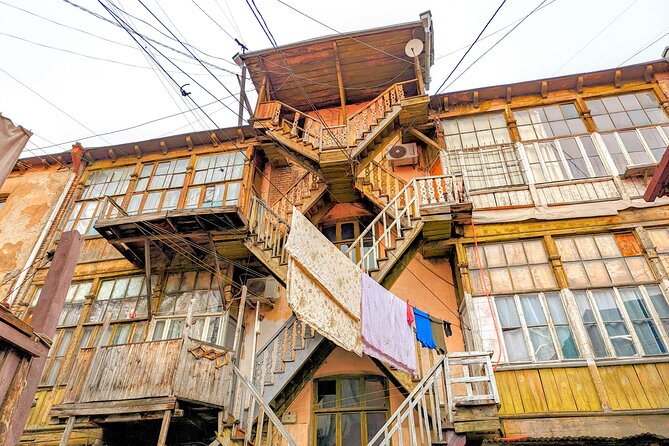
After the architecture and urban energy, you’ll turn into a more restful pocket: Roses Park in the backstreets. This is the kind of stop that helps the tour feel balanced. You get a break from storefronts and streets and switch to a garden rhythm.
The park centers on a rose garden with over 200 varieties of roses. In warmer months, the blooms are at their best, and the air can be noticeably rose-scented. Even if you’re visiting outside peak season, the layout gives you a calm visual reset.
Why I like this stop for value: it’s brief but memorable, and it adds variety without adding major logistics. It’s also a realistic glimpse at everyday life—people come here for a quiet stroll, not just for a photo.
If you’re visiting in hot weather, take your time here. It can be easy to get overheated on city walks, and this is exactly the kind of place where your hydration and sun protection pay off.
Fabrika Tbilisi: Soviet sewing factory to creative social space
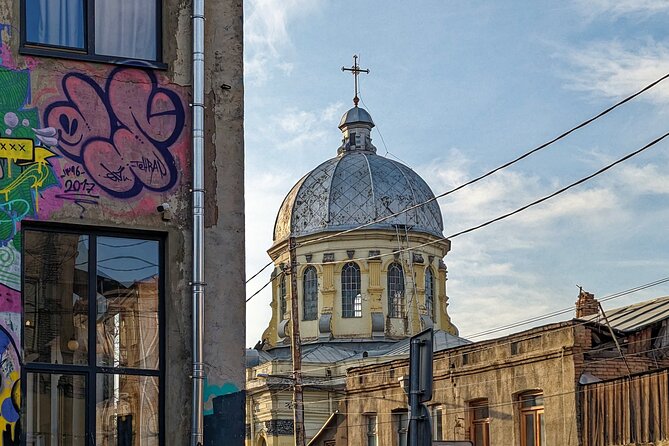
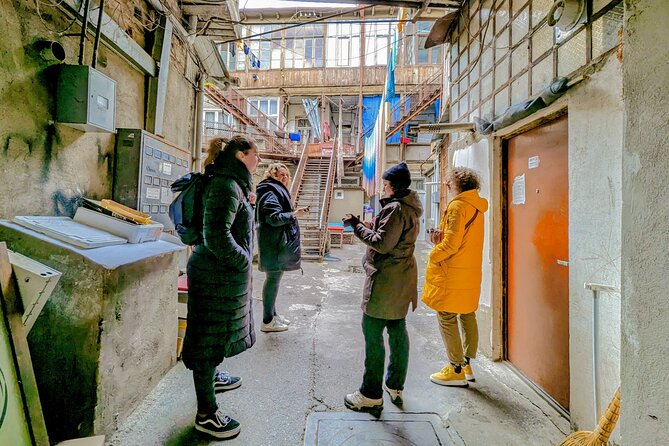
Next up is Fabrika Tbilisi, an old Soviet sewing factory converted into a multi-use space. This is where the tour turns from sightseeing to understanding how cities reinvent their buildings.
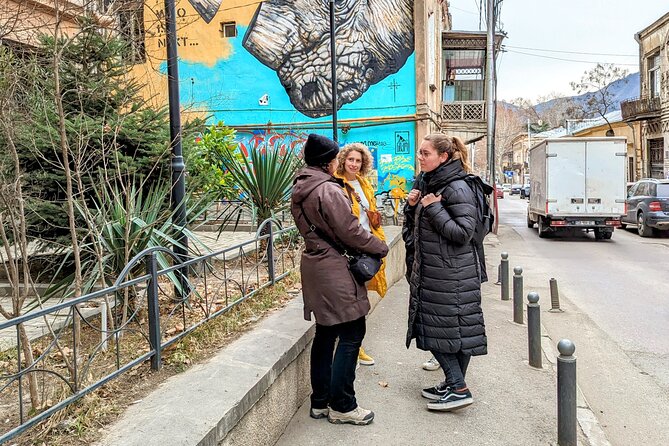
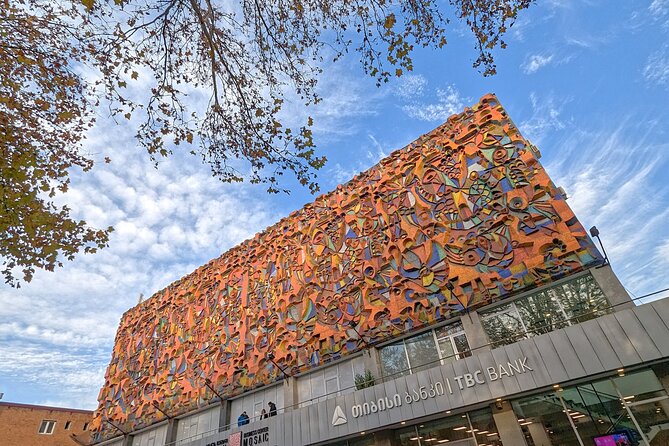
Fabrika functions as a hub for creative people, with culture, art, and entertainment in the mix. The big visual draw is the street art—colorful murals across walls and nearby spaces.
Tbilisi has a recognized street-art identity, and Fabrika helps you see it in context. Instead of treating murals as random decoration, you get them as part of a wider creative ecosystem.
How to make this stop worth your time: slow down and look at surfaces rather than only angles for photos. Murals often have layers—symbols, style changes, and local references—that a quick glance won’t catch.
If you’re not into street art, you can still treat Fabrika as a lesson in reuse and urban change. It’s one of the most practical “how this city works now” stops in the whole route.
St. Peter and Paul Roman Catholic Church: baroque details you can spot fast
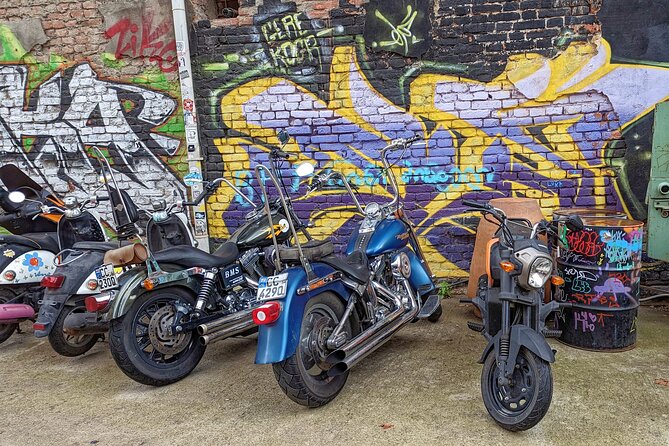
This stop is St. Peter & Paul Roman Catholic Church, built between 1870 and 1877. The architecture is described as marked baroque style, and you’ll see how that plays out in the facade.
One detail I appreciate is the color work. The facade includes pilasters and arches divided by a more intense yellow of Corinth compared with the rest of the structure. That makes the building easier to read even from a few steps back.
Your route also includes a standout design element: a rose window above the wooden front door, with floral ornaments and a dove. The info provided notes that some changes were added after 2000, including the relocation of the original very high and arched door into a wall setting for the rose window.
There’s also a big historical note: Pope John Paul II celebrated Mass here in October 1999.
For a short stop, it’s packed. And because it’s a church, the atmosphere tends to be calmer than streets around it.
A quick heads-up: if you’re sensitive to lighting or details, take your time outside first. Then check the entrance area so you don’t miss the rose window and facade patterns.
Marjanishvili Theatre: art nouveau drama with a 2006 reopening
After the church, you’ll reach Kote Marjanishvili State Drama Theatre. This theatre is one of Georgia’s older and most significant ones—ranked just behind the national Rustaveli Theatre.
Here’s the timeline that makes the place feel real: founded by Kote Marjanishvili in Kutaisi in 1928, it moved to Tbilisi in 1930 and has operated in the same building since then. The building is an art nouveau edifice.
A major event in the modern era is the renovation and reopening in 2006, with the premiere of Bertolt Brecht’s The Threepenny Opera. Even if you don’t see a performance, the theatre’s history gives you a reason to pay attention to the building and the district.
This is also a good stop for anyone who wants cultural context without sitting in a museum chair. A theatre district teaches you how the city values art as a public habit.
If you visit when there’s a show running, you might want to plan ahead for tickets after the tour. (The tour itself doesn’t include performance tickets—just the walk-by cultural focus.)
Marjanishvili Square finish: metro access and easy dinner plans
Your final stop is Marjanishvili Square. It’s a lively intersection with plenty of places to eat and shop, so it works well as a drop-off point. You can wrap up the walk and then choose your own pace from there.
The Marjanishvili metro station is nearby and takes pressure off your logistics. The station was inaugurated in 1966 and designed by architects O. Melia and G. Melkadze. When you arrive, look for the high-relief bust of Kote Marjanishvili—named for the theatre director.
I like finishing here because it’s not stuck in a dead-end sightseeing loop. You end in an area designed for continuing the day—food first, then metro or further exploring.
Price and value: what $30 buys you in real terms
At $30 per person for about 3 hours, this tour is priced like a full guided neighborhood session rather than a single landmark hit. The included items matter:
- Guide service: narration and context across multiple types of places
- Complementary wine tasting with alcoholic beverages
- Listed admissions at stops are free, since you’re not paying entry fees at each location
So you’re paying mainly for the guide’s ability to connect the dots—architecture, street culture, and daily life in one continuous route—plus the convenience of a planned path.
Also, the tour caps at 10 travelers, which keeps it from turning into a long herding experience. That group size is a big part of why the pacing feels manageable on a walking tour.
Is it worth it if you love independent wandering? It depends. If you’re the type who likes to read plaques and follow your own map, you might replicate some of this route on foot. But if you want someone to steer you toward the right corners and explain what you’re seeing (especially with names like Oksana delivering a Q-and-A friendly approach), the guide value shows up fast.
Practical tips for this 3 km backstreet route
For comfort, plan for walking and stop-start moments. Winter in Tbilisi can be cold, windy, and rainy—dress warmly and choose comfortable, non-slip shoes. Summer can get hot, especially around midday, so use sun protection and bring hydration.
You’ll also be near busier roads at points, so expect urban noise and traffic flow. If that stresses you out, keep your expectations realistic and treat the noisier stretches as transfer time between calmer stops.
Finally, timing is part of the experience. The guide can wait up to 10 minutes after the scheduled start time, and after that you may need to rebook. So arrive at the Burberry meeting point on Liberty Square with a little buffer.
Should you book this Alternative Walking Tour of New Tiflis?
Book it if you want a guided way to see Tbilisi’s modern neighborhoods—with theatres, markets, street art, and small garden calm—without feeling trapped in a strict sightseeing checklist. It’s also a good pick for first-time visitors who want a guide to explain what to notice, particularly if your guide is someone like Oksana, known for strong storytelling and answering questions across history, art, and everyday life.
Skip it if you came only for Old Town and narrow historic lanes. This route is built to show you another side of Tbilisi. And if you have mobility limits or you don’t want a walking-focused day, this one may feel too demanding.
FAQ
How long is the Alternative Walking Tour New Tiflis and backstreets?
It lasts about 3 hours.
How much does the tour cost?
The price is $30.00 per person.
What language is the tour offered in?
The tour is offered in English.
Where do I meet the guide?
The meeting point is at Burberry (Freedom Square / Liberty Square area), at the entrance, with the address listed for Mtawminda 0105, Georgia.
Where does the tour end?
It ends near Marjanishvili metro station on Kote Marjanishvili St, T’bilisi, Georgia.
Is the wine tasting included in the price?
Yes. Alcoholic beverages and a complementary wine tasting are included.
Are admissions required for the stops?
The stop details list admission as free.
Is hotel pick-up included?
No, hotel pick-up and drop-off are not included.
How much walking is involved?
You should be able to comfortably walk around 3 km at a relaxed pace.
What group size should I expect?
The tour has a maximum of 10 travelers.
If you want, tell me your travel dates and whether you prefer markets, architecture, or art. I can help you place this tour in a smart day plan around meal stops and metro access.
More Tbilisi Tours and Georgian Day Trips


More from Our Tbilisi Review Desk
More Old Tbilisi Walking Tours



Not quite your thing? More Tbilisi tours and day trips from our review desk





Old Tbilisi Walking Tours, compared.
 ★ 5.0Tbilisi Walking Tour Including Cable Car and Traditional BakeryFrom $191,310 reviews
 ★ 5.0Evening Walking & Talking Tour with Wine & Boat RideFrom $10572 reviews
 ★ 5.0Kakheti;City of Love Sighnaghi, Bodbe. KTW. Wine House Group tourFrom $16376 reviews
 ★ 5.0Old Tbilisi Highlights walking tour with wine & 10 tastingsFrom $15276 reviews
 ★ 5.0Old Tbilisi Tour: Private Walking Tour With Wine TastingFrom $39273 reviews
 ★ 5.0Private Tbilisi Food Tour: 9 Tastings Walk in Bohemian DistrictFrom $79227 reviews
 ★ 5.0Old and New City Guided Tour with 2 Cable Car RidesFrom $39176 reviews
 ★ 5.0Tbilisi Old Town Walking Tour with a Local GuideFrom $38168 reviews
Browse the lists this tour appears in