
Reviewed · 3-DAY EXPERIENCES
3 Days private tour in Georgia from Tbilisi
Georgia starts fast on this private loop. This 3-day tour from Tbilisi is built for smart time use: you get pickup, a private air-conditioned car, and a route that still reacts to your pace instead of feeling like a factory schedule. I especially like how it stacks UNESCO-grade stops early—Jvari and Svetitskhoveli—then pivots to the lively energy of Old Tbilisi.
I also love the human factor here: the guide (Davit, sometimes spelled David) has a knack for making the day feel like you have a friend on the ground, with a calm, attentive, and funny style that keeps things moving. One possible drawback to plan around: a few key sights have admission fees that are not included, and the whole tour depends on good weather, especially on the third day.
In This Review
- Key things that make this tour worth your attention
- How a private 3-day tour from Tbilisi actually saves you time
- Day 1 at Mtskheta: Jvari Church and Svetitskhoveli Cathedral
- Old Tbilisi after Mtskheta: Sameba, Meidan Bazaar, and the Bridge of Peace
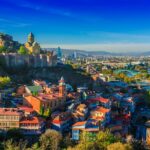
- Narikala Fortress and Kartlis Deda: best city views with minimal effort
- Day 2 in Kakheti: Bodbe Monastery of St. Nino and Sighnaghi
- Khareba Wine Tunnels: 7.7 km of cool air and aging bottles
- Day 3 along the Aragvi: Zhinvali, Ananuri, and Gudauri
- Stepantsminda and Gergeti Trinity Church: one of Georgia’s most dramatic church settings
- Price and value: is $220 per person fair for this mix?
- Who this 3-day private tour suits best
- Should you book this 3-day Georgia private tour?
- FAQ
- How long is the private tour?
- Where does the tour start?
- What is the price per person?
- What’s included in the tour price?
- Are meals included?
- Do I need to pay entrance fees at the churches and monasteries?
- Is the 4WD ride to Gergeti included?
- Is the Bridge of Peace and Old Tbilisi time included for free?
- Is this tour weather-dependent?
- What if I need to cancel?
Key things that make this tour worth your attention
- Private transport + pickup: You save time on logistics and spend more time looking at Georgia.
- UNESCO-heavy day one: Jvari Church and Svetitskhoveli Cathedral anchor the cultural core.
- Real Old Tbilisi walking: Sulfur baths area, Shardeni-style streets, and the Bridge of Peace keep it fun.
- Wine-country tunnel experience: Khareba’s underground tunnels are long, cool, and built for aging qvevri and European wines.
- Kazbegi-area viewpoints: Zhinvali and Ananuri set the tone before you move toward Gudauri and Gergeti.
- Guide quality is a highlight: In the feedback, Davit is consistently credited as the reason the trip feels unforgettable.
How a private 3-day tour from Tbilisi actually saves you time
A lot of Georgia trips feel like a list of must-sees and bus transfers. This one aims to be the opposite. You’re in a private vehicle with bottled water, WiFi on board, and airport transfers, so you start each day ready to go—no guessing, no hunting for the right stop.
The other practical win is flexibility. The tour description makes it clear the flow depends on you, not a rigid script. That means if you linger at a viewpoint, want extra photos, or prefer a slower pace through a church courtyard, the guide can usually work with it.
And yes, you’re paying for that convenience: $220 per person for about three days. The value comes from the combination—private rides, multiple major sights across regions, and included entry fees for several stops. If you’re the type who hates wasting hours commuting, this price will feel more fair.
More private Tbilisi tours at your own pace



Day 1 at Mtskheta: Jvari Church and Svetitskhoveli Cathedral
Day one starts with Jvari Church, also known as the Monastery of the Cross. It sits on a rocky mountaintop above the confluence of the Mtkvari and Aragvi rivers, with a view over Mtskheta. This is the kind of place where the setting matters as much as the building—wide-open sky, river meets river, and the sense that this spot has been watched for centuries.
The current structure is commonly dated to the late 6th to early 7th century (generally 586–604), and the site is UNESCO-listed along with other historic structures of Mtskheta. Your ticket is included, and you’ll have about 30 minutes. That’s enough time to see the church details without rushing.
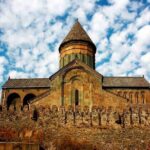
Next comes Svetitskhoveli Cathedral, which is one of the most important monuments of Georgian culture, art, and architecture. It’s UNESCO-listed, and it’s also described as having the burial association with Christ’s mantle, which gives the visit extra emotional weight. The cathedral is the second-largest church building in Georgia after Holy Trinity Cathedral.
You get about 1 hour here, and the admission ticket is included. If you like churches, carvings, and the “why this place matters” side of travel, this is where the day really clicks. The only caution: cathedrals draw crowds, so keep your expectations for quiet realism.
Old Tbilisi after Mtskheta: Sameba, Meidan Bazaar, and the Bridge of Peace
After Mtskheta, the tour moves back toward Tbilisi for the big modern landmark: the Tbilisi Holy Trinity Cathedral, also called Sameba. It was constructed between 1995 and 2004, mixing traditional Georgian church styles with a more recent build. Even if you’re not a church architecture nerd, the scale tends to make an impression fast.
Time here is about 40 minutes, and the admission ticket is included. It’s a good reset point: you go from ancient stone atmosphere in Mtskheta to a newer monument in the city, which helps keep the day feeling varied rather than repetitive.
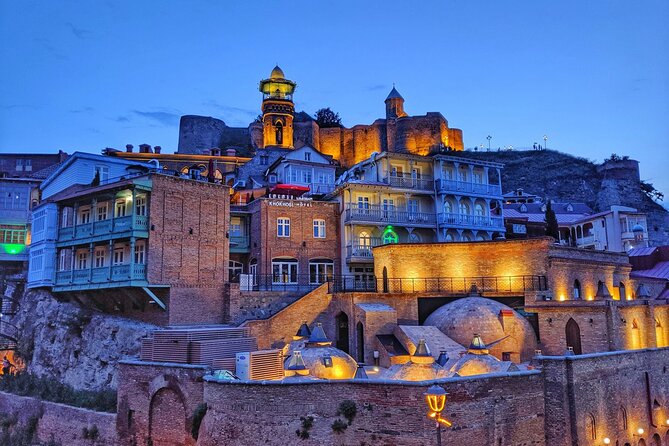
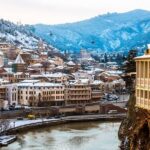
Then you head into the Old Tbilisi atmosphere: Meidan Bazaar, the Legvtakhevi area (Fit ravine), and a walk that can include a waterfall nearby. From there, the tour heads toward the sulfur bathhouse district—some baths date back to the 17th–19th centuries and sit over natural hot water springs. This is one of those neighborhoods where you’ll feel the city’s old-meets-new layering through streets, smells, and constant motion.
You also get time around Meidan Square and Shardeni Street, with cafes, bars and pubs, souvenir shops, and art galleries. That segment is about 1 hour and it’s ticket-free. If you time it right, it’s also a great moment to buy a small bite or a drink during your walking break, since food isn’t included.
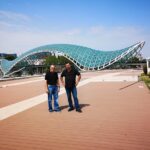
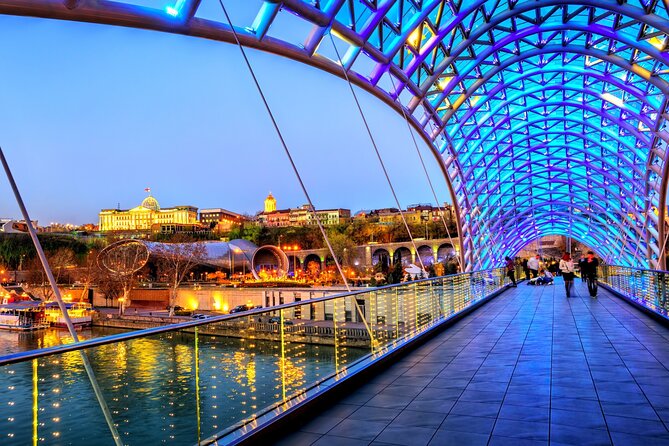
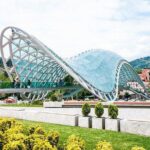
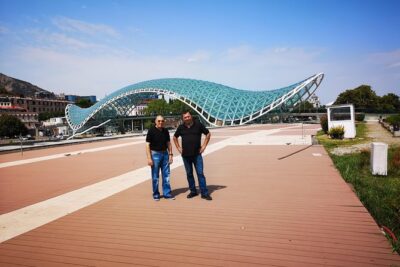
To finish this Old Tbilisi chapter, there’s a short stop at the Bridge of Peace. It’s a pedestrian bridge with a glass and steel design over the Mtkvari River, opened in May 2010. A fun fact: it was brought from Italy in 200 unassembled components, and that detail makes the bridge feel less random and more like a real international story.
It’s only 5 minutes, and it’s free. But don’t skip it—this bridge is one of the best “quick photo win” moments in central Tbilisi.
Narikala Fortress and Kartlis Deda: best city views with minimal effort
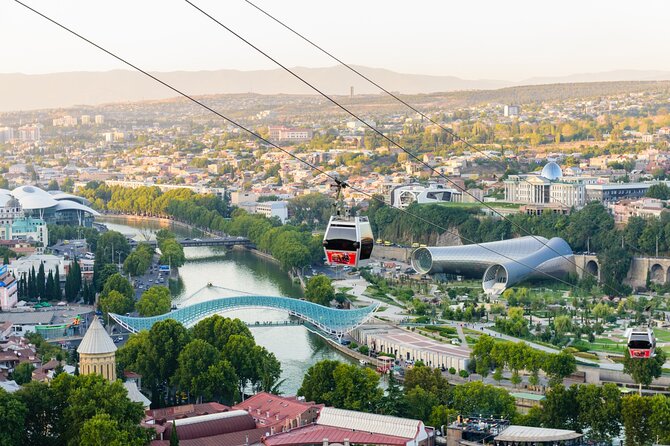
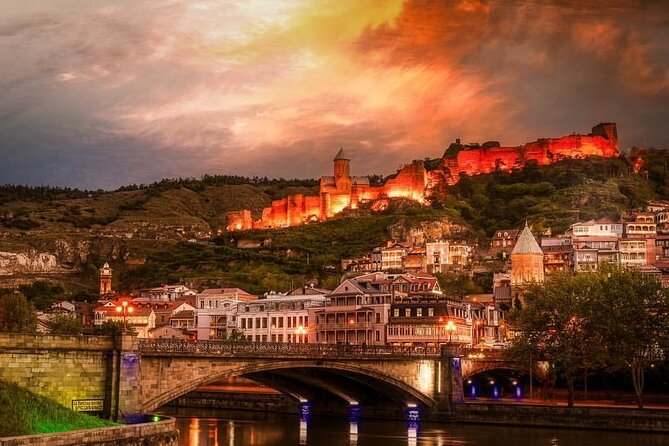
Next up is Narikala Fortress. The tour goes up by cable car, which matters because the fortress sits on a hill and your time budget is tight. Expect about 50 minutes total for the area.
Narikala’s history stretches far back—fortified beginnings around the 4th century, with later developments in the 7th and 12th centuries. The name “Narikala” is attributed to Mongol influence, described as meaning “little fortress.” Even if you don’t memorize all the dates, the point is that you’re looking at a place that’s been strategic for a long time.
Once you’re up, you’ll also see the statue of Kartlis Deda, the Mother of Georgia, erected in 1958 for Tbilisi’s 1500th anniversary. The statue gives you a neat visual anchor for the whole city experience. If you like viewpoint stops, this is a strong one because it connects the skyline to the city’s identity.
One consideration: Narikala’s admission ticket is listed as not included. So if you’re keeping a tight travel budget, set aside a bit for that.
Day 2 in Kakheti: Bodbe Monastery of St. Nino and Sighnaghi
Day two shifts east into Kakheti, and it starts at Bodbe Monastery of St. Nino, also called Bodbe Monastery. This site is linked to St. Nino, who is credited with bringing Christianity to Georgia. Today, there’s a nunnery where the monastery used to be, and the St. George Cathedral contains the remains of St. Nino.
You’ll have about 45 minutes here, and the admission ticket is free. There’s also mention of a new cathedral being built using similar construction methods to famous Georgian cathedrals. Even if you’re not religious, it’s still worth noting because the site tells a story of continuity: faith, architecture, and building traditions all in one place.
From Bodbe, you continue to Sighnaghi, often called the City of Love. It’s in eastern Kakheti, and it’s connected to the ancient Silk Road. The town has undergone major restoration and infrastructure improvements, and it’s also described as having the kind of views and wine culture that makes it a good breather from Tbilisi.
You get around 1 hour in Sighnaghi, and admission is free. This is a realistic amount of time for a town like this—enough to walk, look, and absorb the restored feel without feeling dragged through it.
If you’re into wine culture or you like small-town pacing, Sighnaghi is where you’ll likely feel your shoulders drop.
A few more Tbilisi tours and Georgian day trips worth a look
Khareba Wine Tunnels: 7.7 km of cool air and aging bottles
After Sighnaghi, the tour includes a stop at Tunnel Winery Khareba’s. This is the kind of attraction that’s hard to replicate on your own without time-consuming planning. What makes it special is the 7.7 km of wine tunnels dug into a hillside in the early 1960s for constant-temperature aging.
The tunnels store over 25,000 bottles of Khareba’s wines, including European and qvevri styles. The tour goes into part of the tunnels, where tastings also take place, then moves up toward the viewing tower and restaurant.
Time here is about 45 minutes, and admission is listed as not included. So budget for tastings if that’s part of your plan. If you’re not a big wine person, you might still enjoy it for the engineering and the fact that these tunnels are a rare piece of Georgia’s industrial-meets-tradition story.
The main tip: wear something light and breathable. Underground spaces stay cool, even on warm days.
Day 3 along the Aragvi: Zhinvali, Ananuri, and Gudauri
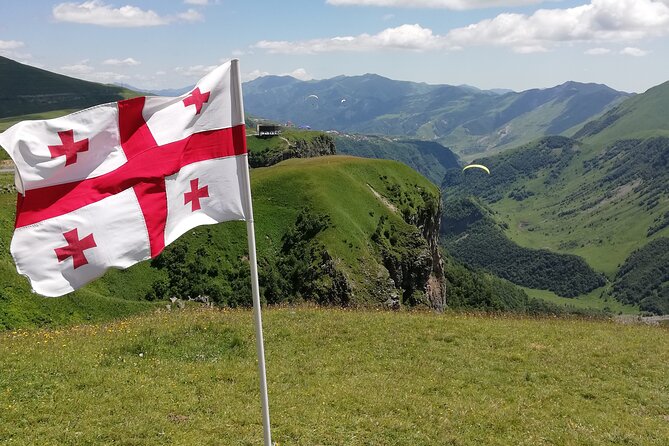
Day three starts with Zhinvali, an artificial reservoir on the Aragvi River formed by a hydroelectric dam built in 1986. You probably recognize that bright blue water from road-trip photos on the Georgian Military Road route toward Gudauri and Mount Kazbegi.
There’s a small watching platform when approaching from Tbilisi, which is perfect for a group photo or for serious landscape photography. Admission isn’t mentioned, and this stop is essentially about views and timing.
Then you visit Ananuri Fortified Castle Ensemble, described as the only fortress of Georgia that has reached us in its original form. It sits on the coast of the Aragvi River and is tied to the Aragva eristavi, the heads of the people. Walk the defense complex and you’ll feel the medieval vibe more than just “view from a bus window.”
You’ll focus on the Assumption Church of the 17th century, with bas-reliefs on the facade. The description emphasizes that the decor elements carry hidden meaning, which is a nice invitation to slow down and look closely at stone details.
Time here is about 45 minutes, and admission is listed as free.
After that, there’s a quick pause at the Aragvi River—mostly a scenic and context stop. It highlights the White Aragvi flowing from Gudauri, meeting the Black Aragvi near Pasanauri, and then continuing as the Aragvi toward the Jinvali Reservoir before joining the Mtkvari near Mtskheta. It’s brief (about 15 minutes) and free, but it helps connect the dots so the region feels like one system, not random points on a map.
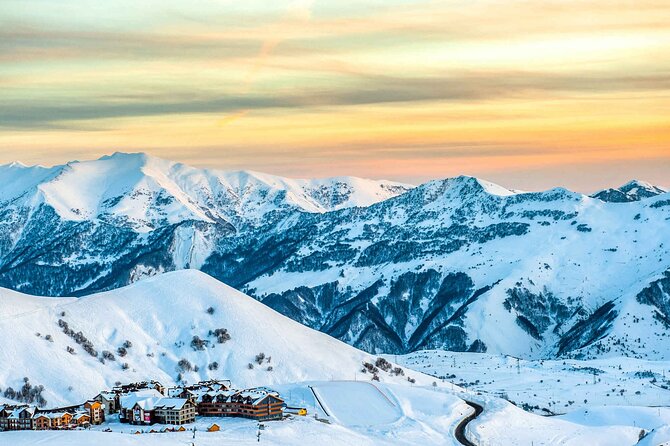
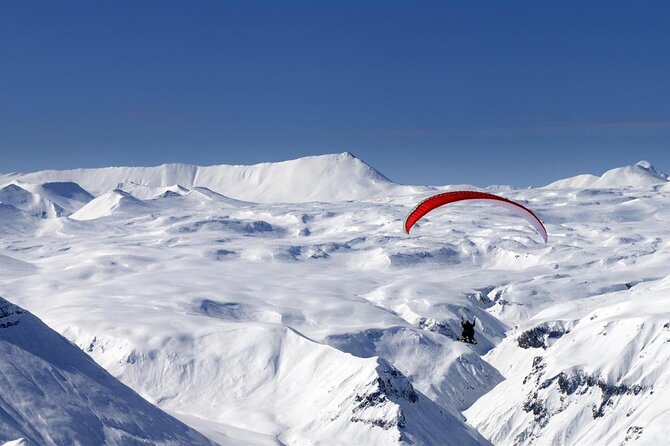
Next comes Gudauri, Georgia’s largest and highest ski resort. Elevations range from about 1,993m to 3,276m, with 34.8 km of slopes and 15 lifts (winter-oriented facts, but still relevant for the setting). The tour gives about 1 hour, with the option of views from the cable car.
Admission is listed as free here. In practice, the cost at this stage may come from cable car use if you choose it, since not every element is covered. If you’re traveling outside ski season, you’ll still likely enjoy the high-altitude viewpoints.
Stepantsminda and Gergeti Trinity Church: one of Georgia’s most dramatic church settings
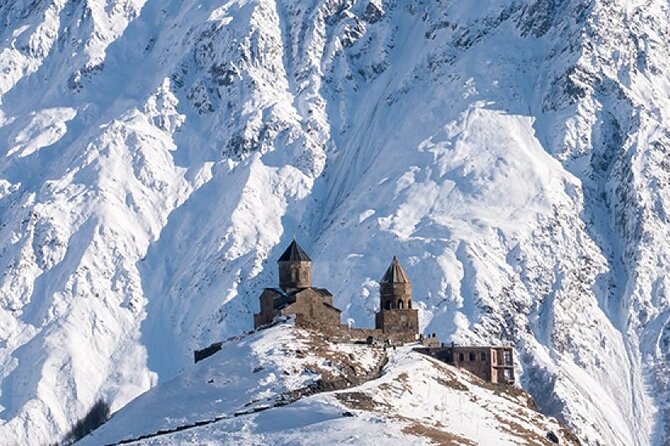
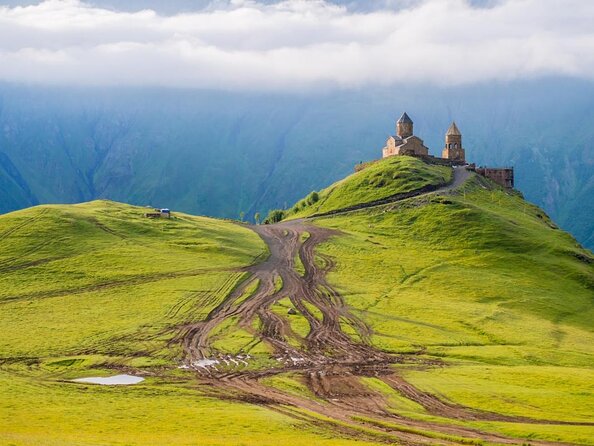
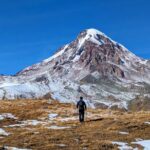
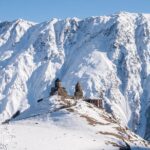
After Gudauri, the tour heads toward Stepantsminda, a townlet in the Mtskheta-Mtianeti region. Then the highlight is Gergeti Trinity Church, near the village of Gergeti under Mount Kazbek.
Gergeti is at an elevation of about 2,170 meters, on the right bank of the river Chkheri. This is the stop that’s most weather-sensitive. Clouds can erase the view, and fog can turn the experience into a short, quiet church visit rather than the iconic Kazbek panorama people plan for.
Time here is about 1 hour, and the admission ticket is listed as not included. Also, transportation from Kazbegi to Gergeti by 4WD car is listed as optional, which matters a lot for your planning.
So what should you do? If Gergeti is the reason you booked day three, plan for the fact that your cost can creep up depending on 4WD needs and how the road conditions look. If you want an easy, fixed itinerary with no extra decisions, you may find this the one area where you’ll need to be flexible.
Price and value: is $220 per person fair for this mix?
At $220 per person for approximately 3 days, you’re paying mostly for private transport, included water/WiFi, and the chance to cover multiple regions without the friction of independent driving.
Here’s where value shows up clearly:
- Private transportation and air-conditioned comfort across long distances.
- Airport transfers and bottled water.
- Admission tickets included for Jvari Church, Svetitskhoveli Cathedral, Sameba, and most of the Tbilisi walking stops.
- Free entries for several key viewpoints and the monastery and fortress segments.
The extra costs you might face are tied to places explicitly marked as not included: Narikala Fortress and Gergeti Trinity Church admission, plus optional 4WD for the Gergeti approach. Food and drinks are also not included, which is standard for tours like this.
In other words, the base price is strong if you want guided flow and minimal logistics. It’s less of a bargain if you’re the type who doesn’t care about guided context and you’d rather DIY most admissions.
Who this 3-day private tour suits best
This fits you if:
- You want three days that feel organized, not scattered.
- You like UNESCO sites, big church architecture, and the story behind them.
- You want a mix of city flavor and day-trip nature viewpoints.
- You value a guide’s personality and communication, not just a stopwatch.
It may feel less ideal if:
- You hate any chance of extra costs at the end of the day.
- You prefer only one region and don’t want to pack in Tbilisi plus Kakheti plus the Kazbegi corridor.
The guide strength (Davit’s attentive, funny, caring style in the feedback) is the secret sauce here. The route matters, but the way it’s delivered is what keeps the trip from feeling rushed.
Should you book this 3-day Georgia private tour?
I’d book it if your goal is a high-yield introduction to Georgia: ancient monasteries, famous Tbilisi sights, Kakheti wine culture, and the Kazbegi-zone dramatic church setting. The private ride and pickup make it feel efficient, and the guide reputation is unusually consistent in making the day feel personal.
I’d think twice if your travel dates are uncertain or weather can be rough, because day three is the one most affected by clouds and road conditions. If you’re okay with that and you don’t mind handling a couple of extra admission/4WD decisions on top of the base price, this is a solid way to see a lot of Georgia without wasting time.
FAQ
How long is the private tour?
It’s an approximately 3-day tour.
Where does the tour start?
The tour is in Tbilisi, Georgia, with pickup offered.
What is the price per person?
The price is $220.00 per person.
What’s included in the tour price?
Included items are all fees and taxes, WiFi on board, private transportation, an air-conditioned vehicle, airport transfers, and bottled water.
Are meals included?
No. Food and drinks are not included.
Do I need to pay entrance fees at the churches and monasteries?
Some admission tickets are included (for example, Jvari Church, Svetitskhoveli Cathedral, and the Tbilisi Holy Trinity Cathedral), while others are not included (such as Narikala Fortress and Gergeti Trinity Church).
Is the 4WD ride to Gergeti included?
Transportation from Kazbegi to Gergeti by 4WD car is listed as optional, so it’s not included.
Is the Bridge of Peace and Old Tbilisi time included for free?
Yes, the Bridge of Peace and the Meidan Bazaar/Sharden Street walk are listed as admission ticket free.
Is this tour weather-dependent?
Yes. The experience requires good weather.
What if I need to cancel?
Free cancellation is available. You can cancel up to 24 hours in advance for a full refund.
More Private Tbilisi Days with Your Own Guide

More Tbilisi Tours and Georgian Day Trips


More from Our Tbilisi Review Desk
Not quite your thing? More Tbilisi tours and day trips from our review desk


3-Day Experiences, compared.
 ★ 5.0Best of Armenia: private 2-3 days tour to Yerevan w/ family lunchFrom $32938 reviews
 ★ 5.0Private 3-Day Tours & Transfers from Tbilisi to Top Georgia SpotsFrom $35031 reviews
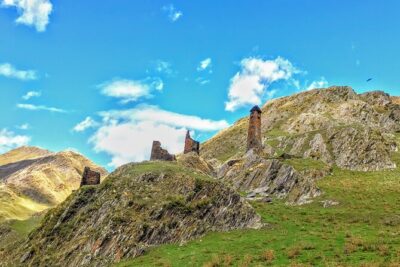 ★ 5.03 Day Tusheti Tour Explore Unspoiled WildernessFrom $33528 reviews
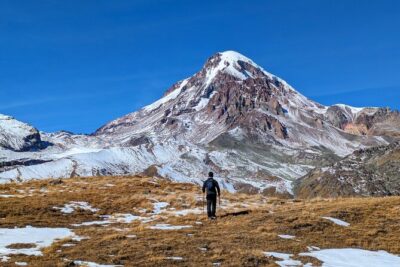 ★ 5.03-Day Hiking Group Tour in KazbegiFrom $59014 reviews
 ★ 5.0Amazing 3 days Tour to GeorgiaFrom $26012 reviews
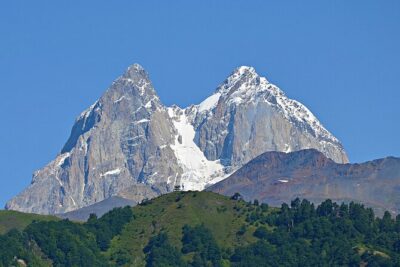 ★ 4.03-Day Private Mestia and Ushguli Tour from TbilisiFrom $46010 reviews
 ★ 4.53-Day Tour in SvanetiFrom $33610 reviews
 ★ 5.03 days private tour in GeorgiaFrom $2508 reviews
Browse the lists this tour appears in