
Reviewed · VARDZIA CAVE CITY & BORJOMI ESCAPES
Vardzia – Rabati – Borjomi
A cave monastery, a castle with multiple faiths, and mineral-water fun in one long day. That mix is why this private Vardzia–Rabati–Borjomi trip feels different from the usual checklist tours. You’ll cover three major sights outside Tbilisi, with pickup from the airport or your hotel, and a guide who can explain what you’re actually looking at.
I especially like two built-in extras: WiFi on board the air-conditioned vehicle (so you can upload photos right away) and complimentary Georgian wine during the day. Those small comforts make the long hours feel more like a planned road trip than a grind.
One consideration: the day can run long, and there’s limited time at each stop. If your driver keeps explanations minimal on the day you go, you’ll want to ask questions early so you don’t end up standing around with zero context, especially at Vardzia.
In This Review
- Key things that make this tour worth your time
- Why this three-site loop works from Tbilisi
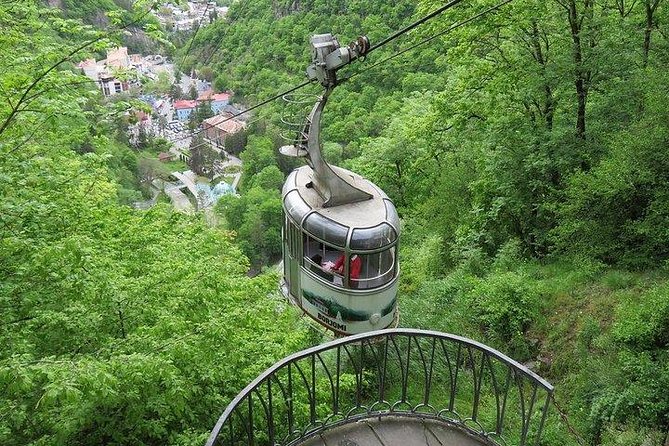
- Borjomi Central Park: springs, a national-park walk, and the cable car
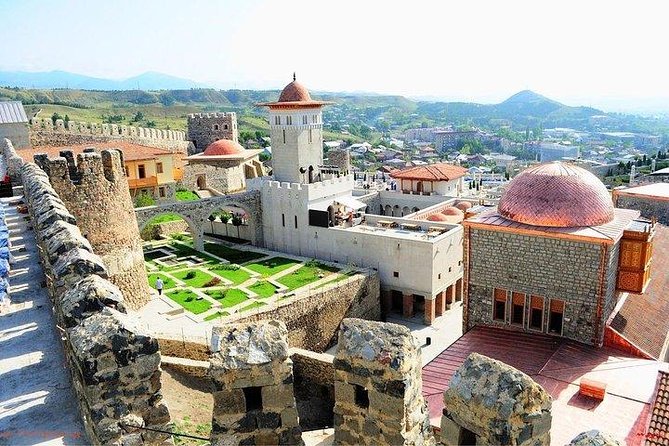
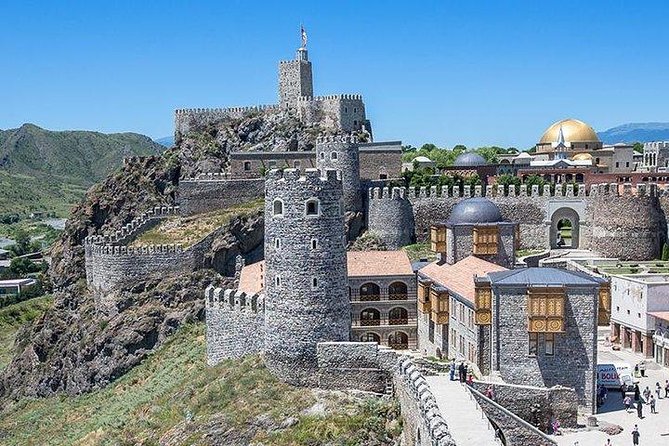
- Rabati Castle: a 13th-century fortress with church, mosque, minaret, and synagogue
- Vardzia: the cave city-palace for Queen Tamar
- Getting there: the long Georgian road and how to make it comfortable
- Price and value: what $94.60 per person really buys
- Who this tour fits best (and who should rethink it)
- Should you book the Vardzia–Rabati–Borjomi day trip?
- FAQ
- FAQ
- How long is the Vardzia – Rabati – Borjomi tour?
- Is pickup included?
- Is this a private tour?
- What stops are included?
- Do I need to pay admission tickets for the sights?
- Is the tour offered in English?
- Is WiFi available during the trip?
- Can I cancel for free?
Key things that make this tour worth your time
- WiFi in the vehicle so you can post and share fast, even with a packed schedule
- Complimentary Georgian wine included during the trip experience
- Three headline stops in one loop: Borjomi Park, Rabati Castle, and Vardzia cave city
- Cable car time at Borjomi for a different angle on the park
- Private format means it’s only your group, not a big bus crowd
Why this three-site loop works from Tbilisi
This is the kind of day trip that makes sense when you only have a short window in Georgia. You start in the Tbilisi area and then trade city time for three very different “Georgia experiences”: mineral springs, medieval (and multi-faith) architecture, and a rock-cut cave city.
The big value here is flow. Instead of bouncing between unrelated half-days, you get one coherent route that keeps the theme moving: how Georgia’s people lived, prayed, and built—then how they treated health with the Borjomi waters.
Because it’s a private tour, your group pace matters. If you want a bit more walking in Borjomi or extra photo time at Rabati, you’ll usually have more flexibility than on a fixed-seat bus day.
More Vardzia cave city and Borjomi escapes we have taken from Tbilisi
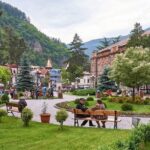
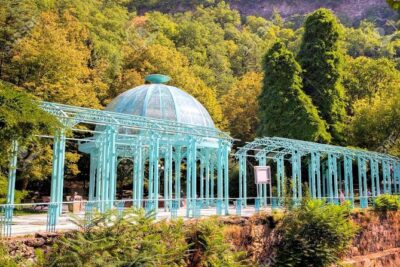
Borjomi Central Park: springs, a national-park walk, and the cable car
Borjomi is famous for its mineral water industry, Georgia’s top mineral-water export. It’s not just a modern brand, either. People have been using these waters for a long time—archaeological finds point to stone baths in the area—so the “healing spring” story has real local roots.
On this stop, you’ll do three things:
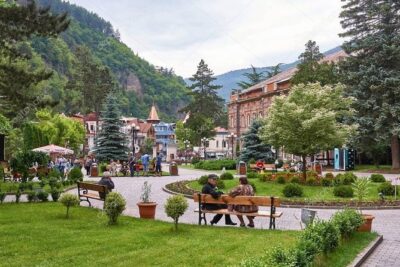
- take a walk in Borjomi Central Park
- drink spring water from BORJOMI
- ride the cable car
You’ll have about 40 minutes here, and admission tickets for the park area are not included, so budget for that. With a time window like this, I’d treat Borjomi as a “taste and sample” visit rather than a long spa day. The goal is to connect the water story to the place itself.
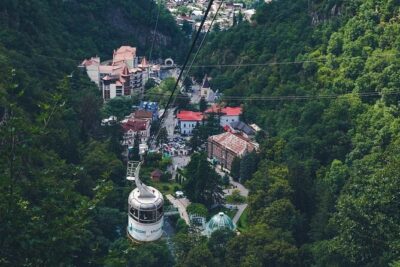
The cable car ride is your quick win. Even if you keep your feet on the ground most of the day, the cable car helps you see the park setting from above. It’s also a nice break from walking, which matters because the rest of the day leans physical.
If you like practical travel habits, this stop rewards them. Wear shoes you’re comfortable with on park paths, and keep a bottle handy if you want to linger after the main BORJOMI moment. Some days include more adventurous driving in the Borjomi area, so don’t be surprised if the road feels extra bumpy once you’re off the main stretches.
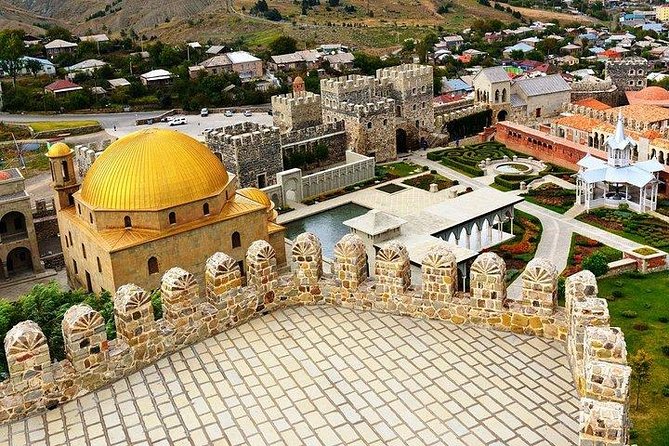
Rabati Castle: a 13th-century fortress with church, mosque, minaret, and synagogue
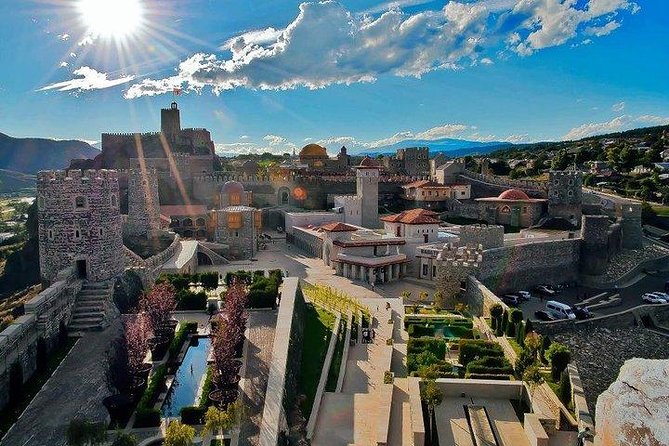
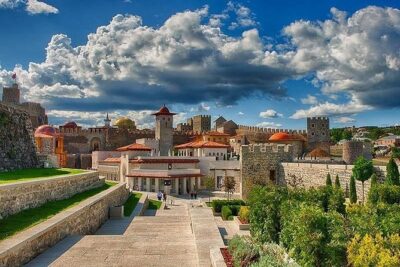
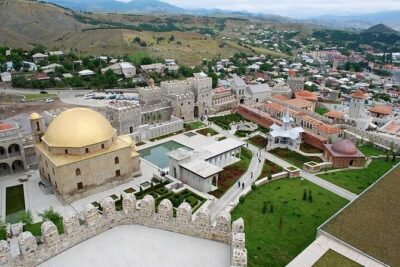
Rabati Castle (near Akhaltsikhe) is the kind of place that makes you pause and look up. You’re visiting a complex that grew under shifting cultural influences, and you can actually see that in the architecture.
The highlights are built right into the site:
- a church
- a mosque
- a minaret
- a synagogue
That mix is the point. Rabati isn’t one-style, one-era, one-story. It’s a physical reminder of how the region has sat at cultural crossroads over time.
The time here is about 45 minutes, and admission tickets are not included. That means you’ll want to have a simple plan: walk the grounds, identify the main religious structures, and take a slow lap for photos. If you’re the type who likes reading details, a guide helps a lot—but even without one, the buildings do the talking.
Rabati’s background adds another layer. The castle and town were tied to the residence of the Jakhely princes between the 13th and 16th centuries. Then, after long damage and neglect, the renovated Rabati Castle opened in August 2012, using archive materials and images for restoration. So you get a living “before and after” story: medieval bones, modern restoration work.
Vardzia: the cave city-palace for Queen Tamar
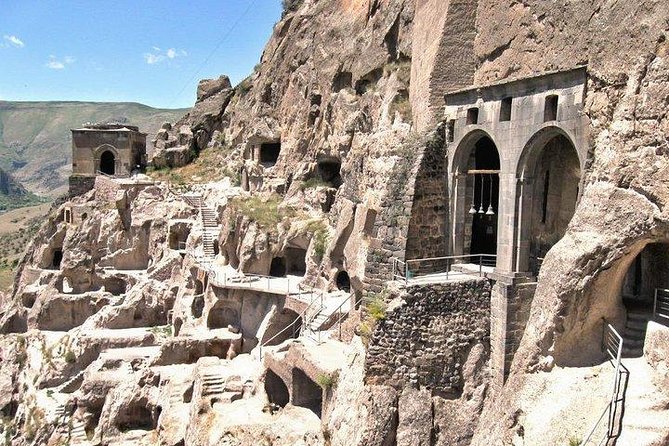
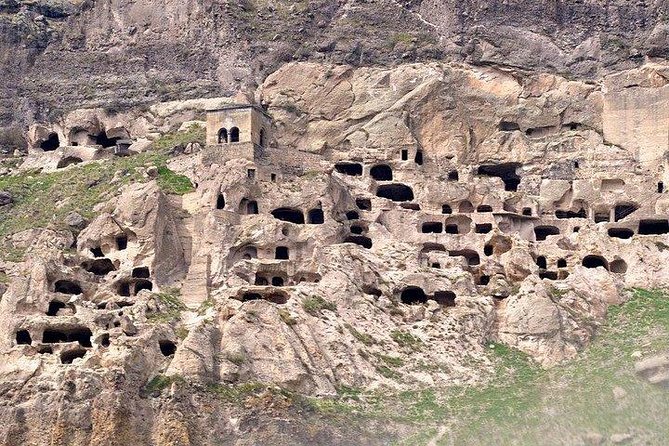
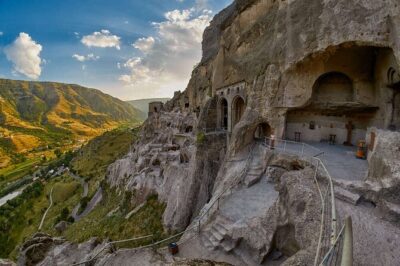
Then you hit the big emotional payoff: Vardzia, the cave-palace-monastery carved into solid rock. People compare it to fantasy worlds for a reason. The halls and openings feel like something pulled from a storybook—except the architecture is real, Georgian, and surprisingly human.
This site is associated with Georgia’s Golden Ages. Vardzia was built in the 12th century for King Tamar. That’s the “mountain queen” nickname idea: it’s not random rock. It was designed as a religious and royal complex, dug out of the hillside to create living spaces and sacred rooms.
You’ll have about 1 hour here, and admission tickets are not included. In a short visit like this, I’d aim for two things:
1) take in the main rock-cut areas quickly to understand the layout
2) slow down for the parts that feel most sculpted or dramatic
Vardzia rewards good timing. You don’t want to sprint, but you also don’t want to get stuck in one corridor while the rest of your day disappears. If your guide is talkative—some guides I’ve seen described as especially engaging, like Romeo or Zurab—ask how the rock-cut design worked and what life inside these spaces would’ve been like.
One practical note: cave-city architecture usually means uneven ground and steps. Bring shoes with grip and expect to spend part of the hour looking slightly up and slightly down. Your photos will improve, but your legs will feel it too.
Getting there: the long Georgian road and how to make it comfortable
A day trip like this is mostly about the drive. That isn’t a complaint—it’s just how these routes work. You’ll be in the vehicle for hours, heading from Tbilisi out toward Borjomi and then on to the castle and cave city.
That’s why the included comfort items matter:
- the vehicle is air conditioned
- there’s WiFi on board (so your photos don’t sit on your phone until later)
- the trip is private, meaning you’re not stuck with ten strangers’ pace decisions
Guides can make a huge difference on these long road days. Some people have had standout experiences with guides and drivers described as patient and friendly, including Paati, Natalie, Mamuka, Romeo, and Zurab. Even when the drive feels long, a good guide turns it into a moving cultural lesson—history, local context, and what to notice at each stop.
On the flip side, one downside that can happen on day trips is a hands-off approach—where the driver drops you at each place, gives a return time, and then that’s it. If that’s your situation, you can protect yourself by asking early: What should I see first here? What’s the one thing that explains the site? Where should I stand for the best photos?
Also, if the day is planned as a full, long outing, don’t assume every extra listed comfort will feel the same from person to person. The tour includes complimentary Georgian wine, but if you care about it, ask about it early in the day so you aren’t waiting around.


Price and value: what $94.60 per person really buys
At $94.60 per person, this tour sits in the “worth it if you care about guidance and efficiency” zone. For that price, you’re not just paying for a car to drive you out—you’re paying for a structured day with:
- pickup from Tbilisi airport or your hotel
- private format for your group
- English-speaking guide support (offered in English)
- WiFi on board
- complimentary Georgian wine
Admissions aren’t included for the main sites (Borjomi Park, Rabati Castle, and Vardzia), so that’s the one line item that can change your total. Still, it’s common for major attractions to charge separately, and the tour’s main value is how it stitches the day together.
If you’re comparing this to cheaper options, think about what you’re losing. Big group bus tours can be cheaper, but they often mean less control over timing and less time to ask questions. Here, the private setup gives you a better chance to turn each stop into a real story, not just a quick photo stop.
For me, the best value comes when you:
- want a guided explanation you can understand in English
- don’t want to plan transportation between three separate sites
- like the idea of a day with comfort touches (WiFi and wine)
Who this tour fits best (and who should rethink it)
This private day trip is ideal if you want a tight, memorable route without negotiating transit on your own. It’s also a good match if you like history and architecture and you want context at every stop.
It’s less ideal if you hate long drives or if you’re the type who needs lots of time in each place. Borjomi is about quick immersion. Rabati is a brisk architecture walk. Vardzia gives you enough time to grasp the scale, but not enough for a slow, detailed wander the way a multi-day visit would.
If your group wants a mostly quiet day—just transport and sightseeing—this can still work. But you’ll do better if you choose an approach where you ask the guide for a few “what to notice” points. That’s how you turn a short stop into understanding.
Should you book the Vardzia–Rabati–Borjomi day trip?
I think you should book this tour if you want an efficient, private way to hit three major Georgian highlights in one day, with comfort built in and a guide to connect the dots. The WiFi and complimentary Georgian wine are genuinely useful on a long day, and the combination of Borjomi’s water culture, Rabati’s multi-faith castle, and Vardzia’s cave-city scale is a strong trio.
Don’t book it expecting unlimited time at each site. Also, plan on paying separate admissions and be ready for a long driving day from Tbilisi. If you keep that in mind, this becomes one of those trips that feels like you actually “did” something, not just got transported.
FAQ
FAQ
How long is the Vardzia – Rabati – Borjomi tour?
It runs about 7 to 9 hours, depending on the day’s timing and road conditions.
Is pickup included?
Yes. Pickup is offered from Tbilisi airport or from your hotel of choice.
Is this a private tour?
Yes. It’s private, meaning only your group participates.
What stops are included?
The tour includes Borjomi Central Park, Rabati Castle, and Vardzia cave city.
Do I need to pay admission tickets for the sights?
Admission tickets are not included for the main stops (Borjomi Central Park, Rabati Castle, and Vardzia).
Is the tour offered in English?
Yes, it’s offered in English.
Is WiFi available during the trip?
Yes. WiFi is available on board your air conditioned vehicle.
Can I cancel for free?
Yes. You can cancel up to 24 hours in advance for a full refund.
More from Our Tbilisi Review Desk
More Vardzia Cave City and Borjomi Escapes
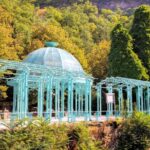
Not quite your thing? More Tbilisi tours and day trips from our review desk
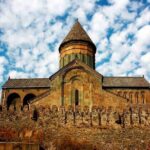


Vardzia Cave City & Borjomi Escapes, compared.
 ★ 4.5Day tour to Vardzia, Borjomi in GeorgiaFrom $43152 reviews
 ★ 4.5Vardzia, Rabati, and Borjomi Ancient Georgia Group TourFrom $3474 reviews
 ★ 4.5LEGENDARY PLACES OF GEORGIA: VARDZIA, BORJOMI, RABAT.( Group Tour)From $4558 reviews
 ★ 5.0Full Day Private Tour in Vardzia, Rabati and Borjomi with GuideFrom $17525 reviews
 ★ 5.0Borjomi National Park Full Day Private Tour From TbilisiFrom $9014 reviews
 ★ 5.0Bakuriani ski resort and the legendary Borjomi (Group Tour)From $5512 reviews
 ★ 4.5Vardzia. Lake Paravani, Khertvisi & Lomisa castle, RabatiFrom $12012 reviews
 ★ 4.0From Tbilisi: Vardzia, Rabati Castle & Borjomi Tour with GuideFrom $378 reviews
Browse the lists this tour appears in