
Reviewed · PRIVATE
17 Day Private Tour through Georgia
Georgia in 17 days feels like speed-dating. The charm here is that your private guide and driver turn a wide country into a readable story, from Tbilisi’s old streets to the Caucasus peaks. I like how the stops are practical—major landmarks, museums, and scenic sites stitched together with comfortable flow.
My other big like: you get real variety without feeling random. You’ll see UNESCO-grade religious sites, taste Georgia’s wine-world through cellar museums, and end with Black Sea history and rock-cut monasteries. For me, the Kakheti wine region stretch and the Svaneti highlands stretch are the two strongest “Georgia looks different here” moments.
One consideration: this is a full-throttle route. You’ll spend a lot of the day on the road, plus a few days include longer walks like the hike to Gergeti Trinity Church and time around Ushguli.
In This Review
- Key highlights to look for
- Why this private Georgia route works from start to finish
- Tbilisi: from Sameba and Metekhi to Narikala and the sulfur baths
- Tbilisi’s day rhythm: cable car, canyon views, and museum variety
- David Gareja and Signagi: cave monasteries near a border zone
- Kakheti’s wine world: Bodbe to Numisi, Tsinandali, Napareuli, and Gremi
- UNESCO-heavy Kartli-to-Gudauri day: Mtskheta, Ananuri, and the drive north
- Kazbegi day: Cross Pass, Gergeti Trinity, and mountain views that justify the effort
- Gori to Kutaisi: Stalin’s museum, Uplistsikhe cave town, and Gelati/Bagrati
- Sataplia to Svaneti: caves, Dadiani palaces, Enguri Dam, and Mestia arrival
- Ushguli and Margiani Museum: UNESCO highlands in real medieval form
- Latali and Lemjeri: the mural church focus near Mestia
- From Svaneti Museum to Batumi: high mountains to Black Sea blur
- Gonio Fortress and Batumi Botanical Garden: Colchis edges and plant science
- Borjomi to Akhaltsikhe: mineral water breaks and southern fortress culture
- Vardzia: rock-cut monasteries and tiered rooms in one unforgettable sweep
- The return to Tbilisi: Sagamo, Paravani, and the Tsalka reservoir view line
- What $4,219 buys you in a 17-day private Georgia route
- Who should book this tour (and who should switch to a slower one)
- Should you book this 17-day private Georgia tour?
- FAQ
- What time does the tour start?
- Where does the tour begin?
- How long is the tour?
- What’s included in the price?
- What is not included?
- What’s the best time to visit?
- How big is the group?
- What happens if I need to cancel?
Key highlights to look for
- Small-group pace with a pro guide who keeps the days clear and moving
- Kakheti wine-making museums (Numisi and Twins Wine Cellar) that explain the craft
- Caucasus viewpoints from Cross Pass and the walk to Gergeti Trinity Church
- Svaneti UNESCO highlands with Ushguli and old mural churches in villages near Mestia
- Black Sea and Colchis history via Gonio Fortress and Roman-era layers
- Vardzia’s rock-hewn monastery tiers plus the Khertvisi ruins on the way
Why this private Georgia route works from start to finish
This tour is built around a simple idea: don’t just see Georgia’s highlights—connect them so you understand the geography. You start in Tbilisi, move through eastern wine country, climb into the Greater Caucasus region, sweep west to Kutaisi and Sataplia, then angle up into Svaneti before heading to the Black Sea and south again to Akhaltsikhe and Vardzia. Then you work your way back to Tbilisi with scenic lake and reservoir stops.
Because it’s private (and runs with an experienced driver), you’re not wasting hours translating bus schedules or hunting parking. That’s the real value of a route like this: you’re paying to reduce friction while you’re seeing a ton of variety.
Also, the tour’s timing window matters. It lists best travel months as April to October, which is when you’re most likely to get workable weather for mountain passes and outdoor viewpoints.
More private Tbilisi tours at your own pace



Tbilisi: from Sameba and Metekhi to Narikala and the sulfur baths
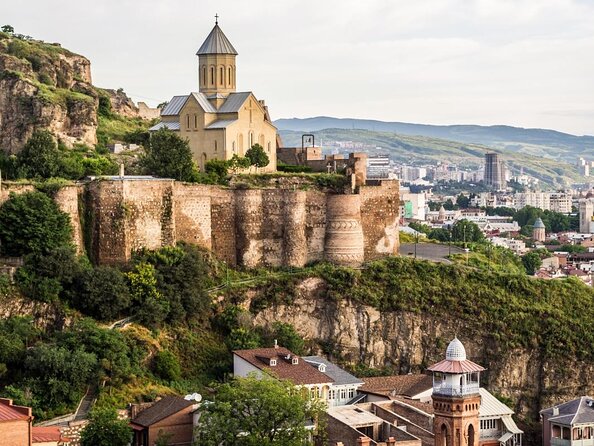
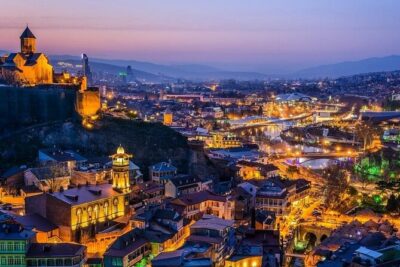
Your first full day in Georgia’s capital is classic Tbilisi, in a good way. You begin at the Holy Trinity Cathedral (Sameba)—a huge Orthodox landmark and one of the tallest in the Orthodox Christian world. Then you move to Metekhi Church, perched above the river Mtkvari and tied to the city’s medieval layers.
After that, you ride up to Narikala Fortress using the aerial cableway. It’s a quick way to get the skyline views without turning the day into a stair marathon. From there you head into the old neighborhoods and down into Abanotubani, the historic sulfur bathhouse district—part culture, part atmosphere, and part “this city runs on its own steam.”
Two museums round out the day well. There’s the Tbilisi History Museum (a big collection covering everyday life, archaeology, ethnography, and more), and then the Georgian National Museum, which covers everything from early human history through medieval times plus rich ethnographic and archaeological material. If you like your sightseeing with context—not just photos—this day clicks.
Practical note: Tbilisi days can feel like “more walking than you planned,” but you do get cableway time and short stop windows, so it’s not exhausting.
Tbilisi’s day rhythm: cable car, canyon views, and museum variety
The way the day is paced matters. You’re not stuck in one museum for hours and then dropped into another with no breath between. Instead, you go old-new-old: fortress viewpoint, old-town canyon and waterfall area (Legvtakhevi canyon), sulfur baths district, then museum-heavy time when the weather or daylight shifts.
You’ll also notice the tour includes admission ticket times in the schedule, with several stops listed as free-entry. That’s useful for your budget mental math because it keeps the day from turning into surprise paid attractions.
If you like wandering, the Abanotubani and Shardeni-area timing is great. You’ll have time near outdoor cafes, art galleries, and souvenir shops without being trapped in a single “tour-only” strip.
David Gareja and Signagi: cave monasteries near a border zone
On Day 3, the tour jumps from city life to monastery-in-rock life at David Gareja. This is a semi-desert cave complex with hundreds of cave cells, living spaces, and churches and chapels, with origins dating back to the 6th century. It’s one of those places where your imagination does half the work—because the setting looks built for long prayer, not quick photo ops.
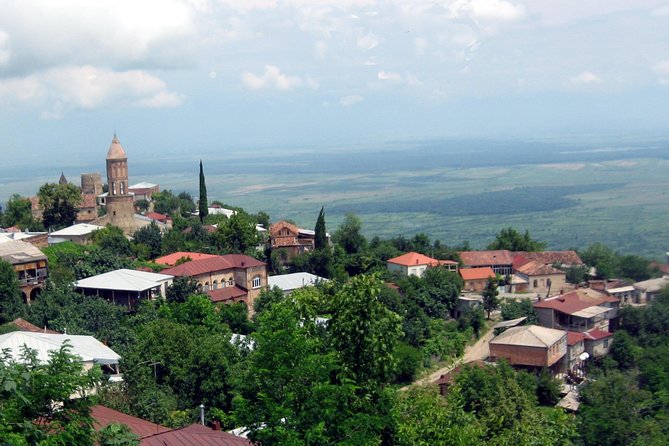
From there you head to Signagi in Kakheti, a small town perched in the eastern foothills with medieval curtain walls. The setting above the Alazani valley is the big payoff. Even if you don’t go deep into every street, the views and town feel are the point.
This is also a good day for pacing yourself. A cave monastery plus travel means your “museum energy” should be turned down a notch, and your “slow-looking” energy should be turned up.
Kakheti’s wine world: Bodbe to Numisi, Tsinandali, Napareuli, and Gremi
If Georgia has a heartland story in this route, it’s Kakheti. Day 4 is the wine-country circuit, and the clever part is that it doesn’t just name wineries—it teaches you what wine-making means here.
You start at Bodbe Monastery of St. Nino, a pilgrimage site linked to St. Nino, the Enlightener of Georgia, with a history that reaches back to the 9th century (and later renovations). It’s spiritual, but also scenic and calm compared with the urban pace.
Then you go into wine-making knowledge at Velistsikhe and the Numisi Wine Cellar Museum. The tour frames it as one of the oldest wine cellars in the region, and it’s the kind of stop that helps you understand why Kakheti is so central to Georgia’s identity.
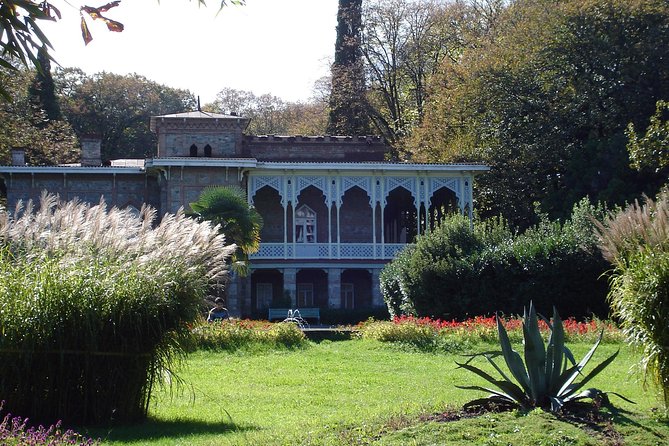
Next is Tsinandali, tied to the House Museum of Alexander Chavchavadze. If you like Georgian cultural history, this is where the wine-region story meets a person—nobleman, poet, military figure—plus his residence, garden, and wine cellar turned museum.
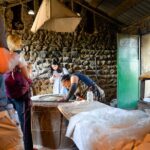
Then you get the more hands-on learning at Napareuli with the Twins Wine Cellar Museum. The schedule calls out transparent 500-liter pitchers where you can observe stages of wine production like pressing, boiling, and natural filtration. That’s a real “how it works” moment, not just a viewpoint stop.
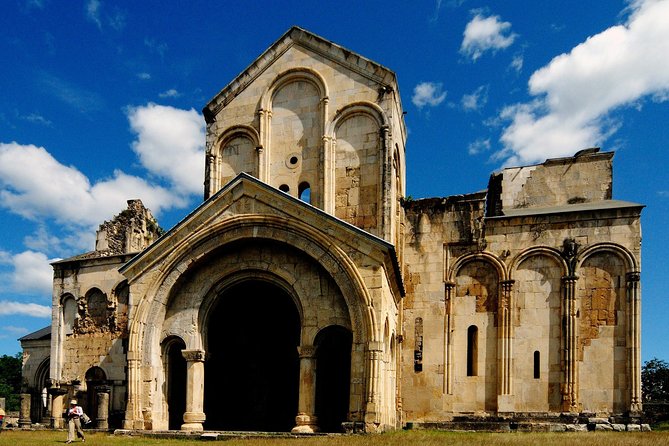
You close with Gremi, the Royal Citadel and Church of Archangels. You’ll see the medieval town complex remnants that once functioned as Kakheti’s capital, plus a three-story castle, bell tower, wine cellar, and medieval walls. It’s a great place to connect: wine-making tradition sits alongside fortifications, politics, and faith.
If you’re expecting a single “tasting day,” this isn’t marketed as a tasting crawl in the provided info. But it is built to teach you the wine-making logic and show you the historic setting behind it.


UNESCO-heavy Kartli-to-Gudauri day: Mtskheta, Ananuri, and the drive north
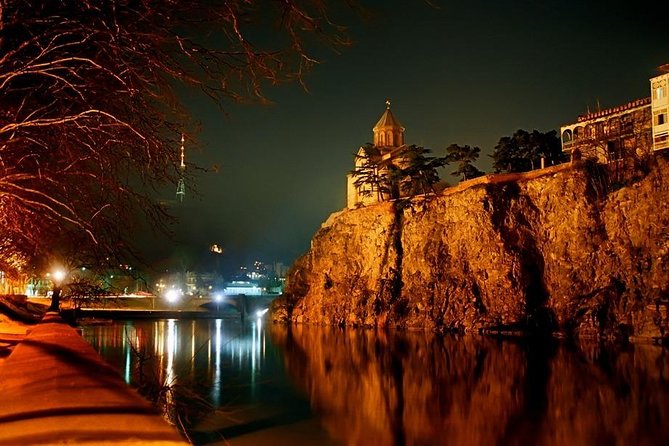
Day 5 starts in Mtskheta, at the confluence of the Aragvi and Mtkvari rivers. Mtskheta is famous for Jvari Monastery and Svetitskhoveli Cathedral, both UNESCO World Heritage Sites. Even if you only skim the monuments, you’re still standing in a core piece of Georgia’s long Christian story.
Then you move toward the defensive and scenic Ananuri Fortified Castle Ensemble—right by the route north. It’s a quick stop, but it gives you a feel for Georgia’s river geography and castle architecture.
After those monuments, the tour drives up toward Gudauri, setting you up for a mountain-focused Day 6. This is also where you’ll start noticing the route’s shape: it’s not just east-to-west, it’s climb-then-slide across regions.
Kazbegi day: Cross Pass, Gergeti Trinity, and mountain views that justify the effort
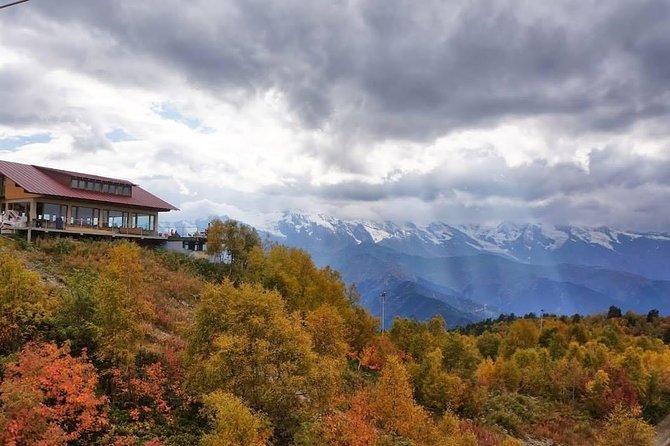
Day 6 is built for views. You stop at Cross Pass (2395 m) to taste local mineral waters, then continue on to Kazbegi (Stepantsminda).
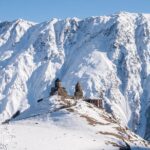
The main event is the walk to Gergeti Trinity Church, a 14th-century church sitting high above Kazbegi. The schedule says an easy walk of about two hours, with panoramic views over Kazbegi town and the Kazbegi Glacier (5047 m). This is one of those moments where your legs get credit later when you look back at how high you went.
After returning to Kazbegi, you head toward Dariali gorge and Gveleti waterfalls. Those add variety: church views give you the “mountain crown,” and the gorge/waterfall angle gives you moving nature and different textures.
One practical thought: bring the mindset that this is a walking day, not just a bus-and-photo day. If you’re prone to altitude discomfort or cold, you’ll want to pack layers early on.
Gori to Kutaisi: Stalin’s museum, Uplistsikhe cave town, and Gelati/Bagrati
Day 7 moves you through history with two very different tones. You visit the House Museum of Joseph Stalin in Gori. It’s listed as included, and it’s a stark reminder that Georgia’s story also runs through 20th-century politics—not just ancient monasteries.
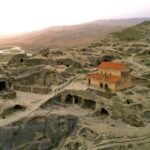
Then you head to Uplistsikhe Cave Complex, described as dating back as early as the 1st millennium BC. This is an ancient rock-hewn town with chambers, tunnels, and streets that served as a political, economic, and religious center in pre-Christian times. It’s also where you see Georgia’s ability to put people into natural stone architecture for survival and power.
After Uplistsikhe, you continue to Kutaisi and make scenic stops around the Rikoti pass plus a pottery and farmers’ market break. That sort of market stop is small, but it can be the difference between “I saw a place” and “I felt everyday life.”
Kutaisi’s evening focus includes major Golden Age UNESCO-era sites: Gelati Academy and Monastery and Bagrati Cathedral. It’s a good pairing—education and monastery life on one side, cathedral architecture on the other—so you don’t just get one religious monument.
Sataplia to Svaneti: caves, Dadiani palaces, Enguri Dam, and Mestia arrival
Day 8 is a transition day done right: you shift from Kutaisi and its natural sites up toward the mountainous Svaneti region.
You start at Sataplia Caves and Natural Reserve, about 10 km from Kutaisi. The reserve is noted for relict deciduous forests, karst caves, and preserved dinosaur footprints. It’s a fun counterpoint to churches and cave towns—same “stone/earth” theme, different kind of curiosity.
Then you head to Zugdidi and visit Dadiani Palaces Historical and Architectural Museum. This is where your route touches local nobility and regional power structures, not only national-famous monuments.
You then stop at Enguri Dam, described as one of the highest concrete arch dams in the world, constructed on the Enguri River. From there, the tour continues to Mestia, the administrative center of Svaneti. Even without a long description of the drive, you’ll feel the change as you head into higher terrain.
Ushguli and Margiani Museum: UNESCO highlands in real medieval form
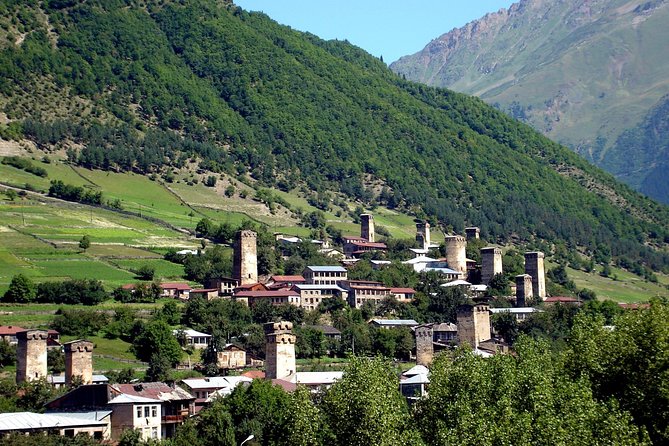
Day 9 gives you Svaneti at full intensity. You drive to Ushguli, described as one of the highest continuously inhabited places in Europe and included as UNESCO World Heritage. Ushguli includes four villages, and it’s known for well-preserved medieval architecture and lifestyle.
Along the way, you stop at villages Ipari and Kala and look at church sites with medieval frescoes and murals. That’s a good use of travel time: you see small pieces of art and then reach the big UNESCO core.
There’s also an optional-but-on-the-schedule easy hike toward the foothills of Shkhara Glacier, the highest peak in Georgia. It’s described as “easy,” which matters. This is how the tour gives you a mountain experience without requiring technical climbing.
In the evening, you return to Mestia and visit Margiani Museum, located in an ancient Svan housing estate and focused on authentic Svan lifestyle and dwelling. It’s a nice way to shift from outdoor medieval towers back into human-scale domestic history.
Latali and Lemjeri: the mural church focus near Mestia
Day 10 keeps the Svaneti theme but changes the format. You visit the villages of Latali and Lemjeri near Mestia, known for churches with medieval decorations, frescos, and murals.
This is the kind of stop that pays off if you like detail. When you’ve already seen some of Svan stone architecture in Ushguli, those murals help explain how art and faith survived in harsh terrain.
From Svaneti Museum to Batumi: high mountains to Black Sea blur
Day 11 starts with the Svaneti Museum of History and Ethnography. The collection is described as including ethnographic and archaeological artifacts, old Georgian manuscripts, and Orthodox icons painted in the Svan style. If you want a “why this region looks like this” explanation, museum time gives it to you.
Then you drive to Batumi, the capital of Adjara and Georgia’s second-largest city, with Black Sea waterfront energy. In the evening, you get a short city tour: Piazza Square and a walk on the boulevards. It’s the right size for a first look without draining you after mountain travel.
Gonio Fortress and Batumi Botanical Garden: Colchis edges and plant science
Day 12 pushes you away from the city center and into two different kinds of wonder.
First is Gonio Fortress, 10 km from Batumi. The schedule dates it to the 1st century AD, calling it a well-fortified Roman city in Colchis (and later Byzantine rule). If you’re into ancient layers, this one is a strong fit because it’s not just “a ruin”—it’s a location with long political reuse.
Then you head to Batumi Botanical Gardens in the Green Cape area. Opened in 1912 and expanded during Soviet times, it’s described as having plants from different climate zones. That means you get greenery and structure—an emotional reset after days of stone and mountain.
Evening back in Batumi wraps the day nicely.
Borjomi to Akhaltsikhe: mineral water breaks and southern fortress culture
Day 13 starts with Borjomi, a spa-resort known for natural mineral water exported widely. You take a walk in the Borjomi Park and taste the waters. This is one of the few truly relaxed blocks in the whole route, and it helps your body reset before the next set of stone sites.
Then you continue to Akhaltsikhe, described as a historical town and administrative center in South Georgia.
Day 14 is where the south becomes dramatic. You visit Rabati Castle, which includes a 14th-century castle plus churches, a mosque, synagogue, and a museum. The museum covers manuscripts, books, photos, archaeological and numismatic collections. It’s a reminder that this region isn’t single-identity—it’s layered.
On the way to Vardzia, you also stop by ruins of Khertvisi fortress along the Mtkvari River. It’s shorter, but it reinforces the “defense and control” theme that runs through Georgia’s fortress architecture.
Vardzia: rock-cut monasteries and tiered rooms in one unforgettable sweep
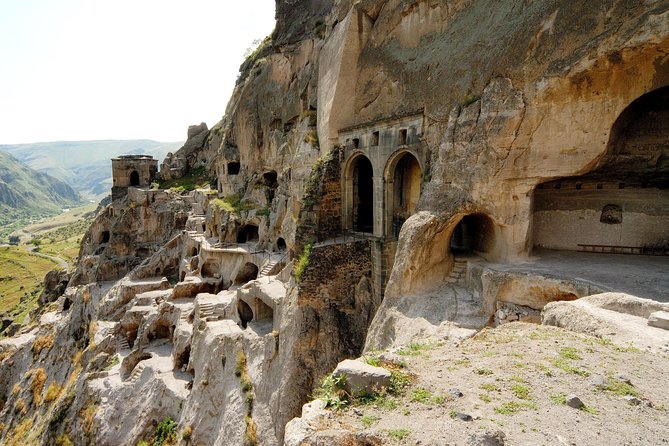
Vardzia is one of the tour’s headline moments. It’s a medieval rock-cut monastery founded in the 12th century during the reign of Queen Tamar. The complex sits on the bank of the Mtkvari River, carved into rock and structured across multiple chambers, cave dwellings, churches, and chapels on different floors and tiers.
This is the sort of place where you understand why people once lived inside mountains: Vardzia is practical, not just scenic. It also rewards slow looking. The tiers and rooms are not “one hallway then done,” so you’ll want comfortable shoes and patience.
The return to Tbilisi: Sagamo, Paravani, and the Tsalka reservoir view line
Day 15 turns travel time into scenery time. You head back to Tbilisi, passing through the Javakheti volcanic plateau with stops at alpine lakes Sagamo and Paravani, plus the Tsalka reservoir, described as the largest artificial lake in Georgia.
This is a good day for photos and a good day to check your comfort level with long drives. Even if the views are worth it, the body needs a rhythm.
Day 16 is free time in Tbilisi, which gives you space to revisit something you loved—maybe a second look at Old Town—or just rest.
Day 17 wraps with breakfast and hotel checkout, then transfer to Tbilisi International Airport.
What $4,219 buys you in a 17-day private Georgia route
Pricing is usually where value talk gets messy, so here’s the clean way to see it.
At $4,219 per person, you’re paying for a lot of “hard-to-schedule” logistics: pickup is offered, you get a professional guide, and you travel with an experienced driver across many regions—cities, mountains, and coastal history—over about 17 days. You’re also getting 16 overnights, water, breakfast on 16 mornings, and dinner on 3 evenings. That included-meal structure matters because it reduces daily decision fatigue.
Also, the tour notes all fees and taxes included, and it runs with a maximum of 15 travelers, which usually keeps the experience feeling more personal than big-bus touring.
If you subtract the headache factor—booking, moving, and timing yourself—this price starts to make sense for the kind of route you’re doing. You’re not just buying attractions; you’re buying a smooth operating system for Georgia.
One more point from the supplied operator responses: the company emphasizes experienced support, with named help like guide Lasha and travel expert Dali in their feedback. That kind of continuity tends to show up in how calmly the day runs.
Who should book this tour (and who should switch to a slower one)
You should book if you want a high-coverage Georgia circuit and you like having a clear day plan. It’s ideal for couples and small groups who don’t want to split time between multiple trips or spend vacation managing connections.
You might want a slower version (or at least mentally slow your expectations) if you’re sensitive to walking time or long travel days. The route includes a mountain hike to Gergeti Trinity Church (around two hours) and a longer half-day block around Ushguli (listed as 4 hours, plus an easy glacier-foothill hike). The cave and monastery days also tend to involve uneven footing.
If your travel style is mostly “one neighborhood per day,” this may feel too packed. But if you’re the type who loves variety—city churches, wine-country cellars, cave towns, highland towers, seaside history, and rock monasteries—this one delivers.
Should you book this 17-day private Georgia tour?
Yes, if your goal is to see Georgia’s big geographic and cultural contrasts in one go without planning every move. The mix of Tbilisi monuments, Kakheti wine-making culture, Caucasus viewpoints, UNESCO Svaneti highlands, Black Sea Roman-era history, and Vardzia makes the route feel like a full country, not a checklist.
Before you book, be honest about two things: your appetite for a busy schedule and your comfort with a few longer walks and high-altitude areas. If you can handle that, you’ll come away with a strong sense of how Georgia changes from region to region—and you’ll spend most days doing sightseeing, not problem-solving.
FAQ
What time does the tour start?
The start time is listed as 9:00 am.
Where does the tour begin?
It starts in Tbilisi, Georgia, with a meeting at Tbilisi National Airport and a transfer to your hotel on Day 1.
How long is the tour?
The duration is approximately 17 days.
What’s included in the price?
The tour includes all fees and taxes, water, 16 overnights, breakfast for 16 mornings, and dinner for 3 evenings. It also includes items like a mobile ticket and pickup is offered.
What is not included?
Not included are flight tickets, insurance, visa fees, and meals unless specifically mentioned in the schedule.
What’s the best time to visit?
The tour lists April to October as the best time.
How big is the group?
The maximum group size is 15 travelers.
What happens if I need to cancel?
You can cancel up to 6 days in advance of the experience for a full refund. Shorter notice can reduce the refund amount or make it non-refundable, based on local time rules.
More Private Tbilisi Days with Your Own Guide

More Tbilisi Tours and Georgian Day Trips
More from Our Tbilisi Review Desk
Not quite your thing? More Tbilisi tours and day trips from our review desk



Private, compared.
 ★ 5.0Kazbegi and Gudauri Full Day Private Tour from TbilisiFrom $69447 reviews
 ★ 5.0Old Tbilisi Tour: Private Walking Tour With Wine TastingFrom $39273 reviews
 ★ 5.0Private Tbilisi Food Tour: 9 Tastings Walk in Bohemian DistrictFrom $79227 reviews
 ★ 5.0Full Day Private Wine Tour in Kakheti Region with Lunch and 3 Wine TastingsFrom $185207 reviews
 ★ 5.0Kakheti – Small wineries and family-cooked lunch • Private tourFrom $116151 reviews
 ★ 5.0Kakheti All Inclusive Private Wine Tour Including LunchFrom $65135 reviews
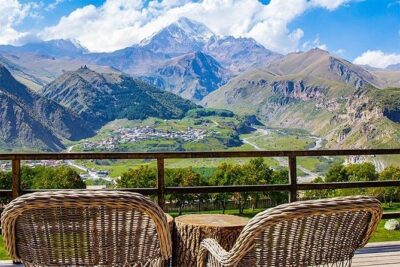 ★ 5.0Kazbegi Full-Day Private Tour with Scenic Stops from TbilisiFrom $97125 reviews
 ★ 5.0Tbilisi Airport Arrival Private Transfer To Accommodation & HotelFrom $24122 reviews